Germany at a Crossroads: The Saxony-Anhalt Election and the Collapse of the Postwar Economic Bargain

For decades, the bedrock of modern Germany’s stability rested upon an implicit and enduring social contract: the nation’s powerhouse high-value manufacturing sector would consistently generate well-paying employment, robust export revenues, and widespread, broad-based prosperity. Political and social institutions would then faithfully translate this economic bounty into lasting social cohesion, domestic tranquility, and steadfast support for democratic norms. Today, relentless competition from China, combined with structural energy shocks and a shifting global trade landscape, has shaken that foundational bargain to its very core.
Nowhere is this seismic shift more acutely felt than in the political earthquakes reshaping Germany’s federal states. Munich and Berlin are grappling with the aftermath of a regional vote that many political scientists and economists fear could be a harbinger of broader national instability.
The Electoral Earthquake in Saxony-Anhalt
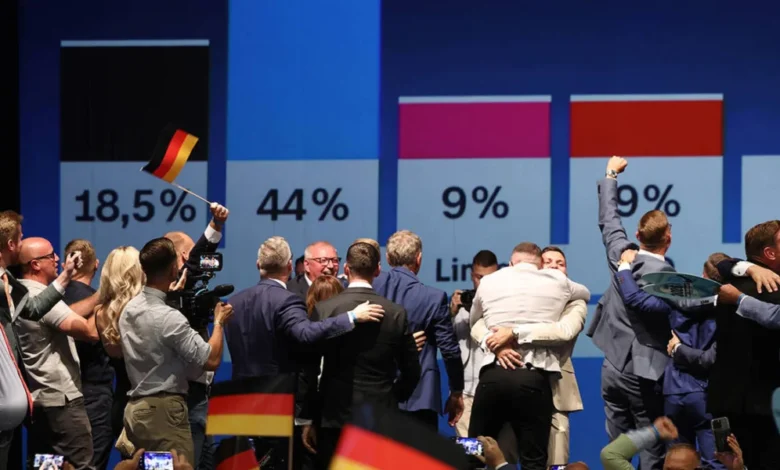
September 6, 2026, may well be permanently etched into the annals of Germany’s postwar political history as a critical turning point. In the state election held in Saxony-Anhalt, the far-right Alternative für Deutschland (AfD) achieved a staggering electoral breakthrough, coming within just three seats of securing an absolute majority in the state parliament.
Capturing an unprecedented 43.8% of the popular vote, the AfD more than doubled its performance compared to the previous state election held in 2021. This sweeping victory not only stunned the political establishment in Berlin but fundamentally redrew the electoral map of eastern Germany.
The AfD’s meteoric gains came almost entirely at the expense of the center-right Christian Democratic Union (CDU), the state’s incumbent governing force and the party of federal Chancellor Friedrich Merz. The CDU suffered a catastrophic defeat, securing a mere 17.2% of the vote—a precipitous drop from its 37.1% share in 2021. The scale of the defeat has sent shockwaves through the federal government, raising urgent questions regarding the durability of Chancellor Merz’s coalition strategy and the efficacy of traditional center-right governance in addressing the grievances of voters outside major urban centers.
Background Context: The Unraveling of the Industrial Model
To understand the magnitude of the Saxony-Anhalt vote, one must examine the profound economic anxieties currently plaguing Germany’s industrial heartland. For generations, eastern German states like Saxony-Anhalt have undergone painful structural transitions following reunification in 1990. While federal transfers and infrastructure investments modernized large parts of the region, a lingering sense of economic precarity remained.
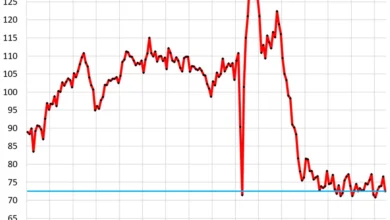
In recent years, this underlying vulnerability has been exacerbated by a confluence of macroeconomic crises. The sudden cutoff of cheap Russian natural gas following the escalation of the war in Ukraine stripped German manufacturing of its primary competitive advantage: low-cost energy. Simultaneously, the rise of advanced Chinese industrial capacity—particularly in the automotive sector, green technology, and machinery—has directly challenged the crown jewels of German engineering.
As Chinese firms move up the value chain, producing high-quality electric vehicles and industrial equipment at scale, traditional German exporters are facing unprecedented margin compression. Factories in states like Saxony-Anhalt, which often serve as suppliers or secondary manufacturing hubs for larger conglomerates, feel the pinch immediately. When the factory floor stumbles, the social contract frays, leaving fertile ground for populist and nationalist political movements that promise radical systemic disruption.
Chronology of the Crisis
The events leading up to the September 6 electoral watershed reflect a steady escalation of political polarization and economic distress in eastern Germany:
- 2021 State Elections: The CDU secures a dominant 37.1% of the vote in Saxony-Anhalt, forming a stable regional government while the AfD lingers as a potent but contained opposition force with roughly 21% support.
- 2022–2023 Energy Crunch: The European energy crisis peaks, forcing German heavy industry to absorb soaring input costs. Inflation spikes, eroding household purchasing power across eastern Germany.
- 2024–2025 Global Market Shifts: Chinese EV manufacturers and industrial tech firms capture significant global market share, squeezing German export volumes. Regional unemployment ticks upward in select industrial districts.
- Early 2026: Chancellor Friedrich Merz’s federal administration implements sweeping economic stabilization packages, but critics argue the relief measures arrive too slowly and fail to target structural regional disparities.
- September 6, 2026: Voters head to the polls in Saxony-Anhalt. The AfD surges to 43.8%, nearly securing an absolute majority, while the governing CDU collapses to 17.2%.
Supporting Data and Economic Realities
The political discontent reflected in the Saxony-Anhalt ballot boxes is anchored in hard economic data compiled by federal statistical agencies and economic research institutes:
- Export Exposure: Germany’s manufacturing sector accounts for roughly 20% of its total economic output, significantly higher than the average for most G7 economies. This high exposure makes the nation uniquely vulnerable to global trade friction.
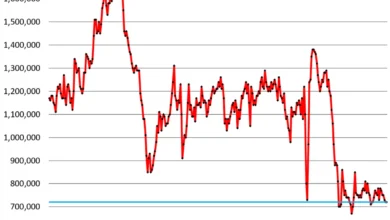
- Automotive Transformation: The German automotive industry, which employs nearly 800,000 workers directly, has seen its domestic profit margins narrow by an estimated 15% over the past three years due to stiff competition from Asian EV producers.
- Regional Disparities: Average disposable incomes in eastern German states remain approximately 15% to 20% below the national average, creating a persistent perception of second-class economic citizenship among rural and semi-urban populations.
- Voter Turnout Dynamics: Turnout in the Saxony-Anhalt election rose by 7.4 percentage points compared to 2021, indicating that disaffected non-voters mobilized heavily in favor of the radical opposition.
Official Responses and Political Repercussions
The response from federal leaders in Berlin was swift, marked by deep concern and urgent calls for self-reflection within the democratic parties.
Speaking at an emergency press conference in the federal capital, Chancellor Friedrich Merz acknowledged the severity of the electoral rebuke. "The message sent by the voters of Saxony-Anhalt is unambiguous and demands our immediate, unvarnished attention," Merz stated. "We cannot dismiss this as a mere protest vote. It is a profound cry for economic security, social stability, and a restoration of confidence in our national trajectory. My government is fully committed to accelerating our industrial modernization strategy and ensuring that no region of our country is left behind in the global transition."
Meanwhile, leaders of the opposition AfD hailed the result as a historic mandate for change. Co-leader Alice Weidel proclaimed that the vote signaled the end of the old political consensus in Germany. "The citizens of Saxony-Anhalt have decisively rejected the failing economic policies of Berlin," Weidel told cheering supporters in Magdeburg. "This is proof that the electorate wants a sovereign economic policy that prioritizes German workers, lowers energy taxes, and ends counterproductive regulatory overreach."
Centrist and center-left parties, including the Social Democratic Party (SPD) and the Greens, echoed the need for cross-party consensus on industrial policy, warning that the normalization of far-right strength threatens Germany’s democratic institutions and its standing within the European Union.
Broader Impact and Future Implications
The implications of the Saxony-Anhalt election extend far beyond regional governance, posing strategic dilemmas for the entire Federal Republic of Germany and, by extension, the European Union.
Economically, the vote intensifies pressure on Berlin to rethink its industrial strategy. Policymakers are increasingly divided between those who advocate for protectionist measures—such as tariffs on Chinese green tech and electric vehicles—and those who fear a trade war that could devastate Germany’s export-driven business model. Balancing the need to protect domestic manufacturing with the preservation of open global trade markets remains the central policy trilemma facing Chancellor Merz’s administration.
Politically, the near-majority achievement of the AfD in a major German state shatters long-standing taboos surrounding political coalition-building. While mainstream parties have maintained a strict Brandmauer (firewall) refusing to cooperate with the far-right, the sheer mathematical weight of the AfD’s legislative presence complicates the formation of stable regional governments, potentially leading to prolonged political gridlock.
As Germany approaches subsequent regional contests and looks ahead to federal electoral cycles, the events in Saxony-Anhalt serve as a stark reminder. The stability of Europe’s largest economy is no longer guaranteed by the inertia of its past success. Unless policymakers can successfully reinvent the postwar social contract to meet the realities of twenty-first-century global competition, the tremors felt in Munich and Berlin will continue to reshape the political landscape of the heart of Europe.