Build Alpha Announces Major Software Release Integrating LLM Orchestration and Advanced Quantitative Research Pipelines

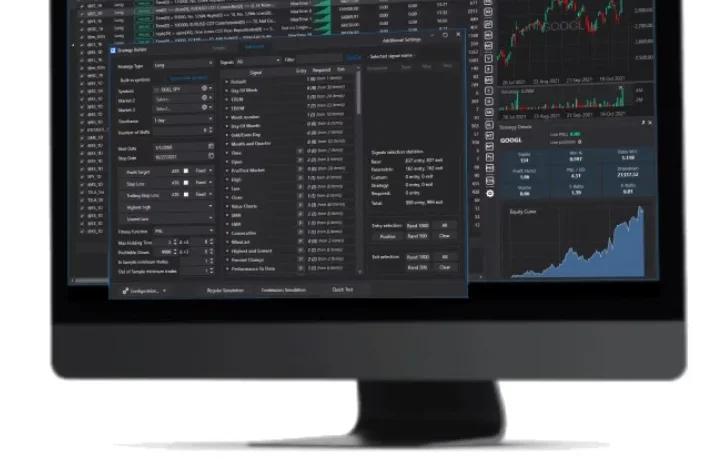
Quantitative trading platform Build Alpha has officially rolled out one of the most comprehensive software updates in its history, marking a decisive shift toward full-pipeline research automation. The latest release introduces four cornerstone capabilities—LLM Orchestration, Sequence Workflows, Portfolio Search, and an upgraded Portfolio Suggest v2—alongside specialized event-aware signals, enhanced workflow controls, and expanded global symbol support.
By combining traditional genetic algorithms with modern large language models (LLMs) and institutional-grade portfolio optimization mechanics, the platform aims to bridge the historical capability gap between independent quantitative developers and institutional trading desks.
The Evolution of Systematic Strategy Development
For decades, retail and independent quantitative traders have faced a persistent bottleneck: the manual labor of hyperparameter tuning, filtering, and cross-validating market strategies. While institutional firms deploy dedicated research teams and high-performance computing clusters to automate these iterative cycles, individual researchers have traditionally relied on fragmented point-and-click tools.
Build Alpha’s latest update seeks to democratize this infrastructure. The platform’s architecture now allows quantitative researchers to configure an entire multi-round research pipeline, hand over meta-level optimization to an AI model, and optimize candidate strategies based on marginal portfolio contributions rather than isolated backtest metrics.
LLM Orchestration: Autonomous Strategy Research
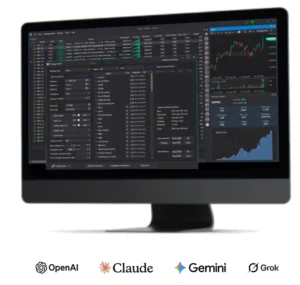
At the center of the release is the LLM Orchestrator, an optional feature that connects Build Alpha directly to major artificial intelligence providers including OpenAI’s ChatGPT, Anthropic’s Claude, Google’s Gemini, xAI’s Grok, DeepSeek, Mistral, and Perplexity. Any OpenAI-compatible model, including those routed through Open Router, can be integrated using the user’s API credentials.
Rather than running code at runtime, the LLM functions as a meta-level researcher. Users establish strict search constraints—such as target fitness functions, risk robustness gates, and maximum drawdowns—and enable AutoTune. Between simulation rounds, the LLM reviews performance telemetry, detects performance plateaus, dynamically adjusts hyperparameters, and can even write and test custom trading signals mid-session. Furthermore, persistent memory across sessions allows the orchestration model to retain lessons learned from past simulations, theoretically compounding its effectiveness over weeks and months of research.
For institutions and risk-averse developers concerned about data privacy and algorithmic black boxes, Build Alpha has ensured the feature remains entirely optional. Disabling AutoTune reverts the software to its traditional built-in genetic algorithms, and every decision made by the orchestrator is logged in a comprehensive, auditable reasoning report.
Sequence Workflows and Multi-Round Pipelines
Complementing the AI integration, Sequence Workflows introduce multi-round automated research pipelines designed to replace tedious manual multi-step testing. Historically, a robust quantitative research protocol might involve a broad search over ten years of historical data, followed by a localized optimization over the past three years, a walk-forward validation round, and a stringent Monte Carlo Permutation filter.
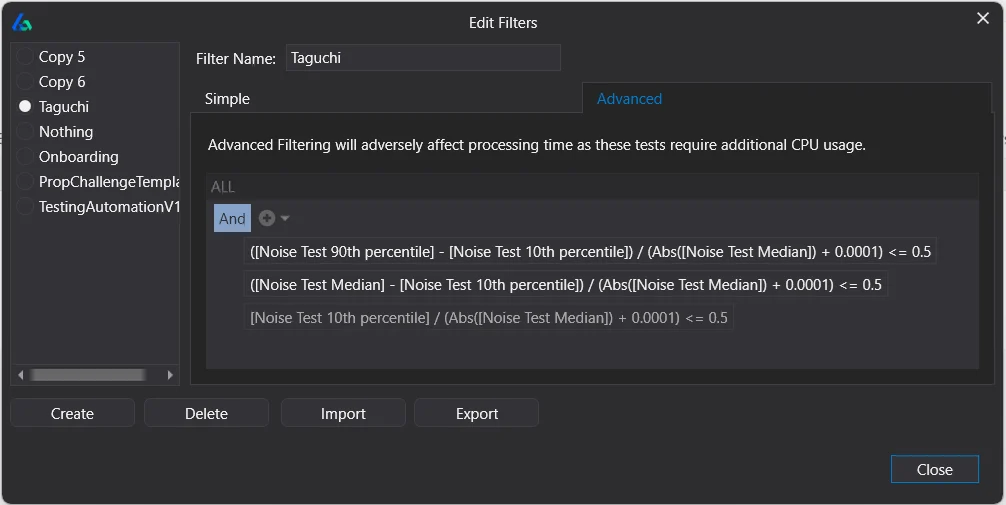
Sequence Workflows allow developers to program this entire sequence into a single automated session. Each round operates independently with custom date ranges, simple performance thresholds (such as minimum trade counts and profit factors), advanced robustness gates, and specific advancement criteria. For instance, a researcher can configure a pipeline to advance to the next phase once 20 valid strategies are identified or a six-hour time limit is reached, halting the process entirely if performance criteria are unmet. This minimizes human intervention and ensures consistent, standardized application of risk filters.
Institutional-Grade Portfolio Optimization
Addressing the fragility of isolated single-strategy backtests, Build Alpha has overhauled its portfolio construction capabilities through Portfolio Search and an upgraded Portfolio Suggest v2.
Traditional systematic development often focuses on generating attractive standalone equity curves, assuming that combining high-performing strategies will inherently yield a robust portfolio. In practice, standalone strategies frequently duplicate market exposures, magnifying drawdowns during systemic shocks. Portfolio Search fundamentally alters this dynamic by evaluating candidate strategies based on their marginal contribution to an existing basket. By prioritizing low correlation and smooth aggregate equity curves, the genetic algorithm routinely surfaces "ugly" standalone strategies—such as alternative futures or specialized volatility spreads—that provide optimal diversification when combined with a broader book.
Concurrently, Portfolio Suggest v2 provides granular control for traders managing pre-existing strategy pools. The updated interface incorporates advanced correlation limits, portfolio-level performance filters, and a specialized compliance toggle enforcing a "one-position-per-symbol" constraint. This particular addition caters directly to traders navigating strict proprietary trading firm rules. Additionally, the expanded results view features detailed weighting and sizing columns, allowing users to inspect the precise capital allocation of underlying strategy baskets with a single click.
Expanded Signal Libraries and Prompt-to-Signal Integration
To facilitate the creation of complex intraday and event-driven models, the software introduces three new event-aware signal classes:
- EventPriceCustom: Stores reference metrics (such as opening prices or indicator values) triggered by specific market conditions, enabling comparisons across extended time horizons.
- EventVWAP: Calculates volume-weighted average prices anchored to customized events rather than standard session boundaries.
- CountSinceEvent: Quantifies the frequency of specific market actions relative to antecedent events, capturing behavioral market characteristics essential for mean-reversion strategies.
Additionally, Build Alpha has rolled out a preview of its Prompt to Signal tool within the Custom Indicators Editor. Developers can describe desired technical setups in plain English—such as identifying volatility compression zones preceding breakouts—and the integrated AI assistant translates these requests into syntactically correct code. These custom signals integrate natively into Build Alpha’s validation pipeline and export cleanly to major execution platforms including NinjaTrader, TradeStation, MetaTrader (MQL4/MQL5), TradingView (Pine Script), Python, and MultiCharts.
Workflow Enhancements and Future Roadmap
The release also incorporates several targeted workflow refinements requested by the user community. Key additions include "Re-run Active Strategies" for one-click forward testing, post-simulation filtering to adjust robustness gates retroactively without re-running computations, expanded CFD support within the custom symbol editor, and bulk parameter editing tools.
Looking ahead, Build Alpha leadership has confirmed that the next major software iteration will introduce a native live execution layer featuring streaming profit-and-loss tracking and real-time position management. By tightening the feedback loop between automated research, code export, and live deployment, Build Alpha continues to position itself as a comprehensive operating system for modern quantitative trading operations.