Build Alpha Unveils Monumental Software Update Integrating LLM Orchestration and Advanced Quantitative Research Pipelines

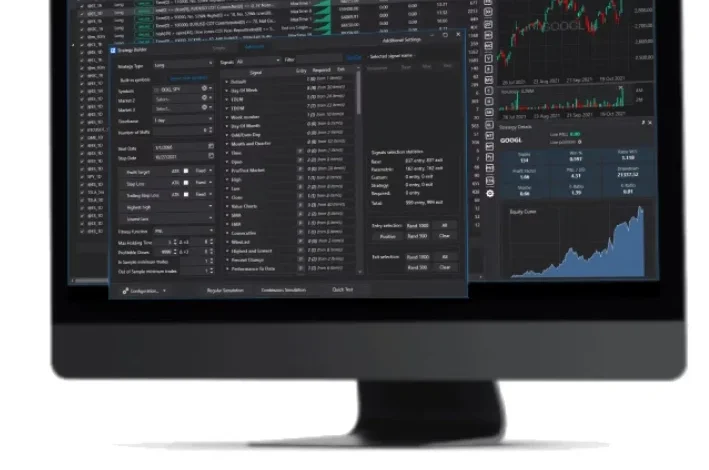
The quantitative finance industry has long been bifurcated between elite institutional trading desks leveraging proprietary artificial intelligence and independent developers constrained by manual workflows. That structural gap narrowed significantly with the deployment of one of Build Alpha’s most comprehensive software releases to date. The update introduces four cornerstone modules—LLM Orchestration, Sequence Workflows, Portfolio Search, and an upgraded Portfolio Suggest v2—transforming the platform from a standalone strategy generator into an end-to-end quantitative research ecosystem. Developed under the direction of founder and former high-frequency market maker David Bergstrom, these features allow independent traders to automate complex research loops, integrate machine learning at a meta-level, and execute institutional-grade portfolio construction within a single session.
Background and Context of the Platform Evolution
For over a decade, systematic retail and boutique quantitative trading suffered from a high operational bottleneck. While backtesting engines could generate individual alpha streams efficiently, optimizing hyperparameter settings, managing multi-round robustness tests, and constructing non-correlated multi-strategy portfolios required constant human intervention. Traders typically spent hours analyzing equity curves, manually adjusting volatility filters, and sifting through thousands of iterations to ensure strategies would not fail out-of-sample.
Build Alpha’s latest release directly addresses these limitations by automating the meta-decision-making process. By embedding application programming interface (API) connectivity for major large language models—including OpenAI’s ChatGPT, Anthropic’s Claude, Google’s Gemini, xAI’s Grok, DeepSeek, Mistral, and Perplexity, alongside any OpenRouter-compatible model—the software enables artificial intelligence to oversee strategy evolution dynamically.
LLM Orchestration: Autonomous Strategy Development
At the center of the release is the LLM Orchestrator, an optional, highly configurable module that bridges generative AI with genetic optimization algorithms. Traditionally, a genetic algorithm searches strictly within predefined parameters ("inside the box"). The LLM Orchestrator effectively decides the boundaries of that box.
When AutoTune is enabled, the large language model analyzes the output of Build Alpha’s current genetic algorithm run. It detects performance plateaus, evaluates fitness functions, and determines whether the search is operating in a productive region of the parameter space. Between optimization rounds, the AI adjusts hyperparameters, modifies search constraints, and can even author brand-new custom signal definitions mid-session. These newly minted signals are then handed directly to the genetic algorithm for evaluation alongside the platform’s native technical indicator library.
Crucially, the system maintains persistent memory across sessions. As a trader runs simulations over days, weeks, or months, the orchestrator retains context, improving its decision-making patterns based on historical performance. For auditability, every decision, hyperparameter adjustment, and piece of reasoning made by the model is logged into a comprehensive post-run AI reasoning report. For privacy and security, the feature operates on a "bring your own key" basis, meaning Build Alpha executes direct API calls via user credentials without intermediaries or data markups.
Sequence Workflows: Automating Multi-Round Research
Complementing the AI orchestrator are Sequence Workflows, which automate multi-stage quantitative testing pipelines. Historically, a robust research methodology required manual execution of sequential filters: running a broad optimization across a 10-year historical dataset, narrowing the parameter set to the past three years, applying a walk-forward validation matrix, and filtering results through Monte Carlo Permutation tests.
Sequence Workflows consolidate this entire pipeline into a single, automated script. Each round within a sequence can be assigned distinct date ranges, simple performance metrics (such as net profit and maximum drawdown thresholds), advanced robustness gates, and strict advancement criteria. Users can configure compounding rules, such as advancing to the next round when 20 viable strategies are discovered or when a six-hour time limit is reached, while automatically terminating the sequence if minimum performance standards are not met. This ensures researchers wake up to a curated list of strategies that have survived rigorous multi-tier stress testing, or a definitive validation failure, saving countless hours of manual data processing.
Portfolio Search and Portfolio Suggest v2: Marginal Contribution Analysis
Portfolio construction represents another major leap forward in the new release. Traditional retail strategy development often focuses on optimizing individual strategies in isolation, selecting the smoothest equity curves, and combining them afterward—an approach that frequently leads to hidden factor concentration and high cross-strategy correlation.
Build Alpha introduces two distinct tools to resolve this issue: Portfolio Search and Portfolio Suggest v2.
Portfolio Search fundamentally alters the objective function of the genetic algorithm. Instead of evaluating candidate strategies solely on their standalone backtests, the engine searches explicitly for strategies that complement an existing baseline portfolio. By prioritizing low correlation, smooth aggregate equity curves, and marginal contribution, the algorithm frequently selects candidate strategies that look unappealing in isolation—such as niche futures strategies that earn profits during broad market drawdowns—because they fill structural gaps within the broader basket.
Meanwhile, Portfolio Suggest v2 addresses the secondary challenge of organizing pre-existing strategy pools. Equipped with an advanced filter panel, v2 allows traders to establish hard correlation limits, performance thresholds, and a mandatory "one-position-per-symbol" toggle designed specifically to satisfy strict prop firm compliance rules. The results interface now features a dedicated weight and allocation column, enabling users to expand basket rows to inspect individual asset sizing without navigating away from the main view.
Event-Aware Signals and Prompt-to-Signal Integration
To expand the expressive capability of the strategy generator, the update introduces three specialized event-aware signals:
- EventPriceCustom: Stores reference prices, indicators, or calculations triggered by specific historical conditions, allowing current price comparisons across delayed time horizons.
- EventVWAP: Anchors volume-weighted average price calculations to custom operational events—such as volatility regime shifts or indicator crossovers—rather than standard session boundaries.
- CountSinceEvent: Quantifies the frequency of discrete market occurrences relative to anchor events, serving as a powerful building block for advanced mean-reversion models.
Additionally, Build Alpha has rolled out a preview of its Prompt to Signal feature. Integrated directly into the Custom Indicators Editor, this tool allows users to describe desired signal logic in plain conversational English. The integrated AI translates the prompt into syntactically correct code that seamlessly compiles with Build Alpha’s multi-platform code generators. Consequently, newly generated signals export natively and without modification to external execution environments, including NinjaTrader, TradeStation, MultiCharts, MetaTrader (MQL4/MQL5), TradingView Pine Script, ProRealCode, and Python.
Workflow Enhancements, Code Export, and Future Outlook
To maximize operational efficiency, the software update incorporates several highly requested workflow controls. These include "Require One From Group," which forces the strategy composer to select specific technical indicators from designated categories to ensure structural diversification; "Require Exits," which mandates specific exit logic for prop firm risk management; and bulk parameter editing tools that allow simultaneous range adjustments across large signal groups. Furthermore, post-simulation filtering enables traders to apply retroactive performance gates without re-running underlying models.
Looking ahead, Build Alpha leadership has signaled that the next major development phase will introduce a native live execution layer featuring streaming profit-and-loss tracking and real-time position management. By bridging advanced AI-driven research pipelines with direct execution capabilities, the platform continues to narrow the operational divide between independent quantitative developers and institutional trading desks.