Kroger outlines its vision for a frictionless shopping experience powered by artificial intelligence at Groceryshop 2024

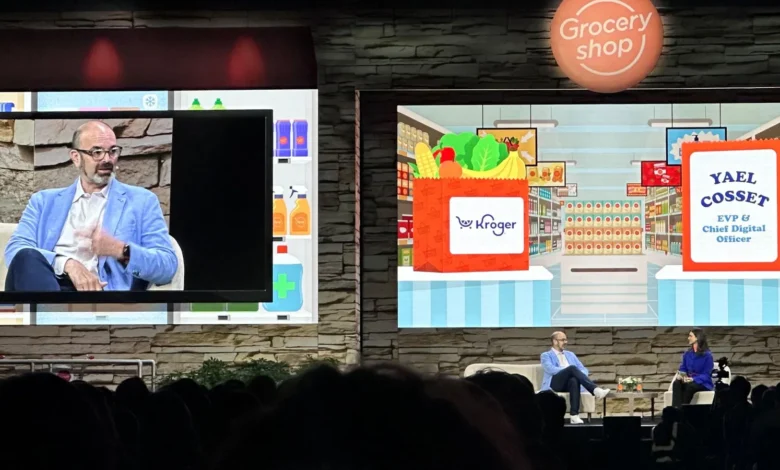
The retail landscape is undergoing a profound transformation as major players pivot toward artificial intelligence to bridge the gap between digital convenience and the tactile reality of brick-and-mortar grocery shopping. At the Groceryshop conference in Las Vegas this week, Yael Cossett, Executive Vice President and Chief Digital Officer at Kroger, articulated a strategic roadmap that places AI at the center of the customer experience, focusing specifically on eliminating the "friction" that has historically divided online and in-store operations.
For Kroger, the industry’s second-largest retailer by revenue, the objective is clear: leverage two decades of proprietary data science to create a seamless ecosystem where technology operates in the background, allowing the human element of food shopping to remain the primary focus.
The Strategic Shift Toward Frictionless Retail
Kroger’s approach to AI is rooted in the philosophy that technology should not be an intrusive barrier but an invisible enabler. According to Cossett, the burden currently placed on consumers—who are often forced to toggle between different mental frameworks depending on whether they are using a mobile app or walking through a physical aisle—is a primary target for elimination.
"It’s on us to remove that friction, the burden of having to think differently about how shoppers engage with us," Cossett explained during his keynote. "And that’s where I think AI really is transformational."
The transition toward this model is not merely a branding exercise but a massive operational undertaking. Kroger is currently layering AI models atop its established "operational backbone," a term the company uses to describe the digital infrastructure it has spent the last decade building. This involves integrating consumer-facing shopping assistants with backend supply chain, inventory management, and merchandising systems. By unifying these data silos, Kroger aims to create a hyper-personalized loop where demand signals from an AI-powered search query are instantly translated into supply chain adjustments.
A Chronology of Kroger’s AI Integration
Kroger’s journey into advanced AI did not begin with the recent generative AI boom; it is the culmination of twenty years of data investment. However, the pace of implementation has accelerated significantly in the last twenty-four months:
- Early 2024: Kroger officially launched an internal AI assistant designed to streamline tasks for its employees, providing staff with instant access to operational data and training materials. This move was intended to reduce administrative overhead and allow store associates to spend more time on the sales floor.
- Mid-2024: The company expanded its AI footprint by unveiling a consumer-facing AI shopping assistant. This tool was designed to assist with meal planning, recipe inspiration, and product discovery, effectively acting as a digital concierge for the average household shopper.
- Late 2024 (Groceryshop): Executives confirmed that the next phase of deployment will focus on "multimodal" integration, where the AI assistant will begin to account for real-time inventory levels and local store logistics, moving beyond mere recommendations to actionable, store-specific fulfillment.
Leveraging Data Science as a Competitive Moat
The foundation of Kroger’s strategy lies in its proprietary first-party data. Unlike competitors who may rely on third-party aggregators or off-the-shelf AI models, Kroger is prioritizing the development of proprietary models trained on its own customer data.
Cossett noted that while the company is eager to leverage "frontier models"—the massive, high-compute models developed by firms like Google or OpenAI—it does so with a layer of proprietary control. "We want to make sure we build proprietary models on top of our proprietary data while also partnering and leveraging frontier models," he said. This hybrid approach ensures that the customer experience remains grounded in Kroger’s specific knowledge of consumer habits, preferences, and price sensitivities.
The sheer scale of this data is substantial. With millions of loyalty card holders and decades of transaction history, Kroger possesses one of the most comprehensive consumer datasets in the retail sector. By applying generative AI to this data, the company can synthesize millions of signals to predict consumer needs, optimize shelf space, and reduce food waste—a critical metric in the thin-margin grocery business.
Dispelling Myths: The Generational Appeal of AI
One of the most significant insights to emerge from the rollout of Kroger’s consumer-facing AI assistant concerns the demographic adoption of the technology. Internal metrics from the recent launch challenged the long-held assumption that AI in retail is a tool exclusively for younger, tech-savvy demographics.
Cossett reported that the utility of the AI assistant has proven to be universal. Customers across various age brackets have embraced the tool, particularly for its ability to simplify meal planning. Furthermore, the company discovered a counterintuitive trend: the use of AI actually increased the breadth of product discovery.
"Because we’ve simplified a point of friction, it’s given time and confidence to the customer to branch out beyond that specific purpose," Cossett explained. Rather than narrowing the shopping cart to a repetitive list of staples, the AI recommendations provided customers with the confidence to explore new products or ingredients, effectively expanding the basket size and diversifying the categories in which they shop.
Ethical Considerations and the Future of Trust
As retailers rush to adopt generative AI, they face significant headwinds regarding consumer privacy and the emotional nature of grocery shopping. Kroger appears to be navigating this by setting clear boundaries. During his presentation, Cossett explicitly addressed the temptation to automate everything, noting that he does not believe grocers should push for fully automated, algorithmic refills.
"I think there is still a significant level of emotional connection between the customer and what they are doing for meals for their family," he argued. For many shoppers, the selection of fresh produce, proteins, and ingredients for a family dinner is a deliberate, personal choice rather than a chore to be outsourced to an algorithm. Kroger’s strategy, therefore, is to provide the intelligence to support the decision, rather than making the decision for the consumer.
This focus on trust is a vital component of the company’s long-term strategy. As AI becomes more integrated, the potential for "black box" recommendations that ignore customer preferences could lead to distrust. By keeping the consumer in the loop and ensuring that AI serves as a tool rather than a replacement for personal choice, Kroger hopes to maintain the loyalty it has cultivated over the last century.
Broader Industry Implications
The implications of Kroger’s strategy are significant for the broader retail industry. Other major players, including Walmart and Ahold Delhaize, are similarly investing heavily in AI. However, the race is no longer just about who has the best algorithm, but who has the most integrated data architecture.
Analysts note that retailers who fail to harmonize their digital and physical operations through AI risk losing relevance as the lines between e-commerce and in-store shopping continue to blur. The "omnichannel" promise of the last decade is now becoming an "omnipresent" reality, where the customer expects a seamless transition regardless of the channel.
Moreover, the financial pressure to adopt these technologies is mounting. Investors are increasingly looking at AI as a key lever for margin expansion. By using AI to optimize labor allocation and reduce supply chain waste, companies like Kroger are finding ways to reinvest savings into lower prices or improved services, creating a virtuous cycle that benefits both the shareholder and the consumer.
Looking Ahead: The Next Phase of AI Integration
As Kroger moves forward, the focus will likely shift toward hyper-localized, real-time personalization. This could include dynamic pricing based on inventory freshness, predictive replenishment alerts that respect the user’s autonomy, and enhanced in-store navigation that guides shoppers to their preferred items based on their unique, AI-curated shopping list.
While the pace of technological change remains rapid, the fundamental goal for the retailer remains unchanged: to serve the customer in a way that is increasingly personalized, efficient, and, most importantly, human-centric. As Cossett emphasized, the future of the grocery store is not a fully automated warehouse, but a smarter, more responsive partner in the daily lives of its customers. Through its commitment to proprietary data, strategic partnerships, and a cautious approach to automation, Kroger is positioning itself to lead this evolution in the modern grocery experience.