Utah Escalates Crackdown on Prediction Markets with 14 Criminal Charges Against Kalshi and Co-Founders

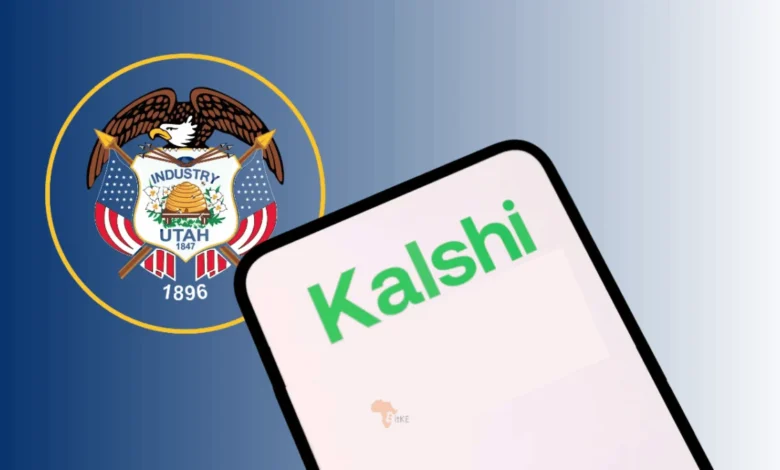
The state of Utah has dramatically escalated its regulatory and legal confrontation with the booming prediction market sector by filing 14 criminal charges against Kalshi and its co-founders. This aggressive maneuver compounds existing legal pressures, exposing the prominent prediction market operator and its executive leadership to a dual threat of severe civil penalties and criminal prosecution. The charges stem from allegations that the platform flagrantly disregarded state gambling statutes by continuing to offer sports and event-based contracts to local residents, even after a federal court ruled in favor of state-level enforcement capabilities.
The criminal information filed by Utah prosecutors marks a pivotal shift in a rapidly intensifying nationwide battle over who holds jurisdictional authority over modern financial prediction markets. While Kalshi has consistently positioned its offerings as federally regulated financial derivatives, state-level regulators across the United States increasingly view these platforms as digital sportsbooks operating without state licenses. With potential millions in profit disgorgement on the line alongside the prospect of criminal fines and individual liability for executives, the unfolding legal drama in Utah serves as a bellwether for the entire prediction market industry, including crypto-native competitors like Polymarket.
The Investigation and Undercover Operations
The foundation of Utah’s criminal case relies heavily on investigative work conducted by the Utah Attorney General’s Office. According to court filings, an undercover investigator successfully bypassed geographic restrictions to access Kalshi’s platform in September 2026. Utilizing standard digital tools, the operative navigated the interface and placed 12 distinct sports wagers.
State prosecutors argue that these transactions provide undeniable, empirical proof that Kalshi is not merely passive technology infrastructure, but an active participant in promoting illegal gambling within Utah’s territorial borders. By permitting the undercover agent to complete sports-related contracts, the platform allegedly violated state prohibitions against unauthorized gaming operations. This evidence forms the backbone of the 14 criminal counts levied against the corporate entity and its co-founders, transforming what was once a purely regulatory disagreement into a high-stakes criminal proceeding.
Civil Lawsuits and Multi-Million Dollar Disgorgement Demands
The newly filed criminal charges do not exist in a vacuum; they run parallel to an aggressive civil lawsuit previously initiated by the state of Utah. In that civil action, the state is seeking comprehensive injunctive relief to permanently bar Kalshi from offering contracts tied to sports, political elections, and other societal events within its jurisdiction. Furthermore, Utah is aggressively pursuing the disgorgement of profits allegedly amassed from local users.
State financial analysts have estimated the gross profits generated by Kalshi from Utah-based participants to range between $30 million and $60 million. If successful, the civil penalties, coupled with asset forfeiture or profit disgorgement, would deal a severe financial blow to the company. The combination of civil monetary demands and criminal exposure creates a high-pressure environment designed to compel compliance or force prediction markets to completely block users from dissenting states.
A Chronology of Regulatory Friction
The collision course between state regulators and prediction market operators has been developing over several years, characterized by a complex timeline of conflicting judicial rulings and federal interventions:
- Initial Market Expansion: Kalshi gained widespread traction by securing regulatory clearance from the Commodity Futures Trading Commission (CFTC) to list event contracts, positioning itself as a federally regulated designated contract market (DCM).
- State Pushback Begins: As election and sports contracts gained massive popularity, state gaming commissions in jurisdictions such as Utah, Nevada, Arizona, and Massachusetts began issuing cease-and-desist orders, arguing that event contracts on sports mirror traditional sports betting.
- Judicial Rulings on State Authority: Courts increasingly began backing state regulators. Notably, a U.S. court issued a ruling affirming that states retain the constitutional and statutory authority to enforce local gambling laws against sports-related prediction contracts, dealing a major legal setback to Kalshi’s overarching defense strategy.
- Emergency CFTC Invocations: Amid escalating multi-state litigation—including high-profile legal actions initiated by New York against Coinbase, Gemini, and Polymarket—the CFTC invoked emergency powers to support continued market operations, setting up a direct jurisdictional conflict between federal commodities regulators and state attorneys general.
- The Utah Undercover Operation (September 2026): State investigators successfully executed test transactions on Kalshi’s platform, documenting active wagers placed from Utah IP addresses despite pending litigation and court rulings upholding state bans.
- Criminal Indictment (Late 2026): Utah formally filed 14 criminal charges against Kalshi and its co-founders, escalating the dispute from administrative and civil penalties into the realm of criminal law.
The Federal versus State Jurisdictional Tug-of-War

At the core of this legal imbroglio is a profound constitutional and statutory conflict regarding regulatory supremacy. Kalshi maintains that its event contracts fall squarely under the exclusive oversight of the Commodity Futures Trading Commission as financial derivatives. Under this legal theory, federal law preempts state-level gambling restrictions, rendering local enforcement efforts invalid.
Supporting this perspective, the CFTC has previously intervened in related litigation, even filing legal actions against Utah to assert that federal commodities law supersedes state gambling statutes for designated contract markets. The federal agency argues that fragmenting national financial markets through a patchwork of individual state regulations undermines the integrity and uniformity of the U.S. derivatives framework.
Conversely, state attorneys general and gaming control boards argue that "gambling by another name is still gambling." They contend that regardless of whether a contract is structured as a financial derivative or a binary option, the substance of wagering money on the outcome of a sporting event or political election constitutes sports betting or unauthorized gaming. Under the Tenth Amendment and traditional police powers, states claim absolute authority to protect their citizens from unregulated gambling operations.
Broader Industry Implications and National Spillover
The legal onslaught against Kalshi is part of a broader, coordinated wave of regulatory hostility facing the alternative betting and prediction market ecosystem. New York has aggressively pursued legal actions against Polymarket, Coinbase, and Gemini over prediction market offerings, characterizing them as unlawful operations that bypass consumer protection and anti-money laundering safeguards native to licensed sportsbooks.
The implications of Utah’s criminal charges extend far beyond the state’s borders. If state prosecutors successfully convict Kalshi executives or secure precedent-setting penalties, it could trigger a domino effect across the United States. Other states with strict anti-gambling statutes may feel emboldened to pursue their own criminal indictments against platform operators and corporate officers.
Such a decentralized enforcement landscape would fundamentally alter the business model of prediction markets. Platforms would be forced to implement hyper-restrictive geofencing technologies or completely withdraw from non-compliant jurisdictions. Conversely, a definitive federal victory affirming CFTC supremacy could strip states of their enforcement powers, solidifying prediction markets as federally regulated financial exchanges.
Official Responses and Defense Strategies
In response to the 14 criminal charges, representatives for Kalshi have vocally rejected the state’s legal theories, characterizing the criminal indictment as an unprecedented act of regulatory overreach. The company has asserted that it operates in full compliance with federal law and under the oversight of its primary federal regulator, the CFTC. Kalshi legal teams have vowed to mount a robust defense in court to challenge the legitimacy of the state charges and protect the company’s executive leadership from personal liability.
Legal analysts note that the defense will likely center on federal preemption doctrines and the argument that state prosecutors are misapplying traditional gambling statutes to modern financial instruments authorized by federal statute. However, the willingness of Utah to utilize undercover sting operations and pursue criminal indictments signals that state authorities are no longer content with mere civil settlements.
Conclusion
The filing of 14 criminal charges against Kalshi and its co-founders by the state of Utah represents a critical watershed moment in the evolution of modern prediction markets. As the industry sits at the perilous intersection of federal commodities regulation and state-level police powers, the outcome of this legal battle will reverberate throughout the financial technology and digital asset sectors. Whether prediction markets can survive as unified national exchanges or will be fractured by a hostile mosaic of state criminal laws remains one of the defining regulatory questions of the decade.
Related posts: