The Japanese Yen Tumbles to a Four-Decade Low as Yield Differentials and Energy Shocks Ignite Sell-Off

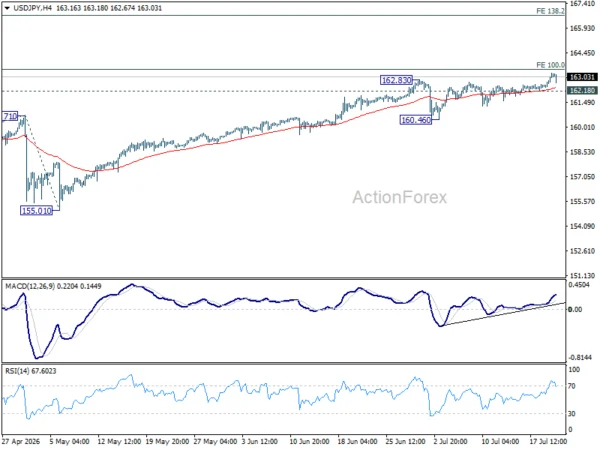
The Japanese Yen has plunged to its lowest level in over four decades today, with the USD/JPY trading pair breaching the critical 163 mark. This significant depreciation is driven by a sustained unwinding of Yen positions by investors, a trend exacerbated by widening global yield differentials and a surge in energy prices. The Yen’s dramatic fall has once again placed Japan’s currency policy under intense scrutiny, reigniting debates about the potential for authorities to intervene in the market to stem the decline. However, current market sentiment suggests a degree of skepticism regarding the imminence of such intervention.
While Japan possesses a historical precedent for intervening during periods of disorderly currency movements, officials have generally adopted a cautious approach when faced with strong market trends and deep liquidity conditions. In such environments, intervention tends to be more costly and less effective. Consequently, traders are now focusing on a more fundamental question: whether Tokyo possesses any policy tools capable of addressing the Yen’s underlying structural weakness, beyond merely attempting to decelerate its depreciation. This question gains particular relevance as the Bank of Japan (BoJ) approaches its July 31 policy meeting. Although threats of intervention may continue to provoke short-term volatility, the more significant concern for markets is the extent to which monetary policy, fiscal policy, and global interest-rate dynamics have left Japan with a limited array of effective policy options.
Intervention Threats: A Fading Deterrent?
Japanese authorities were swift to acknowledge the Yen’s latest downward spiral. Following the USD/JPY’s ascent past 163 overnight, Finance Minister Satsuki Katayama reiterated the government’s long-standing warning, stating that the authorities’ stance "has not changed at all" and that they are prepared to "take decisive action appropriately at any time" if necessary. Chief Cabinet Secretary Minoru Kihara echoed this sentiment, emphasizing the government’s readiness to "respond as appropriate at any time." Despite these pronouncements, the market reaction was notably subdued. Traders largely disregarded the verbal interventions, underscoring the diminishing impact of such warnings after their repeated deployment over the past several years.
The silence from Atsushi Mimura, the senior currency diplomat widely regarded by markets as holding significant influence over intervention timing, was perhaps equally telling. His decision to refrain from public commentary offered investors little concrete reason to anticipate immediate intervention. While Japanese authorities have demonstrated a willingness to act during periods of excessive currency volatility, they have also historically favored intervening when market liquidity is thinner, thereby maximizing the impact of their actions with less financial firepower.
This consideration is particularly pertinent this week. With global markets operating at full capacity and liquidity robust through the mid-week, any attempt to counter a yield-driven dollar rally would likely prove both expensive and transient. Instead of directly challenging the prevailing trend, Tokyo may opt to preserve the element of surprise, relying on verbal warnings to discourage speculative Yen selling. However, these warnings have so far largely fallen on deaf ears, with investors increasingly convinced that intervention, at best, can only slow the Yen’s decline rather than engineer a reversal.
BoJ Rate Hike Speculation: A Temporary Reprieve?
A brief period of relief for the Yen emerged following a Bloomberg report indicating that Bank of Japan officials were open to the possibility of raising interest rates at a faster pace than currently anticipated by economists. This potential shift in stance appears to be driven by growing concerns that the Yen’s persistent weakness is amplifying upside risks to inflation. The report suggested that policymakers are increasingly worried about a weaker Yen exacerbating imported inflation, even though markets overwhelmingly expect the BoJ to maintain its current policy at its July 31 meeting, with any rate hike likely deferred until later in the year.
Whether officially sanctioned or not, such reports could be part of a broader strategy to stabilize the currency ahead of next week’s crucial policy meeting. If direct intervention has become less effective, shaping market expectations through carefully calibrated rhetoric or policy leaks may offer a less costly method of supporting the Yen. By encouraging investors to price in a more hawkish BoJ trajectory, officials could potentially narrow interest rate differentials and trigger bouts of Yen short-covering without depleting foreign exchange reserves.
This possibility makes the coming days critical. Markets will be closely monitoring any further signals from BoJ officials or government sources that policymakers are becoming increasingly uncomfortable with the current exchange rate levels. A consistent stream of hawkish commentary would suggest an attempt by authorities to prepare markets for a more assertive policy stance. Nevertheless, expectations alone can only provide short-term support. Unless the BoJ ultimately implements a significantly more aggressive monetary tightening cycle than currently anticipated by markets, any Yen appreciation driven by rhetoric is likely to prove ephemeral.

Japan’s Policy Conundrum: Deeper Than the Exchange Rate
Even if the Bank of Japan opts for a more aggressive tightening of monetary policy, it remains uncertain whether this would result in a sustained recovery for the Yen. The fundamental issue underlying the Yen’s weakness lies in structural yield differentials, rather than solely in expectations for an additional interest rate hike. With Brent crude oil prices exceeding $94 per barrel, markets are concerned that renewed energy inflation could compel the Federal Reserve and other major central banks to maintain a tighter monetary policy path for an extended period. If overseas interest rates continue to rise in tandem with Japanese rates, the differential that underpins the Yen’s weakness may see only a marginal narrowing.
Simultaneously, the BoJ cannot afford to focus exclusively on the exchange rate. Japan’s government bond market is already exhibiting signs of strain. The yield on 10-year Japanese Government Bonds (JGBs) reached 2.90% earlier this month, its highest level since the late 1990s, before moderating to approximately 2.73%. These rising yields reflect not only inflation concerns tied to higher oil prices but also growing apprehension regarding Prime Minister Sanae Takaichi’s fiscal expansion plans. Investors are demanding higher compensation to hold Japanese government debt as expectations for further monetary tightening collide with concerns over expanding government borrowing.
This presents policymakers with a challenging balancing act. A faster pace of rate hikes could offer some support to the Yen, but it would also risk accelerating the rise in JGB yields, thereby tightening financial conditions and increasing the government’s debt servicing burden. In essence, the BoJ faces a multifaceted policy challenge. It must stabilize a weakening currency while simultaneously avoiding undue stress in a bond market already grappling with yields at multi-decade highs. Under these complex circumstances, even a more hawkish BoJ may struggle to deliver the sustained Yen appreciation that markets are currently hoping for.
Technical Outlook: Bulls Eyeing Further Gains
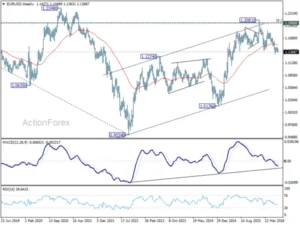
From a technical perspective, the immediate target for USD/JPY is the 100% projection of the move from 152.25 to 160.71, projected from 155.01, which stands at 163.47. A firm break above this level, coupled with sustained trading above the ceiling of the rising channel, could trigger an acceleration of upside momentum, potentially pushing the pair towards the 138.2% projection at 166.70.
On the downside, a break of the minor support at 162.018 would likely lead to further consolidation. However, the near-term outlook is expected to remain bullish as long as the support level at 160.46 holds, even in the event of a significant retracement.
Supporting Data and Context:
- Historical Yen Weakness: The Yen has experienced a protracted period of weakness since the Bank of Japan initiated its ultra-loose monetary policy in the early 2010s under "Abenomics." This policy, characterized by quantitative easing and negative interest rates, was designed to combat deflation and stimulate economic growth.
- Global Yield Differentials: A significant factor driving Yen weakness is the divergence in monetary policy between Japan and other major economies. While the BoJ has maintained its accommodative stance, central banks like the U.S. Federal Reserve have been aggressively raising interest rates to combat inflation. This widening gap in interest rates makes higher-yielding currencies more attractive to investors.
- Energy Price Surge: The global surge in energy prices, particularly crude oil, directly impacts Japan as a major energy importer. Higher energy costs contribute to inflation and widen the trade deficit, further pressuring the Yen. Brent crude trading above $94 a barrel underscores this persistent inflationary pressure.
- Bank of Japan’s Policy Meeting: The upcoming July 31 BoJ policy meeting is a critical juncture. Market participants are scrutinizing every statement and report for clues about potential shifts in monetary policy. The BoJ’s commitment to maintaining its ultra-loose policy has been a key driver of Yen weakness, and any deviation from this path could significantly impact the currency.
- Japanese Government Bond (JGB) Market: The strain on the JGB market, with yields approaching multi-decade highs, highlights the delicate balance policymakers face. Allowing JGB yields to rise too quickly could increase borrowing costs for the government and tighten financial conditions, potentially hindering economic growth.
Implications and Broader Impact:
The continued depreciation of the Yen has significant implications for Japan’s economy and the global financial landscape. For Japanese consumers and businesses, a weaker Yen means higher import costs for goods, energy, and raw materials, contributing to inflationary pressures. Conversely, it can boost the competitiveness of Japanese exports, potentially benefiting manufacturers. However, the rapid and persistent nature of the current decline raises concerns about economic stability.
Globally, a weaker Yen can influence trade flows and investment decisions. It can make Japanese assets appear cheaper to foreign investors, potentially stimulating inbound investment, while also making Japanese exports more attractive internationally. The effectiveness of any potential intervention by Japanese authorities remains a key question, with past attempts having limited success in reversing strong market trends. The current situation underscores a complex interplay of global economic forces and domestic policy constraints that Japan must navigate.