The Strategic Evolution of Financial Independence and Nomadic Family Life Through Long-Term Renting


The paradigm of the American Dream, long defined by the acquisition of a primary residence and the accumulation of fixed assets, is facing a significant challenge from a growing demographic of financially independent individuals who prioritize liquidity and mobility over traditional ownership. Kristy Shen and Bryce Leung, prominent figures in the Financial Independence, Retire Early (FIRE) movement, have recently concluded a three-month nomadic period in Spain with their toddler, reinforcing a lifestyle that many critics argued would be unsustainable following the birth of a child. This development serves as a case study for the "Buy Your Freedom and Rent the Rest" philosophy, suggesting that the flexibility of renting can be strategically applied to family life without compromising stability or financial security.
Chronology of a Financial and Lifestyle Shift
The journey of Shen and Leung began over a decade ago when the pair, then working as engineers in Canada, decided to bypass the traditional path of high-consumption living and homeownership. By maintaining a high savings rate and investing in low-cost index funds, they achieved financial independence in their early thirties. Their public involvement in the FIRE community gained significant momentum in 2015 and 2016, particularly following their participation in the Chautauqua financial forums in Ecuador, hosted by investment author JL Collins.
In 2016, the couple published a seminal thesis on the benefits of renting, arguing that capital tied up in a home’s equity represents a significant opportunity cost. Instead of servicing a mortgage, they chose to invest their capital in the equity markets, using the resulting dividends and capital gains to fund a global nomadic lifestyle. This period was characterized by extensive travel to regions such as Southeast Asia and Europe, living as "DINKs" (Double Income, No Kids).
The transition to parenthood prompted widespread speculation among financial analysts and social media followers that the couple would finally "settle down" and purchase a home. Detractors cited the need for school district stability and the risks of "renoviction"—a process where landlords evict tenants under the guise of renovations to increase rental rates—as insurmountable hurdles for nomadic renters. However, the couple’s recent move across Canada and their extended stay in Spain indicate a continuation of their original strategy, albeit with new operational adjustments tailored for child-rearing.
The Economic Rationale: Renting vs. Owning in a Volatile Market
The decision to remain in the rental market is supported by several macroeconomic factors and historical investment data. According to the U.S. Census Bureau, the national homeownership rate stood at approximately 65.3% in recent quarters. While homeownership is often viewed as a forced savings vehicle, it carries substantial "phantom costs" including property taxes, maintenance, insurance, and interest.
In contrast, the FIRE philosophy posits that the S&P 500 and other broad-market indices historically offer higher long-term returns than residential real estate when adjusted for inflation and expenses. By remaining renters, Shen and Leung maintain a liquid portfolio. Their financial model operates on the principle that while one cannot live inside a stock, the cash flow generated by a well-managed portfolio can pay for high-quality housing in any global market. This provides a hedge against local real estate bubbles and allows the family to relocate in response to economic shifts or personal preferences.
Furthermore, the current economic climate, marked by fluctuating interest rates and rising property valuations in many urban centers, has made the "rent and invest the difference" strategy increasingly viable. When the cost of a mortgage, tax, and insurance exceeds the cost of local rent, the surplus capital can be redirected into compounding assets, theoretically widening the wealth gap between the strategic renter and the traditional homeowner over a 20-to-30-year horizon.
Strategic Framework for Family-Oriented Renting
To mitigate the inherent instabilities of the rental market, Shen and Leung have developed a ten-point strategic framework designed to provide the same level of security associated with homeownership. This methodology focuses on professionalizing the tenant-landlord relationship and leveraging market data.
1. Institutional Ownership Structures
The most critical factor in their strategy is the selection of "purpose-built" rental apartments rather than individually owned condos or houses. Buildings owned by corporations or dedicated REITs (Real Estate Investment Trusts) offer higher stability because the units cannot be sold individually. This eliminates the risk of a landlord reclaiming the property for personal use or selling it to a buyer who intends to occupy the space.
2. Landlord Due Diligence
The couple advocates for a "vetting" process similar to how a landlord vets a tenant. This involves researching management companies for past litigation, city citations, and tenant reviews. Online platforms such as RateTheLandlord have emerged as essential tools for families to assess the reliability of a property’s management before signing a lease.
3. Professionalism and Tenant Branding
To secure the most desirable properties in competitive markets, Shen and Leung treat rental viewings as professional interviews. By presenting themselves as "A++ tenants"—defined by high credit scores, impeccable references, and a liquid "rent reserve" equivalent to one year of payments—they shift the power dynamic in their favor. This reputation allows them to leverage existing approvals to create competition among landlords.
4. Urban Trade-offs and Magnet Schools
A common argument for homeownership is access to specific school districts. The couple counters this by utilizing "magnet schools" or specialized programs that draw students from across traditional boundary lines based on academic or artistic merit. This allows them to live in more affordable or conveniently located neighborhoods while still accessing top-tier education. Additionally, they prioritize neighborhood amenities like public pools and parks over interior square footage, opting for smaller, modularly furnished homes in "up-and-coming" areas adjacent to luxury districts.
5. Legal Literacy and Rights
Understanding local tenancy laws is the final pillar of their strategy. In many jurisdictions, rent control and strong tenant protection laws provide a level of security that rivals ownership. By focusing on regions with favorable regulatory environments, the family protects themselves against predatory rent hikes and unscrupulous eviction attempts.

Broader Impact and Societal Implications
The success of this nomadic family model has broader implications for the future of work and housing. As remote work becomes more normalized, the traditional link between a career and a fixed geographic location is weakening. The rise of "Build-to-Rent" (BTR) communities across North America and Europe suggests that the market is beginning to respond to a demand for high-quality, long-term rental housing that caters to families rather than just transient young professionals.
Financial analysts suggest that if more families adopt the "rent and invest" model, it could lead to a shift in capital allocation within the economy. Rather than being locked in residential equity, more capital would flow into the equity markets, potentially fueling broader corporate innovation and growth. However, this model requires a high degree of financial literacy and discipline, as the "savings" from not owning a home must be diligently invested to ensure long-term sustainability.
Official Responses and Future Outlook
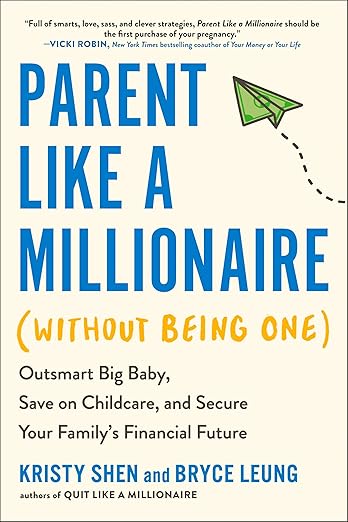
The FIRE community has largely embraced this evolution of the nomadic lifestyle. JL Collins, a leading voice in the movement, noted that the ability to maintain these principles after the birth of a child serves as a powerful rebuttal to critics of the movement. The collaborative release of the new book, Parent Like a Millionaire, authored by Shen and Leung with a foreword by Collins, marks a formalization of these strategies for a mainstream audience.
The book details how the couple managed their Spanish residency and their cross-country move, providing a blueprint for "geographic arbitrage"—the practice of earning in a strong currency while living in a region with a lower cost of living. As the family continues their journey, their experience will likely serve as a primary reference point for a new generation of parents questioning the necessity of a thirty-year mortgage.
The transition from "carefree nomads" to "strategic family renters" represents a maturation of the FIRE movement. It demonstrates that financial independence is not merely about early retirement, but about the continuous optimization of one’s life to prioritize time and experiences over the accumulation of physical property. As Shen and Leung move forward, their lifestyle continues to challenge the conventional wisdom of the "adulting checkbox," suggesting that for the financially literate, freedom is the most valuable asset one can own.