The Evolution of the FIRE Movement and the Strategic Shift Toward Long-Term Rental Stability for Families


The landscape of personal finance and the Financial Independence, Retire Early (FIRE) movement is undergoing a significant demographic shift as its early adopters transition from solo nomadic lifestyles into parenthood. For years, critics of the FIRE movement argued that the strategy of "renting one’s way to freedom" was a temporary luxury afforded only to "DINKs" (Double Income, No Kids). However, recent developments in the community, highlighted by the experiences of prominent figures Kristy Shen and Bryce Leung, suggest that the nomadic rental model is not only surviving the addition of children but is being refined into a sophisticated long-term financial strategy. By prioritizing capital liquidity over home equity, these families are challenging the traditional American narrative that homeownership is a prerequisite for parental stability and middle-class success.
Chronology of the FIRE Rental Strategy
The trajectory of this financial philosophy can be traced back to 2012, when Shen and Leung, both software engineers in their early thirties, opted to forgo the purchase of a high-priced home in Toronto. Instead, they invested their $500,000 down payment into a diversified portfolio of low-cost index funds. By 2015, the portfolio had grown sufficiently to allow for full retirement, a milestone they celebrated by attending the Chautauqua financial independence retreat in Ecuador.
In 2016, the couple codified their strategy in a widely circulated thesis titled "Buy Your Freedom and Rent the Rest." This period marked the height of the nomadic FIRE phase, characterized by global travel and minimal physical possessions. Between 2016 and 2022, Shen and Leung became fixtures on the international speaking circuit, advocating for a lifestyle where time is the primary asset.
The transition to the current phase began following the 2022 conclusion of the Chautauqua events. The birth of their first child and a subsequent relocation across Canada served as a "stress test" for their rental-heavy model. In late 2024, the couple completed a three-month residency in Spain with their toddler, demonstrating that international mobility remains viable for retirees with children. This timeline suggests that the FIRE framework is adaptable to various life stages, provided the underlying investment strategy remains robust.
Statistical Context and the Homeownership Stigma
The decision to remain a lifelong renter runs counter to prevailing North American economic trends. According to the U.S. Census Bureau, the homeownership rate in the United States stood at approximately 65.3% as of late 2023. In Canada, where Shen and Leung are based, the rate is even higher, hovering near 66.5%. The societal pressure to own a home is often rooted in the "adulting" narrative—a psychological benchmark that equates property titles with maturity and stability.
For families, this pressure is intensified by concerns regarding "renovictions"—a process where landlords exploit renovation loopholes to terminate leases and increase rents—and the desire for consistent access to specific school districts. However, financial analysts point out that homeownership carries significant "unrecoverable costs," including property taxes, maintenance (typically estimated at 1% to 3% of the home’s value annually), insurance, and mortgage interest. When these costs are compared against the historical 7% to 10% average annual returns of the S&P 500, the opportunity cost of a down payment becomes a central pillar of the FIRE argument.
A Strategic Framework for Family Rental Stability
To mitigate the inherent risks of renting with children, FIRE practitioners have developed a ten-point strategic framework designed to ensure stability without the burden of a mortgage. This methodology shifts the focus from "finding a place to live" to "managing a residential asset."
1. Prioritizing Ownership Structure
The most critical factor in rental stability is the type of owner. "Purpose-built" rental apartments—buildings owned by corporations or REITs (Real Estate Investment Trusts) specifically for the rental market—offer significantly higher security than individually owned condos or houses. Because these entities cannot easily sell off individual units, the risk of a tenant being forced to move due to a property sale is virtually eliminated.
2. Institutional and Landlord Due Diligence
Modern renters are increasingly using data to vet potential housing. Platforms such as "Rate The Landlord" allow for crowdsourced reviews of management companies. Professional FIRE practitioners suggest inspecting common areas, such as laundry rooms and landscaping, as physical proxies for a landlord’s commitment to maintenance.
3. The "A++ Tenant" Model
Stability is often a result of being a desirable client. This involves maintaining a "rental resume" that includes stellar credit scores, references from previous landlords, and proof of liquid assets. By demonstrating that they possess at least a year’s worth of rent in accessible funds, FIRE families position themselves as low-risk tenants, giving them leverage in competitive markets.
4. Geographic and Educational Flexibility
The traditional model of buying into a "good" school district often results in families being "house poor." The FIRE alternative involves leveraging "Magnet Schools" or "Charter Schools," which often decouple educational access from specific residential boundaries. By choosing "up-and-coming" neighborhoods adjacent to premium areas, families can maintain access to amenities and high-quality education at a fraction of the rental or ownership cost found in "prestige" zip codes.

Economic Implications and Market Reactions
The broader implication of this "rent and invest" model is a shift in how wealth is perceived. Rather than viewing a primary residence as a retirement vehicle, this demographic views the stock market as a "virtual home." As financial author JL Collins famously noted, "You can’t live inside a stock, but you can live inside a home paid for by its dividends, capital gains, and interest."
Market reactions to this trend are mixed. Real estate advocates argue that the forced savings of a mortgage is the only way most families build wealth. However, the rise of the "Generation Rent" phenomenon among high-earning millennials suggests a growing preference for mobility. Institutional investors have taken note, with a marked increase in the development of "Build-to-Rent" (BTR) communities across North America, which cater specifically to families who desire the space of a suburban home without the commitment of a mortgage.
Impact Analysis: The Future of Family FIRE
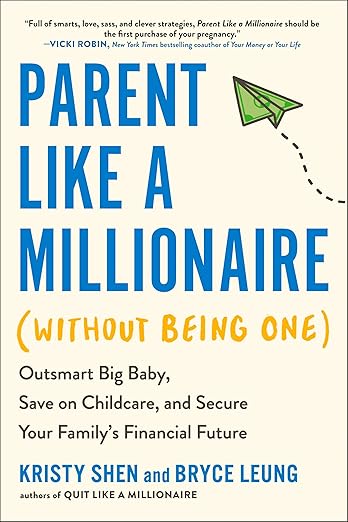
The transition of Kristy Shen and Bryce Leung from "carefree nomads" to "strategic rental parents" serves as a case study for the long-term viability of the FIRE movement. Their recent publication, Parent Like a Millionaire, signals a new chapter in personal finance literature that focuses on the intersection of child-rearing and aggressive wealth preservation.
The implications for the next decade are clear:
- Redefinition of Stability: Stability is increasingly being defined by the size of a liquid portfolio rather than the permanence of a physical address.
- Urban Planning: There may be increased demand for modular, family-sized rental units in urban centers as more families reject the "suburban mortgage" lifestyle.
- Educational Reform: As more mobile families seek high-quality education without geographic ties, the pressure on school districts to offer open-enrollment or magnet programs may increase.
Critics remain, particularly regarding the potential for rising rental costs to outpace portfolio withdrawals. However, the FIRE community argues that the flexibility to "geo-arbitrage"—moving to lower-cost regions or countries when market conditions dictate—provides a safety valve that homeowners do not possess.
In conclusion, the emergence of a "pro-rental" family demographic represents a sophisticated evolution of the FIRE movement. By treating housing as a service rather than an investment, these families are attempting to decouple the American Dream from the American Mortgage, prioritizing the ownership of time and experiences over the ownership of brick and mortar. Whether this model can withstand the pressures of a long-term inflationary rental market remains to be seen, but for the current vanguard of the movement, the dividends are already paying for a life lived on their own terms.