The Collapse of Donald Trump’s Western Hemisphere Strategy Following Brazil’s Historic Election

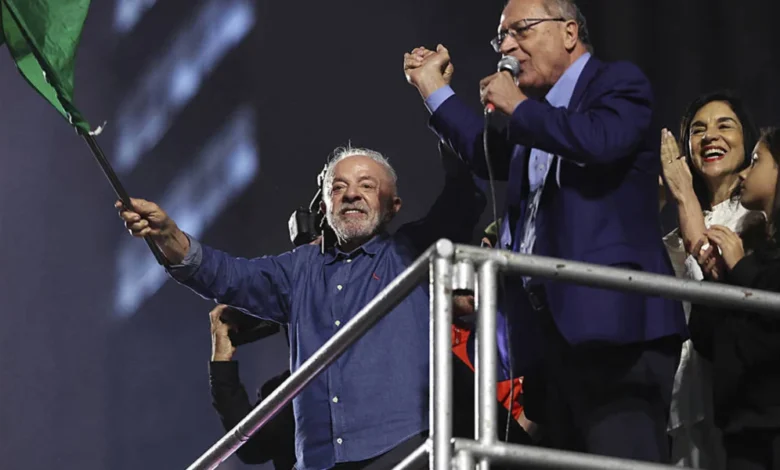
RIO DE JANEIRO — The return of Luiz Inácio Lula da Silva to the presidency of Brazil marks a decisive turning point in contemporary geopolitics, effectively dismantling the cornerstone of Washington’s regional strategy under the administration of U.S. President Donald Trump. For years, the White House pursued a deliberate doctrine of hemispheric realignment, attempting to isolate the United States from broader multilateral entanglements while cultivating a network of ideologically aligned, right-wing client states across Latin America. This diplomatic framework relied heavily on replicating strongman governance models, transactional trade deals, and the marginalization of traditional liberal democracies. However, with Lula’s victory at the ballot box, this ambitious geopolitical blueprint has encountered an insurmountable obstacle, leaving Washington’s foreign policy in the region in deep disarray.
The Architecture of Trump’s Latin American Doctrine
To understand the magnitude of the shift triggered by the Brazilian election, it is necessary to examine the mechanics of the administration’s approach to Latin America. Unlike previous U.S. administrations that focused on institutional strengthening, multilateral cooperation through bodies like the Organization of American States (OAS), and the promotion of human rights, the Trump administration favored a bilateral, transactional model.
The strategy was predicated on the emergence of a "new right" axis in Latin America. Washington sought to forge close personal and political alliances with populist leaders who mirrored the U.S. president’s skepticism toward multilateralism, climate accords, and traditional diplomatic norms. Central to this approach was the cultivation of strong ties with Brasilia under former President Jair Bolsonaro, often dubbed the "Trump of the Tropics." By securing a compliant and ideologically sympathetic partner in South America’s largest economy and most populous nation, the United States hoped to consolidate a formidable hemispheric bloc.
This bloc was intended to serve a dual purpose: first, to project American dominance and counter the growing economic and infrastructural footprint of the People’s Republic of China in the region; and second, to enforce strict regional compliance on issues ranging from immigration enforcement to resource extraction. Through a combination of economic pressure, diplomatic incentives, and rhetorical alignment, Washington sought to construct a controllable hemispheric stronghold that would insulate the United States from broader global shifts.
A Timeline of Regional Shifts and Polarization
The trajectory of Latin American politics over the preceding decade created the volatile conditions that allowed Washington’s strategy to briefly flourish before ultimately collapsing.
- 2016–2018: A conservative wave sweeps across Latin America, often termed the "pink tide’s ebb." Governments in Argentina, Brazil, Chile, and Ecuador shift to the right, creating a receptive environment for Washington’s bilateral outreach.
- 2018: Jair Bolsonaro is elected president of Brazil on a populist, law-and-order platform, immediately signaling a desire to forge an unshakeable alliance with the Trump administration, sidelining traditional Brazilian foreign policy doctrines of diplomatic independence and multilateralism.
- 2019–2020: The Trump administration successfully champions conservative leadership in regional institutions, leveraging financial influence through international lending bodies to support allied governments facing severe economic and social pressures.
- 2020–2022: A counter-wave begins to materialize across the region, driven by public dissatisfaction with economic inequality, the handling of the COVID-19 pandemic, and governance scandals. Left-of-center and progressive leaders secure victories in Mexico, Argentina, Bolivia, Peru, Honduras, Chile, and Colombia.
- October 2026: Lula da Silva secures a historic presidential victory in Brazil, completing the consolidation of a new progressive alignment among South America’s major economies and neutralizing Washington’s remaining anchor for its regional hegemony project.
The Electoral Defeat and Its Geopolitical Toll
The electoral outcome in Rio de Janeiro and Brasília was more than a domestic political contest; it was a referendum on Brazil’s international orientation. Lula’s campaign explicitly promised a return to an independent foreign policy, emphasizing environmental stewardship, strengthening regional integration through mechanisms like MERCOSUR, and re-engaging with global climate and trade frameworks.
For Washington, the defeat of the incumbent far-right administration in Brazil shatters the illusion of a reliable, ideologically homogeneous southern tier. Without Brasilia acting as a willing conduit for U.S. regional directives, the architecture of the administration’s Latin American policy loses its structural integrity. Other allied governments in the region lack the demographic weight, economic leverage, and geopolitical influence required to anchor Washington’s grand design.
Furthermore, the Brazilian election alters the balance of power regarding global environmental governance and resource management. The Amazon rainforest, long viewed by the previous Brazilian administration as a sovereignty issue ripe for unfettered commercial exploitation in alignment with developmentalist and nationalist priorities, is now slated for renewed international conservation cooperation. This shift directly contradicts the resource extraction and deregulation models favored by conservative allies in the hemisphere.
Economic and Strategic Implications
The failure of the hemispheric stronghold strategy carries profound economic and strategic ramifications for the United States. In economic terms, Latin America remains a critical arena for supply chain resilience, nearshoring initiatives, and critical mineral acquisition, particularly lithium and rare earth elements essential for advanced technologies and the green transition.
By alienating traditional liberal partners and tying its diplomatic capital to volatile populist figures, the United States inadvertently opened strategic vacuums that competitors have rushed to fill. Beijing has steadily expanded its economic footprint across South America through infrastructure investments, direct lending, and free-trade agreements. While Washington attempted to enforce ideological conformity, China pursued pragmatic, long-term commercial engagement, making it the primary trading partner for nations like Brazil, Chile, and Peru.
Lula’s victory signals that South America’s major powers intend to pursue a multipolar foreign policy rather than subordinating their national interests to a hemispheric security doctrine dictated from Washington. Brazilian diplomats have repeatedly emphasized a commitment to maintaining robust trade relations with both the United States and China, refusing to participate in new Cold War-style blocs. This assertion of strategic autonomy undermines the core premise of Trump’s foreign policy, which demanded clear alignments and hostility toward multilateral cooperation.
Official Responses and Diplomatic Fallout
Reactions to the electoral outcome have exposed deep divisions within international diplomatic circles. While leaders across Europe, Latin America, and Asia quickly extended formal congratulations to the newly elected Brazilian president—underscoring a shared desire to revitalize multilateral environmental and economic partnerships—the response from Washington was notably measured.
Insiders within the U.S. foreign policy establishment noted that the administration’s immediate priority shifted toward damage control. Privately, State Department officials recognized that managing relations with a resurgent Brazilian left would require a return to traditional, institutional diplomacy, moving away from the personalized, transactional dynamics that characterized the previous four years.
Conversely, regional analysts point out that Lula’s victory empowers a broader coalition of Latin American leaders who have long criticized U.S. interventionism and economic hegemony. The consolidation of independent governments in South America creates a unified diplomatic front capable of negotiating with Washington on equal terms, particularly regarding trade tariffs, immigration policy, and climate finance.
The Broader Impact on U.S. Foreign Policy
The collapse of the Latin America strategy serves as a case study in the limitations of ideological diplomacy. By prioritizing short-term political alignment with strongman leaders over long-term institutional stability and democratic values, the administration neglected the complex, pluralistic realities of modern Latin American politics.
As the geopolitical landscape of the Western Hemisphere enters a new chapter, Washington faces the imperative of recalibrating its approach. The era in which the United States could easily corral southern neighbors into a unified, compliant bloc has drawn to a close. Future U.S. policy in the region will be forced to contend with empowered, independent democracies that prioritize national sovereignty and multilateral engagement above all else, rendering the dream of a controllable hemispheric stronghold an unrealized relic of a shifting global order.
Related posts: