The global technology and investment sectors are approaching a critical inflection point as artificial intelligence infrastructure spending matures. According to recent commentary from Goldman Sachs’ Delta One desk cited by financial analytics platforms, the fundamental drivers of the multi-billion-dollar data center boom are quietly evolving. The core question facing institutional investors is no longer whether cloud giants and major technology conglomerates will secure massive computing capacity at virtually any cost, but rather when they will pivot from aggressive capital expenditure expansion to rigorous operational optimization.

This prospective shift carries profound implications for global supply chains, semiconductor manufacturers, energy grids, and broader equity markets. To understand the gravity of this transition, market strategists frequently draw parallels to the maturation cycles of entirely different capital-intensive industries, such as commercial aviation.
The Aviation Analogy: From Fleet Expansion to Operational Efficiency
When a new commercial airline launches, its initial lifecycle is defined by relentless capital expenditure dedicated to fleet acquisition. Virtually all available funding flows into a highly concentrated network of suppliers: airframe manufacturers, engine producers, and specialized financial institutions. During this initial expansion phase, the airline adds aircraft quarter after quarter, while suppliers and equipment vendors report staggering revenue growth.

This mirrors the exact phase currently occupied by major technology hyperscalers, often referred to as the data center boom. In this technological ecosystem, the airplanes are expansive data centers housing clusters of advanced processors, while the primary beneficiaries include semiconductor designers, memory producers, foundry operators, transformer manufacturers, and energy providers.
However, market dynamics inevitably evolve. At a certain threshold, an airline’s fleet reaches its optimal scale, causing purchase growth to decelerate rapidly. Attention immediately pivots from buying aircraft to maximizing the efficiency of existing assets. Operational priorities shift toward seat-fill optimization, dynamic yield management, fuel burn reduction, turn-time minimization, baggage fee structures, and extended maintenance intervals. Consequently, revenue for original equipment manufacturers begins to flatten or decline, while secondary vendors specializing in revenue management systems, fuel hedging, and customer loyalty programs capture the lion’s share of new spending.
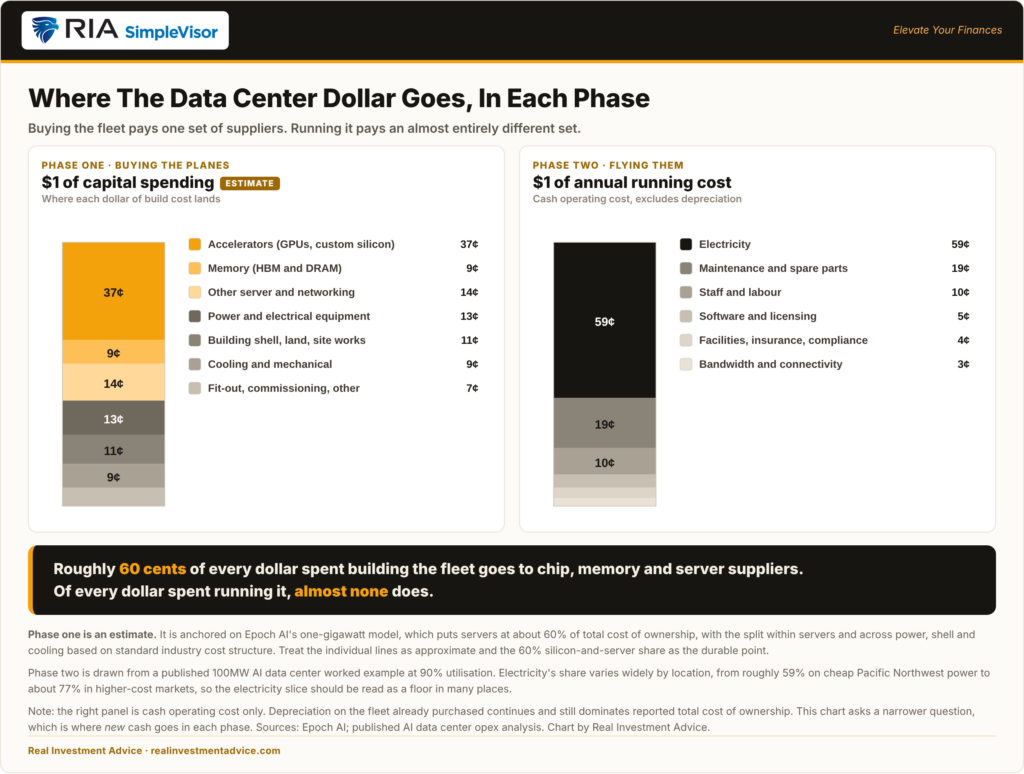
For the technology sector, this secondary phase represents a transition from raw infrastructure construction to software-driven efficiency. When hyperscalers eventually conclude that their physical data center footprints are sufficient, capital expenditures will not necessarily evaporate; instead, they will migrate. Spending will heavily favor inference efficiency, complex scheduling software, advanced cooling technologies, long-dated power procurement contracts, and custom proprietary silicon designed in-house by the hyperscalers themselves. While total capital allocation may remain robust, the underlying beneficiary companies will change dramatically.
Market Trading Update and Technical Landscape
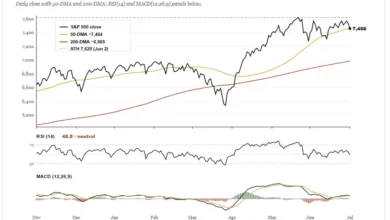
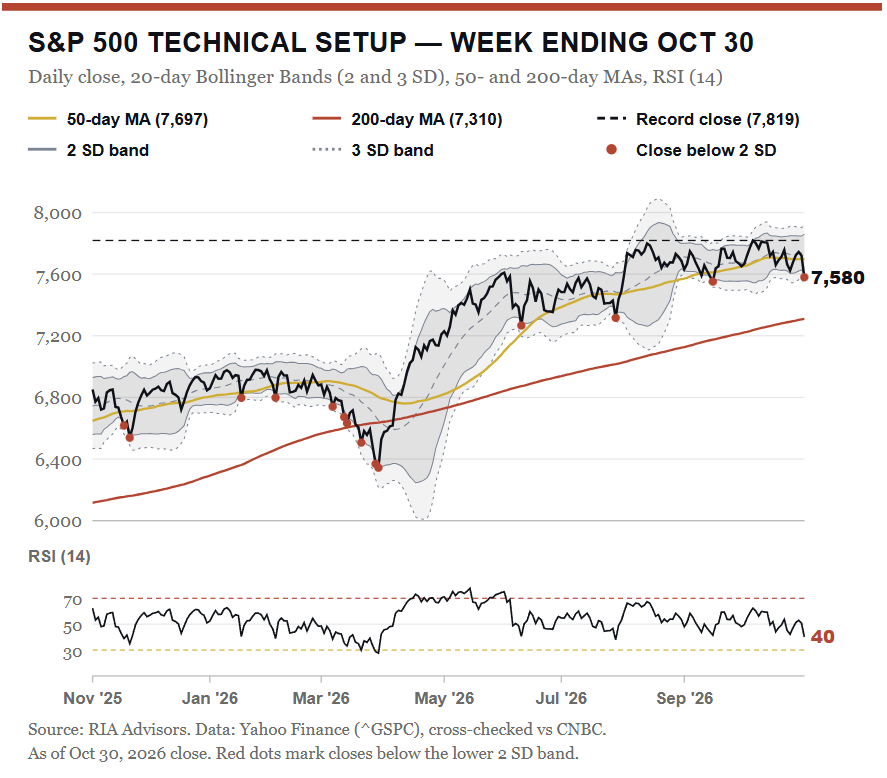
This structural evolution in enterprise spending coincides with a delicate technical environment in broader public equities. Recent trading sessions have introduced notable volatility, punctuated by technical damage across major indices. The S&P 500 recently closed at 7,580.07, registering its first finish below its widely monitored 100-day moving average since April. The index subsequently hovered roughly 0.5% below that 100-day threshold and approximately 1.5% below its 50-day moving average. Down approximately 3.1% from its record close of 7,819 set earlier in October, the broader bull market trend remains technically intact, supported by a rising 200-day moving average sitting comfortably below.
Momentum indicators confirm this short-term consolidation. The Relative Strength Index (RSI) experienced a sharp contraction, falling from 50.8 to 40.1 in a single session. Meanwhile, Moving Average Convergence Divergence (MACD) metrics reversed course below the zero line, widening the histogram and signaling persistent selling pressure in growth-heavy asset classes. Furthermore, index closes dipping below the lower Bollinger Band have historically highlighted short-term oversold conditions, though market historians note that prolonged consolidations can feature multiple closes below these statistical boundaries before establishing a definitive market bottom.
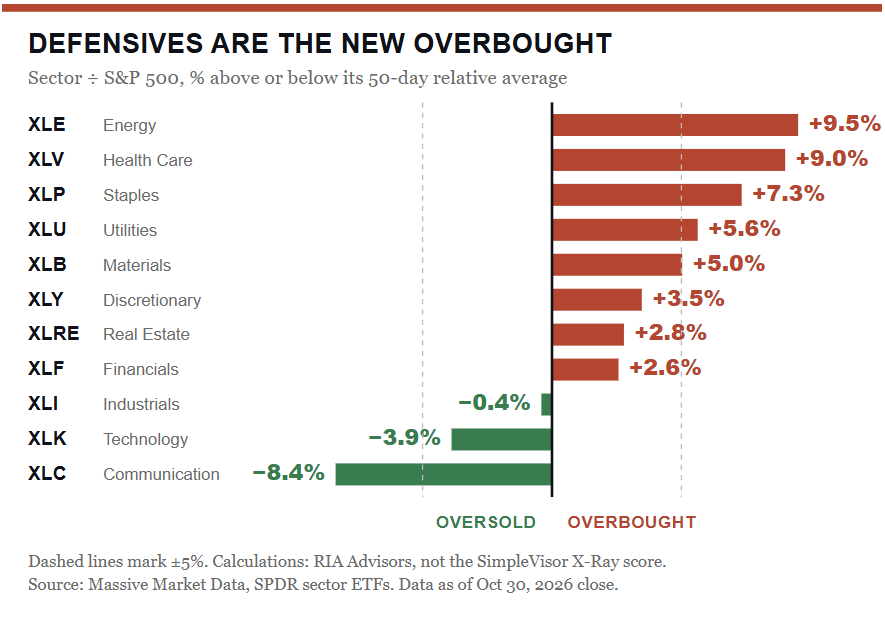
Sector breadth during this correction revealed a distinct divergence between defensive and growth equities. Market analysis shows that traditional safe-haven sectors—led significantly by energy, health care, and consumer staples—have traded substantially above their respective 50-day relative moving averages. Conversely, bellwether sectors like technology and communication services have experienced meaningful pullbacks. This dynamic indicates that defensive trades have become crowded, suggesting that any sustained market rebound will likely require renewed participation from oversold growth and technology equities, which carry the heaviest weightings in major benchmarks.
Macroeconomic Data and the Federal Reserve Outlook
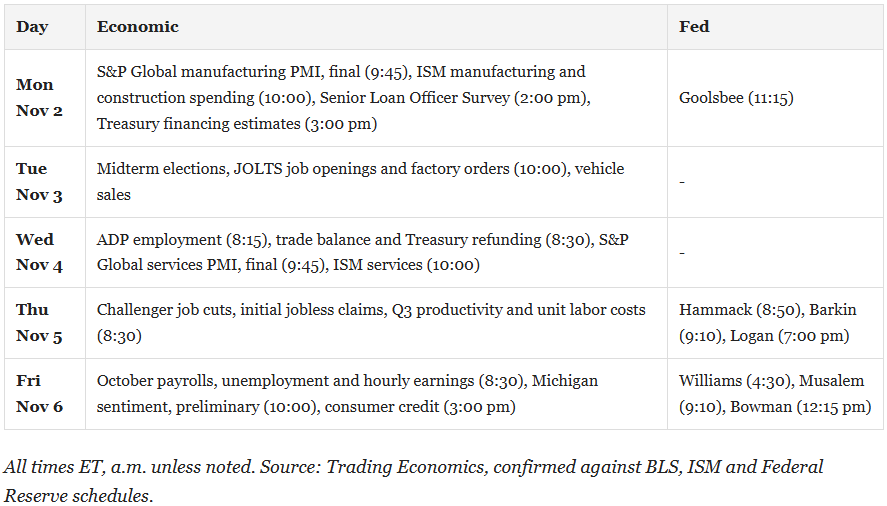
As investors navigate these technical crosscurrents, macroeconomic indicators continue to dictate monetary policy expectations ahead of the Federal Reserve’s upcoming policy meetings. The central focus remains squarely on labor market resilience and inflationary pressures. Recent employment figures released by the Bureau of Labor Statistics (BLS) have pointed toward a distinctly stagnant labor market characterized by minimal hiring and exceptionally low layoff rates. Wall Street consensus expectations have projected modest job growth figures, reinforcing the narrative of a cooling economic expansion.
Concurrently, interest rate traders are closely parsing incoming economic releases—including Job Openings and Labor Turnover Survey (JOLTS) data and ADP employment figures—to gauge whether the Federal Reserve will implement further adjustments to benchmark borrowing costs. Political developments, including legislative shifts in Washington following recent congressional elections, have also introduced additional layers of market sensitivity. While a split government outcome is frequently viewed by investors as a neutral event that preserves policy gridlock, any unexpected electoral surprises carry the potential to generate sudden volatility across both fixed-income and equity markets.
Real Wages and Consumer Spending Pressures
Beneath the headline employment figures lies a more nuanced economic reality for American households: the persistent erosion of real purchasing power. While nominal wage growth has maintained a steady pace—with average hourly earnings rising roughly 3% over a twelve-year trailing period—inflationary pressures, particularly within essential household expenditures, have outpaced wage gains.
A granular examination of consumer price data reveals that headline inflation has been heavily skewed by surging energy costs. Gasoline prices and broader energy indexes have posted significant double-digit percentage gains compared to previous years, far outpacing the modest 2.5% increase recorded in general food prices and core Consumer Price Index (CPI) metrics. Consequently, when wages are deflated by headline CPI—representing the actual prices consumers pay at the retail register and the fuel pump—real average hourly earnings have contracted for multiple consecutive months.
This divergence between core and headline inflation has profound implications for consumer-facing corporations. Households are increasingly forced to reallocate discretionary income toward non-negotiable necessities like energy and utilities, leaving less capital available for discretionary retail purchases, leisure, and durable goods. Major consumer discretionary and retail entities are already feeling the early effects of this squeeze, prompting portfolio managers to tilt capital allocations away from vulnerable consumer goods toward more resilient defensive names and robust financial institutions.
Strategic Portfolio Positioning and Risk Management
Given the confluence of shifting hyperscaler capital expenditures, technical market consolidation, and compressed real wages, institutional and retail investment managers are advocating for a balanced, disciplined approach to portfolio construction. Rather than chasing short-term market bounces or attempting to time volatile equity swings, portfolio strategists recommend maintaining core equity allocations at established target weights while utilizing technical resistance levels—such as the 50-day and 100-day moving averages—as logical areas for portfolio rebalancing rather than aggressive accumulation.
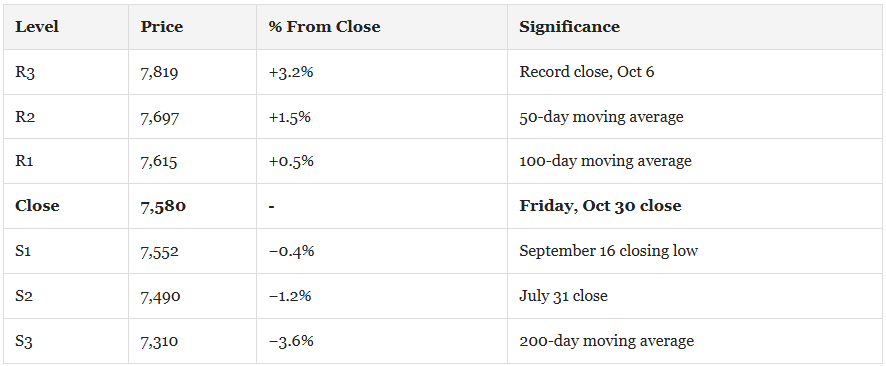
Risk management protocols remain paramount in this environment. Analysts advise monitoring critical support levels closely; a decisive breakdown below established technical supports could prompt a broader retest of the long-term 200-day moving average, signaling the necessity to tighten trailing stops and raise defensive cash reserves. Conversely, a technical reclamation of key resistance benchmarks would invalidate short-term bearish momentum and provide a constructive foundation for re-engaging with high-growth technology and AI-related equities.
As the financial landscape continues to adapt to the maturation of the artificial intelligence boom and fluctuating consumer dynamics, disciplined execution, adherence to structured trading rules, and continuous monitoring of macroeconomic fundamentals will remain the definitive keys to navigating long-term market success.