The Financial Anatomy of the Artificial Intelligence Boom and the Specter of Systemic Risk

Speculative bubbles often leave behind valuable infrastructure while bankrupting the investors who financed them. AI could follow the same path, but the industry’s growing reliance on borrowed money raises the risk of a major financial crisis long before its world-beating applications emerge. CAMBRIDGE—About a year ago, the idea that speculative investment has created an AI bubble began to take hold and soon became conventional wisdom. Since bubbles always burst, the fear now is that time is running out for this one.
Introduction and Core Premise
The trajectory of technological revolutions throughout modern financial history reveals a recurring, paradoxical pattern. Breakthrough innovations—ranging from the 19th-century railway mania to the late-20th-century telecommunications boom—invariably begin with exuberant, speculative capital outlays. These surges frequently culminate in financial crashes that ruin equity holders, venture capitalists, and early speculators. Yet, beneath the wreckage, they consistently leave behind transformative physical and digital infrastructure that powers the next era of sustained economic growth.
Artificial intelligence stands squarely at the crossroads of this historical precedent. However, contemporary financial markets face an unprecedented variable: the sheer scale of debt financing underpinning current AI infrastructure deployment. While previous speculative cycles were heavily fueled by equity and retail exuberance, the modern AI buildout relies increasingly on corporate debt, leveraged credit markets, and complex vendor-financing loops. According to financial analysts and economic historians, this growing dependence on borrowed money significantly alters the risk profile of the current boom. It introduces the distinct hazard of a systemic financial crisis well before generative AI models achieve the productivity gains, monetization levels, and world-beating applications promised by their developers.
Historical Parallels: Infrastructure Left Behind
To understand the current economic dynamics of artificial intelligence, economists frequently look back at the Dot-Com bubble of the late 1990s and the railway mania of the Victorian era. During the telecommunications boom of the turn of the millennium, trillions of dollars were poured into laying transatlantic fiber-optic cables and building out internet service provider networks.
When the bubble burst in March 2000, trillions in market capitalization vanished overnight, bankrupting hundreds of startups and inflicting heavy losses on major financial institutions. Nevertheless, the physical fiber-optic cables remained buried beneath the ocean floors and city streets. This overbuilt, bankrupt infrastructure provided the high-bandwidth foundation that enabled the creation of modern streaming, cloud computing, and social media giants.
Similarly, the 19th-century railway booms in Great Britain and the United States bankrupted countless investors and regional banks. Yet, the rail networks themselves endured, permanently lowering transportation costs, integrating national markets, and laying the groundwork for modern industrial capitalism.
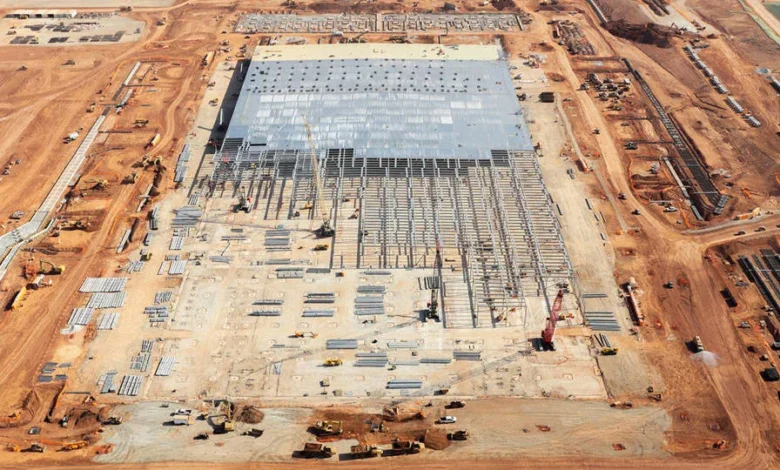
In the context of artificial intelligence, the current capital expenditure (CapEx) cycle is funding data centers, specialized semiconductor fabrication plants, high-performance graphics processing units (GPUs), and massive energy grids. Even if current stock valuations correct sharply or speculative firms face insolvency, the physical compute power and power infrastructure will remain. The core question for contemporary policymakers and financial regulators is not whether the infrastructure will be useful—historical precedent suggests it will be—but whether the financial system can absorb the shock of the debt defaults that will accompany the deflation of the asset bubble.
Chronology of the AI Investment Surge
The acceleration of the artificial intelligence investment cycle can be mapped across a distinct timeline of exponential capital commitments and shifting market sentiment:
- Late 2022 to Throughout 2023: The public release of OpenAI’s ChatGPT in November 2022 serves as the de facto starting gun for the modern generative AI boom. Venture capital funding pivots decisively away from web3 and cryptocurrency toward generative AI applications, foundational model developers, and semiconductor designers. Major technology conglomerates announce sweeping organizational realignments to prioritize AI integration.
- Throughout 2024: Capital expenditures by hyperscale cloud providers—including Microsoft, Alphabet (Google), Amazon, and Meta—escalate dramatically. Quarterly earnings reports reveal tens of billions of dollars dedicated to GPU procurement and data center construction. By the autumn of 2024, financial commentators and institutional economists begin openly debating whether the revenue generation of these models can justify the astronomical upfront costs, introducing the phrase "AI bubble" into mainstream financial discourse.
- Early to Mid-2025: Market volatility increases as institutional investors demand concrete evidence of return on investment (ROI). Software-as-a-service (SaaS) companies face downward valuation pressures as enterprises question the direct productivity gains of early AI integrations. Concurrently, major tech firms begin partnering with energy providers to secure dedicated nuclear and renewable power sources for data centers, pushing capital requirements even higher.
- Late 2025 to October 2026: Market consensus solidifies around the reality of a speculative bubble. Analysts note a shift in funding structures: venture equity is increasingly supplemented by private credit, corporate bond issuances, and asset-backed lending. The risk horizon shifts from mere equity valuation corrections to potential credit defaults within the technology supply chain.
Supporting Data and Financial Metrics
The sheer magnitude of the financial commitments driving the artificial intelligence sector distinguishes it from past technological booms. According to aggregate financial data from major investment banks and market research firms:
- Capital Expenditures (CapEx): Combined capital expenditures by the leading hyperscale technology firms surpassed $200 billion annually by 2025, with projections indicating further acceleration. A significant majority of these funds are directed toward AI-specific compute clusters and supporting infrastructure.
- Semiconductor Economics: High-end AI accelerators, primarily supplied by market leaders like NVIDIA, command unit prices ranging from tens of thousands of dollars. The global semiconductor supply chain has experienced a historic demand shock, leading to multi-billion-dollar commitments for new fabrication facilities (fabs) across North America, Europe, and Asia.
- Energy Consumption and Grid Investments: Modern data centers powering large language models require gigawatt-scale power supplies. Utility companies report unprecedented forecast demand growth, necessitating billions in grid modernization and long-term power purchase agreements (PPAs) with nuclear and renewable energy operators.
- Debt and Leverage Ratios: While the primary hyperscale firms maintain substantial cash reserves and strong balance sheets, the broader ecosystem—including mid-tier cloud providers, specialized AI infrastructure startups, and compute-leasing firms—has increasingly turned to private credit and corporate debt markets to finance hardware purchases.
Industry Perspectives and Official Reactions
Market participants, regulatory bodies, and economic analysts hold divergent views regarding the stability of the current financial architecture supporting artificial intelligence.
Technology industry executives defend the aggressive CapEx cycle as an existential necessity. Proponents argue that artificial intelligence represents a foundational general-purpose technology comparable to electrification or the internet. In interviews and earnings calls, tech leaders contend that under-investing poses a far greater corporate risk than over-investing, asserting that early market dominance in foundational intelligence will yield winner-take-all dynamics that justify initial losses.
Conversely, central bankers and financial stability watchdogs have expressed cautious concern regarding the interconnectedness of modern financial markets and the technology sector. Representatives from institutions such as the International Monetary Fund (IMF) and the Bank for International Settlements (BIS) have highlighted the rapid growth of private credit markets. Because private credit operates outside traditional regulatory perimeters and public banking disclosures, regulators have warned that hidden leverage could amplify systemic shocks if technology valuations experience a severe correction.
Venture capitalists and institutional investors remain split. While growth-oriented funds continue to deploy capital into application-layer startups, value-oriented institutional managers have increasingly trimmed technology holdings, citing compressed risk premiums and diminishing marginal returns on capital expenditure.
Broader Economic Impact and Systemic Implications
The convergence of massive infrastructure spending and speculative debt financing carries profound implications for the global economy.
If the AI investment cycle follows historical patterns without a financial crisis, the economy will eventually absorb the overcapacity. Compute costs will plummet, making advanced intelligence ubiquitous and inexpensive, thereby driving widespread productivity gains across manufacturing, healthcare, logistics, and professional services. The investors who bought at the peak will suffer losses, but the broader economy will reap the long-term benefits of an upgraded digital and energy foundation.
However, the primary danger highlighted by economists is the contagion effect of debt-fueled speculation. Should the monetization of generative AI lag significantly behind the debt service obligations of second-tier infrastructure providers, defaults could cascade through the corporate bond and private credit markets. Because modern financial institutions—including asset managers, pension funds, and commercial banks—hold significant exposure to technology sector debt and equity, a localized correction in tech valuations could rapidly translate into a broader credit crunch.
Ultimately, the artificial intelligence boom tests the resilience of contemporary financial regulation. Ensuring that the transition from speculative euphoria to mature infrastructure deployment does not trigger a systemic banking or credit crisis remains one of the most pressing challenges facing global policymakers and market regulators in the years ahead.
Related posts: