The gap between single-family rents and multifamily rents has widened massively. A look at 14 big markets.

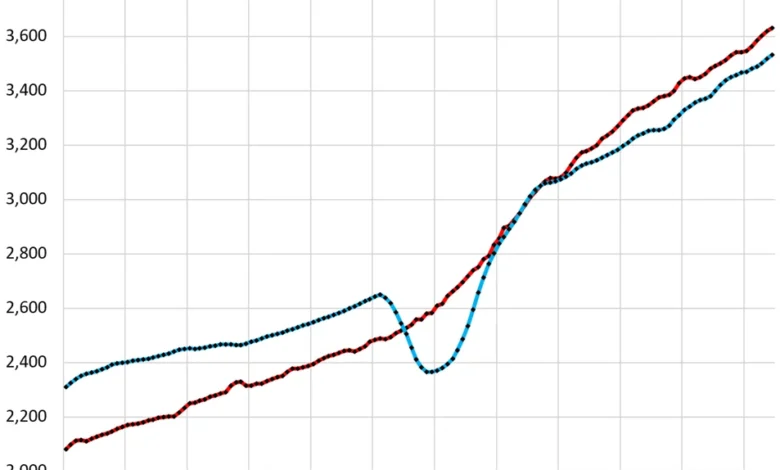
The United States rental housing market has entered a period of unprecedented divergence, as the pricing gap between single-family rental (SFR) homes and multifamily rental (MFR) units reaches historic proportions. According to the latest data from the Zillow Observed Rent Index (ZORI) through June 2026, the national premium for single-family rents over multifamily rents has surged to 29.7%. This figure represents more than double the pre-pandemic norm, which historically fluctuated between 12% and 14%.
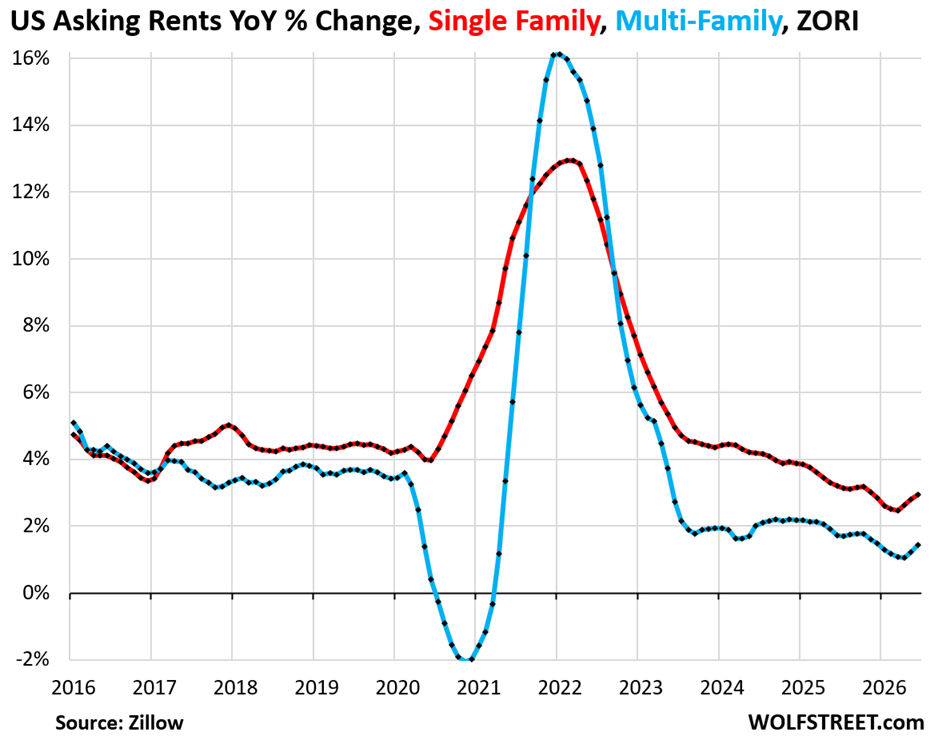
This widening chasm is the culmination of a five-year cycle of extreme volatility, beginning with the post-pandemic inflation surge of 2021 and 2022. During that period, year-over-year inflation reached a peak of 9%, driven significantly by spiking shelter costs. In response, the construction industry mobilized at a pace not seen since the mid-1980s, flooding the market with new supply. However, the distribution of that supply and the shifting demographics of American renters have created a bifurcated market where single-family homes remain in high demand while multifamily developments face a glut that is depressing prices and straining institutional balance sheets.
The Post-Pandemic Construction Surge and Market Evolution
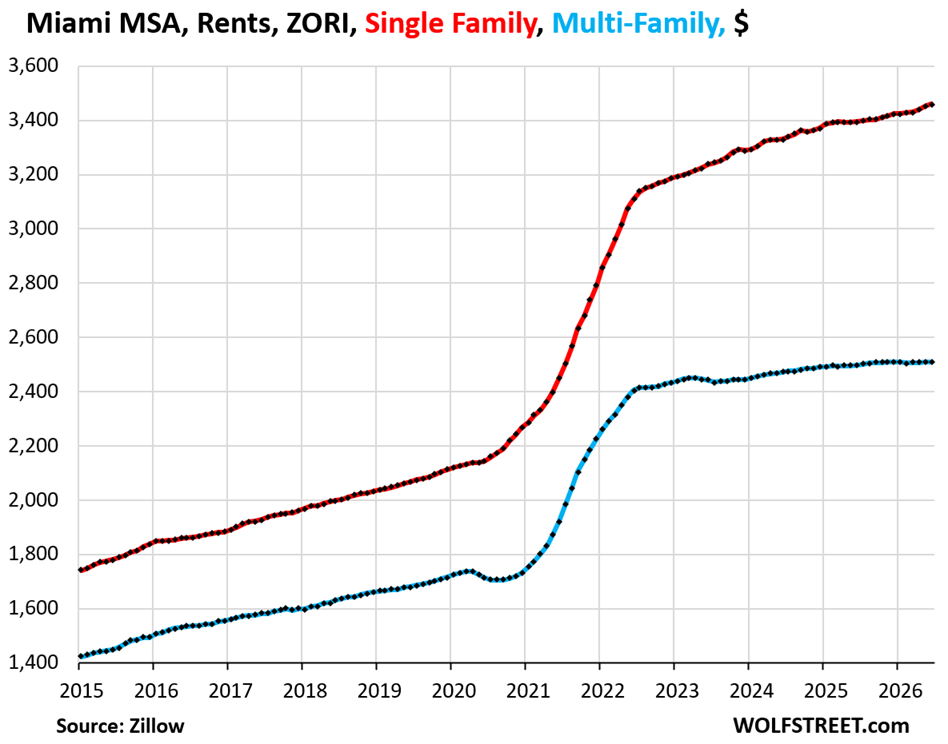
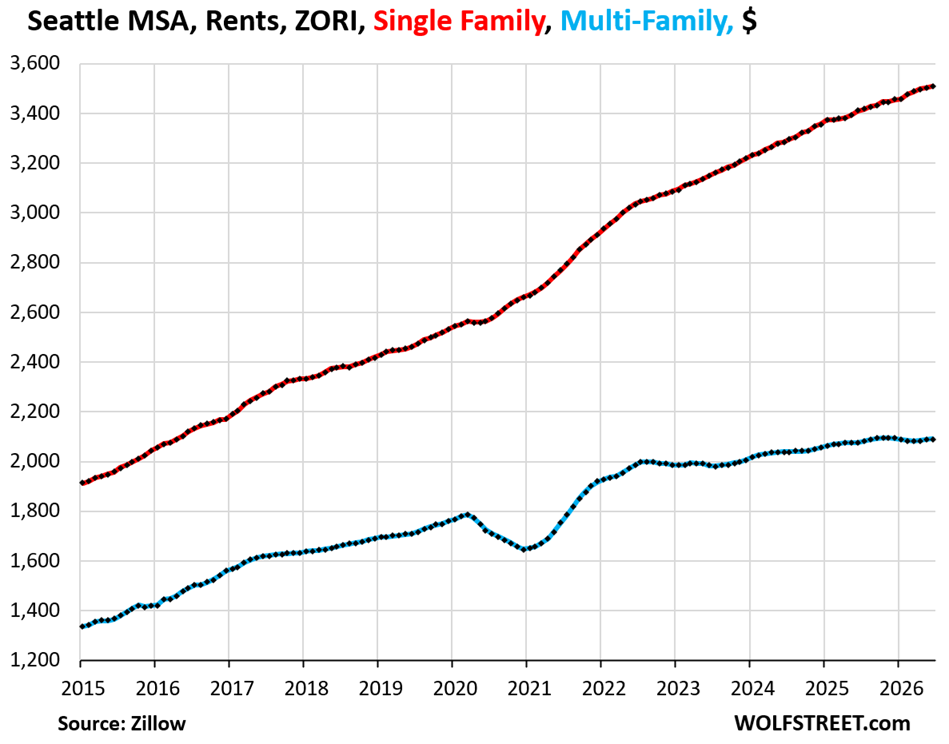
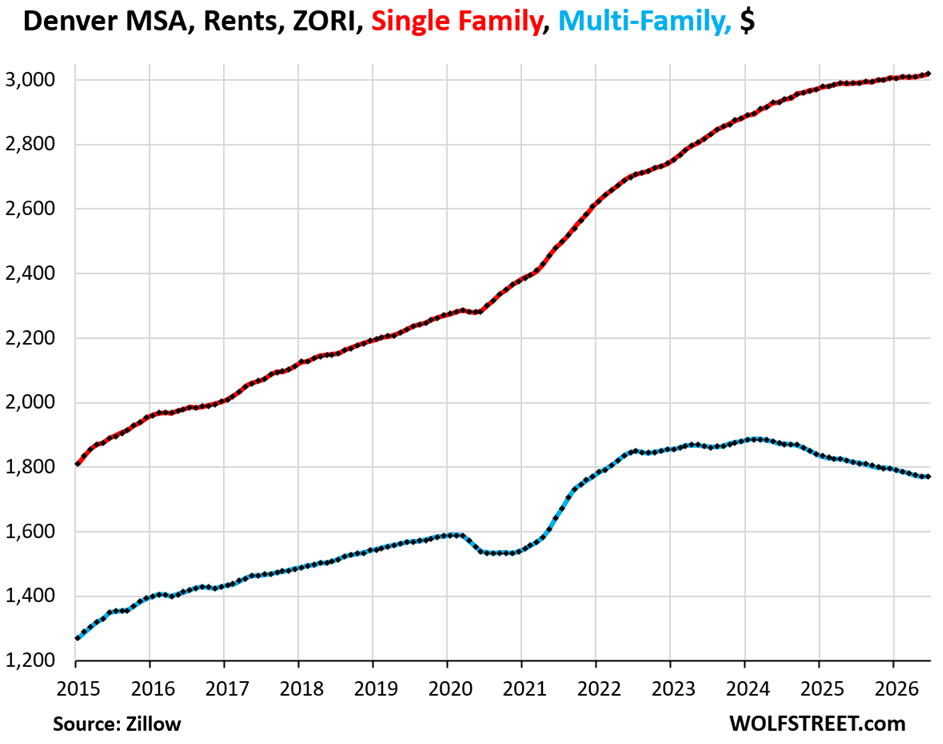
The initial rent explosion between January 2020 and mid-2026 saw multifamily mid-tier asking rents climb by 33% nationwide. The growth was particularly concentrated in high-demand Western and Mountain metros, such as Denver (+69%), Seattle (+67%), and Salt Lake City (+67%). During the same window, mid-tier single-family asking rents experienced an even more dramatic escalation, rising by 52% nationally. Leading this charge were markets like Knoxville (+74%), Providence (+71%), and Miami (+70%).
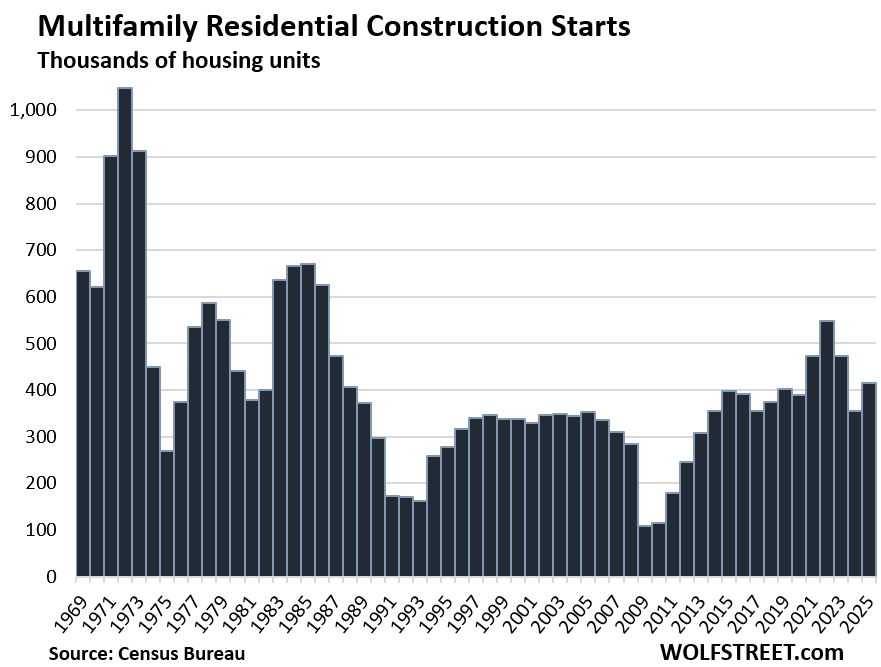
This price action triggered a massive response from developers. Multifamily construction starts reached multi-decade highs between 2021 and 2023. Even as the pace moderated in 2025, the volume of units entering the market remained at levels comparable to the 1980s boom. Much of this new inventory consists of high-end, "Class A" luxury developments, as rising material and labor costs made mid-tier or affordable construction difficult to justify without heavy subsidies.
Simultaneously, the single-family rental market underwent a structural transformation. The "Build-to-Rent" (BTR) model became a primary focus for major institutional landlords and homebuilders. Entire suburban subdivisions were constructed specifically for the rental market, targeting "renters of choice"—high-income households who possess the financial means to purchase a home but opt for the flexibility and amenities of a single-family rental.
Demographic Shifts and Supply Imbalances
The current market cooling in the multifamily sector is largely attributed to an "onslaught of supply" meeting a sudden deceleration in population growth. Recent shifts in federal policy, including a crackdown on illegal immigration and a tightening of legal immigration channels, have caused net migration to slow to a crawl. This demographic shift has left many new high-density developments struggling to reach occupancy targets, forcing landlords to offer concessions or lower asking rents to attract tenants.
In contrast, the single-family market has proven more resilient. The SFR market remains dominated by "mom-and-pop" landlords, who own approximately 82% of the 15 million SFR units in the country. These smaller investors often have lower overhead and different financial pressures than the institutional giants that dominate the multifamily space. While institutional players have aggressively expanded their SFR portfolios through BTR projects, they still represent only about 18% of the total single-family rental stock.
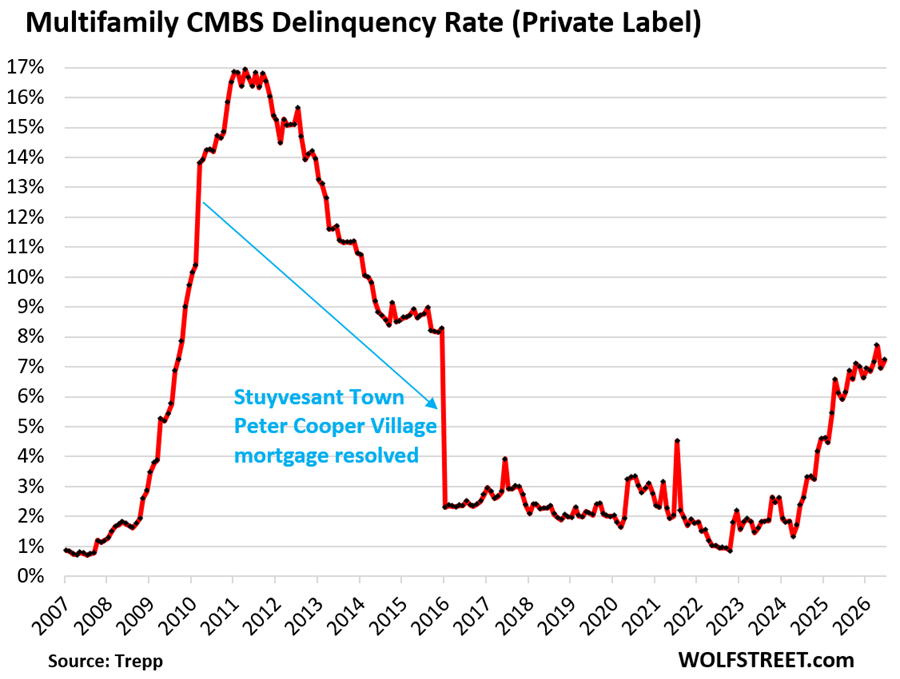
The financial pressure on the multifamily sector is manifesting in rising delinquency rates. Data from Trepp indicates that the delinquency rate for multifamily Commercial Mortgage-Backed Securities (CMBS) has surged to over 7%. As many of these properties were financed with floating-rate debt during the low-interest-rate environment of 2020-2021, the combination of higher debt service costs and softening rents has led to a wave of defaults and property seizures by lenders.
Regional Analysis: A Tale of 14 Metros
The national trend of divergence is not uniform, as local economic drivers continue to dictate market outcomes. A survey of 14 major metropolitan statistical areas (MSAs) reveals three distinct categories of market behavior:
1. The Resilient Core: New York, Chicago, and Boston
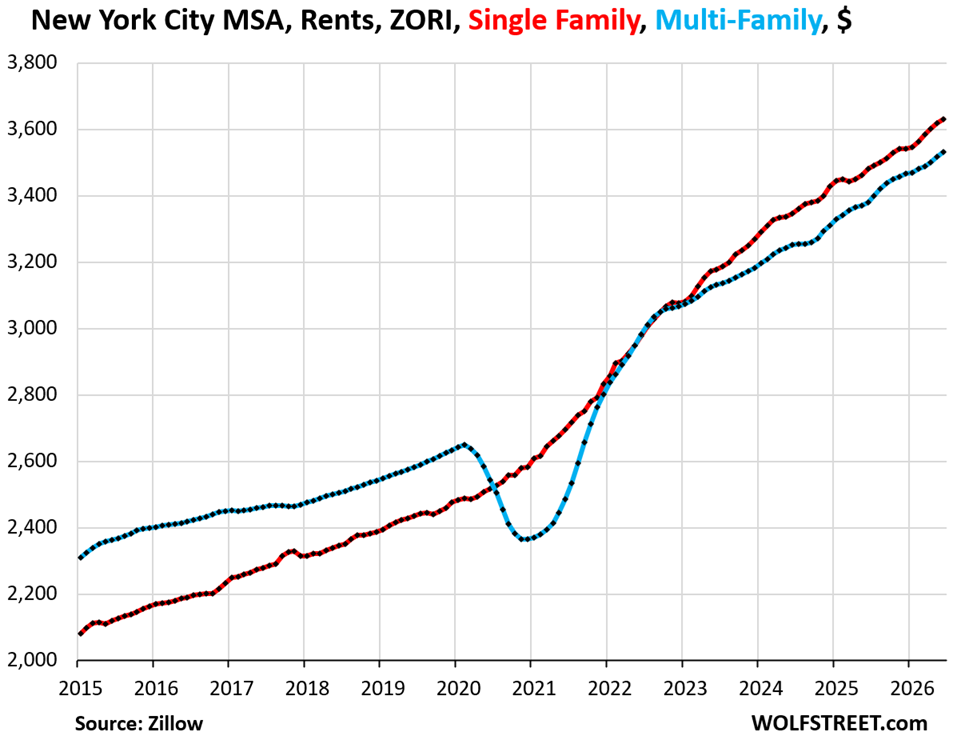
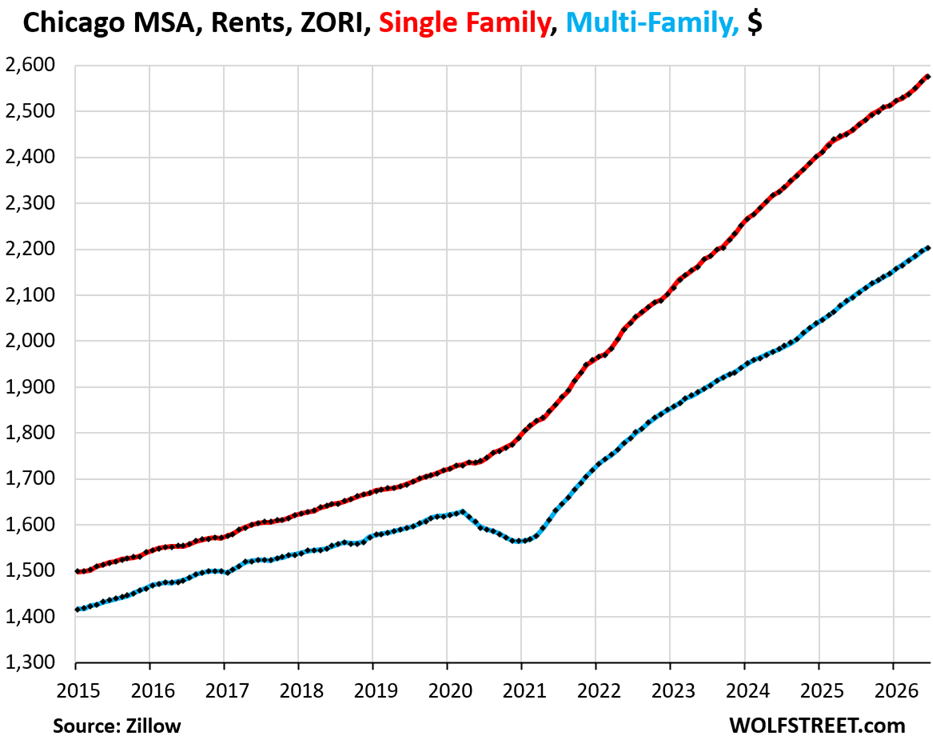
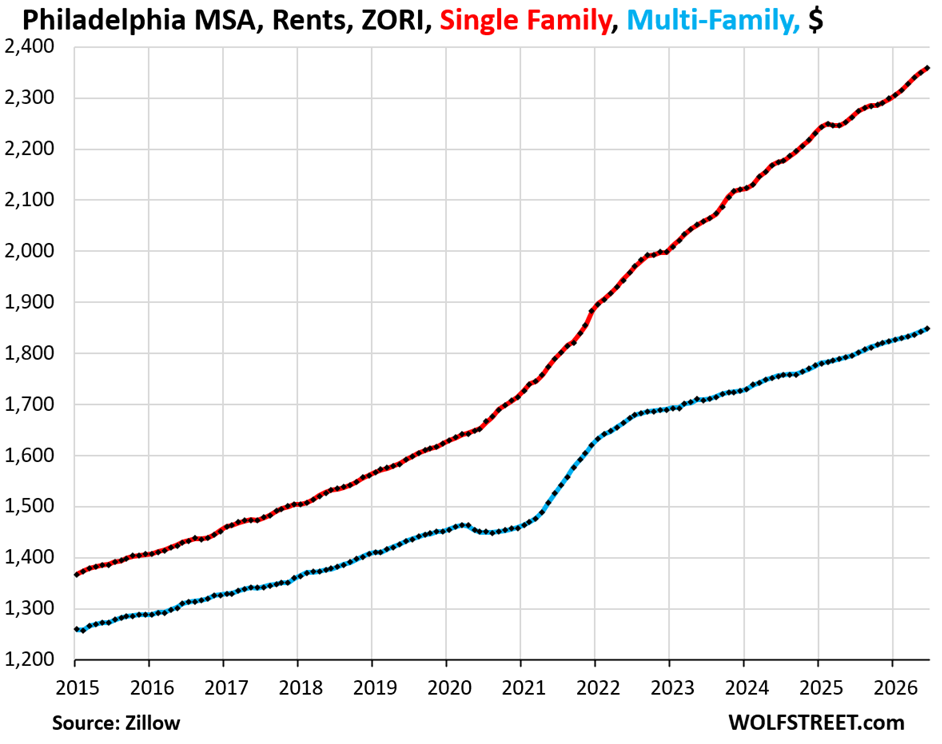
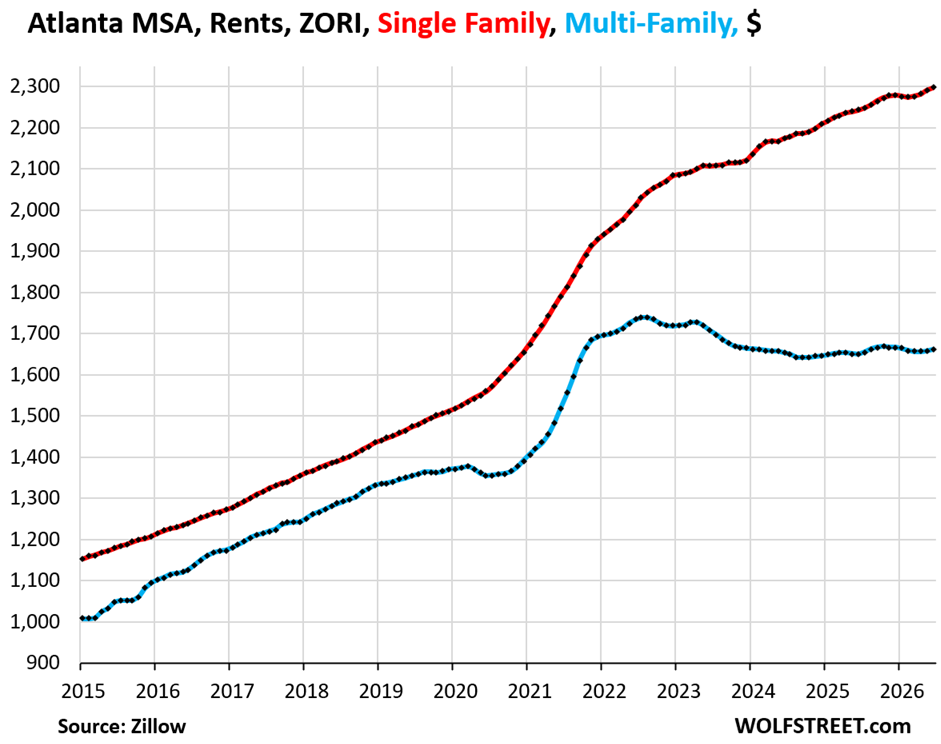
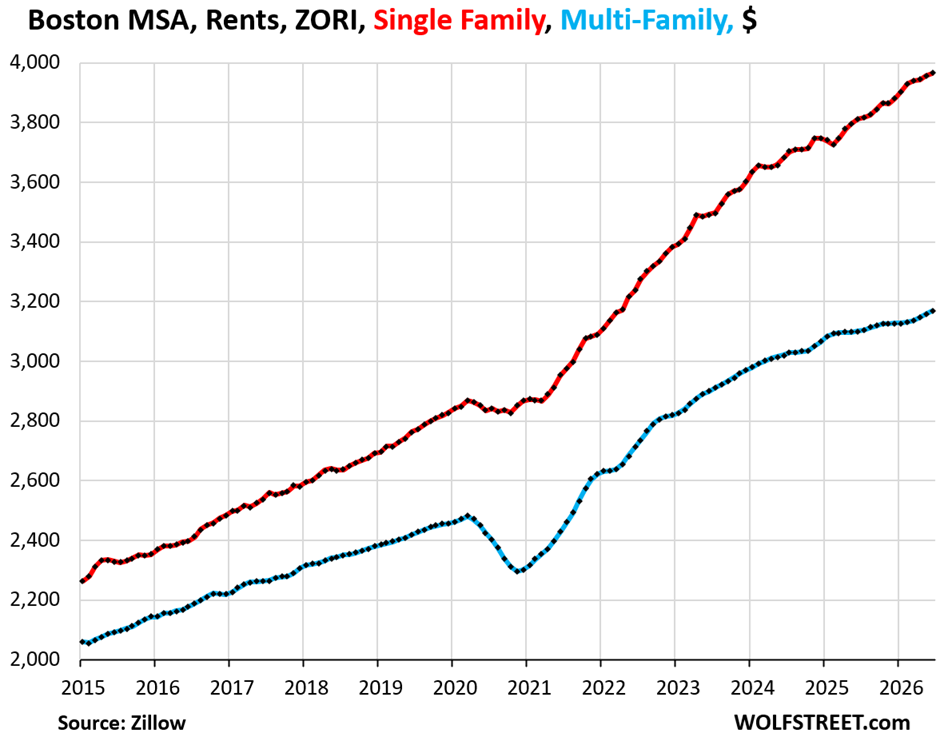
In older, high-density markets like New York City and Boston, rents for both single-family and multifamily units continue to rise in near-lockstep. In the New York metro, demand remains robust enough to absorb new supply, with both sectors showing brisk year-over-year increases. Chicago has also maintained a steady upward trajectory, with single-family rents reaching new records and multifamily rents following closely behind, suggesting a balanced supply-demand dynamic.
2. The Divergent Markets: Dallas, Phoenix, Denver, and Washington D.C.
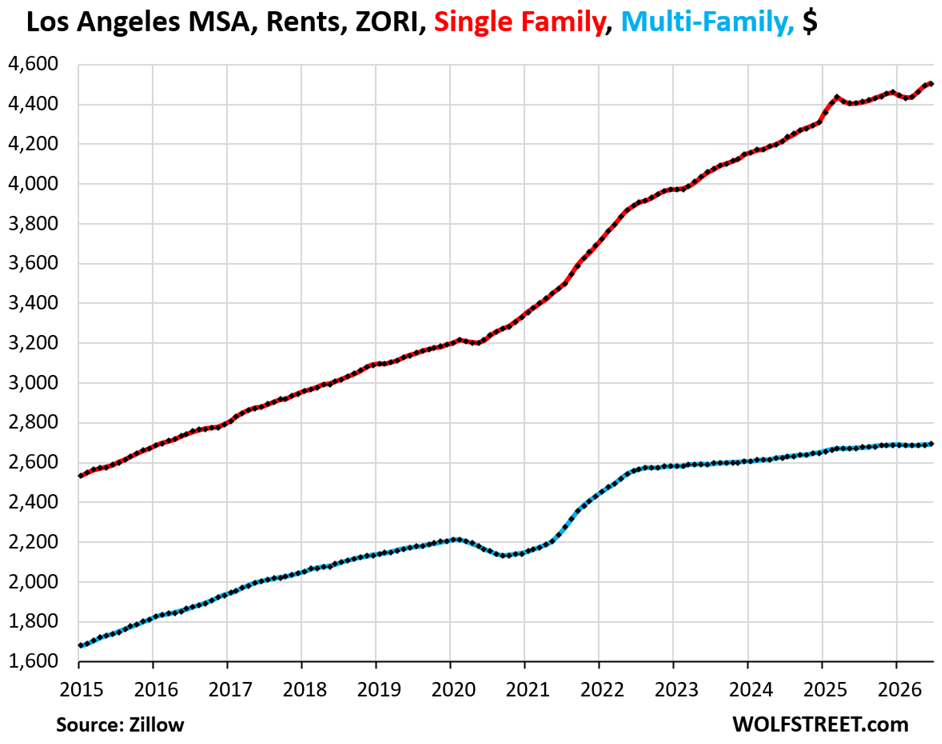
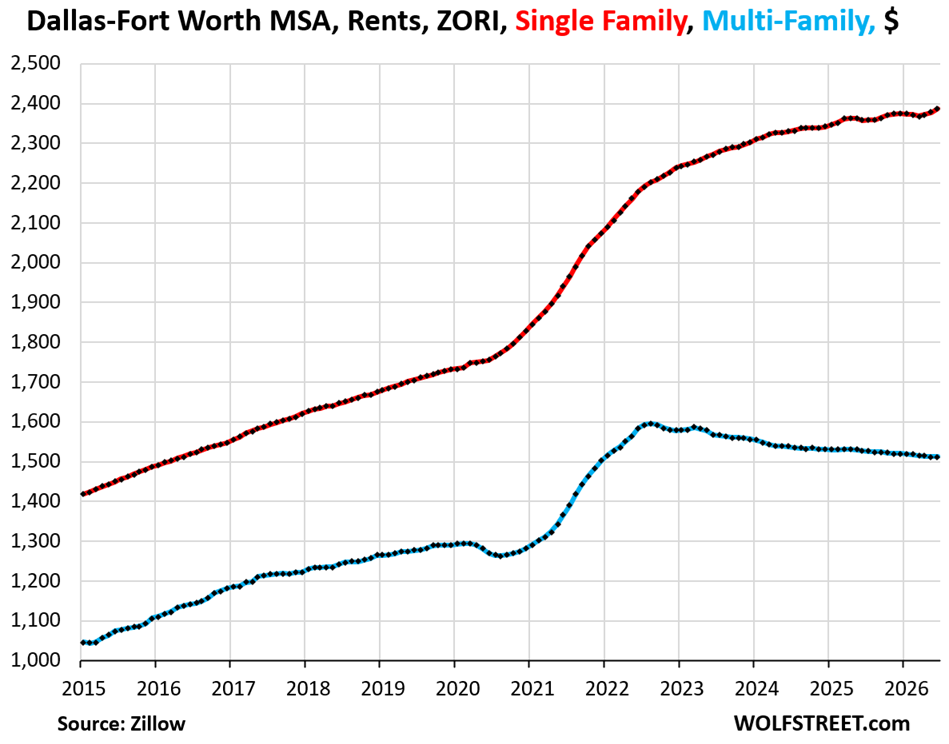
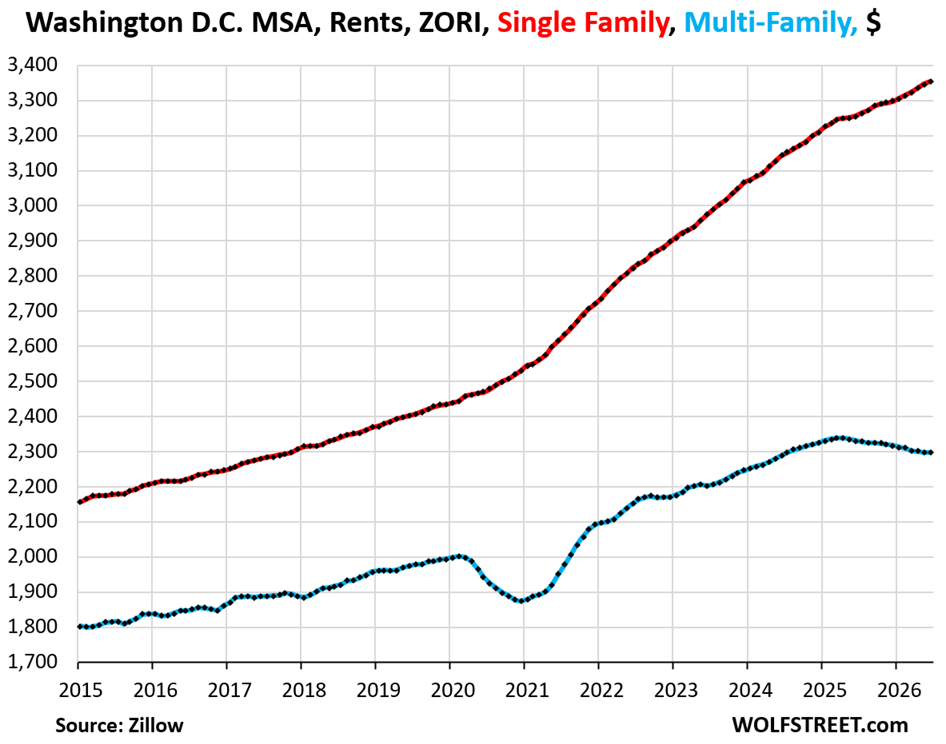
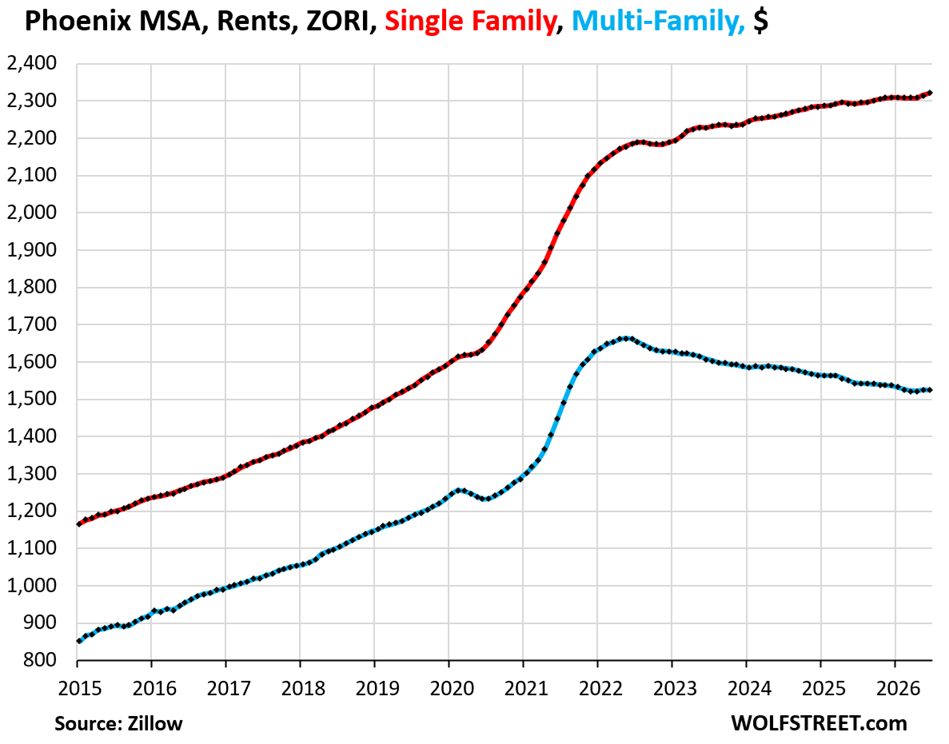
These markets represent the clearest examples of the SFR-MFR split. In Dallas-Fort Worth, multifamily rents have retreated by 5% from their 2022 peak, while single-family rents have continued to climb from record to record. A similar pattern is visible in Phoenix, where multifamily rents have fallen 8% since the spring of 2022. Denver and Washington D.C. have also seen single-family rents hit new highs even as the multifamily sector cools, indicating that families in these regions are prioritizing space and suburban living over apartment dwelling, despite the higher costs.
3. The Tech and Sunbelt Extremes: Austin and San Francisco
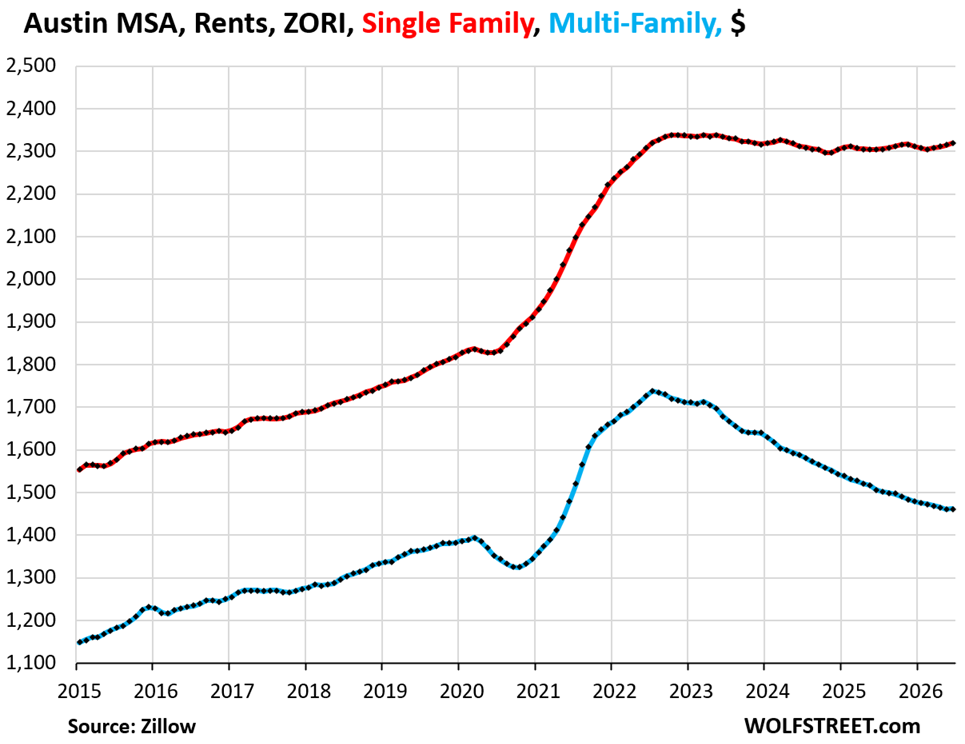
Austin, Texas, serves as the primary cautionary tale of oversupply. Multifamily rents in the Austin metro have plummeted by 16% from their mid-2022 peak. While single-family rents in the area have eased slightly, they have recently begun to tick upward again, widening the local gap significantly.
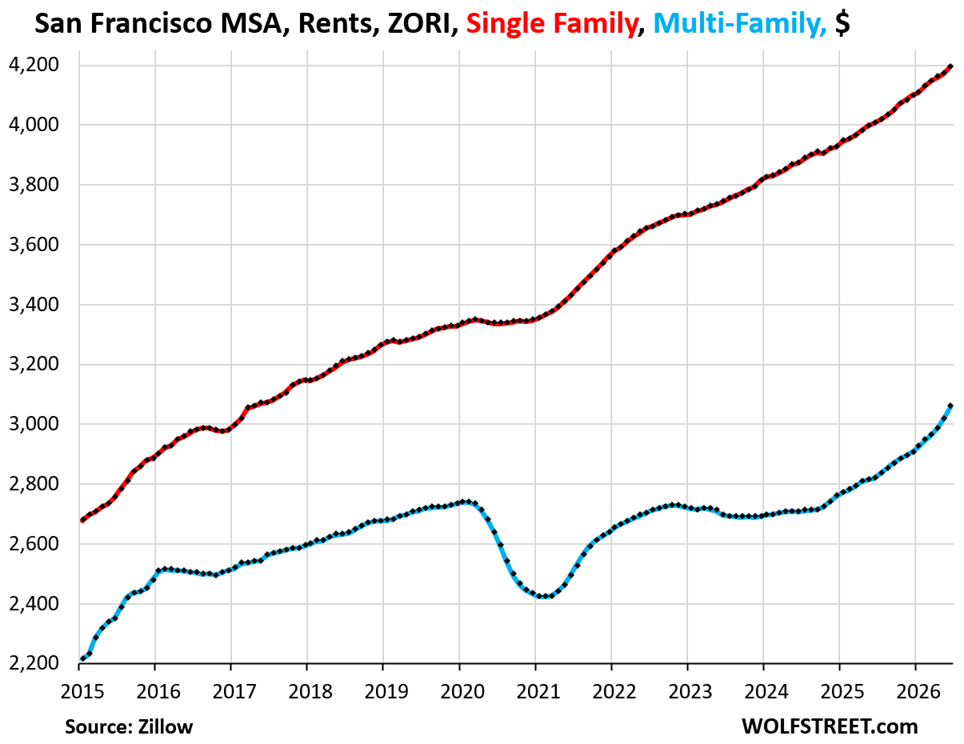
Conversely, San Francisco has seen a surprising resurgence. After years of stagnation and "doom loop" narratives, the artificial intelligence (AI) boom has revitalized the city’s rental market. Multifamily rents in San Francisco surged by 13% starting in late 2024, with June 2026 recording a 1.3% month-over-month spike—the largest in years. Single-family rents in the Bay Area have also resumed a sharp upward climb, suggesting that the tech-driven recovery is lifting all sectors of the local housing market.
Broader Economic Impact and Implications
The widening gap between single-family and multifamily rents has significant implications for the broader U.S. economy and the path of monetary policy. Shelter costs are a primary component of the Consumer Price Index (CPI), and the Federal Reserve closely monitors these trends to gauge the persistence of inflation.
For the American consumer, the current environment presents a paradox. While the "renter of choice" continues to drive up prices for single-family homes, the surplus of multifamily units offers a potential release valve for those willing to trade space for affordability. However, the 29.7% premium for single-family living suggests that for many households, an apartment is no longer considered a direct substitute for a house, regardless of the price difference.
Furthermore, the distress in the multifamily CMBS market poses a risk to regional banks and institutional investors. As more properties face foreclosure or forced sales, the valuation of multifamily assets could see a downward adjustment, potentially leading to a tightening of credit for future construction projects. This could, ironically, set the stage for a future housing shortage once the current glut is finally absorbed.
Conclusion and Outlook
As of mid-2026, the U.S. rental market is defined by a lack of equilibrium. The massive construction boom of the early 2020s succeeded in cooling the apartment market, but it failed to provide a similar reprieve for the single-family sector. With population growth slowing and the AI boom creating localized pockets of extreme demand, the "national" housing story has fragmented into a series of highly specific regional narratives.
For now, the single-family rental remains the "premium" product of the American housing market, commanding record-high rents and a widening lead over its multifamily counterparts. Whether this gap is a permanent structural shift or a temporary imbalance remains to be seen, but for the millions of Americans navigating the current market, the choice between the suburban house and the urban apartment has never been more financially consequential.