The government is already busy fighting over what to do with the $31 billion in profits on its foreign exchange interventions last fiscal year.

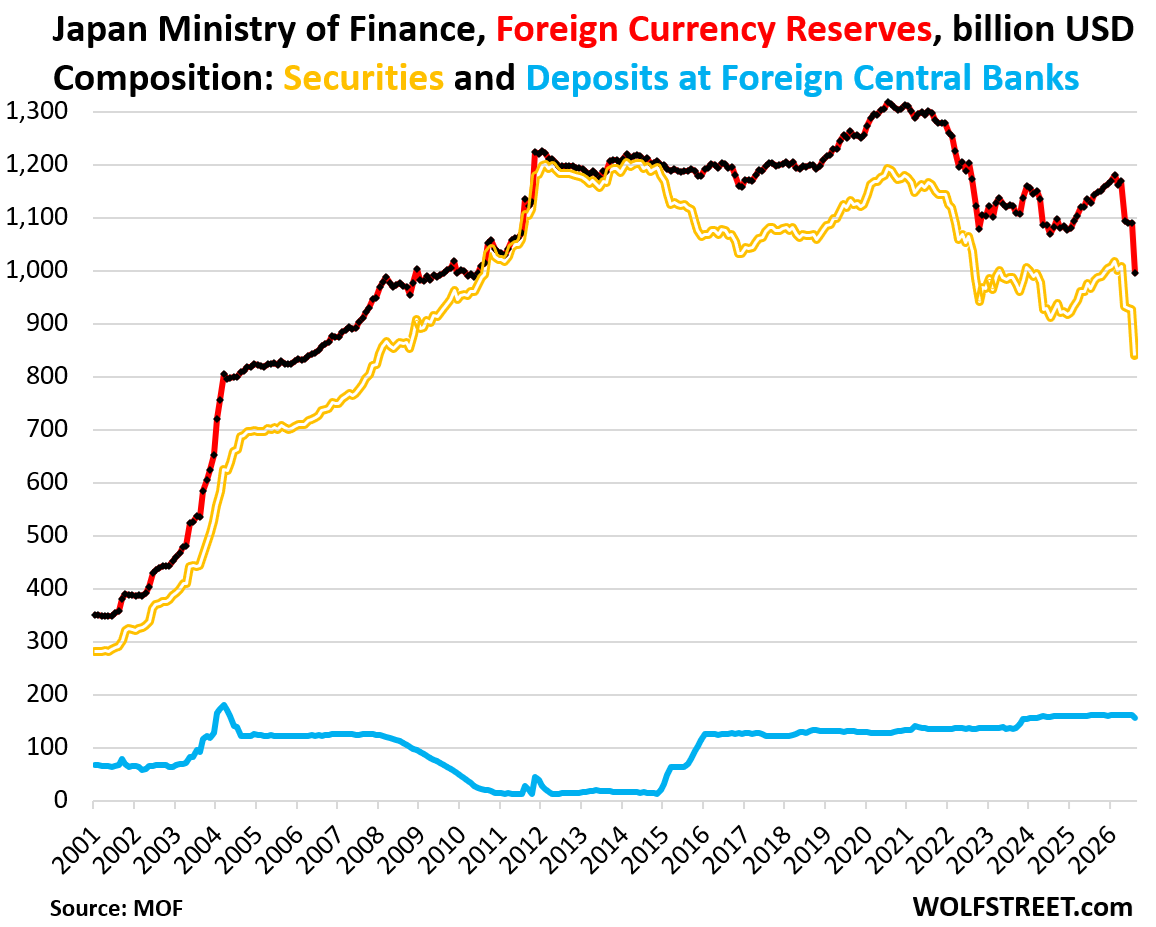
The Japanese Ministry of Finance (MOF) reported a significant shift in the nation’s financial landscape this week, revealing that foreign currency reserves plummeted by a record $94.6 billion in August. This 8.7% contraction brought the total reserves down to $995 billion, falling below the symbolic trillion-dollar threshold for the first time in years. This sharp decline serves as the most tangible evidence yet of the aggressive, high-stakes intervention strategy employed by Japanese authorities to stabilize the yen against the U.S. dollar—a move coordinated, in part, through joint efforts between Tokyo and Washington.
The Mechanics of Market Intervention
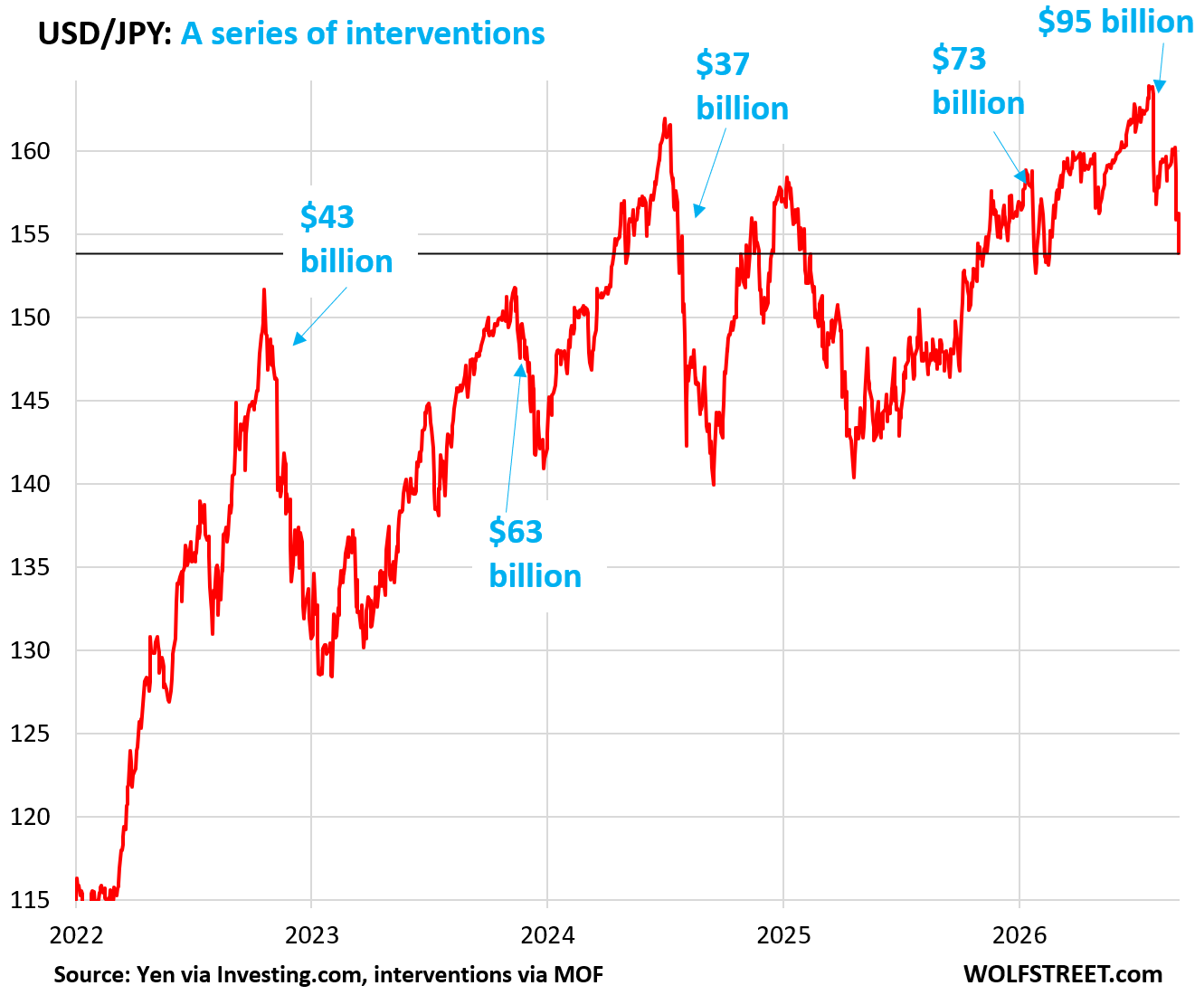
The August figures are not an isolated event but the culmination of a four-month period of intense currency market activity. Between May and August, Japan’s foreign reserves contracted by $174 billion, representing a 14.9% decline. This period was marked by critical interventions, most notably on July 31, when the MOF moved to halt the rapid depreciation of the yen.
These reserves, which act as a strategic buffer for the Japanese economy, are primarily composed of liquid securities—predominantly U.S. Treasury bonds—and cash deposits held at foreign central banks. The data released by the MOF indicates that securities holdings dropped by $87.8 billion in August to $840 billion. Simultaneously, cash deposits held at the Federal Reserve’s Reverse Repo facility for foreign accounts decreased by $6.9 billion, settling at $155 billion.
The scale of the July 31 intervention was historic. The MOF confirmed the repurchase of ¥15.4 trillion in yen-cash, a move that necessitated the liquidation of a massive volume of foreign-denominated assets. By selling U.S. dollar-denominated Treasuries and purchasing yen, the ministry sought to put a floor under the currency, which had been suffering from a long-term decline exacerbated by interest rate differentials between the Bank of Japan (BOJ) and the U.S. Federal Reserve.
A Historical Perspective on Reserve Accumulation
While the recent liquidation of assets is dramatic, it must be contextualized within the history of Japan’s reserve accumulation. Much of the current portfolio was built during the 2001–2011 period, a time when the yen was significantly stronger against the U.S. dollar. During those years, the MOF purchased vast quantities of U.S. Treasuries at favorable exchange rates. By the peak in early 2012, Japan’s foreign securities holdings had reached approximately $1.20 trillion.
The subsequent decade, dominated by the “Abenomics” era, saw the BOJ pursue aggressive quantitative easing and negative interest rate policies. As the Japanese government engaged in deficit spending, the yen underwent a protracted period of depreciation, losing roughly 48% of its value over the following years.
The current environment, therefore, presents a paradoxical benefit for the Japanese government: while the yen’s weakness has necessitated costly interventions, the liquidation of assets acquired years ago—when the dollar was cheaper—has resulted in massive realized profits in yen terms. Essentially, the MOF is selling assets bought at a lower cost basis and converting them into yen at current, much higher, exchange rates.
The Special Account and the Political Tug-of-War
These financial gains are funneled into the Foreign Exchange Fund Special Account (FEFSA). By design, the FEFSA is legally sequestered from the government’s General Account, a measure intended to prevent the use of volatile currency trading gains for routine political spending.
However, the sheer volume of profit generated by recent interventions has turned the FEFSA into a focal point for legislative debate. For the fiscal year ending March 2026, the FEFSA recorded profits of ¥5.06 trillion (approximately $31 billion). This figure does not even account for the subsequent gains from the May and July 2026 interventions, which are expected to bolster the account further.
Under current legal statutes, 30% of these profits must be retained within the FEFSA to serve as a buffer against future market volatility or potential losses. The remaining 70%—amounting to roughly ¥3.54 trillion—is earmarked for transfer into the General Account. It is this pool of funds that has ignited a fierce debate within the Diet and the Prime Minister’s office.
Policy Implications and the Consumption Tax Debate
The utilization of these windfall profits has become a key campaign and policy issue. Prime Minister Takaichi has publicly championed the use of these funds to finance a reduction in the consumption tax on food. The initial proposal suggested a complete removal of the 8% tax on food items. Following intense negotiations in August, a compromise was reached to reduce the tax on food to 1% for a two-year period, with additional subsidies effectively nullifying the tax for low- and middle-income households.
The government’s stated objective is to fund this tax relief without resorting to the issuance of new government bonds, which are already at record levels relative to GDP. The FEFSA profits represent a rare “non-debt” source of revenue, making them highly attractive to politicians looking to fulfill campaign promises without worsening the nation’s fiscal deficit.
Analytical Implications for Global Markets
The reduction in Japan’s foreign reserves carries broader implications for international finance, particularly regarding the U.S. Treasury market. As one of the largest foreign holders of U.S. debt, Japan’s strategic liquidation has the potential to influence yields. While the market has thus far absorbed the selling pressure without a catastrophic spike in yields, the scale of the recent divestment serves as a reminder of the interconnectedness of global central bank balance sheets.
Furthermore, the reliance on these profits to fund domestic fiscal policy creates a moral hazard. If the government becomes structurally dependent on currency intervention profits to balance its books, it could create perverse incentives. A strong yen, while beneficial for reducing the cost of imports and curbing inflation, would reduce the yen-denominated profits generated by liquidating foreign assets. Conversely, a weak yen maximizes these profits but increases the cost of living for Japanese citizens, potentially necessitating further tax cuts.
Conclusion: A Balancing Act
The Ministry of Finance currently finds itself walking a tightrope. It must maintain enough liquidity in the FEFSA to continue acting as a stabilizer for the yen should market volatility spike again, while simultaneously satisfying political demands for fiscal stimulus.
As of September 2026, the situation remains fluid. The government is expected to finalize the budgetary allocation of the ¥3.54 trillion transfer in the coming months. Observers will be closely monitoring the BOJ’s interest rate trajectory and the MOF’s reserve reports, as any further drawdown in reserves will be interpreted by markets as a signal of continued, perhaps more frequent, intervention. For now, the "slush fund" debate continues, highlighting the complexities of managing a massive, debt-laden economy while navigating the turbulent waters of global foreign exchange markets.