Landlord-Tenant Friction Exposes Liability Risks Over Emergency Access and Property Maintenance

The complexities of residential property management frequently test the boundaries of legal compliance, tenant relations, and personal liability for independent landlords. A recent incident involving a single-family rental property in San Francisco highlights the friction that can occur when emergency property interventions intersect with tenant privacy expectations and state housing regulations. The case has sparked broader industry discussions regarding emergency entry protocols, tenant communication standards, and the legal ramifications of deferred maintenance in residential leasing.
Chronology of Events and Emergency Response
The incident unfolded on a Saturday afternoon when the owner of a single-family residential property received an alert from a neighboring resident. According to communications reviewed by property management analysts, the neighbor sent a text message at 3:35 p.m. reporting a continuous, high-pitched alarm emanating from the rental home. The message indicated that the audible warning, potentially a smoke detector or security system, had been sounding throughout the day while the occupants were away.
Faced with potential fire hazards and structural liability, the property owner suspended personal commitments and traveled to the site, arriving within six minutes. Upon confirming the persistent auditory alarm from the public street, the owner attempted to contact the primary tenant via electronic mail to announce the presence on-site. Receiving no immediate response within a five-minute window, the owner utilized a master key to enter the premises to investigate the potential hazard.
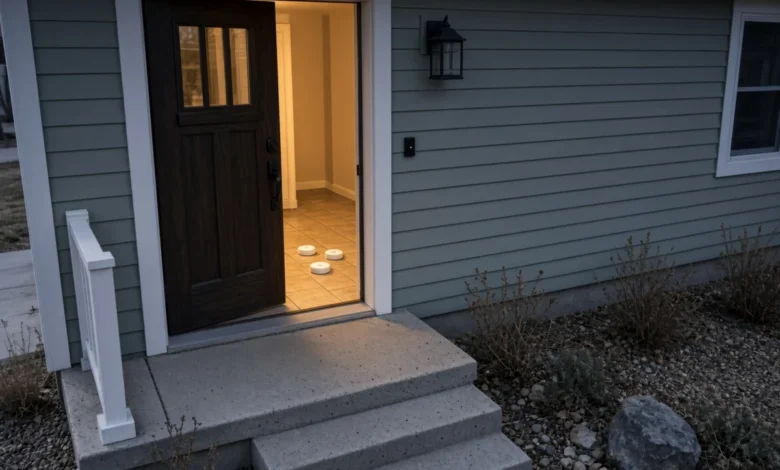
Inspection of the interior revealed no signs of active fire, smoke, or electrical malfunction. However, a physical sweep of the garage uncovered a critical safety violation: a stack of three detached smoke alarms resting on the concrete floor, with the top unit actively sounding its low-battery or end-of-life warning tone. The owner disabled the device, secured the property, and transmitted a follow-up digital notification to the tenant detailing the inspection results and confirming that the residence was secure.
Legal Framework Governing Emergency Entry in California
Under California residential leasing law, statutory regulations strictly govern the circumstances under which a landlord may enter an occupied dwelling. California Civil Code Section 1954 outlines specific permissible entry scenarios, prioritizing tenant privacy while carving out unambiguous exemptions for urgent situations.
The primary statutory exemption applies directly to emergency circumstances, which legally waive both the standard 24-hour written notice requirement and the restriction limiting entry to normal business hours. Legal experts note that a continuous, unverified alarm sounding from an empty residential property constitutes a textbook emergency, granting the property owner the legal right to enter the premises without prior authorization to protect life and property. Standard lease agreements typically incorporate provisions for routine maintenance access, but these contractual clauses cannot supersede statutory emergency exemptions established under state law.
Tenant Response and Maintenance Compliance Concerns
Six days following the incident, the tenant responded via electronic communication. The message acknowledged that the alarms had been discarded due to reaching the end of their operational lifecycles and causing auditory disturbances. Additionally, the communication requested that the landlord provide advance text message notification prior to any future property visits, regardless of the circumstances.
The delayed response and subsequent request for mandatory pre-notification drew scrutiny from housing compliance specialists. While standard communication protocols encourage polite coordination between landlords and tenants, enforcing a text-message prerequisite during an active emergency scenario introduces significant operational and legal risks. Property managers emphasize that delaying an inspection during a suspected fire or system failure could exacerbate property damage, void insurance coverage stipulations, or violate municipal safety codes.
Furthermore, the discovery of multiple disconnected smoke alarms raised serious regulatory compliance questions. Pursuant to California Health and Safety Code Section 13113.7, property owners of rented single-family dwellings bear ultimate legal responsibility for ensuring that functional smoke detection devices are installed and maintained. Conversely, state statutes mandate that occupants immediately notify the landlord or property manager whenever a detection device becomes inoperable.
The presence of three stacked, deactivated alarms on the garage floor indicated a prolonged period during which the residence lacked mandatory fire safety protections. This oversight exposed the property to potential municipal code violations and severe legal liability in the event of an emergency.
Industry Implications and Shifts in Passive Real Estate Investment
This case illustrates the mounting operational friction associated with direct physical property management, particularly for individual investors transitioning toward passive income strategies. Industry data indicates a growing preference among seasoned real estate investors to divest from direct single-family rental management in favor of diversified, professionally managed private real estate investment trusts (REITs) and institutional crowdfunding platforms, such as Fundrise.
By shifting capital away from physical residential assets, investors eliminate direct tenant interactions, emergency maintenance dispatching, and localized regulatory compliance burdens. Market analysts note that while physical real estate remains a staple of wealth preservation, the administrative overhead and liability exposure associated with tenant-occupied properties continue to drive structural changes in how private capital accesses the real estate sector.
In response to the San Francisco incident, housing authorities and legal advisors recommend that independent landlords update their residential lease agreements to reinforce explicit tenant reporting protocols regarding life-safety devices. Establishing clear, legally compliant procedures for emergency access and routine maintenance notification remains essential for mitigating liability, preserving property value, and maintaining professional landlord-tenant relations.