The Resilience of Innovation: Lessons from the Ukrainian Frontline and the Evolution of Modern Warfare

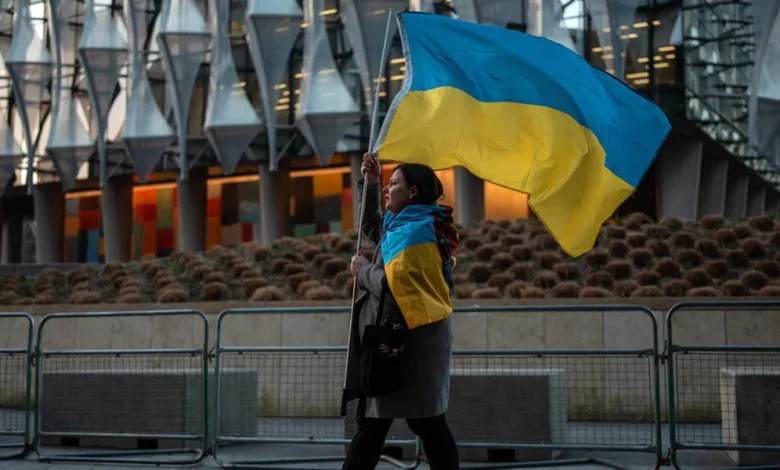
The changing face of the battle for Ukraine has taken much of the world by surprise, both in terms of the horrific scale of casualties that Russia is enduring—estimated at nearly 40,000 in the last month alone according to Ukrainian officials—and the dynamism and sheer chutzpah that has characterized Ukraine’s war effort. As the conflict enters its fifth year in the summer of 2026, the international community is forced to reconcile its previous assumptions about military power with the stark reality of a conflict defined by technological improvisation and democratic grit. There are several reasons why Ukraine has been able to stymie its much larger aggressor, and for the world’s democracies, the most important lesson to draw from Ukrainians’ doggedness and brilliant innovations may be that we should not be so surprised by the power of a free people defending their sovereignty.
The Current Landscape: A Summer of Attrition and Innovation
By July 2026, the frontline has become a laboratory for the future of combat. The recent collapse of several Russian advances, as reported by observers in Moscow and Kyiv, highlights a significant shift in the kinetic capabilities of the Ukrainian Armed Forces (AFU). The reported 40,000 casualties suffered by Russian forces in a single thirty-day window represent one of the deadliest periods for the Kremlin since the initial invasion in February 2022. This surge in attrition is attributed not merely to traditional trench warfare, but to the integration of autonomous systems and real-time intelligence gathering that has rendered massed infantry and armor assaults increasingly suicidal.
Military analysts at Oxford and other strategic hubs suggest that the "chutzpah" mentioned by observers refers to Ukraine’s willingness to take calculated risks that bypass traditional Soviet-era doctrines. From deep-tissue strikes within Russian logistics hubs to the use of domestic long-range drone swarms, Ukraine has shifted the burden of the war onto Russian soil, challenging the Kremlin’s narrative of a "controlled" operation.
A Chronology of Resistance (2022–2026)
To understand the current state of the conflict, one must look at the evolution of the defense since 2022. The timeline reveals a consistent pattern of Ukraine exceeding international expectations while Russia struggled to adapt its rigid command structure.
- February – April 2022: The initial invasion fails to capture Kyiv. Ukraine utilizes man-portable anti-tank weapons (NLAWs and Javelins) to devastate Russian armored columns, forcing a retreat from the north.
- 2023: The war transitions into a grueling battle of attrition in the Donbas. Ukraine receives Western main battle tanks and long-range missile systems like HIMARS, allowing for the systematic destruction of Russian ammunition depots.
- 2024: The "Year of the Drone." Ukraine ramps up domestic production of First-Person View (FPV) drones, effectively neutralizing Russian naval advantages in the Black Sea without a traditional navy.
- 2025: Strategic deep strikes become the norm. Ukraine targets Russian energy infrastructure and military airfields hundreds of kilometers behind the border, utilizing AI-guided navigation to bypass electronic warfare umbrellas.
- 2026 (Present): The Russian military faces a manpower crisis. Despite massive mobilization efforts, the lack of experienced NCOs and the high lethality of the modern battlefield lead to the staggering casualty rates observed in June and July.
Supporting Data: The Cost of Aggression
The scale of the conflict is reflected in the data compiled by international monitoring groups and economic institutions. As of mid-2026, the figures underscore the unsustainable nature of the Russian offensive.
- Casualty Figures: While Russia remains secretive about its losses, independent verifications and Ukrainian military intelligence suggest that total Russian casualties (killed and wounded) have surpassed 600,000 since 2022. The recent spike to 40,000 a month indicates a breakdown in tactical cohesion during major offensive pushes.
- Economic Impact: Russia’s defense spending has ballooned to over 8% of its GDP, cannibalizing sectors like healthcare and education. Conversely, Ukraine, bolstered by nearly $350 billion in cumulative international aid, has managed to keep its economy afloat while pivoting toward a "defense-tech" industrial base.
- Technological Proliferation: In 2026, Ukraine is producing an estimated 150,000 drones per month. This domestic production capability ensures that for every Russian shell fired, Ukraine can respond with multiple precision-guided munitions, regardless of delays in foreign shipments.
Official Responses and Strategic Perspectives
The international reaction to the current phase of the war reflects a mix of alarm at the human cost and admiration for Ukrainian resilience.
In a recent address, Ukrainian President Volodymyr Zelenskyy emphasized that the high Russian casualty rate is a direct result of the Kremlin’s "disregard for human life," contrasted with Ukraine’s "technology-first" approach. "We do not trade lives for meters of ground," Zelenskyy stated. "We use intelligence, we use innovation, and we use the courage of people who know exactly what they are fighting for."
From the Kremlin, the rhetoric remains defiant but increasingly strained. Official spokespersons continue to frame the losses as a necessary sacrifice in a broader existential struggle against NATO expansion. However, reports of rising anxiety in Moscow suggest that the domestic appetite for a "forever war" is waning as the economic and demographic toll becomes impossible to hide from the public.
Western leaders, including those within the European Union and NATO, have used the recent data to argue for continued and accelerated support. Chrystia Freeland, a prominent voice on the geopolitical stage, has noted that the lesson for democracies is one of self-reflection. The assumption that a larger, autocratic power would inevitably crush a smaller neighbor was rooted in an outdated understanding of power. Ukraine has proven that a motivated, innovative democracy can leverage decentralized command and rapid technological adoption to negate a numerical disadvantage.
Broader Impact and Geopolitical Implications
The implications of Ukraine’s "doggedness and brilliant innovations" extend far beyond the borders of Eastern Europe. The conflict has fundamentally altered the global security architecture in several key ways:
The End of the "Mass over Quality" Myth
For decades, military theorists argued that quantity has a quality of its own. The Russian experience in Ukraine has challenged this, showing that massed forces are easily detected and destroyed in a transparent battlefield. The integration of commercial satellite imagery and consumer-grade drone technology has created a "glass battlefield" where traditional maneuvers are easily countered.
The Rise of Democratic Defense-Tech
Ukraine has become the world’s leading hub for military technology. This has spurred a new arms race focused on software, AI, and autonomous systems rather than just heavy steel. Democracies are learning that their greatest strength lies in their ability to innovate quickly—a trait that is often stifled in the rigid, top-down structures of authoritarian regimes.
Sovereignty and International Law
The survival of the Ukrainian state through 2026 reaffirms the principle of national sovereignty. It sends a potent signal to other revisionist powers that the cost of territorial expansion in the 21st century is prohibitively high. The "chutzpah" shown by Kyiv has effectively rewritten the playbook for asymmetric warfare, providing a template for other nations facing existential threats.
Conclusion: The Endurance of the Free Will
As the world watches the Russian advance collapse under the weight of its own casualties and Ukrainian ingenuity, the overarching narrative is one of democratic endurance. The horrific scale of casualties—those nearly 40,000 individuals lost in a single month—is a somber reminder of the price of aggression. Yet, the dynamism of the Ukrainian defense offers a blueprint for the future.
The lesson for the world’s democracies is clear: do not underestimate the capacity for innovation when a free people is pushed to the brink. Ukraine’s ability to stymie its much larger aggressor is not a fluke of history; it is a testament to the power of improvisation, the importance of international solidarity, and the fundamental strength of a society that values the agency of its citizens. As the conflict continues into its next phase, the world will continue to look to the frontlines in Ukraine, not just for news of the battle, but for a glimpse into the future of freedom itself.