They all spiked: Construction of data centers and power plants; orders for equipment at US manufacturers; and inflation in construction.

The United States industrial landscape is currently undergoing a structural transformation characterized by an unprecedented surge in capital expenditure. Recent data from the U.S. Census Bureau underscores a distinct, multi-sector expansion, with spending on data center infrastructure, power generation, and manufacturing facilities reaching historic levels. This surge is not merely a cyclical fluctuation but represents a fundamental shift in how the American economy is allocating resources toward artificial intelligence (AI), electrification, and the reshoring of critical manufacturing capacity.
The Data Center Construction Boom: An Exponential Trajectory
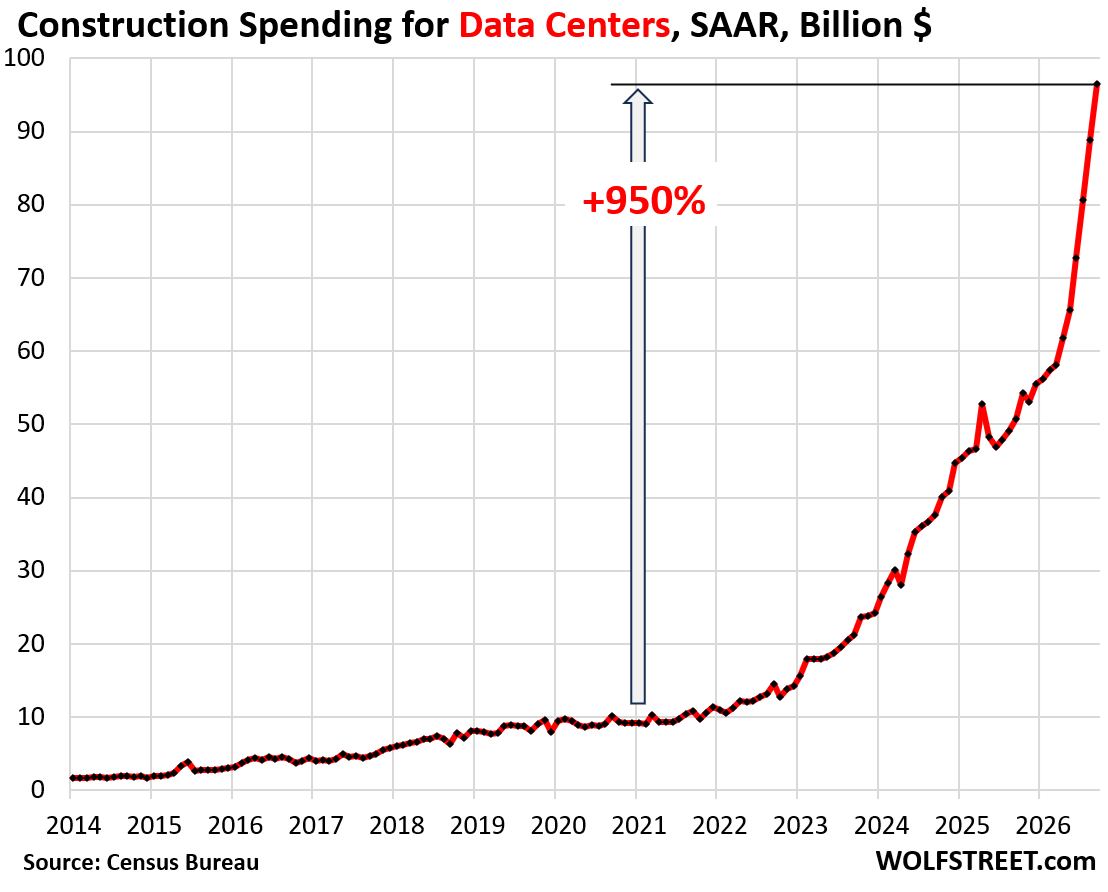
In September, the seasonally adjusted annual rate for data center construction spending reached $96 billion, marking an 8.6% increase over August and a staggering 90% year-over-year jump. To contextualize the scale of this expansion, one must look at the trend line beginning in 2021: since that period, the annual rate of construction spending for these facilities has soared by 950%.
This trajectory is largely driven by the aggressive capital allocation strategies of the world’s largest technology firms. As these entities race to capture market share in the AI sector, they are deploying vast quantities of liquidity. Analysis of the sector reveals that the leading 12 to 13 AI-focused corporations are currently sitting on a collective "war chest" of approximately $1.1 trillion in cash and cash equivalents. This massive liquidity buffer allows these firms to maintain high levels of investment even if broader market conditions tighten or capital costs rise. While some observers question the sustainability of this near-exponential growth, the sheer volume of committed capital suggests that the infrastructure build-out will remain a dominant force in the construction sector for the foreseeable future.
Power Infrastructure and the Energy Challenge
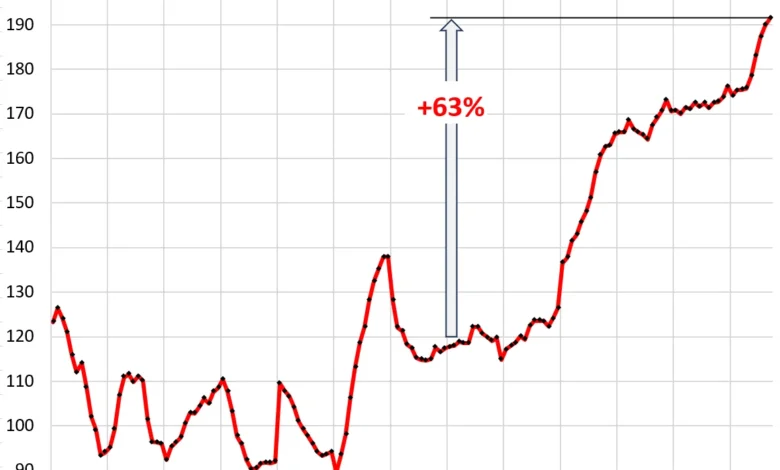
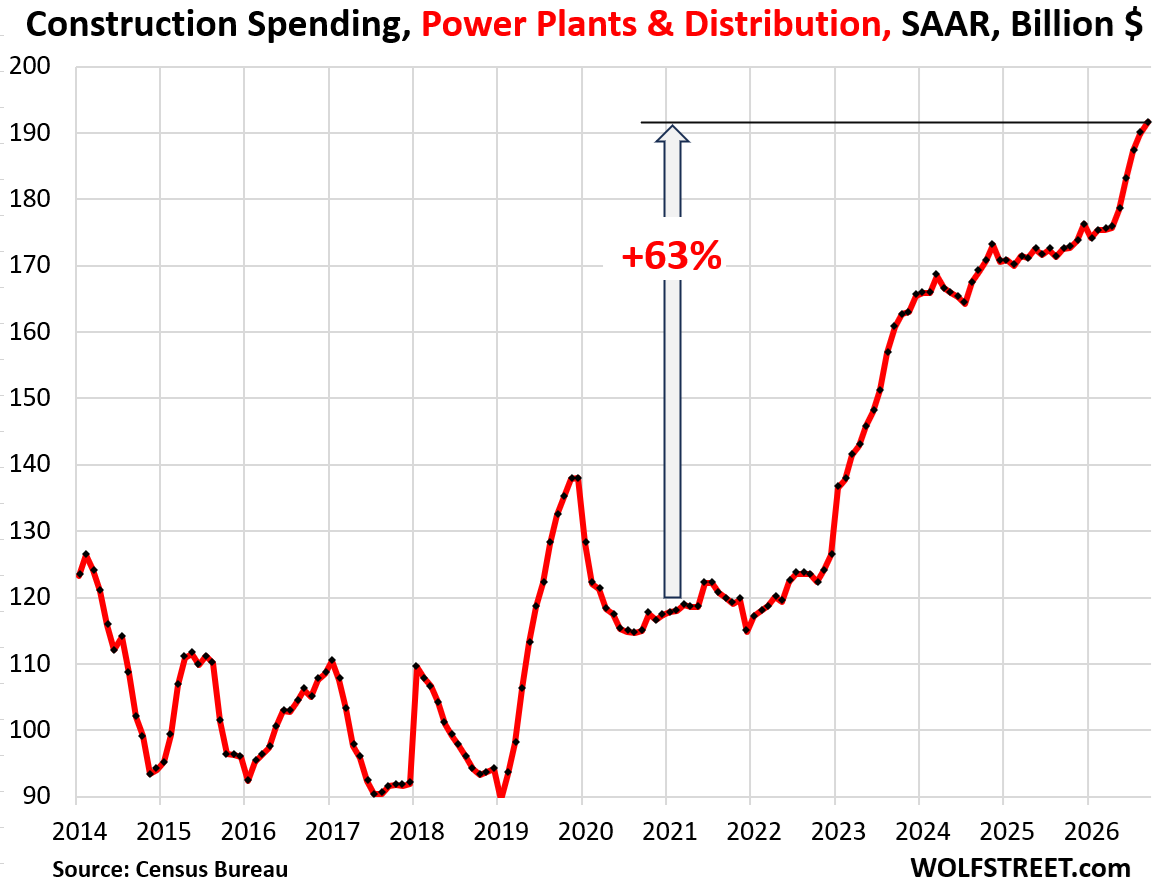
The rapid expansion of data centers has triggered a secondary, equally critical, boom in power plant construction and grid distribution infrastructure. In September, spending in this sector rose by 0.9% month-over-month, bringing the year-over-year growth to 11.1%, with an annual spending rate of $192 billion. Since the start of 2021, investment in power infrastructure has climbed by 63%.
The implications for the energy sector are significant. Data centers require consistent, high-capacity electricity, often necessitating the construction of dedicated power generation units or significant upgrades to regional grid capacities. This has led to local and regional friction, where municipalities and state governments grapple with the competing demands of data center developers and local utility consumers. While these disputes have caused intermittent delays, they have yet to curb the overall momentum of the sector. The energy demand from these facilities has increasingly become a focal point for economic policy discussions, particularly regarding the long-term impacts on electricity pricing and grid stability.

Manufacturing Reshoring and Industrial Capacity
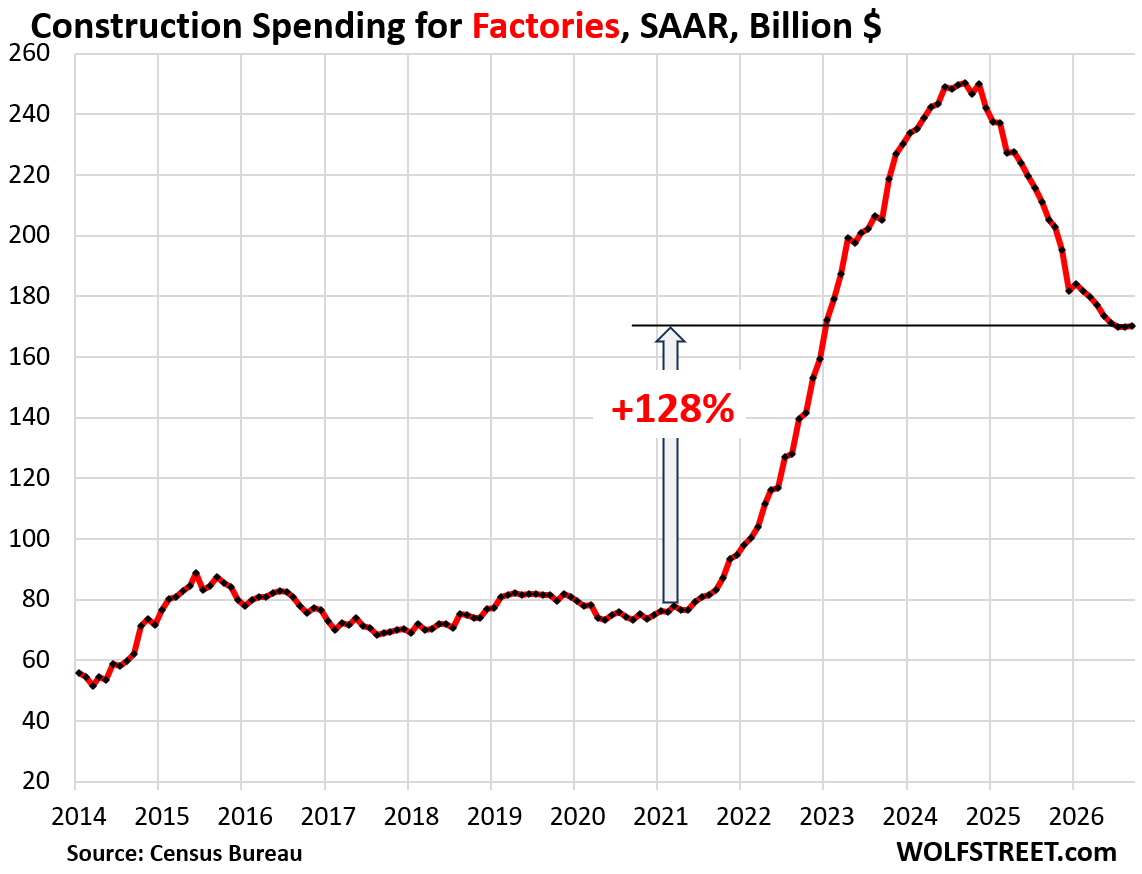
Parallel to the digital infrastructure surge is the ongoing expansion of the U.S. manufacturing base. Factory construction spending has remained robust at an annual rate of $170 billion. While this represents a plateau after the initial post-2021 boom, it remains 128% higher than levels recorded at the beginning of 2021. This sustained investment is a clear indicator of a long-term strategic pivot toward domestic production, particularly in semiconductor fabrication and advanced materials.
Unlike the temporary nature of some construction projects, these manufacturing facilities represent a multi-decade commitment to domestic output. The economic impact of these factories will be measured not by the initial construction spend, but by the long-term contribution to GDP and employment once these facilities reach full operational capacity. The scale of this investment is substantial, with factory construction currently outpacing data center spending by approximately 76%.
Shockwaves of Demand in the Industrial Sector
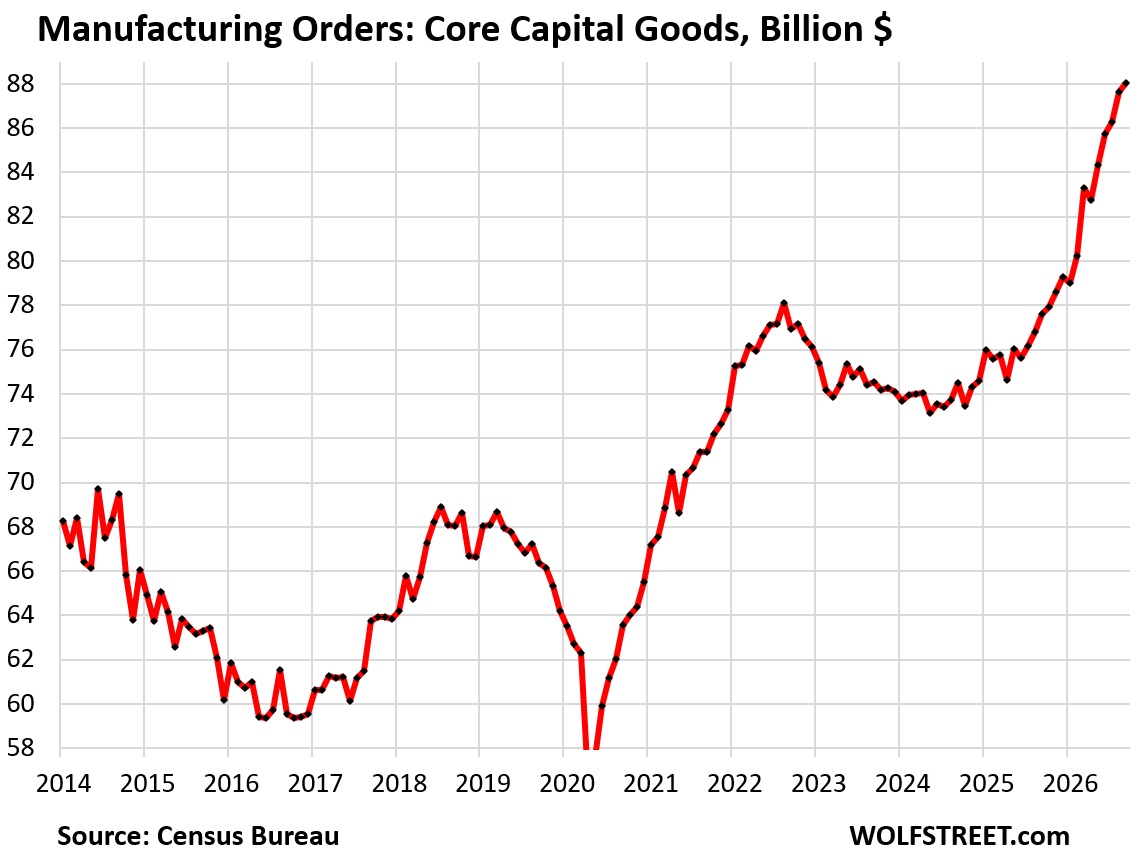
The industrial demand for high-end equipment has created a "shockwave" that is being felt across the broader manufacturing economy. According to recent Census Bureau reports, orders for "core capital goods"—a category that excludes defense and aircraft—rose by 10.4% year-over-year to $88 billion in September.
This category serves as a bellwether for the industrial economy, encompassing a wide range of essential equipment, including:
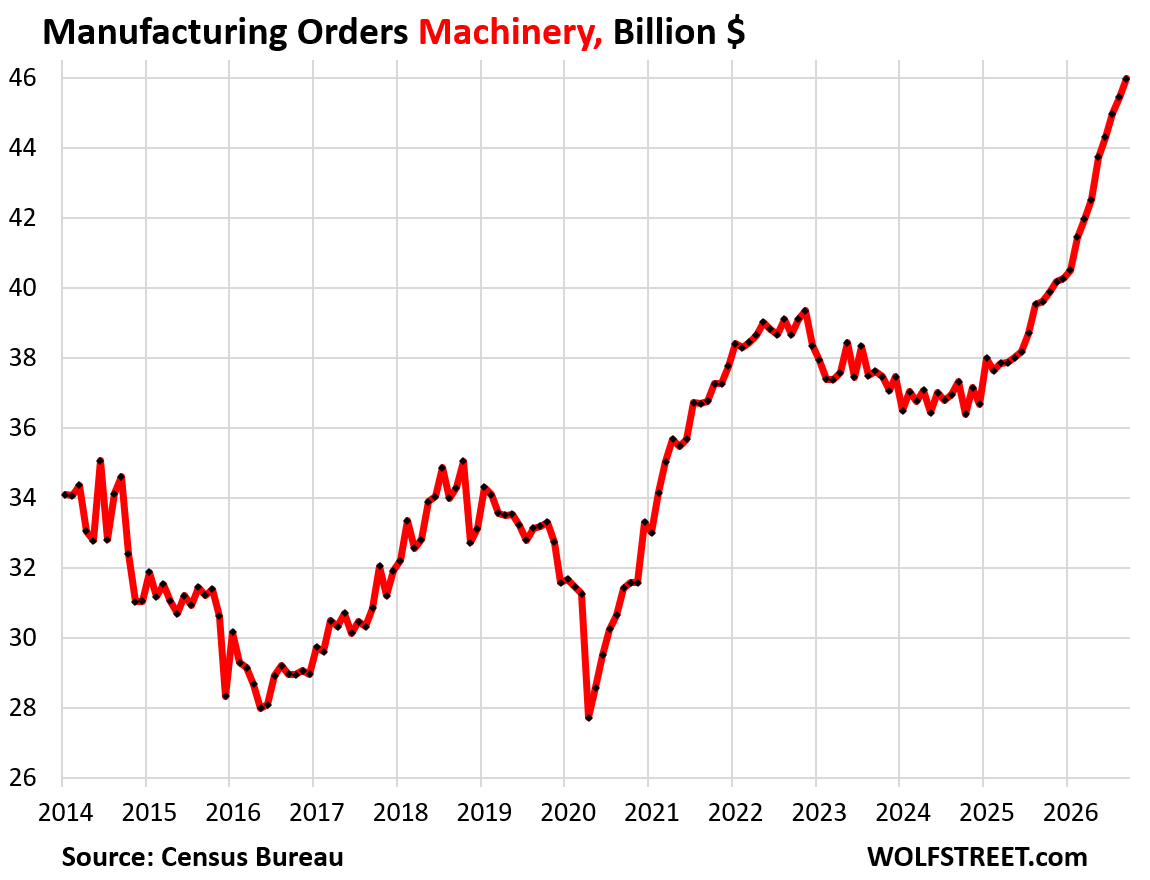
- Machinery: Orders spiked by 16.1% year-over-year to $46 billion. This sector produces the heavy-duty machinery required for both construction and factory-floor operations.
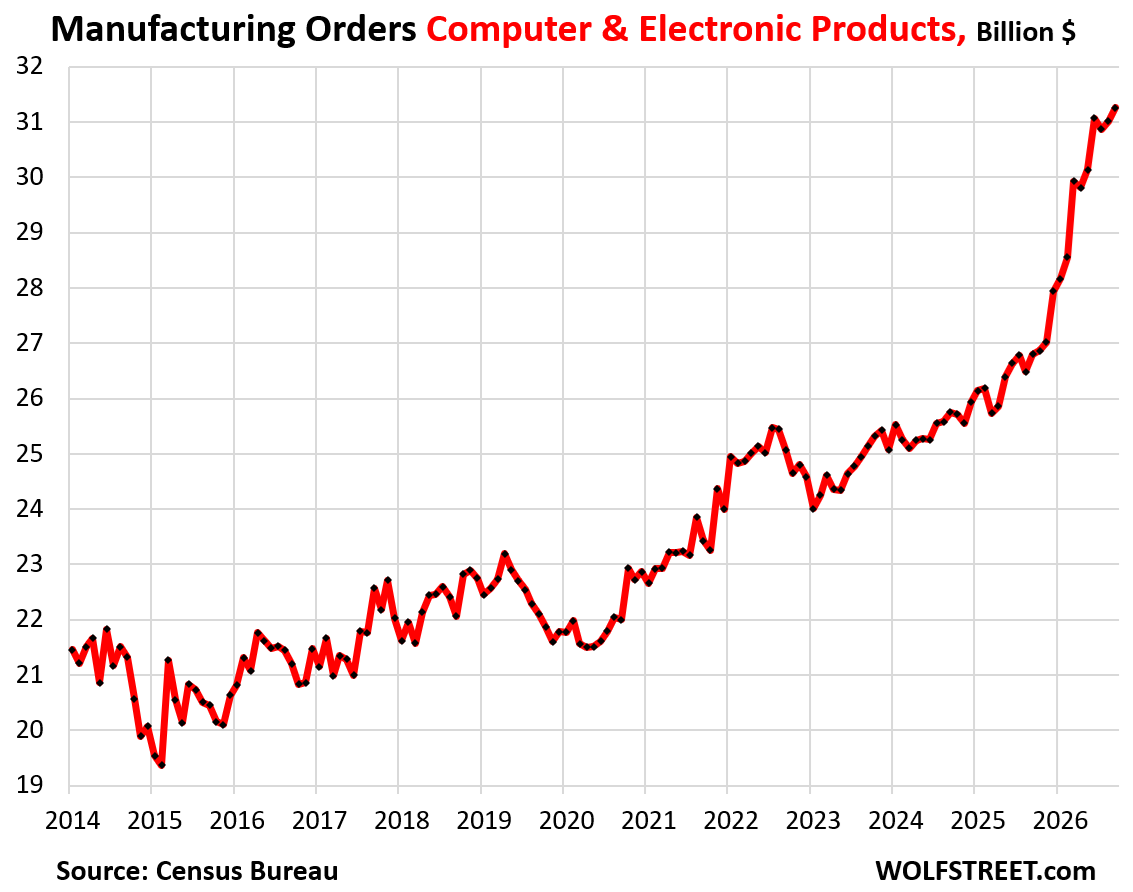
- Computer and Electronic Products: Orders grew by 16.6% year-over-year to $31 billion. This segment is inextricably linked to the demand for semiconductors, sensors, and the complex control systems necessary for modern, automated industrial plants.
These spikes in orders reflect the integrated nature of the current construction boom: the buildings themselves are only the shell. The true value and complexity lie in the specialized equipment—HVAC systems, optical networking gear, power distribution hardware, and robotic manufacturing lines—that must be integrated into these structures.
The Inflationary Environment in Construction
The rapid growth in demand for labor, raw materials, and specialized services has inevitably exerted upward pressure on prices. Data from the Bureau of Labor Statistics indicates that the Producer Price Index (PPI) for construction materials rose by 11.0% year-over-year in September. This index covers fundamental components such as steel mill products, concrete, lumber, and gypsum, all of which have faced supply-chain strain due to the high volume of ongoing projects.
Furthermore, the PPI for nonresidential construction services—which includes essential inputs like architectural engineering, legal services, transportation, and specialized trade services—has surged by 14.0% year-over-year. This "second wave" of inflation in the construction sector poses a challenge for project managers and developers. While firms with massive cash reserves may be able to absorb these costs, the rising price of materials and services is effectively raising the barrier to entry for smaller-scale projects and potentially altering the cost-benefit analysis for future developments.
Broader Implications and Outlook
The current economic climate is defined by an unprecedented convergence of technological demand and industrial policy. The shift toward AI-integrated data centers and the aggressive reshoring of manufacturing facilities are effectively re-industrializing parts of the United States. However, this growth is not occurring in a vacuum.
The reliance on massive capital expenditures by a small number of "AI giants" presents a unique concentration risk. While their current $1.13 trillion cash position offers a degree of immunity against short-term market volatility, any fundamental shift in the AI sector’s profitability or long-term utility could lead to a rapid deceleration in this infrastructure pipeline.
Furthermore, the inflationary pressures noted in the construction sector serve as a reminder that the physical expansion of the economy is subject to the constraints of supply chains and labor availability. As the country continues to build at a breakneck pace, the intersection of energy requirements, material costs, and manufacturing output will likely define the industrial trajectory for the remainder of the decade. The data clearly shows that the U.S. is not merely planning for growth; it is currently in the middle of a massive, capital-intensive physical build-out designed to underpin the next generation of the digital and industrial economy. Whether this trajectory can be maintained without significant structural bottlenecks remains the central question for policymakers and market analysts alike.