Trading Signal Pool: Ensemble Indicators for Better Edge

In the modern landscape of quantitative finance, individual technical indicators have seen their predictive edges decay significantly. For decades, retail and institutional traders alike have relied on classical technical analysis tools—such as the Relative Strength Index (RSI), moving average crossovers, and volume oscillators—to forecast market direction. Originally developed decades ago, these indicators often struggle to maintain profitability in today’s high-frequency, algorithm-driven markets. To combat this widespread decay, quantitative developers are increasingly turning to ensemble methods. Among the most innovative developments in this space is the Trading Signal Pool, a percentage-based meta-signal framework designed to aggregate dozens of weak or independent technical indicators into a single, robust statistical predictor.
What Is a Trading Signal Pool?
At its core, a Trading Signal Pool is an aggregation mechanism that evaluates multiple individual signals simultaneously and reports the collective outcome as a single percentage. On any given market bar, the pool calculates the proportion of underlying signals that are currently firing as "true." Traders can then establish systematic rules based on this percentage—triggering trades only when the pool crosses a specific threshold, such as 67 percent or 80 percent alignment.
Rather than scrutinizing a single indicator with microscopic focus, the signal pool asks a broader, more definitive question: How many independent indicators agree on market conditions at this exact moment? When dozens of disparate signals align simultaneously, the resulting data point carries vastly more structural reliability than any single indicator firing in isolation. This concept mirrors the "1-mutant neighborhood" found in evolutionary biology, where isolated points of evidence remain fragile, but clusters of corroborating data points prove structurally resilient.
The Evolution of Ensemble Modeling in Quantitative Finance
The theoretical foundation of the Trading Signal Pool rests heavily on ensembling—a cornerstone of modern machine learning and statistical prediction. Ensembling techniques are widely credited for powering breakthroughs in predictive modeling, from the algorithms that won the multi-million-dollar Netflix Prize to the random forests and gradient-boosting models dominating data science competitions on platforms like Kaggle.
Prominent quantitative investors have long championed similar philosophies. Jaffray Woodriff of Quantitative Investment Management has frequently noted that building a winning super-model requires aggregating a large, diverse group of base predictive models. Similarly, historical accounts of Jim Simons and his Renaissance Technologies team—chronicled in Gregory Zuckerman’s The Man Who Solved the Market—reveal that the world’s most successful systematic hedge fund frequently prioritized statistical significance and out-of-sample data performance over intuitive explanations or narrative rationales. Simons and his researchers routinely deployed non-intuitive signals that defied traditional economic theory, relying instead on rigorous mathematical validation. Signal pools operate on this exact principle, transforming lagging or seemingly obsolete technical indicators into active components of a larger, statistically validated predictive apparatus.
Breaking Down the Mechanics: From Logic Gates to News Filters
The versatility of a Trading Signal Pool extends beyond basic technical aggregation, serving as a flexible architecture for various trading logic and event filters.
Traditional technical analysis typically forces traders to choose between strict "AND" logic (requiring Indicator A and Indicator B to trigger simultaneously) or rigid manual stacking. Signal pools simplify this process fundamentally:
- OR Logic: By setting the pool threshold above 0 percent, the system fires a trade whenever any underlying signal within the pool is true.
- AND Logic: By setting the threshold to 100 percent, the pool triggers only when every single underlying member aligns.
- Threshold Optimization: Any parameter value between these extremes allows quants to test varying degrees of market consensus before executing a strategy.
Furthermore, these pools can be repurposed instantly into custom news-event filters without requiring complex coding infrastructure. For instance, a trader can compile macro-economic indicators or Federal Reserve meeting catalysts into a single pool. A threshold of greater than 0 percent can trigger a "trade-on-news" protocol, while a threshold of 0 percent or lower can dictate an automated market-avoidance rule. By adjusting a single numerical parameter, traders can seamlessly pivot between opposite operational strategies using the exact same underlying data inputs.
Implementation and Workflow Integration
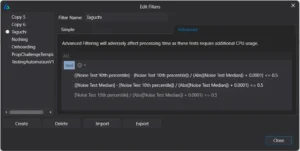
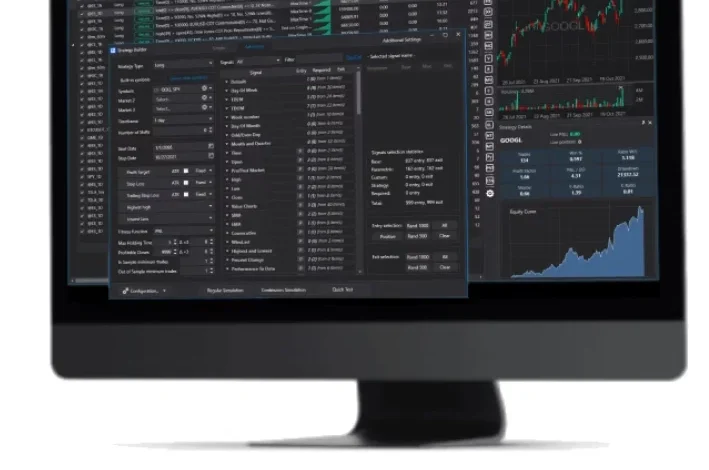
Modern algorithmic platforms, such as the Build Alpha quantitative research software, have streamlined the creation of Trading Signal Pools through dedicated visual editors. Constructing a functional signal pool typically follows a structured, four-step workflow designed to eliminate manual coding bottlenecks:
- Editor Initialization: Accessing the custom signal environment and selecting "Pool" as the primary signal configuration type.
- Signal Library Integration: Selecting inputs from a vast repository of categories—including price action, technical indicators, chart patterns, seasonality, Commitment of Traders (COT) data, market breadth, sentiment, volatility, intermarket relationships, and custom Python scripts. Developers can also apply parameter variations across lookback periods to expand the pool’s breadth.
- Threshold Definition: Establishing the precise execution threshold (e.g., pool greater than or equal to 80 percent) and converting the collective output into a tradable signal.
- Strategy Deployment: Integrating the newly created signal pool into the broader strategy engine, where it can be treated as a primary entry, exit, or regime filter.
Once finalized, the pool logic is automatically embedded into exported source code compatible with major retail and institutional execution platforms, including TradeStation EasyLanguage, NinjaTrader, MetaTrader, TradingView Pine Script, and Python-based broker APIs.
Broader Market Implications and Asset-Class Agnosticism
Trading Signal Pools are entirely asset-class agnostic, functioning effectively across equities, exchange-traded funds (ETFs), foreign exchange pairs, futures contracts, commodities, interest rate products, and cryptocurrencies. This cross-market compatibility challenges the insular tendencies of certain trading communities—particularly in retail foreign exchange, where legacy technical indicators are frequently marketed as proprietary edges.
Industry analysts emphasize that signal pooling is not a magic bullet for manufacturing edge out of random data. The underlying principle remains strictly bound to the rule of quantitative validity: garbage in yields garbage out. If none of the constituent indicators possess genuine predictive power for a specific market and timeframe, aggregating them will not fabricate profitability. Consequently, rigorous robustness testing—including walk-forward analysis, Monte Carlo simulations, and noise testing—remains an indispensable step before deploying any pool-driven strategy into live market environments.
Summary and Outlook
As financial markets become increasingly saturated with algorithmic competition, the reliance on single, unadjusted technical indicators is proving obsolete. Trading Signal Pools offer a systematic bridge between traditional technical analysis and advanced machine learning ensembling. By aggregating dozens of weak predictors into a single percentage-based meta-signal, quantitative developers can capture nuanced market breadth, eliminate narrative bias, and extract durable statistical edges from familiar tools. Supported by automated generation engines and comprehensive validation pipelines, signal pooling represents an increasingly vital methodology in contemporary systematic trading strategy development.