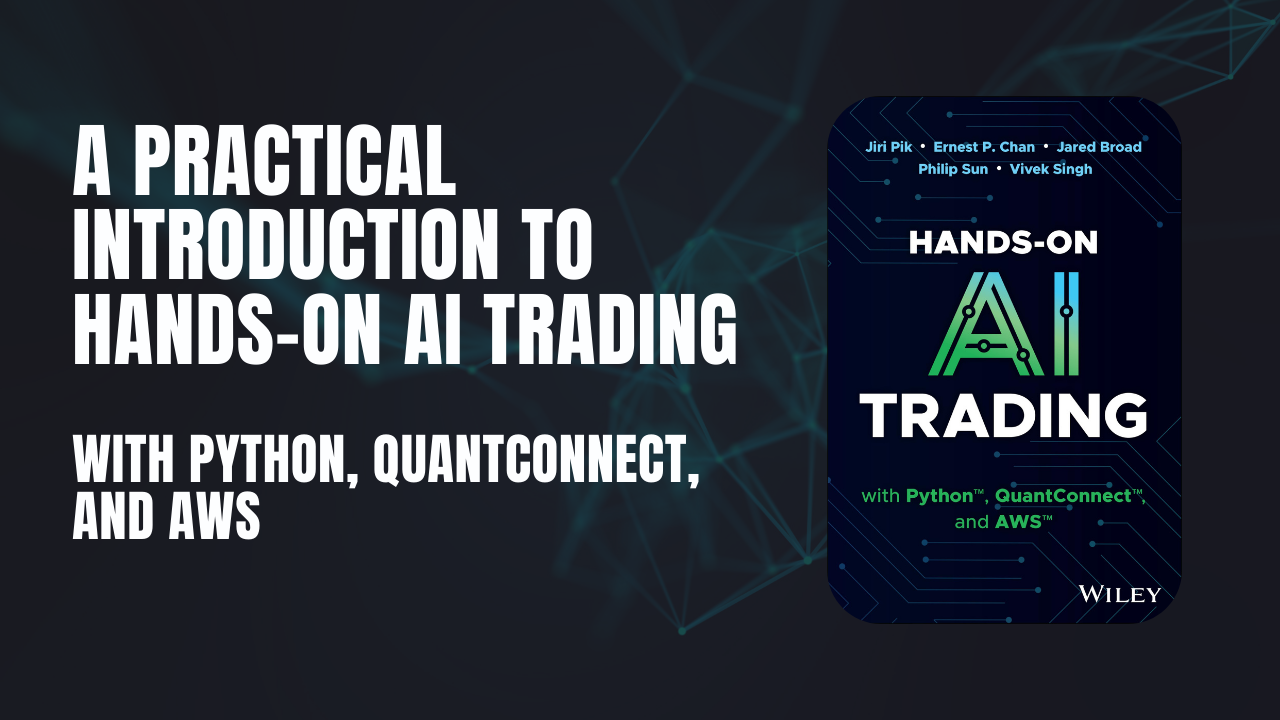
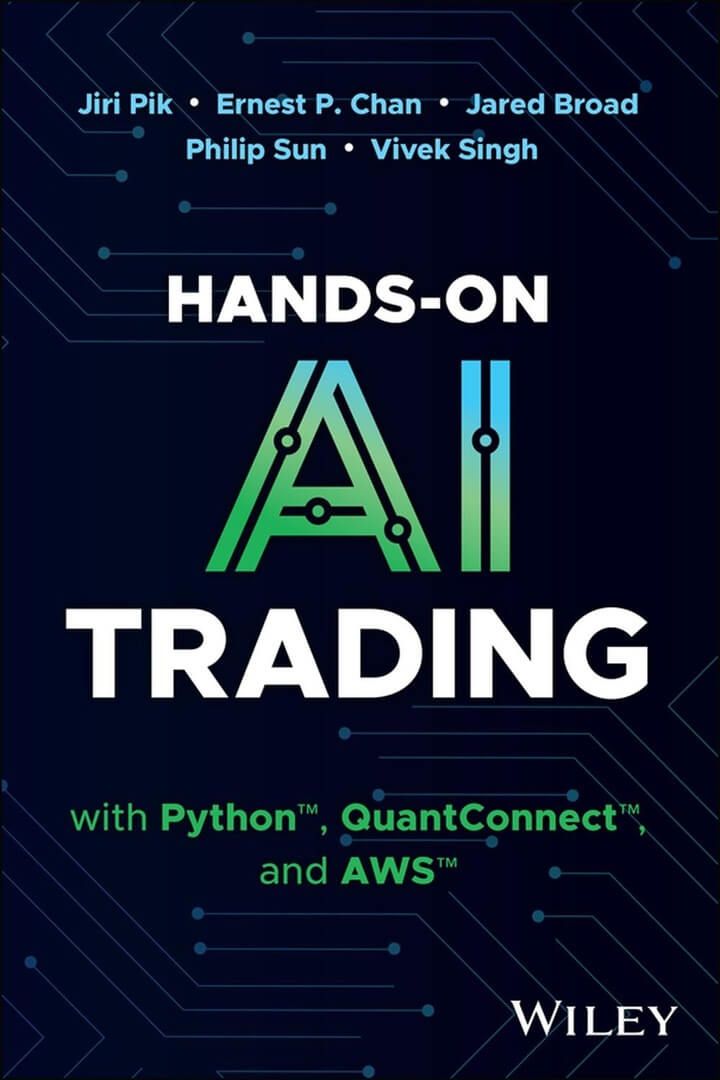
The integration of artificial intelligence into quantitative finance has transcended experimental status to become a core pillar of modern market operations. As hedge funds, proprietary trading firms, and independent quantitative researchers seek to gain an edge, the focus has shifted from mere algorithmic execution to the sophisticated deployment of machine learning (ML) and natural language processing (NLP). The publication of Hands-On AI Trading with Python, QuantConnect, and AWS, released by Wiley, represents a significant milestone in this transition, offering a blueprint for bridging the divide between academic theory and institutional-grade deployment.
The quantitative finance sector has undergone a paradigm shift over the past decade. According to industry reports from firms like J.P. Morgan and BlackRock, over 75% of institutional trading volume is now influenced by some form of systematic or algorithmic intervention. However, a persistent "implementation gap" remains for many practitioners. While open-source libraries and academic repositories are abundant, they often lack the rigorous infrastructure required to account for real-world trading friction, such as latency, slippage, and transaction costs. This book aims to codify these workflows, providing a standardized approach to AI in finance.
A Coherent Framework for Systematic AI
The development of the book follows a trajectory consistent with the evolution of the QuantConnect ecosystem. Historically, quant researchers were forced to navigate fragmented environments—using local Python environments for model training, followed by manual translation into C# or proprietary languages for execution. The emergence of cloud-based platforms like QuantConnect changed this by allowing researchers to maintain a singular, continuous pipeline.
The book’s structure is built upon this synthesis. Rather than isolating models as academic exercises, the authors advocate for a "strategy-first" methodology. In this framework, a model is not a solution in search of a problem; it is a tool selected to address specific market objectives, such as regime detection, volatility forecasting, or sentiment analysis. By forcing the reader to define the trading hypothesis before selecting the algorithm, the text mirrors the standard operating procedures of professional desks.
Technical Foundations and Infrastructure
The significance of the book’s reliance on the QuantConnect-AWS nexus cannot be overstated. Modern quantitative research requires immense computational power and high-fidelity data. AWS serves as the backend infrastructure, providing the scalability needed for backtesting complex strategies against multi-year datasets.
The integration allows for the handling of several critical factors that often derail amateur trading systems:
- Execution Frictions: The platform simulates real-world constraints such as broker-level fees, order slippage, and liquidity limitations.
- Data Integrity: The inclusion of tick-level data ensures that models are not trained on "look-ahead" bias or synthetic noise, which are common pitfalls in backtesting.
- Scalability: By utilizing the cloud, users can parallelize the optimization of hyperparameters, significantly reducing the time required for model training and validation.
Chronology of AI in Trading
The journey to this publication reflects the broader history of the field. In the early 2010s, "AI in trading" was largely synonymous with simple linear regression models and basic moving average crossovers. By 2018, the industry saw a surge in the use of Random Forests and Gradient Boosting Machines (GBMs) to capture non-linear relationships in market data.
We are currently in the third wave of this evolution: the adoption of Large Language Models (LLMs) and Deep Reinforcement Learning (DRL). The current book captures this era, dedicating significant portions of its content to the processing of unstructured alternative data, such as news feeds and earnings call transcripts, which are increasingly driving market sentiment analysis.
Implementing Advanced Strategies
The core value proposition of the text lies in its twenty fully implemented, deployable strategies. These are not merely code snippets but complete, production-ready algorithms. The strategies are categorized into thematic groups that reflect contemporary market focus:
- Volatility and Risk-Aware Strategies: These modules explore how AI can adjust position sizes dynamically based on realized or implied volatility, effectively hedging against "tail risk" events.
- Regime Detection: By employing Hidden Markov Models (HMMs) and clustering techniques, these strategies identify shifts in market states (e.g., bull, bear, or sideways) and switch between different alpha-generating models accordingly.
- Alternative Data Alpha: This section demonstrates how to parse massive datasets—ranging from social media sentiment to supply chain logs—to generate signals that are uncorrelated with traditional price-action indicators.
Expert Perspectives and Institutional Relevance
The authorship team brings a unique combination of academic rigor and industry experience. By bridging the divide between QuantInsti’s educational initiatives and QuantConnect’s technical platform, the authors ensure that the material is not only theoretically sound but also operationally robust.
Early feedback from industry professionals suggests that the book’s emphasis on "decision-making over code" is its most compelling feature. For many practitioners, the challenge is not knowing how to import a library like Scikit-learn or PyTorch, but knowing how to interpret the output of a model in the context of a live, capital-at-risk environment. The book addresses this by focusing on how to evaluate the "economic value" of a model, rather than just its statistical accuracy (R-squared or F1 scores).
Market Implications and Future Outlook
The release of this comprehensive guide signals a maturing of the quantitative finance community. As barrier-to-entry tools become more accessible, the competitive advantage will no longer come from access to code or hardware, but from the sophistication of the strategy design and the speed of the research cycle.
The broader implication is a "democratization of quant research." Where once only elite tier-one banks and massive hedge funds could afford the infrastructure to run robust AI-driven pipelines, independent quants and smaller firms can now leverage the same cloud-based capabilities. This shift is expected to increase market efficiency, as a larger number of sophisticated actors are able to identify and arbitrage market anomalies in real time.
Educational Pathways and Practical Steps
For those looking to engage with the material, the learning path typically involves mastering the foundational concepts of quantitative finance before attempting to deploy complex AI models. The Quantra learning tracks serve as a prerequisite, guiding users through the fundamentals of market mechanics, statistical testing, and risk management.
Readers are encouraged to engage with the material by:
- Validating Hypotheses: Utilizing the provided strategy templates to test their own market theories.
- Iterative Backtesting: Running models through various market regimes, including historical crash scenarios and periods of high inflation, to test robustness.
- Community Collaboration: Engaging with the QuantConnect and QuantInsti communities to share insights and refine the algorithms provided in the text.
The publication of this work arrives at a pivotal moment. As the financial industry continues to grapple with the impact of AI on market volatility and structure, the need for a disciplined, ethical, and technically sound approach to algorithmic trading has never been greater. By providing a clear, reproducible, and rigorous framework, the book serves as a vital resource for the next generation of quantitative traders, researchers, and financial engineers who are tasked with building the future of global markets.
Ultimately, the goal of this initiative is not to create "black box" traders, but to foster a community of informed practitioners who understand the limitations and potential of the tools they use. As the industry moves forward, the ability to balance technical complexity with financial common sense will remain the defining characteristic of successful quantitative professionals. For those prepared to move beyond the basics, the strategies and methodologies detailed in this book provide a comprehensive roadmap toward achieving that balance.