Why Smart Money Often Falls Victim to Sophisticated Fraud: The Lessons of Theranos

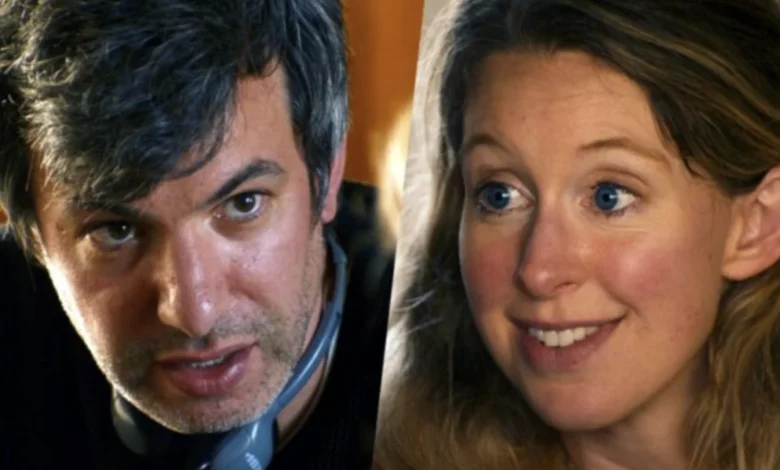
The Elizabeth Holmes and Theranos saga serves as a definitive case study in the vulnerability of high-net-worth individuals and institutional investors to high-stakes deception. With the release of the new biographical film You Can See Everything, public discourse has once again turned to the mechanisms by which a fraudulent enterprise managed to secure hundreds of millions of dollars from some of the most sophisticated investors, politicians, and business figures in the world. This phenomenon highlights a persistent paradox in finance: the tendency for intellectual pedigree and professional success to serve as catalysts for, rather than protections against, catastrophic investment errors.
The Rise and Fall of a Silicon Valley Unicorn
Theranos was founded in 2003 by Elizabeth Holmes, a 19-year-old Stanford University dropout. The company’s stated mission was to disrupt the clinical laboratory industry through proprietary technology capable of performing comprehensive diagnostic tests using only a few drops of blood obtained via a finger prick. For over a decade, Holmes cultivated an image as a visionary, famously adopting the black turtleneck aesthetic of Steve Jobs and projecting a narrative of technological inevitability.
The company’s growth trajectory was exponential, at least on paper. By 2014, Theranos had achieved a valuation of $9 billion, positioning it as one of the most successful private startups in Silicon Valley history. However, the internal reality remained starkly different. Investigative reporting, most notably by John Carreyrou of The Wall Street Journal in 2015, eventually exposed that the company’s "Edison" devices did not function as advertised. Instead, Theranos was quietly relying on modified, traditional diagnostic equipment from other manufacturers to process its samples, while misrepresenting the accuracy and scope of its own proprietary technology to stakeholders.
A Chronology of Institutional Trust
The timeline of Theranos’s fundraising reflects a pattern of cascading validation, where the involvement of high-profile board members and investors created a "halo effect" that blinded others to the lack of technical due diligence.
- 2003–2010: Foundation and early development. Holmes secures initial funding through personal connections and early angel investors, emphasizing secrecy and "stealth mode" development.
- 2011–2013: The Board of Directors begins to take shape, eventually including former U.S. Secretaries of State George Shultz and Henry Kissinger, and former Secretary of Defense William Perry. These names provided a veneer of geopolitical and military legitimacy that proved irresistible to later investors.
- 2014: The peak of the bubble. Theranos secures $400 million in funding at a $9 billion valuation. Partner Fund Management and other major institutional players finalize their positions.
- 2015: The turning point. The Wall Street Journal publishes its exposé, raising significant questions about the validity of Theranos’s testing technology.
- 2016–2018: Regulatory scrutiny intensifies. The Centers for Medicare & Medicaid Services (CMS) bans Holmes from operating a laboratory. In 2018, the SEC charges Holmes and former president Ramesh "Sunny" Balwani with massive fraud. The company formally dissolves.
- 2022: A jury finds Elizabeth Holmes guilty on four counts of wire fraud and conspiracy to commit wire fraud.
The Anatomy of the Investment Blind Spot
The failure of investors to uncover the fraud is not merely a story of deception, but one of cognitive bias. Psychological research into decision-making indicates that high-net-worth individuals are not immune to the social pressures of "herding." When a group of established, wealthy peers validates an investment, subsequent investors often bypass rigorous due diligence, assuming that the initial backers—who are perceived as being "smarter" or better informed—have already performed the necessary vetting.
This behavior is exacerbated by the "blind spot bias," a cognitive phenomenon where individuals are acutely aware of the biases of others while remaining blind to their own. In the case of Theranos, the board of directors and the elite investor class were susceptible to the "narrative fallacy"—the tendency to prefer a compelling, simplified story over complex, technical data. Holmes’s ability to frame the company as a humanitarian mission to "democratize healthcare" allowed investors to align their financial interests with their desire for legacy and impact.
Financial Consequences for the Elite
The financial fallout of the Theranos fraud reached far beyond retail investors. High-profile figures and families lost substantial capital, often without conducting the level of technical review expected in smaller, less prestigious transactions.
- The Walton Family: The heirs to the Walmart fortune reportedly invested $150 million into the company.
- Rupert Murdoch: The media mogul invested $125 million, an amount he eventually liquidated for a nominal $1 to secure tax write-offs, marking the total loss of the principal.
- The DeVos Family: Former Education Secretary Betsy DeVos and her family sustained a $100 million loss.
- Institutional Hedge Funds: Partner Fund Management, a firm predicated on expert analysis, purchased shares at the height of the $9 billion valuation, suffering significant losses when the company collapsed.
The willingness of these investors to commit such capital based on "gut feel" or the reputation of the board, rather than independent verification of the technology, underscores a critical failure in the governance of private equity.
The Danger of Overconfidence in Cognitive Ability
The academic literature on cognitive biases suggests that individuals with higher intelligence are often more susceptible to certain types of self-deception. As researchers Richard West, Russell Meserve, and Keith Stanovich have posited, cognitive ability does not necessarily serve as a firewall against irrational decision-making. In fact, high-functioning individuals may use their intellectual capacity to build elaborate rationalizations for their poor decisions, further insulating themselves from corrective feedback.
When a successful investor personalizes their success—viewing it as a reflection of their own inherent genius rather than a byproduct of market timing or specific opportunity—they become more prone to risky behavior. This "invincibility complex" creates a environment where the investor stops asking the hard questions, believing their mere participation in a project grants it validity.
Broader Implications for Market Governance
The Theranos case serves as a stark reminder of the limits of reputation-based due diligence. It has forced a re-evaluation of how private, non-public companies are audited. In the wake of the fraud, venture capital and private equity firms have increased the demand for independent, third-party technical validation of "black box" technologies.
Furthermore, the scandal highlights the ethical risks of appointing "celebrity boards" to oversee high-tech startups. The inclusion of political and military figures on the Theranos board provided the company with social capital that had no correlation with the company’s technical viability. This practice, while common, is now viewed with increased skepticism by institutional investors who recognize that political influence is not a substitute for industry-specific expertise.
Ultimately, the Theranos story is a cautionary tale about the intersection of charisma and capital. It demonstrates that in the absence of rigorous, objective oversight, even the most prominent figures in the global economy can fall victim to the oldest of financial traps: the desire to believe in a narrative that is simply too good to be true. As markets continue to fluctuate and new "disruptive" technologies emerge, the lessons of the Holmes era—that skepticism must be proportional to the magnitude of the claim—remain essential for any serious participant in the global financial landscape.