How American Democracy and the Rule of Law Halted the Momentum of the MAGA Movement

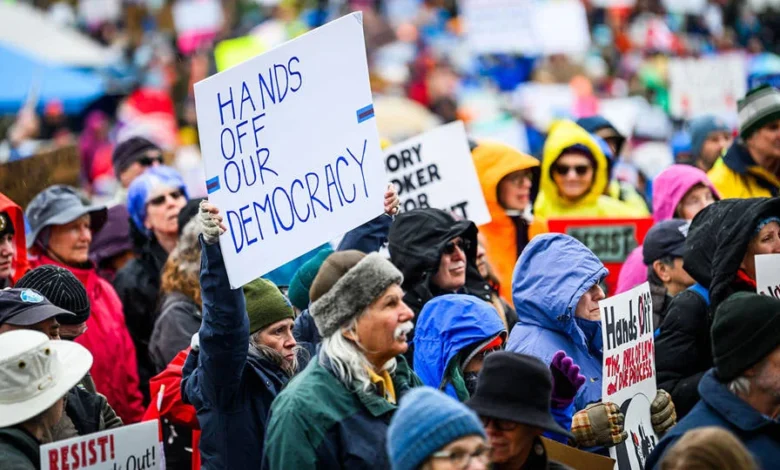
CHICAGO — The political landscape of the United States underwent a profound and unexpected realignment following a series of decisive electoral outcomes that fundamentally altered the trajectory of the federal government. For months leading up to the legislative showdown, mainstream political discourse was dominated by a singular, overriding anxiety among the electorate: the cost of living. Inflation, housing affordability, and the general strain on household budgets consistently ranked as the primary concern for voters across diverse demographics. Yet, beneath the surface of economic pragmatism lay a deeper, more resolute insistence on the preservation of constitutional norms, institutional integrity, and the rule of law.
This dual mandate—demanding both economic relief and the safeguarding of democratic governance—culminated in a sweeping generational rebuke of the political strategies championed by Donald Trump and his wider Make America Great Again (MAGA) movement. While economic grievances provided the initial impetus for voter mobilization, the ultimate vehicle for political expression became a referendum on the institutional integrity of the republic.
To understand the magnitude of this political pivot, one must consider the counterfactual scenario. Imagine, for a moment, that the midterm elections had not delivered Democratic wins at a generational scale, but merely a trickle of flipped seats—enough, perhaps, to change control of the House of Representatives but not enough for a Senate majority. Is there any doubt that President Donald Trump would embrace such results as a good-enough validation of his often lawless and brutal administration? Would it not now be doubling down, striving to cast the polls as an imprimatur for its excesses? Instead, the electorate delivered a sweeping mandate that not only shifted legislative power but explicitly rejected the normalization of institutional erosion.
The Economic Context and the Cost-of-Living Crisis
The months preceding the election were characterized by severe economic headwinds that historically boded ill for the party in power. Post-pandemic inflation, persistent high interest rates, and soaring housing costs had squeezed middle- and lower-income families. Traditional political wisdom suggested that voters experiencing economic distress would default to punishing the incumbent administration by handing sweeping majorities to the political opposition, regardless of that opposition’s ideological posture or respect for democratic norms.
However, political analysts noted a significant shift in voter psychology. While inflation remained the top metric in polling data, it became inextricably linked in the minds of many voters to governmental stability and predictability. The chaotic governance style associated with the MAGA movement was increasingly viewed not as a disruptive force for positive change, but as an additional risk factor contributing to economic uncertainty. Supply chain resilience, international trade stability, and regulatory predictability all depend heavily on a functioning rule of law. Consequently, voters began to perceive the protection of democratic institutions not as an abstract, high-minded ideal, but as a practical prerequisite for achieving long-term economic stability and affordability.
Chronology of the Electoral Realignment
The path to this generational political shift was marked by a series of escalating tensions between federal administrative actions, judicial pushback, and public reaction.
- Early 2025: The second Trump administration initiated a series of aggressive executive actions aimed at restructuring federal agencies, circumventing traditional civil service protections, and challenging established judicial oversight. These moves sparked immediate legal challenges from a coalition of state attorneys general and civil rights organizations.
- Late 2025: Congressional oversight hearings highlighted mounting friction between legislative prerogatives and executive overreach. Public polling began to reflect a growing unease among independent and moderate conservative voters regarding the pace and legality of executive actions.
- Mid-2026: As campaigns for the midterm elections officially kicked off, opposition candidates strategically tied economic grievances to the chaotic management style of the administration. They framed the defense of democratic checks and balances as essential to restoring investor confidence and lowering consumer costs.
- November 2026: Voters went to the polls in numbers typically reserved for presidential election years. The resulting shift in legislative power handed decisive majorities to opposition lawmakers in both chambers of Congress, shattering the momentum of the MAGA movement and signaling a major turning point in contemporary American politics.
Supporting Data and Voter Demographics
Exit polls and comprehensive voting data from the election revealed striking trends that illuminated the collapse of the MAGA movement’s broad electoral coalition. While the core base of populist voters remained steadfast, the periphery of the movement—crucial suburban independents, college-educated moderates, and economically pragmatic working-class voters—shifted decisively away from MAGA-aligned candidates.
According to data compiled by nonpartisan research organizations, independent voters broke for opposition candidates by margins exceeding 15 percentage points. Furthermore, voter turnout in suburban districts surrounding major metropolitan areas—traditionally competitive battlegrounds—surged by over 20 percent compared to previous midterm cycles. Crucially, when asked in post-election surveys to rank the factors influencing their vote, respondents placed "protection of democracy and the Constitution" second only to "inflation and cost of living," with a vast majority noting that the two issues were deeply interconnected.
Polling analysis further indicated that a significant portion of the electorate viewed the aggressive tactics of the administration as a liability rather than a strength. The perception of institutional instability eroded confidence in future economic growth, prompting voters to seek legislative gridlock as a stabilizing mechanism.
Reactions from Political Parties and Stakeholders
The immediate aftermath of the election sent shockwaves through both major political parties, prompting starkly divergent assessments of the political landscape.
In Washington, opposition leaders hailed the results as a historic vindication of American democratic principles. In a joint statement following the certification of key races, congressional leaders emphasized that the electorate had firmly rejected authoritarian impulses and political retribution. "The American people have spoken clearly," the statement read. "They want a government that respects the rule of law, protects constitutional norms, and focuses on the real, everyday challenges facing working families. This is not a mandate for division, but a mandate for restoration and healing."
Conversely, responses from the administration and prominent MAGA figures were marked by internal division and defensive posturing. While some pragmatic strategists within the movement acknowledged the necessity of pivoting toward a more moderate, policy-focused message that directly addresses affordability, hardline surrogates doubled down on claims of electoral irregularities and media bias. Privately, however, campaign insiders conceded that the strategy of leveraging executive overreach and political confrontation had alienated vital swing voters who ultimately prioritized systemic stability over ideological disruption.
Business and economic advocacy groups offered a measured response, generally welcoming the prospect of divided government or a shift in legislative oversight. Representatives from major trade associations noted that businesses thrive on regulatory certainty and predictability—qualities that had been frequently threatened by erratic policymaking and legal challenges.
Broader Impact and Implications for the Future
The 2026 midterm results carry profound implications for the remainder of the presidential term and the future direction of American politics. By decisively checking the authority of a populist administration, the electorate has reasserted the primacy of the system of checks and balances designed by the nation’s founders.
First, the legislative shift fundamentally alters the power dynamic in Washington. With opposition parties in control of Congress, the administration will face intense scrutiny, rigorous oversight, and a near-total blockade on unilateral executive initiatives. Subpoena power will return to committee rooms, forcing transparency on administrative actions that had previously operated without substantive legislative oversight.
Second, the results serve as a cautionary tale for political strategists regarding the limits of populism when paired with institutional erosion. While populist rhetoric targeting economic anxieties remains a potent force, the data suggests that voters draw a hard line when populist tactics begin to destabilize the fundamental rules of governance. The desire for disruption has clear limits, particularly when it intersects with personal financial security and the predictability of the legal system.
Finally, the revitalization of democratic institutions through the electoral process demonstrates the underlying resilience of the American political system. Pundits had frequently questioned whether a deeply polarized electorate could peacefully self-correct through the ballot box. The high-turnout, decisive rejection of lawless governance provided a resounding affirmative answer.
As the newly empowered legislature prepares to take office, the immediate task will be twofold: addressing the persistent anxieties of an electorate struggling with the cost of living, and repairing the institutional wear and tear of preceding years. As history suggests, neither task can be successfully accomplished without the other. Restoring affordability and economic vitality depends entirely upon the bedrock of a stable, predictable, and rule-bound democratic order.
Related posts: