AI in Quant Jobs: Impact of Automation and Skills Adaptation in the Age of AI

The Changing Paradigm of Quantitative Roles
Recent data from the "State of AI in Trading 2027" survey, which polled 185 industry practitioners, students, and career-changers, provides a window into this transition. A significant 49.2% of respondents identified the ability to generate "real work" from AI tools as the most critical skill for securing employment over the next two years. In contrast, traditional coding proficiency—often considered the bedrock of quant finance—was ranked as the least important skill for new hires, cited by only 7.7% of participants.
This shift suggests that the "quant" of the future will be less of a standalone programmer and more of a technical overseer, tasked with curating AI outputs and ensuring their validity. For those one to three years into their careers, this shift is felt acutely; 39.5% of this cohort anticipate a reduction in the availability of entry-level roles as automation assumes the burden of data cleaning, basic signal generation, and routine backtesting.
The Crisis of Confidence: Backtesting vs. Live Performance
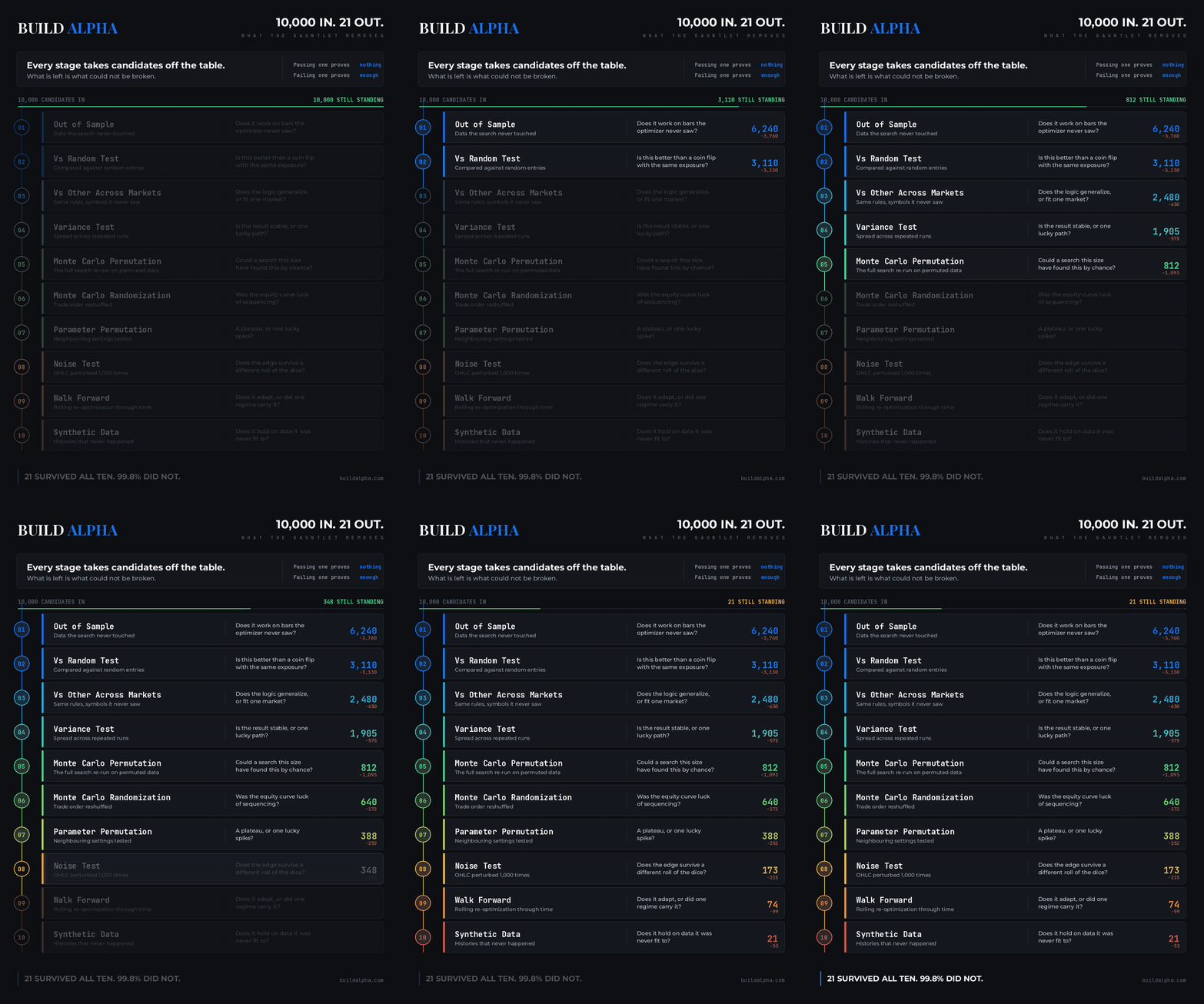
While headlines often focus on job losses, practitioners express a more nuanced concern: the "overfitting trap." Nearly 39% of survey respondents noted that their primary worry is the deployment of models that demonstrate exceptional performance in historical backtests only to fail catastrophically when applied to live markets.
This challenge highlights the persistent need for human oversight. AI models are prone to look-ahead bias, data leakage, and overfitting—errors that can be disastrous in high-frequency or high-leverage environments. Consequently, the most sought-after quants are those who possess the "human-in-the-loop" capability to challenge machine-generated hypotheses. The industry is moving toward a model where AI acts as a force multiplier for research, while human intuition remains the final arbiter of risk.
Chronology of AI Adoption in Finance
The integration of AI into finance did not occur overnight. It has been a decade-long migration from rudimentary statistical arbitrage to complex neural networks.
- 2014–2017: The era of "Big Data" and early-stage machine learning. Firms began integrating alternative data sets—such as satellite imagery and credit card transaction logs—into their traditional models.
- 2018–2021: The rise of deep learning and NLP. Quantitative desks began using natural language processing to scrape sentiment from news wires and social media, creating "alpha" from previously unstructured, qualitative data.
- 2022–2024: The Generative AI explosion. The arrival of advanced LLMs changed the game for coding assistance and automated documentation, allowing junior quants to produce complex algorithms at an unprecedented speed.
- 2025–Present: The focus has shifted to model explainability (XAI) and robustness. With regulators demanding transparency, firms are prioritizing models that can be audited, even if they are computationally complex.
AI’s Functional Utility in Modern Quant Desks
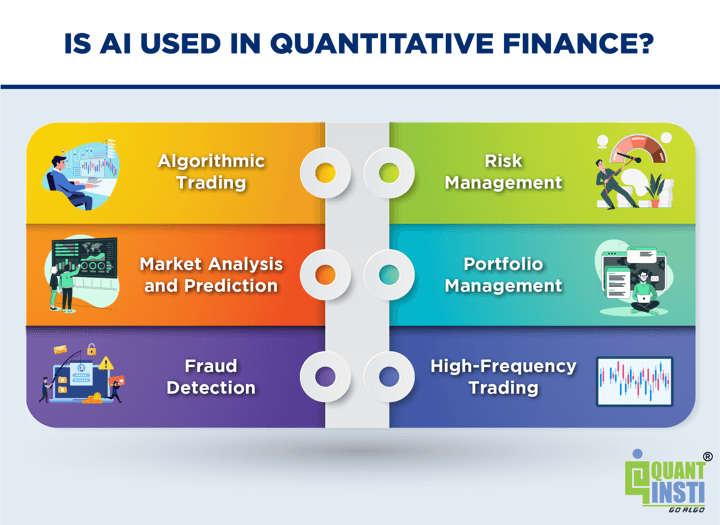
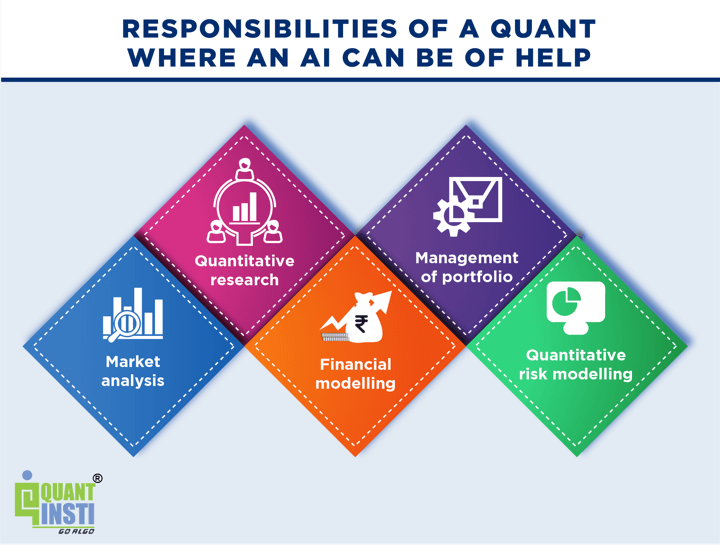
The utility of AI across quantitative roles is extensive, touching every stage of the investment lifecycle:
Algorithmic Trading: By leveraging reinforcement learning, trading bots now learn to navigate market volatility in real-time, adjusting their strategies based on instantaneous feedback loops. This is the cornerstone of contemporary automated execution.
Risk Management: AI has transformed stress testing. Instead of relying on historical scenarios that may not repeat, machine learning algorithms can simulate millions of "black swan" scenarios, providing a more granular understanding of tail-risk exposure.
Portfolio Management: Optimization is no longer just about mean-variance efficiency. AI models now factor in non-linear correlations and shifting regime changes to dynamically rebalance portfolios, often identifying asset relationships that traditional models overlook.

Fraud and Surveillance: In the context of compliance, AI acts as an early-warning system, flagging anomalous trade patterns that may indicate market manipulation or internal malfeasance, thus protecting the firm from regulatory scrutiny.
The Skill Gap and the Need for Up-skilling
The rapid adoption of these technologies has created a palpable skills gap. Academic programs are currently struggling to keep pace with the industry’s demand for graduates who can bridge the divide between theoretical finance and practical data science.
Industry leaders suggest that for a quant to remain relevant, they must master a hybrid toolkit. This includes proficiency in Python and C++, a deep understanding of statistical inference, and—critically—a familiarity with the limitations of modern AI architectures. Up-skilling is no longer a luxury; it is a mandate for professional survival. The ability to articulate why a model reached a specific conclusion is becoming as important as the ability to build the model itself.
Risks and Ethical Considerations
The reliance on AI brings a unique set of hazards. "Black box" models, where the internal logic of a decision is obscured, represent a significant regulatory risk. Regulators globally, including the SEC and the FCA, are increasingly scrutinizing the use of AI in financial decision-making, emphasizing that firms must be able to explain their models’ behavior.
Furthermore, the issue of data bias remains a significant hurdle. If an AI model is trained on historical data that contains systemic biases or periods of market irrationality, it may perpetuate these errors, leading to flawed risk assessments. This necessitates a culture of rigorous, ongoing validation. Quants must move away from "set-and-forget" strategies, opting instead for continuous, iterative monitoring of their AI systems.
Broader Implications for the Financial Sector
The broader implication of this shift is a potential polarization of the job market. While low-level tasks such as data entry, routine cleaning, and basic backtesting will be increasingly relegated to machines, the demand for high-level "super-quants"—individuals capable of managing complex, autonomous systems and navigating the ethical and regulatory landscape—is likely to grow.
The future of quant finance will be defined by the "Human-AI Partnership." As the cost of computational power continues to drop and the accessibility of sophisticated AI tools grows, the competitive advantage will shift from the firm with the best code to the firm with the best human-machine integration.
Conclusion
AI is not an executioner of the quant profession; it is a catalyst for its professional evolution. The practitioners who will thrive in the coming decade are those who view AI not as a replacement for human intellect, but as an indispensable partner in the pursuit of alpha. The transition requires a departure from traditional, siloed methodologies and a move toward an agile, multi-disciplinary approach.
As the industry continues to integrate machine learning and data-driven strategies, the focus on technical agility, coupled with a deep, nuanced understanding of financial markets, will remain the defining characteristic of a successful career. For those entering the field, the path forward is clear: master the AI tools of today to build the financial architectures of tomorrow. The role is changing, but the necessity for human judgment, ethical foresight, and strategic innovation in finance has never been greater.