Gold Under Pressure: Waning AI Optimism, Hawkish Federal Reserve, and Tariff Press


ures Drive Precious Metal Near 15-Month Lows
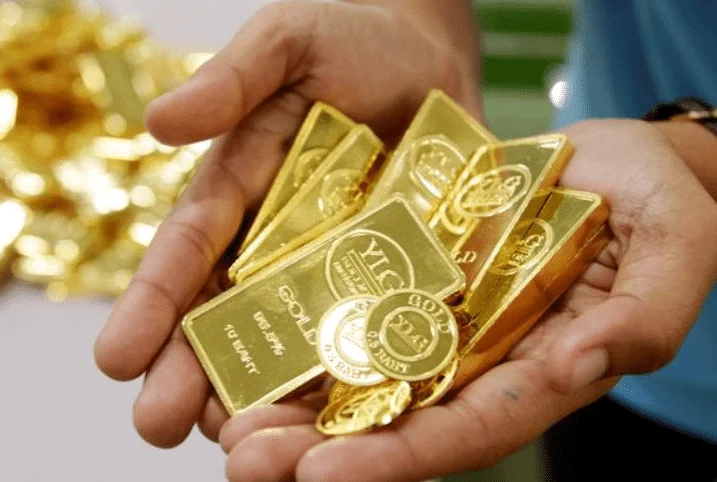
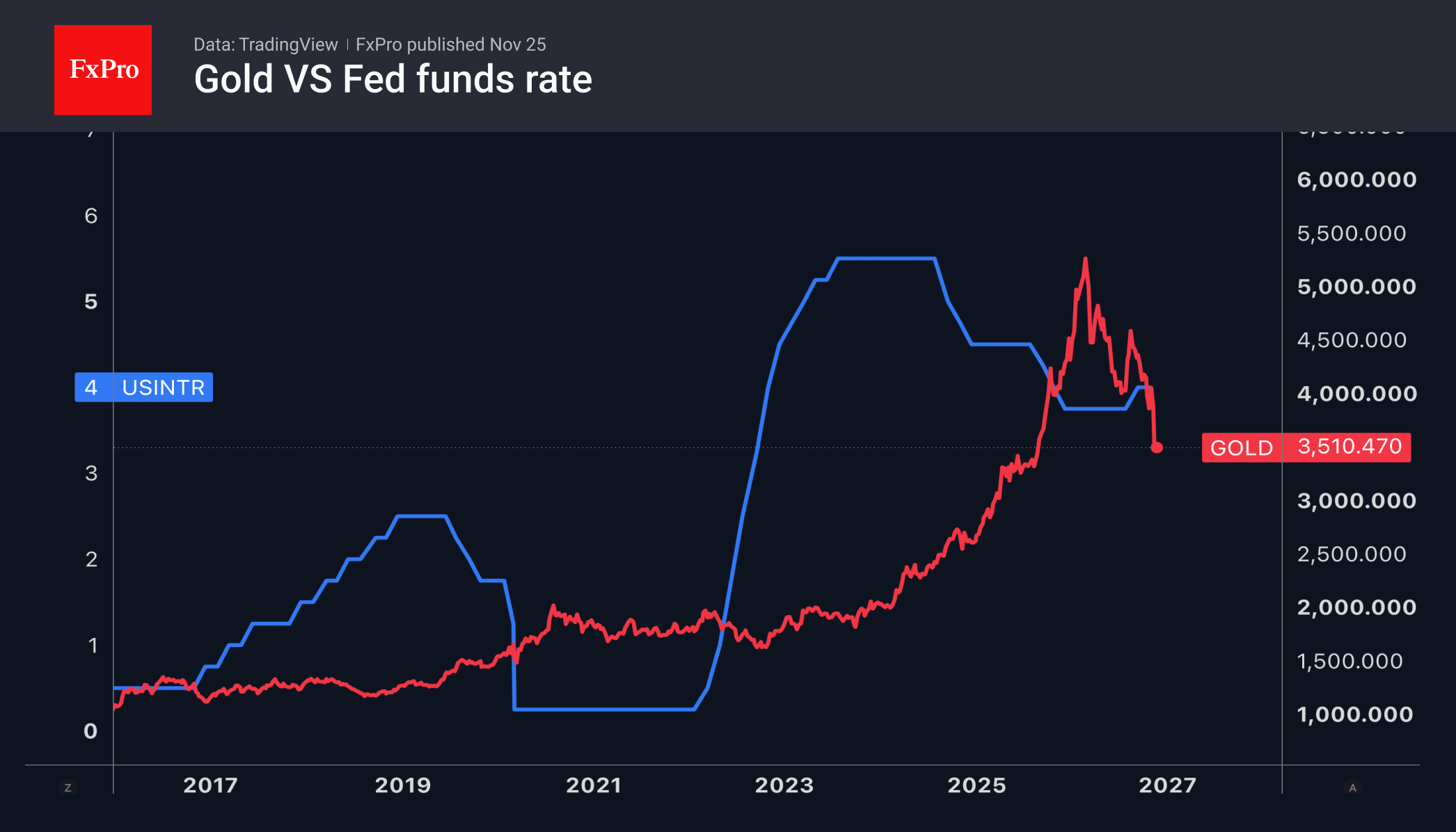
The global financial markets are currently witnessing a profound recalibration of asset valuations, with gold finding itself caught in a severe downward spiral. Plummeting from its historic peaks near the $5,300 mark, the precious metal has tested critical support levels around $3,510 per ounce, sliding toward its weakest valuation in nearly fifteen months. This sharp correction is primarily driven by a convergence of macroeconomic headwinds, most notably a hawkish monetary policy stance from the United States Federal Reserve, a cooling of enthusiasm surrounding artificial intelligence technologies, and escalating geopolitical trade tensions stoked by the looming threat of aggressive White House tariffs.
As traditional safe-haven flows dry up and market participants aggressively liquidate holdings to cover equity margin calls or reallocate capital toward higher-yielding instruments, the fundamental narrative supporting gold has faced relentless interrogation. Analysts and market strategists are increasingly warning that the path of least resistance for the yellow metal remains skewed to the downside, at least until clearer signals emerge from macroeconomic data releases and central bank guidance.
Macroeconomic Headwinds and Federal Reserve Policy
The core of gold’s recent woes lies in the shifting landscape of United States monetary policy. With the federal funds rate currently anchored at 4%, persistent inflationary pressures have forced the Federal Reserve to maintain a resolutely hawkish trajectory. Financial markets are actively pricing in an expected interest rate hike during the upcoming Federal Open Market Committee (FOMC) meeting scheduled for December 9, casting a long shadow over non-yielding assets such as gold.
Higher interest rates traditionally increase the opportunity cost of holding bullion, as investors can secure attractive, risk-free returns through government-backed fixed-income securities. Furthermore, the strong correlation between real interest rates and gold prices has turned deeply adverse. According to projections from financial institutions like Natixis, sustained monetary tightening combined with softening physical demand could drag gold prices down further toward the $3,340 per ounce threshold.
Market participants are now training their sights on incoming inflation metrics, specifically the October personal consumption expenditures (PCE) price index—the Federal Reserve’s favored gauge of underlying price stability. Current readings place annual PCE inflation at approximately 3.1%. A hotter-than-expected print could embolden policymakers to pencil in as many as three additional rate hikes through the end of 2027, a scenario that would likely trigger a fresh wave of aggressive institutional selling. Conversely, a marked slowdown in PCE inflation could offer the precious metal a temporary reprieve, granting gold the breathing room necessary to establish a durable price floor.
The AI Equity Rally and Liquidity Squeezes
Compounding the pressure from monetary policy is the shifting sentiment within global equity markets, particularly concerning the technology sector. The recent resurgence of the stock market rally—sparked in part by Jensen Huang’s return as the chief executive officer of Nvidia—provided only a fleeting moment of relief for precious metals traders.

For much of the past two years, artificial intelligence optimism has driven record-breaking capital inflows into tech-heavy indices. However, signs of waning enthusiasm and growing skepticism regarding the immediate monetization timeline of generative AI infrastructure have introduced heightened volatility. When technology stocks face corrections or when liquidity constraints tighten across broader portfolios, institutional investors frequently turn to their most liquid and profitable holdings to raise cash. Gold, having enjoyed a monumental multi-year bull run that saw prices touch $5,300, has frequently been utilized as a primary source of liquidity. Consequently, when equity markets wobble or when broader macroeconomic news turns sour, institutional algorithms and traders increasingly treat every headline as an invitation to sell gold.
Global Trade Pressures and Chinese Bullion Dynamics
Geopolitical tensions and international trade dynamics are playing a uniquely complex role in shaping the current gold market landscape. While Western investors retreat from bullion exchange-traded funds, physical demand dynamics in key Asian markets, particularly China, present a fascinating divergence.
Driven by the timeless commodity-market adage that the cure for low prices is low prices, physical buyers in China have stepped up their accumulation of the precious metal as valuations have retreated. Beijing has imported a staggering $209 billion worth of bullion since the beginning of the year. Data indicates that non-monetary gold purchases have risen for ten consecutive months, culminating in a record high where gold accounts for nearly 8% of the nation’s total imports.
However, analysts caution that this aggressive buying spree is not solely a function of retail bargain-hunting. Rather, it serves a strategic macroeconomic purpose for the world’s second-largest economy. By significantly ramping up physical imports of commodities like gold, China has been able to manage and offset its colossal trade imbalances. Without these massive non-monetary bullion purchases, China’s cumulative trade surplus would have breached the coveted $1 trillion milestone as early as September. Such a milestone would almost certainly have intensified protectionist rhetoric in Washington, heightening the immediate risk of sweeping White House tariffs.
The threat of higher tariffs has broader implications for global commerce and currency stability. As trade rhetoric hardens, the anticipated economic drag could force central banks globally to reassess their growth and inflation forecasts, creating a volatile crosscurrent for global currencies and commodities alike.
Institutional Outflows and Investment Sentiment
The stark dichotomy between physical accumulation in Asia and institutional liquidation in Western financial centers highlights a deep fracture in market sentiment. While central banks and retail consumers in developing economies view lower prices as an attractive entry point, institutional investors managing exchange-traded funds (ETFs) are running for the exits.
Market data through the week ending November 20 revealed massive ETF outflows totaling 20.4 tonnes, marking the largest weekly redemption volume since June. This contraction continues a troubling trend for gold bulls, with capital withdrawals recorded in three of the past five weeks. Consequently, November is currently tracking toward its first monthly outflow in five months, signaling a decisive loss of momentum among mainstream institutional asset allocators.
The reluctance of large-scale investors to buy the dip suggests that prevailing price levels may not yet be attractive enough to trigger a widespread reversal. Until macroeconomic clarity emerges regarding the Federal Reserve’s terminal rate and the trajectory of corporate earnings in the technology sector, institutional participation in gold is expected to remain subdued.
Market Outlook: Base Case, Risks, and Critical Levels
Navigating the gold market in the current environment requires careful attention to key technical thresholds and upcoming macroeconomic catalysts. Financial analysts have mapped out several distinct scenarios for the weeks ahead.
Base Case Scenario
As long as the Federal Reserve maintains its hawkish policy posture and investor enthusiasm for artificial intelligence initiatives continues to face cyclical cooling, market sentiment is expected to remain fragile. Under this baseline assumption, market participants are likely to treat any piece of news—whether positive or negative—as an immediate catalyst to sell gold rallies, keeping downward pressure intact and testing lower support zones.
Risk and Reversal Scenarios
Conversely, a meaningful downside surprise in inflation metrics, particularly a pronounced cooling in the October PCE price data, could radically alter the monetary policy outlook. Weaker inflation prints would compress the perceived odds of aggressive Federal Reserve tightening, providing the precious metal with a crucial opportunity to establish a firm price floor.
From a technical perspective, market strategists note that any sustainable consolidation above the $3,900 per ounce level—the psychological and technical threshold where the pace of selling accelerated sharply earlier in the month—would serve as a strong preliminary signal of a bullish trend reversal.
Key Dates on the Economic Calendar
Traders and institutional investors are maintaining a vigilant watch on a series of high-impact events in the immediate future:
- Today: Release of the October Personal Consumption Expenditures (PCE) inflation data.
- November 26, 2026: United States Thanksgiving holiday, traditionally characterized by reduced market liquidity and lower trading volumes.
- December 9, 2026: The highly anticipated Federal Reserve interest rate decision and accompanying economic projections.
As global markets weigh the dual pressures of monetary tightening and shifting geopolitical trade policies, the coming weeks will prove decisive in determining whether gold can weather the current storm or whether a deeper correction toward the low $3,300s is inevitable.