Global Financial Markets Brace for Shifting Central Bank Trajectories Amid Sticky Inflation and Geopolitical Shocks


Global financial markets are navigating a complex landscape defined by shifting monetary policy expectations, aggressive central bank signaling, and unforeseen structural shifts in energy and banking sectors. As final inflation metrics trigger notable market reactions in Europe, Federal Reserve officials in the United States continue to adopt a remarkably hawkish stance. Meanwhile, structural adjustments within the Eurozone banking system and unprecedented geopolitical disruptions in Eastern Europe are forcing analysts and policymakers to recalibrate their forecasts for the year ahead.
European Inflation Surprises and the ECB Policy Outlook
Final inflation numbers are typically treated as non-events by seasoned market participants, largely because preliminary data is rarely subject to significant revisions. However, the release of the October Eurozone Consumer Price Index (EMU CPI) proved to be a notable exception, catching traders off guard and prompting a measurable market response.
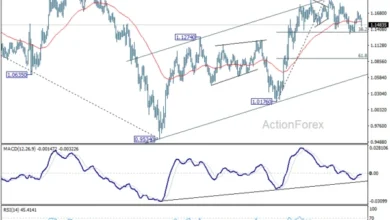
The primary catalyst for the adjustment was an upward revision of the core CPI figure from 2.5% year-on-year to 2.6% year-on-year. This upward tick matched the peak recorded in May, representing the highest outcome observed since May 2025. Despite this persistent price pressure, the euro drifted further away from the critical EUR/USD 1.10 threshold, trading downward to hover around the 1.0970 mark.
The core CPI print holds immense significance for the European Central Bank (ECB), particularly in light of recent forward guidance. ECB President Christine Lagarde has explicitly tied the trajectory of monetary policy to the path of underlying inflation, closely monitoring the potential broadening of price pressures across the bloc.
While a December 25 basis point rate hike remains the consensus base case for the central bank, policymakers have signaled that a wait-and-see approach will likely be adopted thereafter if core CPI fails to decelerate sustainably toward the 2% target. In the absence of broader indirect or second-round effects, a combination of tighter financial conditions and lingering negative growth risks is currently doing much of the heavy lifting for the ECB.
Reflecting these evolving dynamics, EMU money markets are currently pricing in at least one additional rate hike—beyond the anticipated December move—by April 2027, with a high probability of a subsequent tightening phase unfolding during the second half of 2027.
Federal Reserve Signals Aggressive Tightening Cycle in the United States
Across the Atlantic, US monetary policy expectations have undergone a significant hawkish repricing, driven largely by sticky domestic inflation figures and assertive commentary from Federal Reserve Governor Christopher Waller. Over recent years, Waller has developed a reputation as a reliable early indicator regarding the strategic direction of US monetary policy. While his specific policy calls have occasionally diverged from the exact timing of final outcomes, his track record in predicting the overarching direction of travel remains virtually impeccable.
Although Waller’s persistent advocacy for a 50 basis point rate hike in December may ultimately face pushback from the broader Federal Open Market Committee (FOMC), the core message is unmistakable: US monetary policy is poised to be tightened faster and more aggressively than markets anticipated prior to his recent remarks. Reaffirming his stance, Waller reiterated his call for a 50-basis-point reduction or, alternatively, suggested that the Fed should guide markets toward back-to-back 25-basis-point hikes across the December and January meetings.
In a striking policy twist, the Washington-based governor introduced a new dimension to the debate by arguing that the interest rate levels maintained during the summer of 2025 will ultimately prove insufficient to pull inflation sustainably back down to the Federal Reserve’s 2% target. This perspective marks a clear departure from prevailing market assumptions, which had largely centered on the Fed merely reversing the cumulative 75 basis points of precautionary rate cuts enacted during the final quarter of 2025.
Waller stands out as the first prominent Fed official to openly contemplate pushing policy rates into even more restrictive territory. This posture stands in stark contrast to the Fed’s September "dot plot," in which none of the governors projected an end-of-year policy rate exceeding the 4.25% to 4.50% range observed in the summer of 2025 across the entire forecasting horizon. Current US money market pricing increasingly aligns with Waller’s outlook, with traders now discounting a peak policy rate of at least 4.50% to 4.75%.

ECB Considers Raising Minimum Reserve Requirements to Optimize Liquidity
In addition to traditional interest rate levers, Eurozone policymakers are actively evaluating structural modifications to manage liquidity and reduce institutional costs. According to reports citing sources close to the matter, ECB policymakers are slated to discuss a proposal during next week’s Governing Council meeting to raise the minimum reserve requirement ratio from 1% to 2% as a share of deposits and other short-term liabilities.
Because these mandatory reserves are held in unremunerated accounts at national central banks, the implementation of this policy could generate substantial financial relief. Preliminary calculations by news agencies indicate that the move could save national central banks and the ECB combined up to €4.4 billion annually under current interest rate conditions. Should the benchmark policy rate rise to a minimum of 2.75%, these potential savings would increase correspondingly.
Beyond fiscal savings, the adjustment would serve as an effective mechanism to mop up some of the roughly €2 trillion in excess liquidity that continues to circulate within the financial system following years of aggressive quantitative easing and bond-buying programs by the Eurosystem. The minimum reserve ratio was previously reduced to 1% back in 2012 in response to the sovereign debt crisis. While initial deliberations begin next week, a formal decision could officially be pushed back to the Governing Council’s dedicated policy meeting on December 17.
Geopolitical Pressures Force Historic Shift in Russian Energy Markets
Geopolitical friction and ongoing military conflicts continue to ripple through global commodity markets, producing unprecedented structural anomalies in Eastern Europe. According to trade data processed by analytical firms and highlighted in financial reports, Russia imported record volumes of petrol by sea over the past month.
Seaborne imports reached an estimated 390,000 tons in October, marking a stunning and historic reversal for a nation that has traditionally operated as a robust net exporter of refined petroleum products. Russia first began importing motor fuels in July, a development that directly coincided with a coordinated campaign of targeted drone and missile strikes by Ukraine against Russian energy infrastructure. These operations initially focused on basic storage and distribution facilities before progressively targeting increasingly complex refineries located deep within Russian territory.
The resulting domestic petrol crisis reached its zenith during the summer months, when industry estimates suggested that roughly 40% to 45% of Russia’s total refining capacity was offline simultaneously during the peak of the seasonal holiday travel and agricultural harvest period.
Despite the acute strain on domestic petrol supplies, Russian diesel production continues to significantly exceed domestic demand, shielding that specific energy segment from emergency import requirements. In response to the broader supply crunch, Moscow previously instituted a selective export ban on refined fuels, a restrictive measure that has recently been officially extended until at least January 31, 2027.
Broader Economic Implications and Outlook
The convergence of sticky inflation prints in Europe, hawkish recalibrations by Federal Reserve officials, and structural liquidity adjustments by the ECB underscores the fragile balance central banks must maintain as they steer their respective economies through lingering post-pandemic and geopolitical headwinds.
In the Eurozone, the persistence of core inflation above targets complicates the ECB’s pivot toward normalization, forcing monetary authorities to weigh the risks of premature easing against the drag of tighter financial conditions. Simultaneously, the potential implementation of higher minimum reserve requirements highlights a renewed focus on balance sheet management and institutional cost efficiency.
In the United States, Governor Waller’s advocacy for higher-for-longer and potentially more restrictive interest rates challenges prevailing market compliances, injecting fresh volatility into fixed-income and currency valuations. As central banks worldwide prepare for their final policy deliberations of the year, market participants will remain hyper-sensitive to incoming macroeconomic data releases, monitoring whether underlying price pressures will finally yield or necessitate an even more aggressive policy response throughout 2027.
Related posts: