Pakistan’s Crypto Regulator Pushes for Case-by-Case Islamic Law Review of Digital Assets Amidst Influential Fatwa

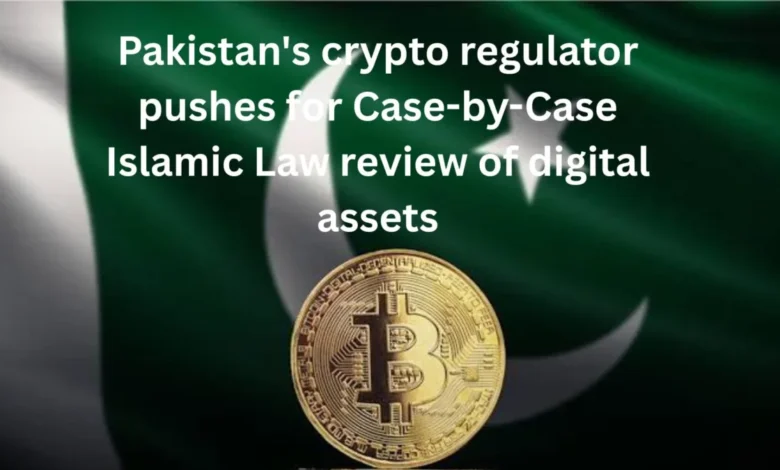
Pakistan’s leading digital asset regulator is advocating for a meticulously nuanced evaluation of cryptocurrencies under Islamic law, following a pivotal meeting with one of the nation’s most respected religious scholars whose recent pronouncement cast significant doubt on the Sharia compliance of crypto-based transactions. This development underscores a critical juncture for Pakistan’s nascent digital economy, as it navigates the complex interplay between technological innovation, economic aspiration, and deeply ingrained religious principles.
The Regulatory Pushback Against a Blanket Ban
Bilal bin Saqib, Chairman of the Pakistan Virtual Assets Regulatory Authority (PVARA), announced on Saturday, July 11, 2026, that he had engaged in a constructive discussion with Mufti Taqi Usmani, a globally recognized authority in Islamic jurisprudence and finance. The meeting centered on the Sharia status of blockchain technology, digital assets, stablecoins, and tokenized real-world assets. Saqib characterized the dialogue as highly productive, emphasizing a shared fundamental objective: safeguarding Pakistani citizens from the prevalent risks of fraud, exploitation, and other financial harms associated with the rapidly evolving crypto sector.
However, a divergence emerged concerning the approach to evaluating digital assets. Chairman Saqib, through a post on the social media platform X, firmly contested the notion of categorizing all digital assets as a single, undifferentiated entity. He articulated that distinct technologies such as blockchains, stablecoins, and tokenized real-world assets possess unique characteristics and diverse applications. Consequently, Saqib argued for a tailored assessment, advocating for each category to undergo its own comprehensive combination of technical scrutiny and religious review, rather than being subjected to a sweeping, generalized judgment. This stance highlights PVARA’s commitment to fostering a responsible digital economy while seeking to avoid an outright prohibition that could stifle innovation.
The Influential Fatwa and Its Implications
The urgent need for this high-level discussion was precipitated by the public circulation, beginning on Friday, July 10, 2026, of a significant fatwa (religious edict). This ruling, dated June 10, 2026, was issued by Mufti Taqi Usmani and other eminent scholars affiliated with Darul Ifta, a jurisprudential body within Jamia Darul Uloom Karachi, one of the largest and most influential Islamic seminaries globally. The fatwa concluded definitively that cryptocurrencies do not fulfill the definition of ‘maal’ (property or wealth) under Islamic law. It characterized them as "fictitious digital entries" rather than tangible, genuine assets, thereby questioning their legitimacy within Sharia-compliant financial frameworks.
The edict specifically cited USDT (Tether) and other similar tokens, asserting that transactions conducted using cryptocurrencies—including illustrative examples involving the purchase of books and online courses—were deemed invalid. This invalidation implies that buyers in such instances would not have lawfully acquired the goods or services, potentially leading to widespread legal and religious uncertainty for individuals and businesses engaging with digital assets. Given Pakistan’s demographic landscape, where approximately 231.7 million people identified as Muslim in the 2023 national census, such scholarly rulings on financial matters wield immense influence over public perception and the practical adoption of digital assets by ordinary Pakistanis.
Understanding ‘Maal’ in Islamic Jurisprudence
The concept of ‘maal’ is central to Islamic financial law. For an asset to qualify as ‘maal,’ it must typically possess several key attributes: it must be valuable, capable of being owned, transferable, and provide a benefit. Traditional Islamic jurisprudence, developed over centuries, primarily dealt with tangible assets or widely recognized financial instruments. The scholars issuing the fatwa likely based their conclusion on the perceived lack of intrinsic value, governmental backing, or tangible representation for cryptocurrencies, viewing them as speculative instruments rather than legitimate forms of wealth.
This interpretation posits that cryptocurrencies, lacking a physical form, underlying commodity, or direct link to a central bank or sovereign authority, fail to meet the established criteria for ‘maal.’ This conservative stance aligns with a cautious approach often taken by traditional Islamic scholars when confronting novel financial instruments that do not easily fit into existing jurisprudential categories. The concern often revolves around elements of gharar (excessive uncertainty or ambiguity), maysir (gambling), and riba (interest), all of which are prohibited in Islamic finance. Critics of cryptocurrencies from a Sharia perspective often point to their volatility, speculative nature, and the lack of regulatory oversight as problematic elements that introduce gharar and maysir.
PVARA’s Mandate and the Emerging Regulatory Challenge
PVARA itself is a relatively nascent institution, having been established by the Pakistani government in 2025. Its core mandate is ambitious: to license and oversee cryptocurrency exchanges, regulate the virtual asset sector, and facilitate the strategic integration of blockchain technology into Pakistan’s broader financial ecosystem. The authority was envisioned as a key driver for digital innovation and financial inclusion in a country eager to leverage technology for economic growth.
However, the influential fatwa introduces a significant and immediate challenge to PVARA’s objectives. The agency is now tasked with the delicate balancing act of promoting technological advancement and attracting investment in the digital space, while simultaneously addressing profound religious objections that resonate deeply within Pakistani society. How PVARA navigates these religious injunctions will not only define the scope of its regulatory framework but also critically shape public adoption rates, investor confidence, and the overall trajectory of Pakistan’s digital asset landscape. The outcome of this debate could either pave the way for a Sharia-compliant digital economy or impose severe limitations on its development.
Chronology of Key Events:
- 2025: The Pakistan Virtual Assets Regulatory Authority (PVARA) is established by the Pakistani government with the mandate to regulate virtual assets and integrate blockchain technology.
- June 10, 2026: Mufti Taqi Usmani and scholars from Darul Ifta, Jamia Darul Uloom Karachi, issue a fatwa concluding that cryptocurrencies do not qualify as ‘maal’ under Islamic law.
- Friday, July 10, 2026: The fatwa begins circulating publicly, creating significant apprehension within the crypto community and among potential investors.
- Saturday, July 11, 2026: Bilal bin Saqib, Chairman of PVARA, meets with Mufti Taqi Usmani to discuss the Sharia status of various digital assets, advocating for a nuanced, case-by-case review.
- Last updated, July 13, 2026: The public and regulatory bodies await further clarity and potential policy adjustments based on these critical discussions.
Broader Context: Pakistan’s Economic Ambitions and Digital Transformation

Pakistan, with its large youth population and growing internet penetration, views digital transformation as a crucial pillar for economic development. The government has expressed interest in leveraging blockchain technology for various applications, from improving land records to facilitating cross-border remittances. Remittances are a vital source of foreign exchange for Pakistan, and the potential for blockchain to reduce transaction costs and increase efficiency in this sector is significant.
However, the regulatory environment for cryptocurrencies in Pakistan has historically been ambiguous, often leaning towards caution or prohibition. Previous directives from the State Bank of Pakistan and other financial institutions have warned against engaging with cryptocurrencies due to concerns about money laundering, terror financing, and speculative risks. PVARA’s establishment was intended to bring clarity and a structured approach to this sector. The current religious ruling adds another layer of complexity, demanding a reconciliation between modern financial instruments and traditional religious law.
Global Implications for Islamic Finance and Digital Assets
The debate unfolding in Pakistan is not isolated; it resonates across the broader landscape of Islamic finance globally. The global Islamic finance industry, estimated to be worth over $3 trillion, is actively exploring how to integrate new technologies, including blockchain and digital assets, while adhering to Sharia principles. Countries like Malaysia, Indonesia, and the UAE are also grappling with similar questions, with varying degrees of success in establishing Sharia-compliant frameworks for digital assets.
Some jurisdictions have seen the emergence of "Sharia-compliant" cryptocurrencies or blockchain platforms designed to facilitate ethical and permissible transactions. These often involve underlying tangible assets, strict governance models, and mechanisms to avoid gharar, maysir, and riba. The Pakistani scenario could either serve as a deterrent for such innovations or, if a nuanced approach prevails, could catalyze the development of a robust, Sharia-compliant digital asset ecosystem within the country. The stature of Mufti Taqi Usmani means his rulings carry weight beyond Pakistan, potentially influencing interpretations and policies in other Muslim-majority nations.
Potential Paths Forward and Future Outlook
The path forward for Pakistan’s digital asset sector appears to hinge on a collaborative and iterative process between religious scholars, financial regulators, and technology experts. Several potential avenues could be explored:
- Categorization and Differentiated Rulings: This aligns with Chairman Saqib’s proposal. Different types of digital assets (e.g., stablecoins pegged to fiat currencies, tokenized real estate, utility tokens, pure cryptocurrencies like Bitcoin) could be evaluated separately. A stablecoin backed 1:1 by a central bank-issued fiat currency might gain Sharia compliance more easily than a highly volatile, unbacked cryptocurrency. Tokenized real-world assets, representing fractional ownership of tangible properties, could also find easier acceptance if structured correctly.
- Development of Sharia-Compliant Digital Assets: Local and international fintech firms, in conjunction with Islamic scholars, could focus on developing digital assets specifically designed to meet Sharia requirements from their inception. This would involve ensuring transparency, avoiding speculative elements, and having clear underlying assets or utility.
- Educational Initiatives: Bridging the knowledge gap between traditional Islamic scholars and cutting-edge technology experts will be crucial. Workshops, dialogues, and research initiatives could help scholars understand the technical nuances of blockchain and digital assets, while tech innovators gain insight into Sharia principles.
- Phased Regulatory Approach: PVARA might adopt a phased approach, starting with regulating less controversial digital assets (like certain stablecoins or tokenized assets) while continuing dialogue on more complex ones.
The discussions between Bilal bin Saqib and Mufti Taqi Usmani represent a critical first step in what is likely to be a prolonged and complex process. The outcome will not only determine the future of digital assets in Pakistan but also contribute to the global discourse on integrating modern financial innovation with centuries-old religious traditions, demonstrating the dynamic nature of Islamic jurisprudence in adapting to new realities. The world will be watching closely to see how Pakistan, a nation deeply rooted in Islamic values, charts its course in the digital age.