South Africa Unveils Comprehensive Draft Guide to Cryptocurrency Taxation, Clarifying Existing Law for Digital Assets

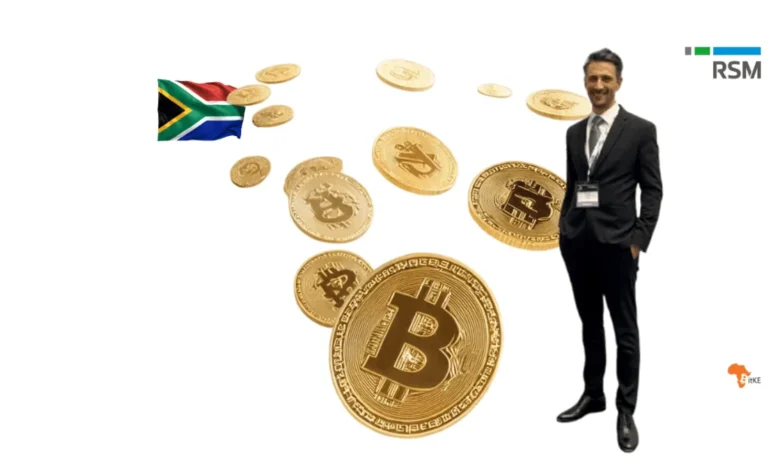
The South African Revenue Service (SARS) has released its long-awaited Draft Guide to the Taxation of Crypto Assets, offering what may be its clearest and most comprehensive explanation yet of how existing tax laws apply to cryptocurrency transactions. This pivotal document, rather than introducing an entirely new tax regime, meticulously outlines how current income tax and capital gains tax (CGT) rules are to be applied to a wide array of crypto-related activities, including but not limited to trading, mining, staking, donations, and even crypto-to-crypto transactions. The guide is now open for public comment until August 31, 2026, providing a crucial window for industry stakeholders, tax professionals, and individual investors to contribute to its final form.
A Significant Leap Towards Clarity in Crypto Taxation
For years, the burgeoning cryptocurrency market in South Africa operated within a grey area of taxation, guided only by brief, often ambiguous, statements from SARS. The initial guidance issued in 2018 was largely insufficient to address the complexities and rapid evolution of the digital asset landscape. This new draft guide represents a monumental step forward, providing a much-needed framework that significantly reduces uncertainty for taxpayers and tax practitioners alike. According to Tertius Troost, a prominent tax specialist at RSM South Africa, the primary contribution of this draft is precisely this reduction in ambiguity, offering a clearer picture of how SARS is likely to approach audits and assessments related to crypto transactions. "The biggest value of the guide is that it reduces uncertainty," states Troost, adding, "It gives taxpayers a better understanding of how SARS is likely to approach audits and assessments." This enhanced clarity is vital for fostering compliance and encouraging responsible participation in the digital economy.
The South African crypto market has seen exponential growth over the past decade, mirroring global trends. As of 2023, reports indicated that a significant percentage of the adult population in South Africa had either owned or traded cryptocurrencies, making it one of the leading nations in crypto adoption on the continent. This rapid expansion, coupled with the inherent anonymity and borderless nature of digital assets, presented a formidable challenge for tax authorities. The absence of specific, detailed guidance led to widespread confusion, potential non-compliance, and an uneven playing field for taxpayers. The release of this draft guide signals SARS’s commitment to adapting its regulatory framework to modern financial innovations, ensuring that the principles of fairness and equity in taxation are upheld across all asset classes.
Chronology of South Africa’s Evolving Crypto Stance
South Africa has been on a gradual journey towards formalizing its stance on cryptocurrencies, moving from initial caution to a more proactive regulatory approach.
- 2014: The South African Reserve Bank (SARB) first issued a position paper on virtual currencies, highlighting risks but acknowledging their potential.
- 2018: SARS released its initial, albeit brief, guidance stating that "crypto assets are not currency but are assets of an intangible nature" and are subject to income tax and CGT rules. This marked the first official acknowledgement of crypto’s taxability.
- 2019-2021: Various intergovernmental working groups, including the Crypto Assets Regulatory Working Group (CARWG), were established to develop a comprehensive regulatory framework for crypto assets.
- 2022: The Financial Sector Conduct Authority (FSCA) declared crypto assets as a financial product under the Financial Advisory and Intermediary Services (FAIS) Act, paving the way for the licensing of Crypto Asset Service Providers (CASPs). This was a major step towards bringing the industry under formal regulation.
- 2023: The FSCA began issuing licenses to CASPs, further solidifying the regulatory landscape for crypto businesses.
- July 2026: SARS releases the Draft Guide to the Taxation of Crypto Assets, providing detailed tax guidance.
- August 31, 2026: Deadline for public comments on the draft guide, an essential phase for stakeholder input.
This timeline underscores a concerted effort by South African authorities to move from a reactive to a proactive regulatory environment, recognizing the economic significance of digital assets while addressing associated risks.
Navigating Income Tax vs. Capital Gains Tax: The Intention Test
A central tenet clarified by the draft guide revolves around the distinction between crypto profits being taxed as ordinary income versus capital gains. This is a critical differentiation, as the tax rates and allowable deductions can vary significantly. Ordinary income is generally taxed at progressive rates applicable to an individual’s total taxable income, while capital gains are subject to an inclusion rate (currently 40% for individuals) and an annual exclusion.

Troost emphasizes that the distinction primarily depends on the taxpayer’s intention rather than the inherent nature of the crypto asset itself. This "intention test" is a long-standing principle in South African tax law, applied to various asset classes. In practice, however, SARS is expected to scrutinize several factors to ascertain this intention, moving beyond mere declarations. These factors, crucial for taxpayers to understand, include:
- Frequency and Volume of Transactions: A high frequency of trades, particularly large volumes, can suggest a business-like operation, indicating an intention to profit through active dealing rather than long-term investment.
- Period of Ownership: Assets held for short periods before disposal typically point towards speculative trading, whereas assets held for several years might indicate a capital investment.
- Profit Motive and Business Activities: Whether the taxpayer has actively sought to maximize profits through buying and selling, employed sophisticated trading strategies, or advertised their crypto activities as a source of income.
- Funding Sources: Whether the crypto assets were acquired with borrowed funds, suggesting an intent to leverage for short-term gains.
- Relationship to Other Business Activities: If crypto trading is integrated into or complements other business ventures.
- Nature of the Asset: While not solely determinative, some crypto assets are inherently designed for speculative trading (e.g., meme coins), while others are primarily utility tokens or long-term store-of-value assets.
- Record-Keeping and Systems: Professional-level record-keeping, advanced trading software, and dedicated analytical tools might suggest a business operation.
For instance, a casual investor who buys Bitcoin and holds it for five years, then sells it to fund a down payment on a house, is likely to be assessed under Capital Gains Tax. Conversely, an individual who frequently day-trades various altcoins, using automated bots and sophisticated market analysis, would more likely have their profits classified as ordinary income, subjected to a higher tax burden. This nuanced approach requires taxpayers to maintain meticulous records to substantiate their intentions.
Demystifying Taxable Events: Beyond Fiat Conversions
The draft guide also clarifies that several transactions commonly perceived as tax-free or non-events can indeed trigger taxable events. This is a critical area of education for many crypto users who might mistakenly believe that taxes only apply when crypto is converted back into fiat currency (like South African Rand).
- Crypto-to-Crypto Swaps: A significant clarification is that swapping one cryptocurrency for another (e.g., Bitcoin for Ethereum) is treated as a disposal of the first asset, meaning a taxable event occurs. Even if no fiat currency changes hands, the exchange itself can create a capital gain or loss, or ordinary income/loss, depending on the taxpayer’s intention and the profit/loss realized from the disposal. This requires taxpayers to calculate the market value of the disposed asset at the time of the swap to determine their gain or loss.
- Using Cryptocurrency for Goods or Services: The guide unequivocally states that using cryptocurrency to pay for goods or services is regarded as a disposal of an asset, not merely spending money. For example, if a user buys a coffee with Bitcoin, they are effectively selling their Bitcoin at its market value at that moment to acquire the coffee. Any appreciation in the Bitcoin’s value since its acquisition would constitute a taxable gain.
- Mining Rewards: Income derived from cryptocurrency mining (e.g., block rewards, transaction fees) is typically considered ordinary income at the point of receipt, valued at its market price.
- Staking Rewards: Similarly, rewards earned from staking crypto assets are likely to be treated as ordinary income when they are received, based on their market value at that time.
- Airdrops and Hard Forks: While not explicitly detailed in all cases, the general principle suggests that assets received through airdrops or hard forks might be considered ordinary income upon receipt, with their cost base for future disposals being their market value at the time of receipt.
These clarifications emphasize the need for comprehensive record-keeping of all crypto transactions, not just those involving fiat currency. Taxpayers must track acquisition dates, costs, and disposal values for every single transaction to accurately calculate their tax liabilities.
The DeFi Dilemma: A Remaining Frontier of Uncertainty
Despite its comprehensive nature, the draft guide provides limited specific direction on decentralized finance (DeFi). While SARS acknowledges the sector’s growing importance and complexity, it largely excludes detailed guidance on activities such as decentralized lending, borrowing, liquidity provision, yield farming, and other intricate DeFi transactions. This omission leaves a significant area of uncertainty for participants in this rapidly evolving segment of the crypto market.
DeFi’s unique characteristics – its global, permissionless, and often pseudonymous nature, coupled with the use of smart contracts and complex tokenomics – present formidable challenges for traditional tax frameworks. For example, how should pooled assets in a liquidity protocol be treated? Are rewards from yield farming considered income, and at what point? What are the tax implications of liquidations in decentralized lending protocols? These are questions that many in the industry are grappling with, and the current draft offers little specific clarity.
Tertius Troost suggests that industry participants are highly likely to seek greater clarity during the public consultation process. This period will be crucial for experts and stakeholders to submit detailed comments, highlighting the specific challenges and proposing potential solutions for taxing DeFi activities. SARS will then need to weigh this feedback against its existing tax principles and international best practices to develop more definitive guidance. Without it, the risk of non-compliance due to ambiguity remains high for those deeply involved in the DeFi ecosystem.
The End of Crypto Anonymity: SARS’s Expanding Reach

One of the most critical warnings reiterated by tax specialists like Troost is that the assumption of crypto anonymity from tax authorities is now obsolete. "The days of assuming crypto is invisible to SARS are over," warns Troost, adding a stern caution: "Don’t make compliance decisions based on what SARS cannot see today."
SARS has significantly expanded its capabilities and access to financial information, making it increasingly difficult for taxpayers to conceal crypto-related income and gains. This expanded reach is multifaceted:
- Third-Party Reporting: Local crypto exchanges and service providers are increasingly required to report user transaction data to SARS. As the FSCA licenses more CASPs, these entities will fall under stricter regulatory obligations, including data sharing with tax authorities.
- International Information-Sharing Frameworks: South Africa is a signatory to various international tax cooperation agreements, such as the Common Reporting Standard (CRS), which facilitates the automatic exchange of financial account information between participating jurisdictions. While CRS primarily covers traditional financial assets, its principles are paving the way for similar frameworks for crypto. The OECD’s Crypto-Asset Reporting Framework (CARF), for instance, is designed specifically for the automatic exchange of tax information on crypto assets, and South Africa is likely to adopt such standards in due course. This means that even if a South African taxpayer uses an offshore exchange, SARS may still gain access to their transaction data through international agreements.
- Data Analytics and Blockchain Forensics: SARS is investing in advanced data analytics tools and blockchain forensics capabilities. These technologies allow tax authorities to analyze public blockchain data, trace transactions, identify patterns, and potentially link on-chain activity to identifiable entities, especially when funds eventually move to regulated exchanges or traditional bank accounts.
- Increased Enforcement Capacity: As reported previously by BitKE, SARS has expressed intentions to significantly increase its staff dedicated to enforcing crypto asset transaction disclosures. This indicates a strategic commitment to actively pursuing non-compliant crypto users. The recruitment and training of specialized personnel underscore SARS’s resolve to close the tax gap in the digital asset space.
These developments mean that taxpayers should operate under the assumption that SARS has, or will soon have, the means to identify and audit their crypto activities. Proactive compliance, accurate record-keeping, and seeking professional tax advice are no longer optional but essential for anyone involved with digital assets in South Africa.
The Public Comment Period: A Chance to Shape the Future
The public comment period, which closes on August 31, 2026, is a critical phase for the South African crypto ecosystem. This window allows various stakeholders – including individual crypto users, blockchain companies, industry associations, legal experts, and tax professionals – to provide feedback, raise concerns, and suggest amendments to the draft guide.
This collaborative process is vital for several reasons:
- Refinement and Clarity: Public input can help SARS identify ambiguities, address unforeseen scenarios, and refine the language of the guide to make it even clearer and more practical.
- Addressing Omissions: Key areas like comprehensive DeFi guidance, treatment of NFTs, and specific rules for tokenized securities might be brought to SARS’s attention for inclusion or more detailed explanation.
- Ensuring Fairness: Stakeholders can highlight areas where the proposed treatment might inadvertently create an undue burden or an unfair disadvantage for crypto users.
- Industry Buy-in: A guide developed with significant industry input is more likely to be embraced and complied with, fostering a healthier relationship between taxpayers and the tax authority.
The quality and breadth of the feedback received will significantly influence the final version of the guide, shaping the future of crypto taxation in South Africa for years to come. It is an opportunity for the crypto community to actively participate in the regulatory process rather than passively react to it.
Broader Implications and Future Outlook
The release of SARS’s draft guide is not merely a technical tax document; it carries broader implications for South Africa’s digital economy and its position in the global crypto landscape.
- Fostering a Regulated Environment: By providing clarity, SARS is contributing to the creation of a more mature and regulated crypto environment. This can enhance investor confidence, attract legitimate businesses, and potentially reduce illicit activities by making the rules of engagement clear.
- Economic Impact: A predictable tax regime can encourage innovation and investment in the blockchain sector, as businesses and individuals can better assess their financial obligations and risks. This could potentially stimulate job creation and economic growth in the digital space.
- International Alignment: South Africa’s approach, largely based on applying existing tax principles, aligns with the general trend observed in many developed economies. This consistency is beneficial for cross-border crypto activities and simplifies compliance for international investors.
- Ongoing Evolution: The crypto space is characterized by rapid innovation. While this guide provides a solid foundation, it is unlikely to be the final word. SARS will need to maintain a flexible and adaptive approach, regularly reviewing and updating its guidance to keep pace with new technologies and financial products. The current draft serves as a significant milestone, setting the stage for continuous engagement and refinement.
In conclusion, the South African Revenue Service’s Draft Guide to the Taxation of Crypto Assets marks a pivotal moment for digital asset holders in the country. It dispels much of the previous uncertainty, outlining clear principles for applying existing income tax and capital gains tax laws to various crypto transactions. While areas like decentralized finance still require more specific guidance, the document’s comprehensive nature, coupled with SARS’s enhanced enforcement capabilities, signals a new era of accountability for crypto investors. The ongoing public comment period offers a vital opportunity for the crypto community to contribute to the final shape of these regulations, ensuring a fair, clear, and effective tax framework for South Africa’s burgeoning digital economy. Compliance is no longer a matter of choice but a necessity, and understanding these new guidelines is paramount for all participants in the crypto space.