Kansas Regulators Close Small Business Bank Amidst Persistent Financial and Compliance Issues, Deposits Assumed by Farmers State Bank of Oakley

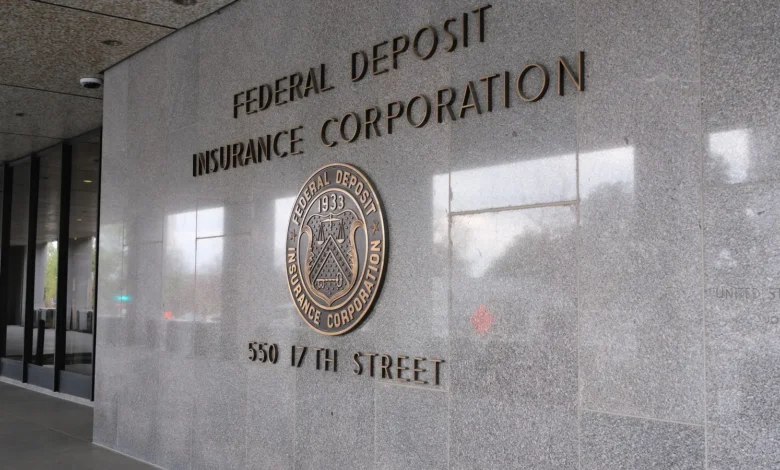
Kansas regulators officially closed Lenexa-based Small Business Bank on Friday, marking the culmination of years of persistent financial and operational deficiencies that drew repeated warnings from federal oversight bodies. In a swift resolution designed to protect depositors and maintain financial stability, The Farmers State Bank of Oakley, located across the state, has agreed to assume all of Small Business Bank’s deposits and purchase a significant portion of its assets. The Federal Deposit Insurance Corporation (FDIC) facilitated the transaction, acting as receiver for the failed institution, ensuring a seamless transition for customers.
The closure comes after a critical declaration by the Federal Reserve in June, which labeled Small Business Bank "significantly undercapitalized." This severe designation triggered a "prompt corrective action directive," granting the bank a mere 30 days to bolster its equity through the sale of shares, secure a buyer, or implement other stringent measures to rectify its precarious financial position. Despite this ultimatum, the bank was unable to meet the regulatory requirements, leading to its eventual closure. The lone location of Small Business Bank is scheduled to reopen its doors on Monday, operating as a newly established branch of The Farmers State Bank, minimizing disruption for the local community and its banking clients.
A Pattern of Regulatory Scrutiny: Small Business Bank’s Downward Trajectory
The June "significantly undercapitalized" label was not an isolated event but rather the third major warning issued to the Lenexa-based lender by the Federal Reserve within as many years, illustrating a troubling pattern of non-compliance and financial instability. This repeated regulatory intervention highlights a systemic failure within Small Business Bank to address fundamental issues related to its operations and financial health.
The first significant public action occurred in 2023 when the Federal Reserve handed down a comprehensive cease-and-desist order. This order cited a wide array of critical deficiencies that underscored deep-seated problems within the bank’s operational framework. These included inadequate staffing levels, which can hamper efficiency and oversight; weak internal controls, essential for preventing fraud and errors; poor credit risk management, indicating potentially risky lending practices; and significant shortcomings in general lending and credit administration. Furthermore, the order pointed to insufficient capital, a crucial buffer against losses, and major issues in both IT and third-party risk management, areas that have become increasingly vital in the digital banking age. A cease-and-desist order is a serious enforcement action, compelling an institution to stop specific activities or practices deemed unsafe or unsound and to implement corrective measures.
The situation did not improve in the subsequent year. In 2024, examiners from the Kansas City Federal Reserve Bank, working in conjunction with the Kansas Office of the State Bank Commissioner, conducted another review. Their findings revealed "new and continuing deficiencies," suggesting that the bank had either failed to adequately address the issues from the 2023 order or had developed new problems. Particular emphasis was placed on persistent weaknesses in overall risk management and, critically, a lack of compliance with anti-money laundering (AML) regulations. AML compliance is a cornerstone of financial integrity, designed to prevent illicit financial activities such as terrorism financing and drug trafficking. Repeated failures in this area are viewed with extreme gravity by regulators, as they can expose the financial system to significant reputational and operational risks.
These successive regulatory actions painted a clear picture of an institution struggling to meet basic operational and financial health standards. The escalation from a cease-and-desist order to findings of "new and continuing deficiencies" and finally to being declared "significantly undercapitalized" demonstrates a progressive deterioration that ultimately led to the bank’s demise.
The Role of Regulators and Deposit Insurance in Maintaining Stability
The swift action taken by Kansas regulators, supported by the FDIC and the Federal Reserve, underscores the robust regulatory framework designed to protect the integrity of the U.S. financial system and, most importantly, the deposits of ordinary citizens and businesses.
The Federal Deposit Insurance Corporation (FDIC) plays a critical role in this process. Created in 1933 during the Great Depression, the FDIC insures deposits up to $250,000 per depositor, per insured bank, for each account ownership category. This insurance provides a vital safety net, preventing bank runs and instilling confidence in the banking system. When a bank fails, as in the case of Small Business Bank, the FDIC steps in as the receiver. Its primary responsibilities include resolving the failed institution in a manner that minimizes losses to the Deposit Insurance Fund (DIF) and ensures that insured depositors have prompt access to their funds, typically by transferring accounts to a healthy acquiring bank.
The estimated cost of Small Business Bank’s failure to the Deposit Insurance Fund is approximately $5.7 million. This figure, while significant for a smaller institution, is expected to fluctuate as the FDIC proceeds with the liquidation of the bank’s retained assets. The DIF is an industry-funded insurance pool, primarily supported by assessments on insured depository institutions, rather than taxpayer money, further emphasizing the banking sector’s collective responsibility for financial stability.
The Federal Reserve, as the central bank of the United States, plays a crucial supervisory and regulatory role. It oversees banks to promote a safe, sound, and stable financial system. Its "prompt corrective action" framework, under which Small Business Bank was deemed "significantly undercapitalized," is a tiered system of mandatory supervisory actions that become progressively more stringent as a bank’s capital levels decline. This framework is designed to intervene early to prevent further deterioration and to minimize the cost of bank failures. The Kansas Office of the State Bank Commissioner also exercises primary regulatory authority over state-chartered banks within Kansas, working in tandem with federal agencies to ensure compliance with state and federal banking laws.
The Acquiring Bank: Farmers State Bank of Oakley’s Strategic Expansion
The Farmers State Bank of Oakley emerges as a key player in this resolution, demonstrating its strategic growth and capacity to absorb a failing institution’s operations. This acquisition represents a significant expansion for the Oakley-based bank, which itself is fresh off another notable growth initiative.
Just last week, The Farmers State Bank successfully completed the conversion of customer accounts following its acquisition of Kaw Valley State Bank. This prior integration of an acquired bank’s operations likely provided valuable experience and infrastructure, preparing it for the seamless assimilation of Small Business Bank’s customer base and assets. The acquisition of Kaw Valley State Bank, followed by the absorption of Small Business Bank, signals an aggressive and well-executed growth strategy by The Farmers State Bank, aiming to expand its geographical footprint and market share across Kansas.
As of March 31, The Farmers State Bank boasted assets totaling $389 million and operated two branches in Oakley and Eudora. The addition of Small Business Bank’s sole Lenexa location will further extend its reach into the populous Kansas City metropolitan area, providing new opportunities for growth and service delivery. This strategic expansion through acquisition is a common tactic for community banks looking to scale operations, diversify their customer base, and enhance their competitive position in an evolving financial landscape. The successful integration of these new branches and customer accounts will be crucial for the bank’s continued success and its commitment to serving a broader community.
Financial Footprint of Small Business Bank and Cost of Failure
At the time of its closure, Small Business Bank held approximately $73 million in assets and $69 million in deposits, according to FDIC figures. These numbers place it firmly within the category of a smaller community bank, highlighting that even institutions of this size are subject to rigorous regulatory oversight and face severe consequences for failing to meet compliance and capital standards.
The estimated $5.7 million cost to the Deposit Insurance Fund, while not catastrophic for the overall health of the DIF, represents a direct financial impact stemming from the failure. This figure is calculated based on the difference between the failed bank’s assets and liabilities that the FDIC must cover. As mentioned, the final cost can change as the FDIC liquidates the remaining assets and resolves any outstanding claims, a process that can take time. For comparison, the DIF held approximately $116.1 billion at the end of the first quarter of 2024, demonstrating its substantial capacity to absorb such losses. However, every failure, regardless of size, reinforces the importance of vigilant regulation and sound banking practices.
Broader Context: Bank Failures in the U.S. and Regulatory Vigilance
Small Business Bank’s closure marks the fourth U.S. bank failure this year and the second within the month of July alone. This trend, while not indicative of a systemic crisis, signals a continued environment of regulatory vigilance and the ongoing challenges faced by certain institutions.
The year 2026 has already seen a notable number of bank failures. Just ten days prior to Small Business Bank’s closure, Indiana-based Kentland Federal Savings and Loan Association was shut down by regulators on July 10. The Office of the Comptroller of the Currency (OCC) found that Kentland had "experienced substantial dissipation of assets and earnings due to unsafe and unsound practices," mirroring some of the issues seen at Small Business Bank.
Earlier in the year, May saw the failure of Community Bank & Trust – West Georgia. This closure followed months after an inspection by the Atlanta Federal Reserve revealed significant operational deficiencies within the bank’s holding company. These deficiencies specifically pertained to the pursuit of its growth strategy, issues with board oversight, capital adequacy, and compliance with rules related to affiliate transactions – highlighting how strategic missteps and governance failures can lead to insolvency.
The first bank failure of the year occurred in January with the closure of Chicago lender Metropolitan Capital Bank & Trust. Illinois regulators cited "unsafe and unsound conditions" and an "impaired capital position" as the primary reasons for its failure, again pointing to fundamental financial health issues.
The four bank failures in 2026 equal the total number of failures observed in the preceding two years combined. Two banks closed in 2024, followed by another two in 2025. This compares to five bank failures in 2023, a year that saw the high-profile collapses of much larger institutions like Signature Bank, First Republic Bank, and Silicon Valley Bank. While the scale of the 2026 failures is considerably smaller than the systemic events of 2023, the consistent pace underscores that regulatory scrutiny remains high across the banking sector, irrespective of an institution’s size. These closures serve as a reminder that even in an era of relative economic stability, individual banks can succumb to poor management, insufficient capital, or a failure to adapt to regulatory demands.
Implications for the Banking Sector and Customers
The failure of Small Business Bank, and others like it, carries several implications for the broader banking sector and for banking customers. For depositors, the rapid resolution by the FDIC and the seamless transfer of accounts to The Farmers State Bank of Oakley reaffirm the effectiveness of deposit insurance and the regulatory safety net. Customers of Small Business Bank can expect uninterrupted access to their funds and continued banking services, albeit under a new institutional name. This protects consumer confidence, which is vital for the stability of the financial system.
For community banks, these failures highlight the constant pressure to maintain robust risk management frameworks, ensure adequate capital levels, and adhere strictly to compliance regulations, particularly in areas like anti-money laundering. Smaller institutions often operate with tighter margins and fewer resources than their larger counterparts, making compliance and effective governance all the more critical. The increasing complexity of regulatory requirements, coupled with evolving cybersecurity threats and economic fluctuations, presents ongoing challenges that demand proactive and sophisticated management.
Regulators, in turn, demonstrate their commitment to early intervention and decisive action when banks fail to meet supervisory expectations. The detailed chronology of warnings issued to Small Business Bank showcases a regulatory process designed to provide opportunities for remediation before closure becomes inevitable. This approach aims to prevent larger, more disruptive failures and to minimize the cost to the Deposit Insurance Fund.
In conclusion, the closure of Small Business Bank serves as a stark reminder of the rigorous oversight governing the U.S. banking industry. While isolated bank failures are a normal part of a dynamic economic system, the consistent pattern of regulatory non-compliance leading to this outcome underscores the critical importance of sound governance, robust risk management, and unwavering adherence to financial regulations for all institutions, regardless of their size. The swift resolution by the FDIC ensures that depositors are protected and financial stability is maintained, even as the landscape of community banking continues to evolve.