The Evolution of Retrieval Augmented Generation Why Context Engineering is Replacing Prompt Engineering in Enterprise AI

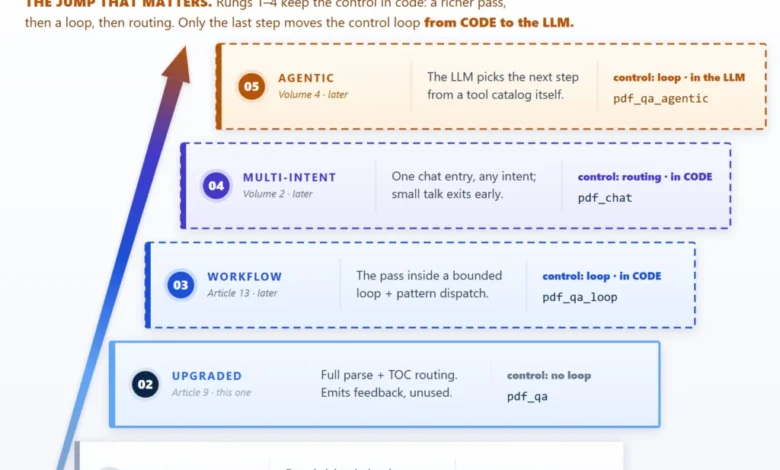
The landscape of enterprise artificial intelligence is undergoing a fundamental shift as developers move away from simple prompt engineering toward a more rigorous discipline known as context engineering. While early implementations of Retrieval-Augmented Generation (RAG) relied on basic text matching and large language model (LLM) prompts, new data suggests that these "naive" pipelines are insufficient for the complexities of professional documents. A recent comparative analysis of production-grade RAG pipelines against standard baselines reveals that the most common failures in AI accuracy—often mislabeled as "hallucinations"—are actually structural failures in the data processing chain.
The investigation, centered on a series of technical benchmarks using a specialized GitHub repository, "notebooks-vol1," demonstrates that a standard 100-line RAG pipeline frequently fails when confronted with complex PDFs, such as World Bank commodity reports and National Institute of Standards and Technology (NIST) technical frameworks. By isolating four critical "bricks" of the RAG architecture—parsing, question parsing, retrieval, and generation—researchers have identified that accuracy is not a product of the model’s size, but of the integrity of the context provided to it.

The Architectural Shift from Naive to Upgraded RAG
In the early stages of the LLM boom, the "naive" RAG model became the industry standard for quick deployments. This architecture follows a simple path: it parses a PDF into flat text, converts a user’s question into keywords, retrieves the top few matching pages based on vector similarity, and asks the model to generate an answer. While this method performs adequately on short, prose-heavy documents like the seminal "Attention Is All You Need" research paper, it collapses when applied to enterprise-grade materials containing tables, specialized vocabulary, or extensive hierarchical structures.
The "upgraded" pipeline, currently being adopted by high-stakes industries such as finance and cybersecurity, replaces these loose processes with strict "contracts." In this framework, parsing returns a relational data frame rather than flat text, question parsing expands queries into the document’s specific vocabulary, retrieval is routed through the document’s table of contents, and generation is restricted to typed, schema-based answers.
Parsing Failures: When Tables Become Noise
One of the most significant hurdles in document AI is the conversion of visual tables into machine-readable text. In a test case involving the World Bank’s Commodity Markets Outlook, a report dense with price forecasts, the naive pipeline failed to answer a basic question regarding the 2025 forecast for U.S. natural gas (Henry Hub).

The failure occurred because traditional parsers use a "flat text" approach, stripping away the grid structure of the table. When a fixed-size chunker processes this stream, the label "Henry Hub" and the corresponding price figure "3.5" often end up in different segments. Consequently, the retrieval brick hands the model a chunk of text that contains the label but not the value, leading the model to report that the information is missing, resulting in a confidence score of 0.00.
Industry experts refer to the solution as "relational parsing." By returning a "line_df"—a data frame where every text line retains its bounding box coordinates—the pipeline preserves the alignment between labels and cells. In the same World Bank test, the upgraded pipeline correctly identified the $3.5 per mmbtu price with a 0.99 confidence rating. This highlights a critical implication: the model did not need to be "smarter"; the parser simply needed to stop destroying the data’s relational shape.
The Vocabulary Gap: Navigating Domain-Specific Terminology
A second point of failure lies in the "question parsing" brick. Many enterprise documents use highly specific terminology that does not always align with a user’s natural language. For instance, when queried about the "pillars" of Zero Trust Architecture using the NIST SP 800-207 standard, naive RAG systems often return a negative result.

The NIST document never uses the word "pillars," instead referring to them as "tenets." Because a naive system searches for the user’s literal words, it misses the relevant section entirely. This is not a failure of the LLM’s reasoning, but a failure of the system to bridge the vocabulary gap.
The upgraded approach utilizes "query expansion," where a small LLM or a specialized dictionary normalizes the question before retrieval begins. By mapping "pillars" to "tenets" or "principles," the system anchors the search in the document’s actual vocabulary. In tests, this allowed the system to return all seven tenets of Zero Trust with 0.95 confidence, illustrating that effective RAG requires a sophisticated understanding of domain-specific synonyms.
Structural Retrieval vs. Frequency Ranking
The third brick, retrieval, is often where the most deceptive errors occur. In a 32-page document like the NIST Cybersecurity Framework (CSF) 2.0, a term like "Profile" appears on almost every page. However, only one specific section provides the formal definition.

Naive retrieval mechanisms, which rely on keyword frequency or cosine similarity, often rank several pages as equally relevant. If the page containing the actual definition falls below the "top-k" cutoff (the limit on how many pages are sent to the LLM), the model will never see the answer. This problem scales poorly; on a 400-page document like NIST SP 800-53, the needle is easily lost in the haystack.
The emerging standard for solving this is "structural routing." Instead of relying on raw frequency, the upgraded pipeline reads the document’s native Table of Contents (ToC). By identifying the section titled "CSF Profiles," the system routes the retrieval directly to the correct coordinates. This method ensures that the system’s performance does not degrade as the document grows in length, a vital requirement for legal and regulatory compliance.
Generation Guardrails: The End of Free-Text Hallucinations
The final brick, generation, is where the AI’s output is actually constructed. A common complaint among AI users is that models "hallucinate"—they provide fluent, confident, but entirely incorrect answers.

In a benchmark using the April 2024 World Bank report (which only provides forecasts through 2025), a naive pipeline was asked for the 2026 Brent crude oil forecast. Lacking a specific row for 2026, the model grabbed the nearest available number (the 2025 forecast of $79) and presented it as the 2026 value.
To prevent this, developers are moving toward "typed generation contracts." Instead of asking for a prose response, the system requires the model to fill out a structured schema (often using OpenAI’s Structured Outputs or similar tools). This schema includes a mandatory Boolean field: complete_answer_found. Faced with the same 2026 query, the upgraded model is forced to recognize that the data point does not exist in the provided context. It sets the flag to "false" and explains that the document’s data ends at 2025. This structural constraint makes missing or partial data visible to the end-user, preventing false information from being presented as fact.
Chronology of RAG Development
The evolution of these systems has moved rapidly over the last 24 months:

- Early 2023: The "Naive RAG" era. Focus was on simple vector databases and basic PDF-to-text conversion.
- Late 2023: The "Prompt Engineering" peak. Developers tried to solve accuracy issues by writing longer, more complex instructions for the LLM.
- Early 2024: The "Agentic RAG" emergence. Introduction of multi-step reasoning and query rewriting.
- Mid 2024 to Present: The "Context Engineering" shift. Focus moves upstream to relational parsing, structural retrieval, and structured output schemas.
Industry Implications and Analysis
The move toward context engineering has profound implications for how AI is integrated into the workforce. For the financial sector, where a single misplaced decimal point in a commodity forecast can lead to millions in losses, the ability to rely on relational parsing is a prerequisite for adoption. In the legal and regulatory space, structural retrieval ensures that AI can navigate thousands of pages of code without missing a single relevant clause.
Furthermore, this research suggests that the "black box" nature of AI is slowly being dismantled. By breaking the RAG process into four distinct bricks with verifiable contracts, developers can perform "root cause analysis" on errors. If a system provides a wrong answer, engineers can now determine exactly where the chain broke: was it a parsing error, a vocabulary mismatch, a retrieval miss, or a generation failure?
This level of transparency is expected to satisfy regulatory bodies concerned with AI "hallucinations." By proving that an AI system only answers based on verified, structurally sound context, companies can build the "chain of trust" necessary for deploying AI in critical infrastructure and public services.

As the technology matures, the distinction between a "chatbot" and a "production-grade intelligence engine" will likely depend on these four bricks. The era of simply "asking the model" is ending; the era of engineering the context has begun.
Related posts: