Prime Minister Andy Burnham Signals Economic Shift with Appointment of John Healey as Chancellor of the Exchequer

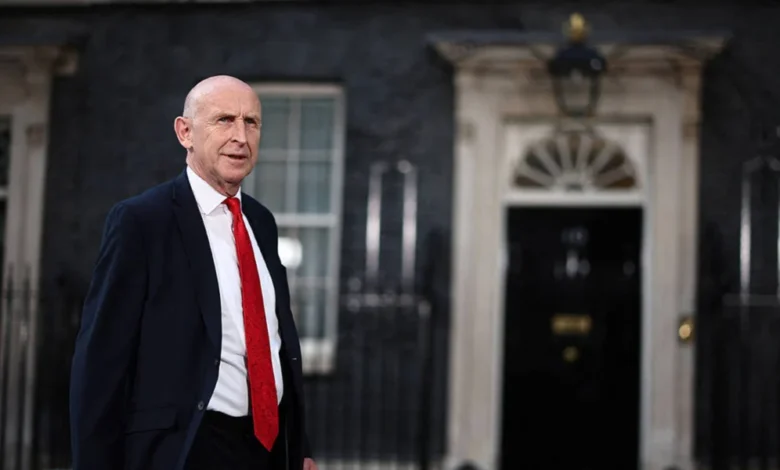
The landscape of British politics and economic management underwent a seismic shift this week as Prime Minister Andy Burnham, having secured a decisive mandate in the most recent general election, announced his first cabinet. In a move that caught many in the City of London and Westminster off guard, Burnham appointed John Healey, the former Secretary of State for Defence, as the Chancellor of the Exchequer. The decision represents a calculated gamble by the Burnham administration, signaling a departure from traditional fiscal appointments in favor of a veteran political operator who possesses deep institutional knowledge of the Treasury but carries the baggage of a high-spending departmental background.
As the United Kingdom enters the second half of 2026, the economy remains in a state of fragile recovery. The appointment of Healey is seen as an attempt to marry the government’s ambitious "pro-growth" agenda with a pragmatic understanding of the UK’s fiscal constraints. Mohamed A. El-Erian, a leading economic commentator, noted that if Healey can successfully leverage his insider knowledge of the Treasury—gained during his years as a junior minister under the Blair and Brown administrations—while simultaneously tempering his instincts for defense-oriented expenditure, he could provide the structural "shake-up" that the UK economy has lacked for over a decade.
The Strategic Logic Behind the Healey Appointment
The selection of John Healey is not merely a personnel choice but a statement of intent regarding "Securonomics"—the intersection of national security and economic resilience. By moving a former Defence Secretary into Number 11 Downing Street, Prime Minister Burnham is suggesting that the UK’s economic health is inextricably linked to its geopolitical standing and industrial base. Healey, who served as Financial Secretary to the Treasury between 2005 and 2007, is no stranger to the corridors of Great George Street. His familiarity with the "Treasury view"—the traditionally cautious and fiscally conservative outlook of the department—gives him a unique advantage in navigating the internal bureaucracy to implement Burnham’s radical decentralization and growth plans.
However, the risk remains palpable. Critics argue that Healey’s recent years spent advocating for increased military spending and defense modernization may conflict with the urgent need for fiscal consolidation. The UK’s debt-to-GDP ratio remains uncomfortably high, hovering near 98%, and the markets have reacted with a mix of curiosity and caution. The primary challenge for the new Chancellor will be to prove that he can pivot from being a "spender" of public funds to a "guardian" of the national purse, all while fostering an environment conducive to private sector investment.
Chronology of the 2026 Cabinet Formation
The appointment follows a rapid-fire series of events that began with the general election results on July 4, 2026.
- July 5, 2026: Andy Burnham is invited by the King to form a government after his party secures a 45-seat majority. In his first speech on the steps of Downing Street, Burnham promises a "National Investment Strategy" to bridge the North-South divide.
- July 10, 2026: Speculation mounts regarding the Treasury. Most analysts predicted a technocratic appointment or the promotion of a shadow treasury veteran.
- July 18, 2026: Internal reports suggest a rift between Burnham and the more conservative wing of the party over the scale of proposed infrastructure spending.
- July 21, 2026: John Healey is seen entering Number 10 Downing Street for a three-hour meeting with the Prime Minister.
- July 22, 2026: The official announcement is made. John Healey is named Chancellor of the Exchequer. Market yields on 10-year gilts see a minor uptick of 5 basis points in immediate response to the news.
Economic Context: The UK in 2026
To understand the weight of this appointment, one must look at the data defining the UK’s current economic position. The post-pandemic and post-energy crisis years left a legacy of sluggish productivity and high interest rates. While inflation has stabilized near the 2.5% mark, the growth engine of the country has remained stalled.
| Economic Indicator | Value (Q2 2026) | Trend |
|---|---|---|
| GDP Growth (Annualized) | 1.2% | Stagnant |
| CPI Inflation | 2.6% | Falling |
| Unemployment Rate | 4.3% | Rising |
| Public Sector Net Debt | 98.4% of GDP | Stable |
| Bank of England Base Rate | 4.25% | Neutral |
The Burnham-Healey partnership inherits a country where the "productivity gap" compared to G7 peers has widened to 18%. Furthermore, private business investment has remained below 2019 levels in real terms. Healey’s "pro-growth" agenda, as outlined in his preliminary briefings, focuses on three pillars: planning reform to unlock housing and energy projects, a "New Deal" for skills training, and a revamped industrial strategy that prioritizes the UK’s aerospace and green-tech sectors.
Official Responses and Market Reactions
The reaction from the political and financial spheres has been polarized. The Confederation of British Industry (CBI) issued a statement expressing "cautious optimism," noting that Healey’s experience in both finance and defense could provide a "steady hand" for the UK’s industrial base. "We welcome a Chancellor who understands the complexities of large-scale procurement and long-term investment cycles," the statement read.
Conversely, the Opposition has labeled the appointment a "security risk to the economy." The Shadow Chancellor argued that Healey’s history of advocating for defense spending makes him the "wrong man to find the efficiencies required to lower the tax burden on working families."
In the City, the response was more nuanced. Goldman Sachs analysts suggested that the appointment indicates a "shift toward a more interventionist industrial policy." Sterling (GBP) remained relatively stable against the Dollar and the Euro, trading at $1.29 and €1.18 respectively, as traders wait for Healey’s first Mansion House speech, scheduled for next month, to gauge his commitment to fiscal rules.
Analysis: The "Healey Doctrine" and Structural Shake-up
The "structural shake-up" mentioned by El-Erian refers to a potential overhaul of how the Treasury operates. Traditionally, the Treasury has been criticized for its "short-termism"—focusing on annual budget cycles at the expense of multi-decade infrastructure projects. Healey’s background in defense, where planning horizons often span 20 to 30 years (as seen in nuclear submarine or fighter jet programs), could introduce a more strategic, long-term perspective to fiscal planning.
A key component of this shake-up is expected to be the "Regional Growth Fund 2.0." Prime Minister Burnham, the former Mayor of Greater Manchester, has long advocated for the devolution of fiscal powers. It is anticipated that Healey will oversee the transfer of significant tax-raising and spending powers to regional mayors, a move that would fundamentally alter the UK’s centralized economic model.
However, the "defense-spending instincts" remain a point of contention. With global tensions remaining high in 2026, the Ministry of Defence is expected to demand a budget increase to 3% of GDP. As a former head of that department, Healey will find himself in the difficult position of having to say "no" to his former colleagues to satisfy the Treasury’s deficit reduction targets. His ability to manage this tension will define the first year of his chancellorship.
Implications for International Trade and Investment
International partners are watching the Burnham-Healey duo closely. The UK’s relationship with the European Union has entered a "normalization phase," with discussions ongoing regarding a new veterinary agreement and mutual recognition of professional qualifications. Healey’s pragmatic reputation is seen as an asset in these negotiations.
In Washington, the U.S. Treasury Department signaled that it looks forward to working with Healey on global tax transparency and supply chain resilience. The appointment suggests that the UK will continue to align itself with a "de-risking" strategy regarding global trade, particularly in sensitive technology sectors.
Conclusion: A High-Stakes Experiment
The appointment of John Healey as Chancellor is a high-stakes experiment in political and economic alignment. By choosing a veteran who understands the machinery of the state but has a non-traditional background for the Treasury, Prime Minister Andy Burnham is betting that the UK’s problems require a political solution as much as a technical one.
If Healey succeeds, he could oversee a period of renewed industrial vigor and regional empowerment, finally breaking the cycle of low growth that has plagued the UK. If he fails to contain spending or loses the confidence of the bond markets, the Burnham administration could find its ambitious agenda curtailed before it truly begins. The upcoming Autumn Statement will be the first true test of the "Healey Doctrine," where the new Chancellor must translate his "calculated risk" into a coherent fiscal reality. For now, Westminster holds its breath, watching to see if the former defense chief can defend the pound as effectively as he once defended the realm.