Just as debt markets fueled the global financial near-meltdown that followed the 2007–08 subprime-mortgage crisis, their exposure to AI will drive developments now. The problem is that we possess only very limited public information about those markets, and regulators are not making that information any easier to obtain.
The artificial intelligence revolution has profoundly reshaped the global economic landscape, functioning simultaneously as a technological frontier and a massive macroeconomic catalyst. From the lush valleys of Hanalei, Hawaii, to the bustling trading floors of Wall Street and the sprawling server farms of Northern Virginia, the financial undercurrents of the AI boom are generating both unprecedented growth and hidden systemic vulnerabilities. For months, and arguably years, generative AI and machine learning infrastructure have dominated corporate speculation about the future, driving aggressive speculation in the present.
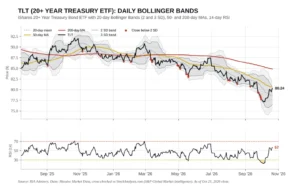
AI-related ventures are largely responsible for the rapid, tech-driven increase of the S&P 500 stock index. Yet, beneath the surging equity valuations lies a more intricate, debt-laden engine: capital expenditure on data centers, advanced semiconductors, and high-energy-consumption infrastructure. Investment in these physical facilities has emerged as a major contributor to rising interest rates in the United States. As technology conglomerates and specialized infrastructure funds borrow heavily to finance construction, their demand for credit directly competes with a federal government running persistent, multi-trillion-dollar fiscal deficits.
The Macroeconomic Footprint of AI Infrastructure
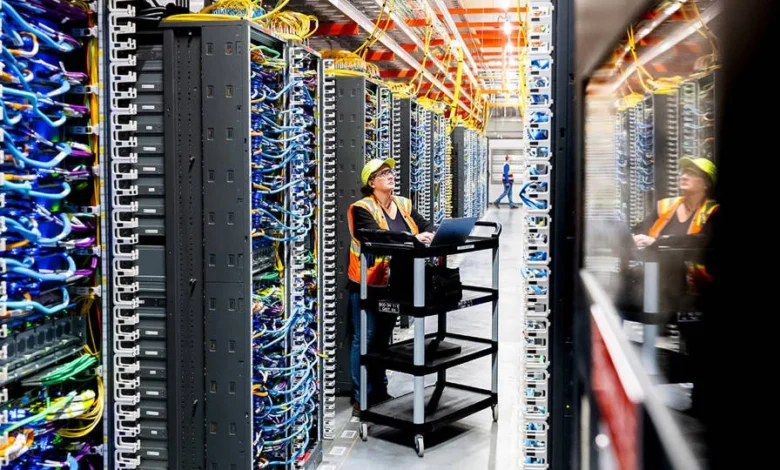
The scale of capital deployment required to sustain the artificial intelligence boom is historically unprecedented. Building a modern, hyperscale data center equipped with specialized graphics processing units (GPUs) requires billions of dollars in upfront capital. Unlike traditional software enterprises that scale with minimal physical overhead, the generative AI boom is intensely capital-intensive.
This capital expenditure is increasingly debt-financed. While major technology firms possess substantial cash reserves, many are utilizing corporate bond markets, syndicated loans, and specialized private credit vehicles to fund their AI expansion. Concurrently, specialized infrastructure developers and real estate investment trusts (REITs) are borrowing aggressively to secure land, power purchase agreements, and cooling systems.
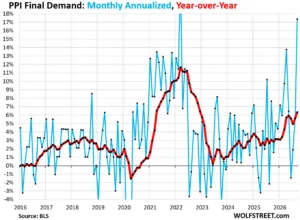
This surge in borrowing coincides with a delicate macroeconomic environment. As central banks navigate the post-inflationary landscape, long-term borrowing costs remain elevated compared to the preceding decade of near-zero interest rates. The influx of corporate borrowers seeking capital for AI projects has effectively increased the competition for loanable funds. Consequently, sovereign debt issuance from the United States Treasury—needed to finance structural budget deficits—must contend with private-sector giants bidding up the price of capital.
Historical Parallels: Echoes of 2007-2008
The structural resemblance between today’s AI-driven capital expenditure boom and the prelude to the 2007–08 global financial crisis has not gone unnoticed by macroeconomic analysts and risk management professionals. While the underlying assets differ—subprime residential mortgages in the mid-2000s versus high-performance computing clusters and large language model developers today—the transmission mechanism of risk shares striking similarities.
During the subprime era, financial institutions leveraged debt markets to fund assets whose long-term economic viability relied on continuous, uninterrupted appreciation in housing prices. When housing markets stalled, the opaque nature of the debt instruments—such as collateralized debt obligations and credit default swaps—prevented market participants and regulators from accurately assessing their true exposure.
In the context of the current AI boom, the primary risk lies in opacity and overleverage. A significant portion of the financing supporting AI startups, cloud service providers, and specialized data center operators is concentrated in private credit markets and opaque corporate debt structures. Publicly available balance sheets reveal only a fraction of the total liabilities incurred by private entities and venture-backed firms working in the AI ecosystem. If the commercial monetization of generative AI fails to materialize at the pace required to service these massive debt obligations, a credit squeeze could ripple outward, impacting traditional commercial banks and institutional investors exposed to these lending vehicles.
The Chronology of the AI Debt Accumulation
The acceleration of AI-related debt markets has evolved through distinct phases over the past several years:
- Late 2022 to Early 2023: The public debut of advanced generative AI models triggers a massive surge in enterprise interest. Venture capital and corporate research budgets pivot decisively toward machine learning capabilities.
- Mid 2023 to Late 2023: Tech conglomerates announce record capital expenditure budgets. Demand for advanced semiconductors outstrips supply, leading to massive hardware pre-purchasing funded by internal cash flows and early debt facilities.
- 2024 to 2025: The focus shifts from software development to physical infrastructure. Billions of dollars are funneled into data center construction across North America, Europe, and Asia. Corporate bond issuance tied explicitly to AI and cloud expansion reaches historic highs.
- 2026 and Beyond: Private credit markets become deeply intertwined with AI infrastructure funding. Regulators and economists begin raising alarms regarding the transparency of these debt obligations and the potential systemic risk posed by concentrated corporate borrowing.
Regulatory Blind Spots and Information Gaps
A central challenge facing financial stability watchdogs is the severe lack of transparent, standardized public information concerning AI debt exposure. Unlike publicly traded equities or standard corporate bonds subject to rigorous disclosure requirements, a substantial share of modern infrastructure financing occurs via private credit, bilateral bank loans, and specialized joint ventures.
Financial regulators, including the U.S. Federal Reserve, the Securities and Exchange Commission (SEC), and international bodies such as the Financial Stability Board (FSB), have repeatedly emphasized the need for enhanced monitoring of non-bank financial intermediation. However, regulatory frameworks have struggled to keep pace with the rapid evolution of private debt markets.
Economists and market observers note that regulators are not currently making this information any easier to obtain. The fragmented nature of private lending agreements means that systemic vulnerabilities can build up unseen. Without comprehensive data on counterparty risk, leverage ratios, and the true extent of debt-servicing obligations across the AI supply chain, policymakers are operating with limited visibility.
Industry Perspectives and Official Reactions
While technology executives maintain an optimistic outlook—emphasizing that AI represents a foundational general-purpose technology comparable to the advent of the internet or electrification—financial sector participants express growing prudence.
Representative statements and analyses from economic institutions highlight a dichotomy between technological optimism and financial realism:
- Banking and Credit Analysts: Rating agencies have begun scrutinizing the credit profiles of mid-tier technology firms and infrastructure providers. While top-tier mega-cap technology companies maintain robust balance sheets capable of absorbing high capital expenditures, smaller suppliers and specialized data center developers face tightening credit standards.
- Central Banking Officials: Representatives from major central banks have noted that while the financial system is generally better capitalized than it was prior to 2008, the migration of risk into private credit and non-bank financial sectors warrants continuous surveillance. The interplay between high sovereign borrowing needs and aggressive corporate investment in AI creates a complex liquidity dynamic.
Broader Economic Implications and Outlook
The long-term economic implications of the AI debt expansion will depend on the realization of productivity gains across the broader economy. If artificial intelligence successfully drives widespread labor productivity improvements, revenue generation will catch up with capital expenditures, allowing firms to service their debt comfortably.
Conversely, if the commercial return on investment for generative AI experiences a prolonged plateau, the debt accumulated during the build-out phase could become a significant drag on corporate earnings and financial stability. The risk is not merely localized to technology firms; because modern pension funds, insurance companies, and asset managers are heavily invested in both public technology debt and private credit funds, a correction in AI valuations could have broad systemic consequences.
Ultimately, navigating the intersection of artificial intelligence and debt markets requires a concerted effort toward regulatory transparency. Without a clearer mapping of where capital is flowing and how much leverage supports the ongoing infrastructure boom, policymakers and market participants will remain vulnerable to hidden systemic risks reminiscent of past financial crises.