The Empirical Case for Trend Following and Momentum Strategies in Modern Portfolio Construction

The debate between passive index investing and active factor-based strategies has long served as a fault line in modern finance. While the Efficient Market Hypothesis (EMH)—the theory that asset prices reflect all available information—suggests that beating the market consistently is nearly impossible, a growing body of academic research points to persistent anomalies that challenge this view. Among these, trend following and momentum investing have emerged as the most rigorously documented strategies, offering investors a potential mechanism to mitigate drawdowns and enhance long-term risk-adjusted returns.
The Evolution of Trend Following: From Niche to Necessity
Trend following is a systematic investment approach predicated on the observation that assets that have performed well in the recent past tend to continue that trajectory, while underperforming assets often continue to decline. This strategy, characterized by the mantra "let winners run and cut losers short," has been validated across a century of market data.
A landmark study by AQR Capital Management, titled "A Century of Evidence on Trend-Following Investing," analyzed historical data spanning from 1880 to the present. By examining stocks, bonds, commodities, and currencies, researchers demonstrated that the trend-following premium is not a modern artifact but a robust phenomenon that has persisted through diverse economic regimes, including the Great Depression, the post-war inflationary era, and the digital age.
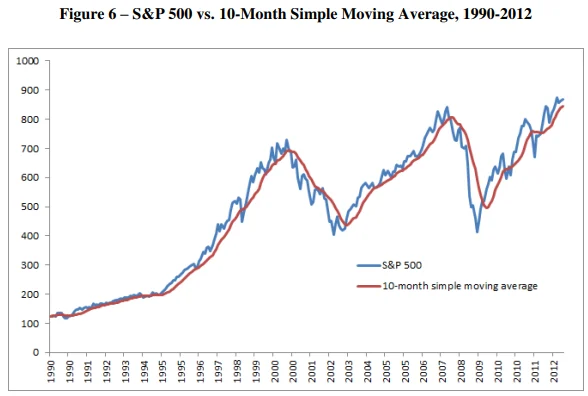
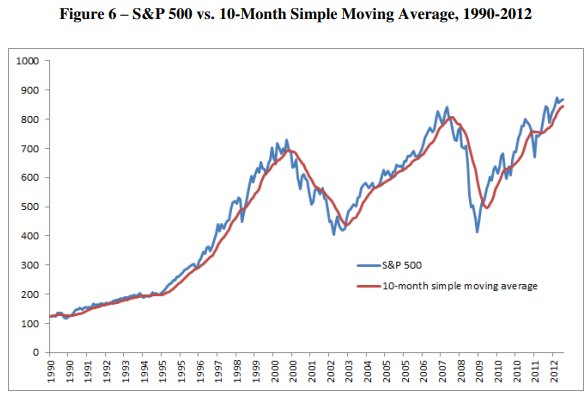
The primary appeal of trend following for the retail investor is its utility as a risk-mitigation tool. In 2007, Meb Faber published his seminal paper, "A Quantitative Approach to Tactical Asset Allocation," just months before the onset of the Great Financial Crisis. The study introduced a straightforward rule: maintain exposure to an asset class while it remains above its 10-month moving average and transition to cash or risk-free assets when it falls below that threshold. While the rule occasionally produces "whipsaws"—false signals that lead to unnecessary trading—its effectiveness during catastrophic market drawdowns has made it a cornerstone of defensive portfolio construction.
Understanding Momentum: The Relative Strength Anomaly
While trend following focuses on an asset’s absolute performance relative to its own history, momentum investing is a relative metric. It involves ranking a universe of securities based on their performance over a specific lookback period—typically between three and twelve months—and overweighting the leaders while divesting from the laggards.
The academic foundation for momentum was firmly established in 1993 by Narasimhan Jegadeesh and Sheridan Titman in their paper, "Returns to Buying Winners and Selling Losers." Their findings revealed that stocks exhibiting strong relative performance over a 3-to-12-month period consistently outperformed over the subsequent 3-to-12 months. Subsequent research, such as Rouwenhorst’s 1998 study, "International Momentum Strategies," confirmed that this effect was not localized to U.S. markets but was present across European stock exchanges and various emerging markets, further cementing its status as a robust factor.
The Institutional Perspective: Fama and French’s Admission
Perhaps the most compelling evidence for the validity of momentum comes from the proponents of the Efficient Market Hypothesis themselves. In their 2008 paper, "Dissecting Anomalies," Eugene Fama and Kenneth French—the architects of the Fama-French Three-Factor Model—conducted a comprehensive stress test of various market anomalies.
Their analysis evaluated momentum alongside factors such as accruals, net stock issuance, and asset growth. In their conclusions, they explicitly identified momentum as the "premier anomaly," noting that it was the only factor that remained statistically significant across all firm-size categories and consistently produced returns that varied systematically. While Fama and French have historically maintained that markets are generally efficient, their acknowledgement of momentum’s persistence has forced a re-evaluation of how passive investors view "beating the market."
Behavioral Drivers: Why Momentum Works
Financial theorists largely attribute the success of momentum to human behavioral biases. Rather than reflecting a fundamental shift in asset value, momentum is frequently driven by the psychological phenomenon of "herding." When investors observe an asset rising in price, cognitive biases such as confirmation bias and fear of missing out (FOMO) often trigger a slow, delayed reaction to new information.
Wes Gray of Alpha Architect, in his research "Avoiding the Big Drawdowns with Trend-Following Investment Strategies," highlights that these systems serve as a "behavioral release valve." By codifying the decision-making process, investors can avoid the panic-selling that typically occurs during market volatility. As Gray notes, "dynamic risk aversion" explains why human risk appetite is not static; it fluctuates based on recent experience. Systematic strategies remove this emotional volatility, ensuring that investors do not abandon their long-term plans during temporary market turbulence.
Implications for the Individual Investor
For the individual investor, the inclusion of trend following or momentum is not a requirement, but a strategic choice. The S&P 500, as a market-capitalization-weighted index, inherently possesses momentum characteristics; it automatically increases exposure to growing companies and reduces exposure to those in decline. However, a dedicated factor-based strategy offers a more disciplined, rule-based approach to this process.
There are significant risks to consider. These strategies require strict adherence to a ruleset, which can be difficult during periods where the strategy underperforms the broader market. "False positives" can lead to increased transaction costs and tax consequences, which may erode the benefits of the strategy if not managed through tax-efficient accounts or low-cost vehicles.
Furthermore, the complexity of implementing these strategies can be high. Investors must decide whether to use exchange-traded funds (ETFs) that track momentum indices or to manage their own tactical asset allocation. For most, the primary takeaway is the importance of diversification. A portfolio that combines passive, low-cost index funds with a systematic, factor-based overlay may provide a more durable structure for long-term wealth accumulation.
Conclusion: Aligning Strategy with Belief
The successful implementation of any investment strategy rests on the investor’s conviction in the underlying process. If an investor does not fundamentally understand the "why" behind trend following or momentum, they are unlikely to adhere to the strategy when the market inevitably moves against them.
For those who lean toward the Efficient Market Hypothesis, the existence of these factors suggests that while the market is highly efficient at incorporating information, it is not immune to the psychological impulses of its participants. Whether one chooses to strictly follow a Bogle-esque index strategy or augment a portfolio with factor-based trend following, the objective remains the same: to construct a portfolio that is both mathematically sound and behaviorally sustainable. As the research suggests, the most effective strategy is ultimately the one that an investor can stick to through both the bull markets and the inevitable, and often brutal, market corrections.