The Shifting Sands of Homeownership: Baby Boomers’ Wealth Redefines Retirement and Challenges Traditional Real Estate Narratives

The deeply ingrained cultural narratives surrounding real estate in the United States are undergoing a significant transformation, largely driven by the unprecedented wealth accumulation of the Baby Boomer generation. For decades, the prevailing wisdom dictated that a house was one’s largest investment, renting was akin to financial folly, and housing prices invariably trended upwards. The retirement ideal often painted a picture of downsizing to a more modest abode, perhaps near a beach or a golf course. However, recent data and expert observations suggest these "rules of thumb" are increasingly being broken, creating ripple effects across the housing market and influencing the financial futures of younger generations.
The Boomer Wealth Phenomenon and Its Real Estate Impact
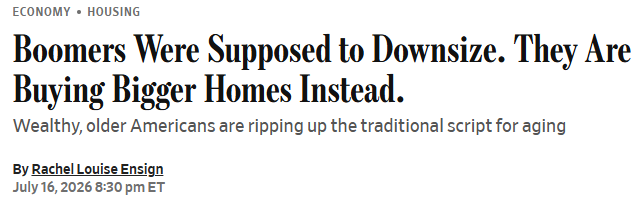
A confluence of factors has empowered Baby Boomers, individuals born roughly between 1946 and 1964, to defy traditional retirement patterns. This generation holds an estimated $110 trillion in total wealth, a figure substantially larger than that of younger American demographics. Many Boomers benefited from decades of consistent asset appreciation in both real estate and the stock market, often having purchased their homes and investments at considerably lower prices. This substantial financial cushion is now enabling them to make choices that diverge from historical norms.
Merrill Lynch financial advisor April Tardiff has observed this trend firsthand. In a recent reporting period, eight of her clients retired, and remarkably, all eight chose to upsize their homes rather than downsize. Tardiff notes that in the past five years, only one of her clients has opted for a smaller residence. This stands in stark contrast to the "historic retirement play" of selling a family home for a more compact one, a practice that is becoming increasingly rare. The sentiment is perhaps best captured by a 64-year-old client, Victor, who quipped, "We’ll downsize when they plant me 6 feet into the ground."
This phenomenon is further underscored by data indicating that Baby Boomers are now the largest cohort of homebuyers. With many having paid off their mortgages, they possess the financial capacity to purchase properties outright, further solidifying their dominance in the market. Reports indicate that Boomers constitute approximately 42% of current homebuyers, a significant number that directly influences housing demand and availability.
The Squeeze on Younger Generations
While Baby Boomers’ financial prowess allows them to pursue their desired living arrangements, the implications for younger Americans, particularly Millennials and Gen Z, are becoming increasingly challenging. The same market dynamics that benefit older generations are creating significant hurdles for those seeking to establish homeownership.
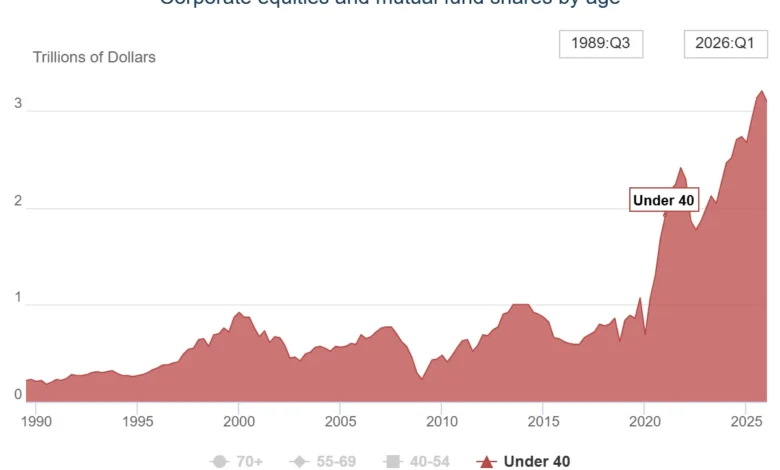
A compelling analysis from The New York Times highlights the stark disparity in real estate wealth accumulation. Since 2010, Americans aged 55 and older have added approximately $20 trillion in real estate wealth, while those under 40 have added only $3.5 trillion. This means that two out of every three dollars of housing wealth added in the U.S. over this period now resides with individuals aged 55 and older. The statistics are particularly striking when considering larger homes: empty nesters, those whose children have left home, own about 28% of large homes, while Millennials with children own only about 16%.
This imbalance means that older adults are not only staying in their larger homes for longer periods but are also actively purchasing additional properties in retirement. Simultaneously, the cost of housing has escalated to a point where it is becoming unattainable for a growing number of young families hoping to put down roots.
Challenging Long-Held Beliefs About Housing as an Investment
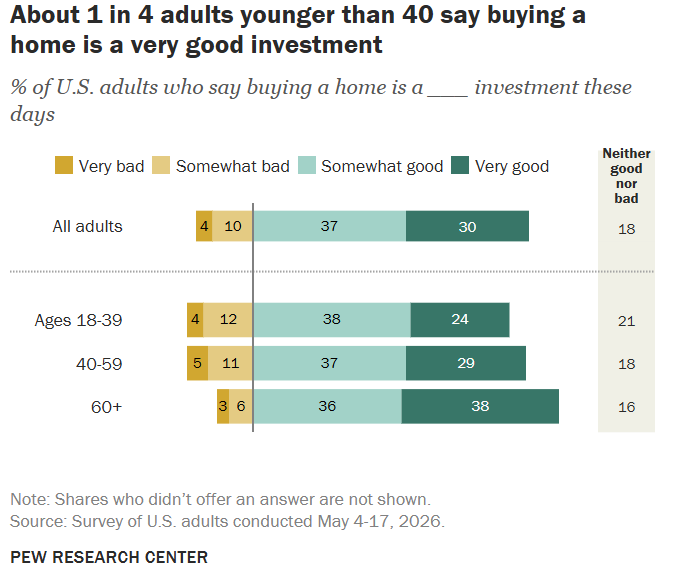
The current market conditions are forcing a re-evaluation of deeply ingrained beliefs about housing as an investment vehicle. A study by Pew Research reveals a notable shift in perception among younger adults. Only about one-quarter of adults aged 18 to 39 now believe that housing is a "very good investment," a sentiment considerably less prevalent than among individuals aged 60 and older.
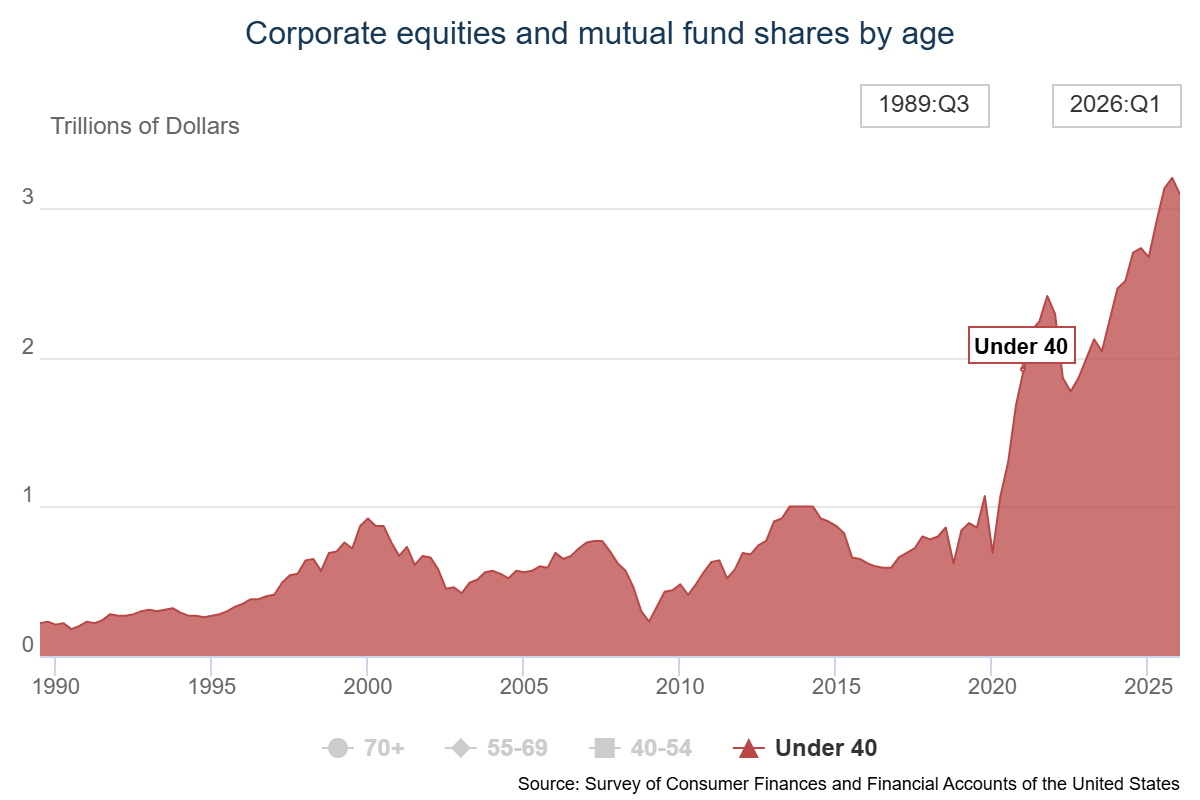
This diminished enthusiasm for housing as a primary investment can be partly attributed to its increasing inaccessibility. The soaring equity holdings observed among individuals under 40 in the 2020s, as reported by A Wealth of Common Sense, can be seen as a consequence of housing’s unaffordability. When homeownership becomes an elusive goal, younger investors often turn to other avenues, such as the stock market, to grow their wealth.
The stark reality of housing affordability is further illustrated by the disparity in housing wealth added since 2010. While older Americans have seen substantial gains, younger demographics have lagged significantly. This has led to a situation where the dream of homeownership, once considered a cornerstone of the American dream and a reliable path to wealth creation, is becoming increasingly out of reach for many.
The Broader Economic and Social Implications
The current housing market trajectory carries significant economic and social implications. The lack of affordable housing for younger generations could lead to delayed family formation, reduced consumer spending, and a widening wealth gap. While the desire to build more housing in the United States is frequently expressed, policy initiatives to address this issue have, for various reasons, not been prioritized.
This situation suggests a high likelihood that millions of young people who might have otherwise purchased a home will be unable to do so, not due to a lack of desire, but because it no longer aligns with their financial realities. This could force a generation to rent for longer periods, impacting their long-term financial stability and ability to build equity.
Housing vs. Stocks: A Shifting Investment Landscape
From a pure investment perspective, the traditional narrative of housing’s superiority is being questioned. An analysis from Bloomberg examined the median house price in Nantucket, Massachusetts, which has surged to nearly $4 million, from $500,000 in 1995. While this represents a significant increase, investing $500,000 in the S&P 500 Index in 1995 would have yielded over $8.2 million by the time of the report, even more when dividends are reinvested.
Furthermore, the costs associated with homeownership often go unacknowledged in simple appreciation calculations. Expenses such as routine maintenance, unexpected repairs (like a new garage door or addressing a mole problem), and ongoing upkeep can significantly erode the net returns on a property. While the "psychic income" of owning a home—the emotional and lifestyle benefits—is undeniable, these tangible costs must be factored into any comprehensive investment analysis.
The downstream effects of this evolving housing market are multifaceted. It raises questions about the future of the stock market, the potential for younger generations to achieve wealth accumulation through alternative means, and the long-term societal impact of delayed homeownership. Will forcing younger generations into the stock market ultimately lead to greater wealth, or will the absence of a traditional asset like a home lead to different forms of dissatisfaction?
As the Baby Boomer generation continues to leverage its wealth and redefine retirement, the foundational beliefs about homeownership in the United States are likely to be tested and potentially reshaped in the years to come. The affordability crisis, coupled with the financial choices of a wealthy older generation, is creating a new reality for housing and investment in America.