AI Agent Access Comes to HaasOnline TradeServer Cloud | HaasOnline Blog

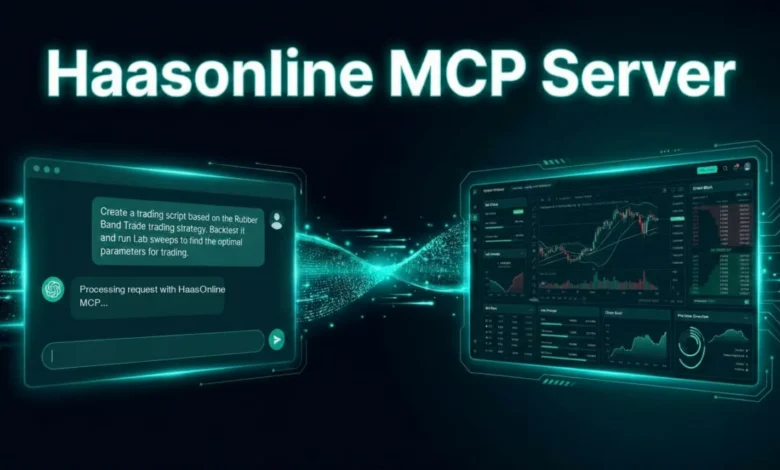
HaasOnline has officially extended its Model Context Protocol (MCP) support to its cloud-based infrastructure, marking a significant shift in the landscape of algorithmic trading. By enabling direct integration between popular AI assistants—including Claude, Cursor, and VS Code—and the TradeServer Cloud platform, the company has eliminated the technical barriers previously associated with self-hosting. Traders can now query, analyze, and modify their trading environments through natural language conversations, bypassing the need for manual API key management or complex local infrastructure deployment.
A New Era of Algorithmic Interaction
The integration of MCP into the HaasOnline ecosystem represents a transition from static bot management to dynamic, AI-assisted portfolio oversight. Since the initial release of the MCP server for self-hosted TradeServer users in April, the industry has closely watched how developers and traders utilize Large Language Models (LLMs) to bridge the gap between complex market data and actionable strategy adjustments.
Previously, the "self-hosted" requirement acted as a significant hurdle for retail traders lacking the technical proficiency to manage server-side configurations. By moving this functionality to the cloud, HaasOnline has effectively democratized AI-driven trading management. Users no longer need to maintain local environments to leverage the power of LLMs; instead, they can authenticate via a secure OAuth 2.1 authorization-code flow with PKCE (Proof Key for Code Exchange). This mechanism ensures that high-level security standards are maintained, replacing outdated and risky practices such as manual API key insertion into configuration files.
Chronology of Development
The path to cloud-based AI integration has been methodical, reflecting a broader trend in the fintech sector toward interoperability and modularity.
- April 2024: HaasOnline introduces the Model Context Protocol for self-hosted TradeServer instances, allowing users to connect local LLMs to their personal bot configurations.
- Q2–Q3 2024: The company observes widespread adoption among power users, who report increased efficiency in debugging HaasScript and auditing multi-exchange portfolios.
- Late 2024: Engineers refine the security architecture to allow for secure cloud-side authentication, moving away from local-only credentials.
- October 2024: The official launch of AI Agent access on the HaasOnline TradeServer Cloud, making the feature accessible to a significantly broader user base across Standard, Pro, and TradeServer tiers.
Security Architecture and Risk Mitigation
A primary concern for any trader integrating an AI agent into their workflow is the risk of unauthorized trade execution or fund mismanagement. HaasOnline has addressed these concerns by implementing a "read-and-edit-only" permission structure. The architecture is built on a fundamental principle of risk separation: while the AI agent can access 46 distinct tools to audit market data, backtest results, and script logic, it lacks the technical capability to perform destructive or financial actions.
Critically, the MCP tools exposed to the agent cannot place or cancel trades, transfer funds, or toggle the power state of active bots. Furthermore, the assistant never gains direct access to the user’s exchange API keys. The MCP server acts as an intermediary, authenticating on behalf of the user within the HaasOnline environment. This ensures that even if an AI assistant were compromised, the worst-case scenario is limited to the unauthorized viewing or modification of code-based scripts, rather than the depletion of capital. This "sandbox" approach is vital for maintaining institutional-grade security in an era of increasingly sophisticated cyber threats.
Practical Applications and Efficiency Gains
The utility of this integration is most evident in complex, multi-exchange portfolios. Historically, a trader managing a dozen grid bots across platforms like Binance, Kraken, and Coinbase would require manual verification of each bot’s performance metrics. This process is time-consuming and prone to human error.
With the new AI agent integration, this workflow is condensed into a singular query. A trader might ask: "Identify which of my bots have underperformed by more than 5% relative to the index over the last 30 days, and explain the commonalities in their configuration." The AI, having direct access to the user’s real-time parameters and historical fills, provides a data-backed response. This shifts the trader’s role from "data harvester" to "strategic analyst."
Furthermore, script development has been significantly streamlined. The assistant can now draft HaasScript code, simulate backtests, and analyze logs in real-time. By keeping the entire development loop within a single conversational interface, the cycle time for iterating on a new trading strategy is reduced from hours to minutes.
Market Implications and Future Outlook
The broader implications of this development suggest that AI-human collaboration will become the standard for professional retail trading. As the financial sector continues to integrate LLMs, the competitive edge will likely belong to those who can effectively "prompt" their systems to optimize parameters based on shifting market volatility.
However, industry experts emphasize that this technology does not replace the necessity of financial literacy. The AI agent acts as a force multiplier, not a substitute for risk management. The responsibility for trading decisions, risk tolerance, and capital allocation remains firmly with the human operator. As the HaasOnline team noted, "An assistant reading your bots is still an assistant reading your bots; the trading decisions and the risk remain yours."
Accessibility and Pricing Tiers
HaasOnline has opted for a tiered rollout to balance infrastructure load with user needs. The AI agent access is available as a value-add feature for users on the Standard, Pro, and TradeServer plans. Notably, the company has included the feature in its free trial, allowing prospective users to experiment with the workflow before committing to a paid subscription.
For those who prefer to maintain self-hosted environments, the company has clarified that existing configurations remain unaffected. The local MCP server remains a viable option, ensuring that those who prioritize total data sovereignty on their own hardware are not excluded from the technological upgrade.
Conclusion
The shift of AI agent access to the cloud marks a milestone in the evolution of HaasOnline’s product suite. By bridging the gap between sophisticated algorithmic trading tools and the intuitive nature of modern AI, the platform has set a new benchmark for user accessibility. While the industry continues to debate the long-term impact of AI on market liquidity and volatility, tools like the TradeServer Cloud MCP integration provide a clear path forward: one where traders can leverage the cognitive power of AI to manage their risk and strategies more effectively, provided they maintain a vigilant and disciplined approach to the markets.
As of the current release, users can initiate their connection by accessing the "AI Agent" tab in the TradeServer sidebar, selecting their preferred assistant (such as Cursor or VS Code), and authorizing the secure link. This simplified onboarding process is expected to accelerate the adoption of automated, AI-augmented trading strategies across the global market.