Is the Yield on the Agg the Equivalent of a Near Guaranteed 5.2% Annual Return

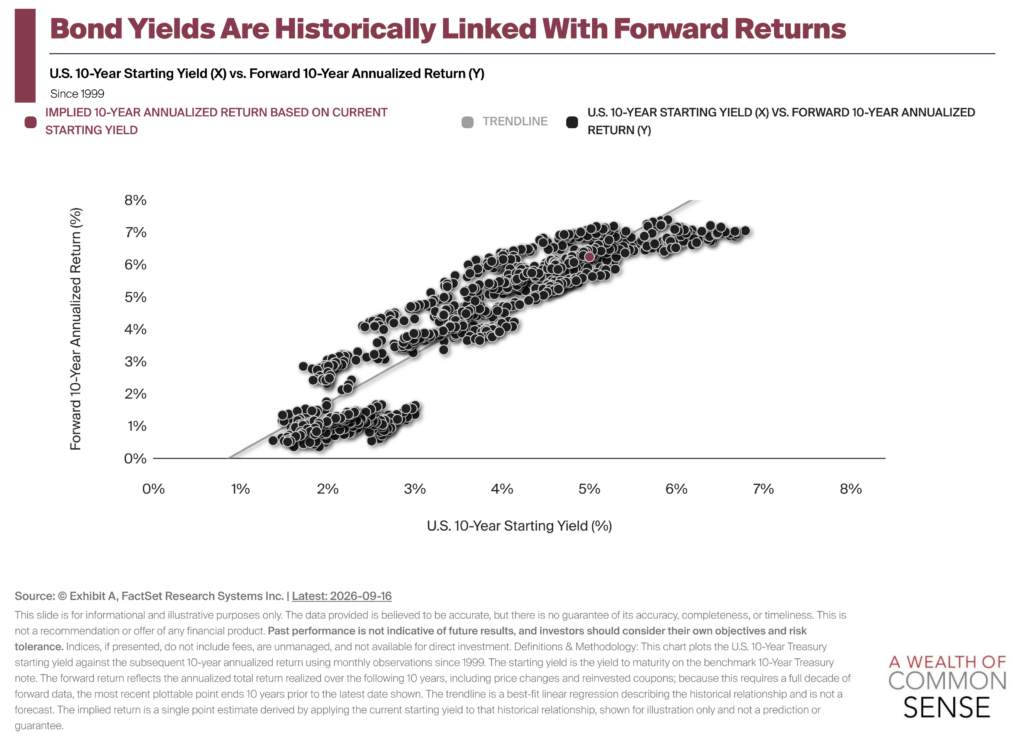
The question of whether the iShares Core U.S. Aggregate Bond ETF (AGG) offers a guaranteed 5.2% annual return is currently at the forefront of investor discourse as bond markets adjust to a higher interest rate environment. As of mid-September 2026, the average yield to maturity for the AGG stands at approximately 5.3%, a stark departure from the ultra-low interest rate regime that characterized the 2010s and the early part of the 2020s. While this level of yield represents a significant improvement for fixed-income investors, financial experts emphasize that the return is not "guaranteed" in the traditional sense, as it is subject to the complex mechanics of interest rate fluctuations and bond pricing.
The Historical Context of Fixed Income Yields
To understand the current state of the bond market, one must examine the trajectory of the last decade. During the 2010s, the yield on the "Agg"—a proxy for the broad U.S. investment-grade bond market—frequently dipped below 3%. The onset of the COVID-19 pandemic in 2020 accelerated this trend, with yields plummeting to under 2% as central banks implemented aggressive monetary easing to stimulate the economy.
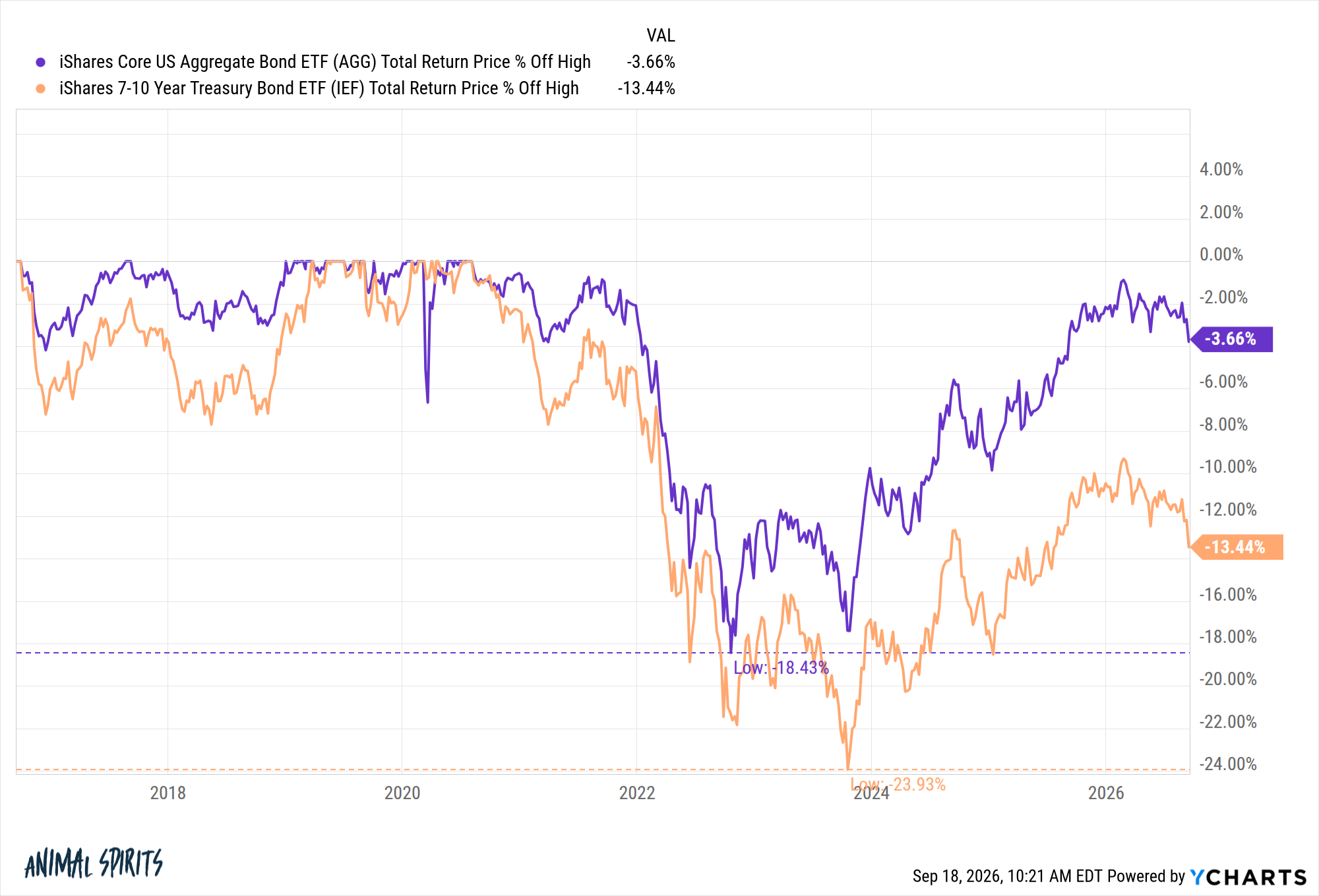
However, the subsequent period of inflation and the Federal Reserve’s pivot toward a more restrictive monetary policy cycle drastically shifted the landscape. Investors who had become accustomed to the "lower for longer" environment faced a painful transition. As interest rates climbed to combat persistent inflation, the market value of existing bonds fell. The Agg experienced a drawdown of nearly 20%, and 10-year Treasury bonds suffered losses exceeding 20% during this period. This transition is widely regarded by market historians as the most severe bond bear market in recorded history, highlighting that fixed income is not immune to capital losses despite its reputation for relative stability.
The Math of Yield and Forward Returns
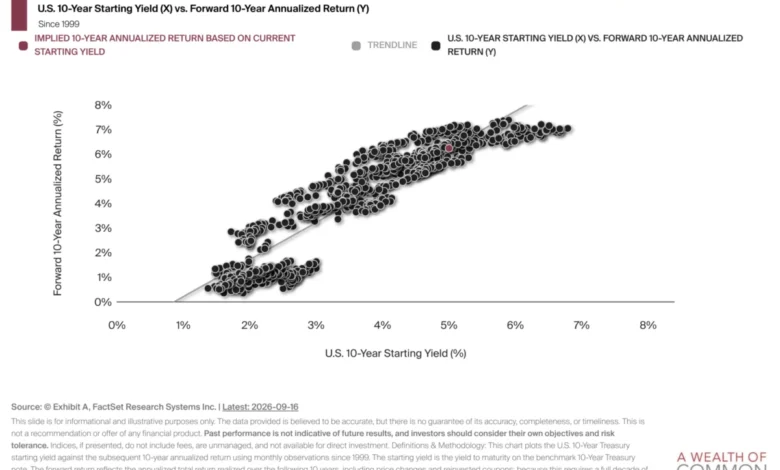
Unlike equities, which are driven by a combination of fundamental metrics—such as earnings, dividend growth, and valuation multiples—and the unpredictable nature of investor sentiment, bond returns are largely dictated by mathematical relationships. The starting yield of a bond is one of the most reliable predictors of future returns over the short-to-intermediate term.
When an investor purchases a bond fund, the "yield to maturity" provides a projection of the annual return, assuming all interest payments are reinvested and the bonds are held to their maturity date. While the 5.3% yield currently associated with the AGG is a powerful indicator, it is not a fixed contract. The volatility of bond prices is inversely related to interest rate movements: when market interest rates rise, the price of existing bonds falls, and when interest rates drop, prices rise.
This dynamic explains why, despite a 20% increase in yields since the beginning of 2026, the 10-year U.S. Treasury has only seen a modest decline of approximately 3% in total value. The income generated by the bond acted as a shock absorber, offsetting the capital depreciation caused by rising rates. This underscores a critical lesson for investors: while short-term price volatility is inevitable, the "pull to par" and the compounding of interest payments over time tend to converge toward the initial yield.
Comparative Analysis: Equities vs. Fixed Income
Market analysts often draw a distinction between the predictability of bonds and the speculative nature of stocks. In the equity market, forecasting returns requires making assumptions about how much investors will be willing to pay for future earnings—a metric known as the price-to-earnings (P/E) ratio. Because this sentiment-driven component is inherently volatile, estimating forward equity returns is notoriously difficult.
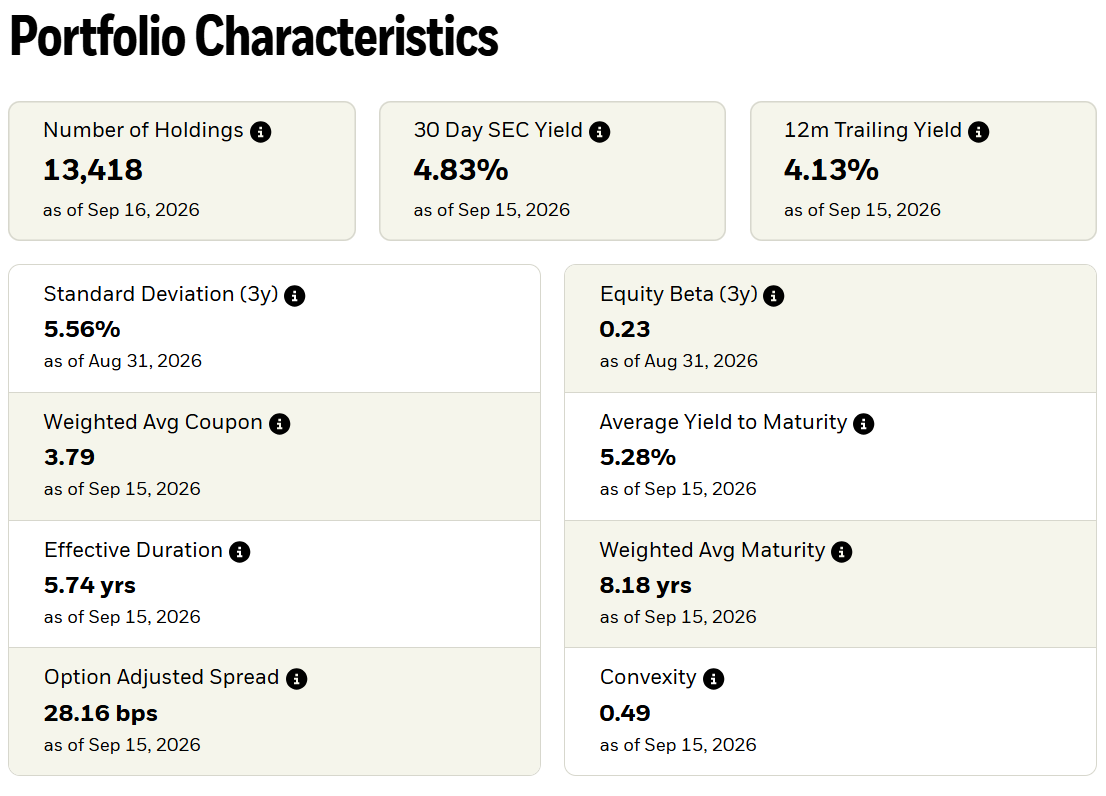
Conversely, the data from the last quarter-century illustrates a strong correlation between the starting yield of a 10-year Treasury and its subsequent 10-year annualized return. While not a perfect one-to-one relationship due to changes in inflation and unexpected monetary policy shifts, the correlation is robust enough to provide a high-confidence range for fixed-income portfolios. For investors looking at intermediate-term horizons of five to seven years, a 5% starting yield offers a mathematically grounded expectation of future performance that was simply unavailable during the 2010s.
Risks to the "Guaranteed" Return Narrative
Despite the optimistic outlook for 5% yields, institutional observers warn against complacency. The primary risk remains the path of inflation and the subsequent response from central banks. If inflation expectations were to become unanchored, central banks might be forced to raise rates further, which would exert downward pressure on bond prices in the short term.
Furthermore, long-duration bonds, such as the 20-year Treasury bond, carry higher interest rate risk than intermediate bonds. Investors holding these long-term instruments have experienced significantly deeper drawdowns—some exceeding 40% from their peak—illustrating that the "Agg" is a diversified basket that performs differently than long-dated government debt.
Expert Perspectives and Market Outlook
Financial commentators, including those in recent discussions on platforms like Ask the Compound, note that the current environment is a return to a more "normal" interest rate regime. For many years, investors were forced into riskier assets simply to find a yield that could outpace inflation. Today, the opportunity cost of holding high-quality, investment-grade bonds has decreased significantly.
Industry experts suggest that the current 5% yield environment allows for more effective asset allocation. For retirees or those nearing retirement, this yield provides a reliable income stream that reduces the need to chase speculative equity returns. However, professional advisors consistently caution that "yield" is not synonymous with "total return." The total return is the sum of interest income plus or minus price changes. Therefore, while a 5% yield is a strong anchor for long-term returns, the investor must be prepared for the volatility of the underlying bond prices along the way.
Broader Implications for Portfolio Construction
The shift toward a 5.3% yield in the AGG has broad implications for multi-asset portfolio construction. For much of the last fifteen years, the traditional "60/40" portfolio—comprised of 60% stocks and 40% bonds—was criticized for failing to provide adequate downside protection. In 2022, when both stocks and bonds fell simultaneously due to inflationary pressures, the diversification benefit of bonds was questioned.
However, with yields now at 5%, bonds are regaining their status as an effective hedge against equity market volatility. If a market correction occurs, investors can now rely on the income generated by their fixed-income holdings rather than needing to sell assets during a downturn. This "income cushion" is a foundational element of modern portfolio theory, and its return to the market is viewed by many as a healthy normalization of financial markets.
In summary, while the 5.2% to 5.3% yield on the AGG is not a guaranteed return, it provides a significantly more attractive and predictable baseline for investors than they have seen in over a decade. By focusing on the math of starting yields rather than the emotions of market fluctuations, investors can better align their expectations for the 5-to-7-year horizon, recognizing that while the path of interest rates remains uncertain, the long-term utility of a 5% yield remains a powerful tool for capital preservation and growth. As the market moves forward, the focus will likely remain on whether inflation can be tamed sufficiently to stabilize the bond market, allowing investors to reap the benefits of these higher, more sustainable yields.