In another 35 bigger cities, condo prices dropped by 8-14%. How the mind-blowing Condo Bubbles deflate in 34 charts.


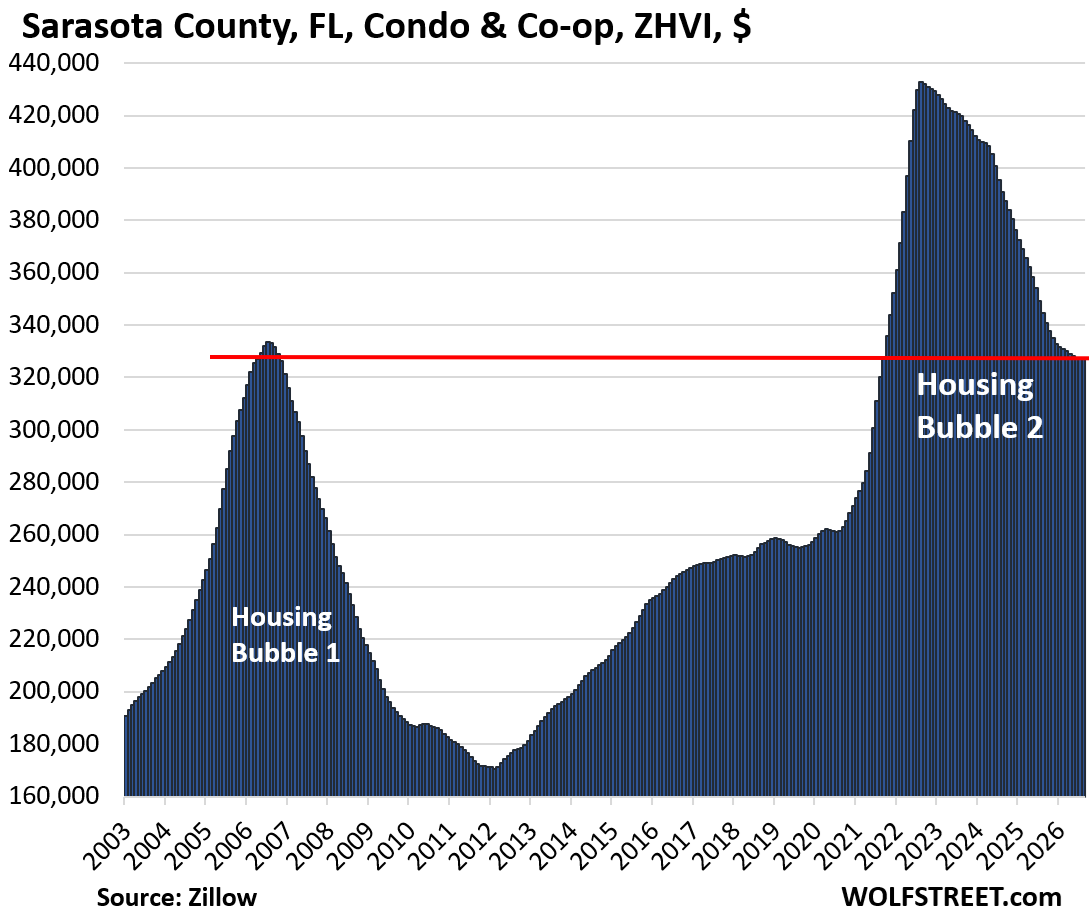
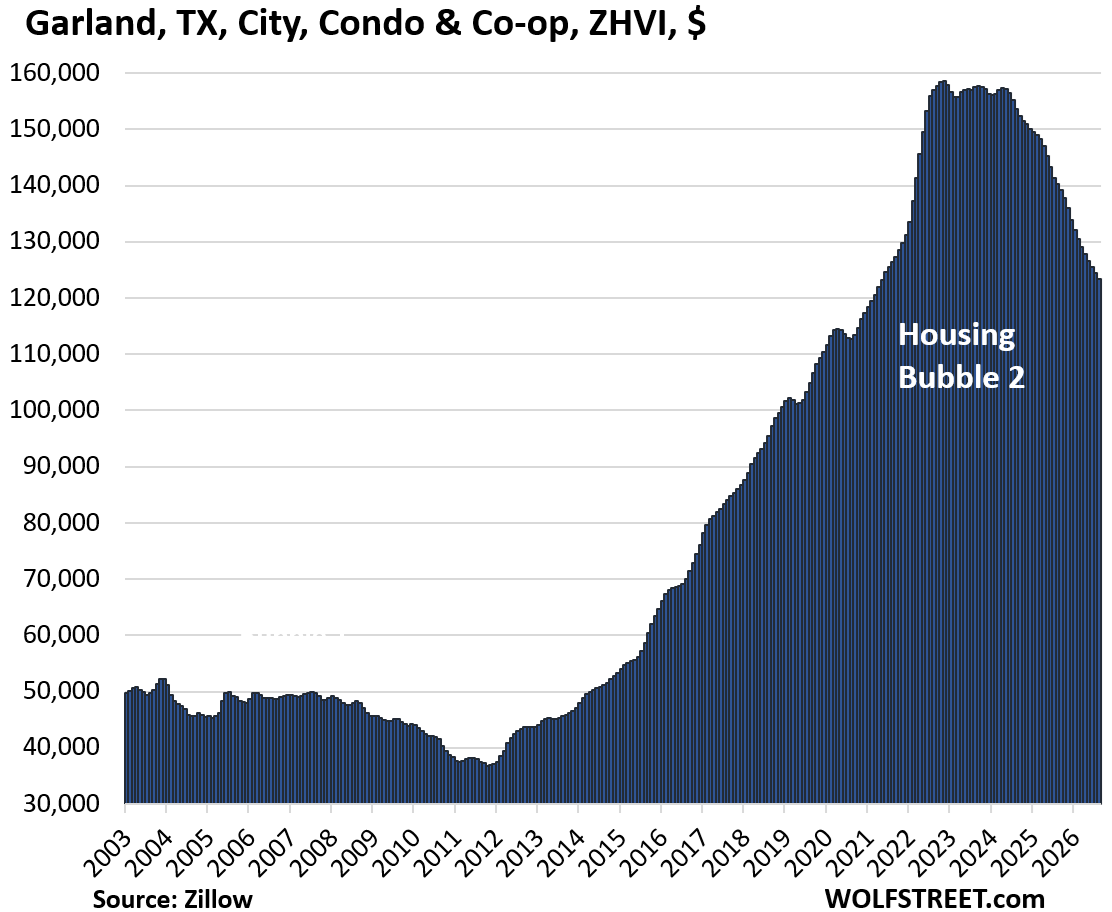
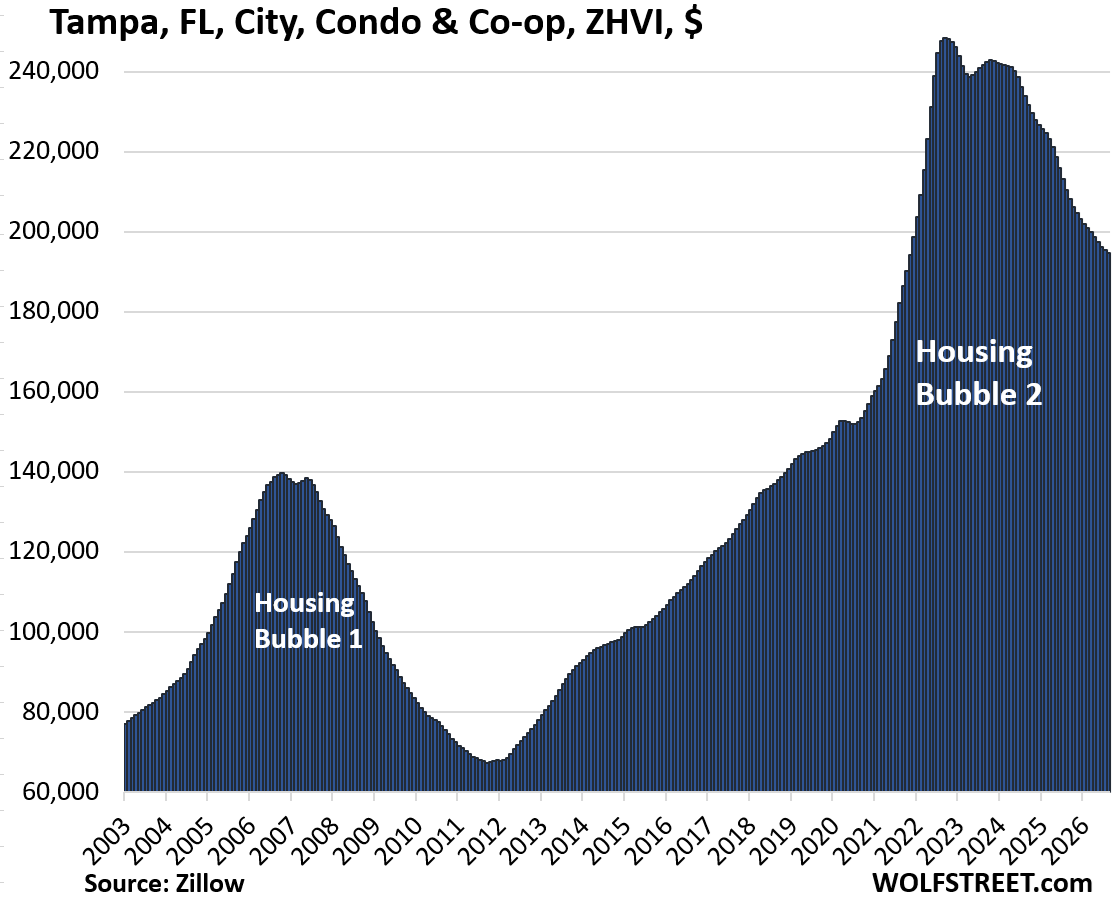
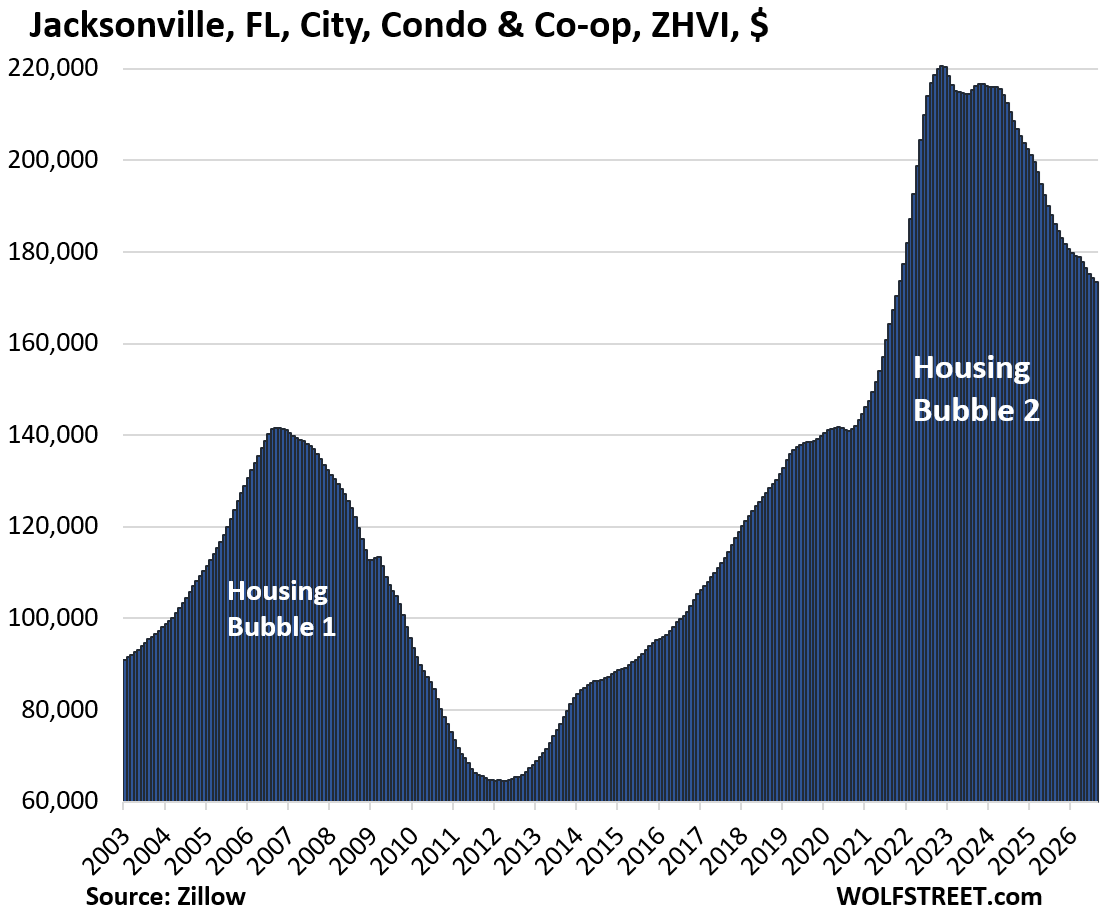
The residential real estate landscape in the United States is currently undergoing a significant correction, particularly within the condominium and co-operative housing sectors. While single-family homes have maintained relative price resilience in many regions due to chronic supply shortages and lock-in effects from legacy mortgage rates, the condo market is experiencing a more aggressive downward repricing. Data analysis reveals that in 34 major metropolitan areas, mid-tier condo prices have fallen between 15% and 34% from their respective peaks, most of which were established during the hyper-stimulated market conditions of mid-2022.
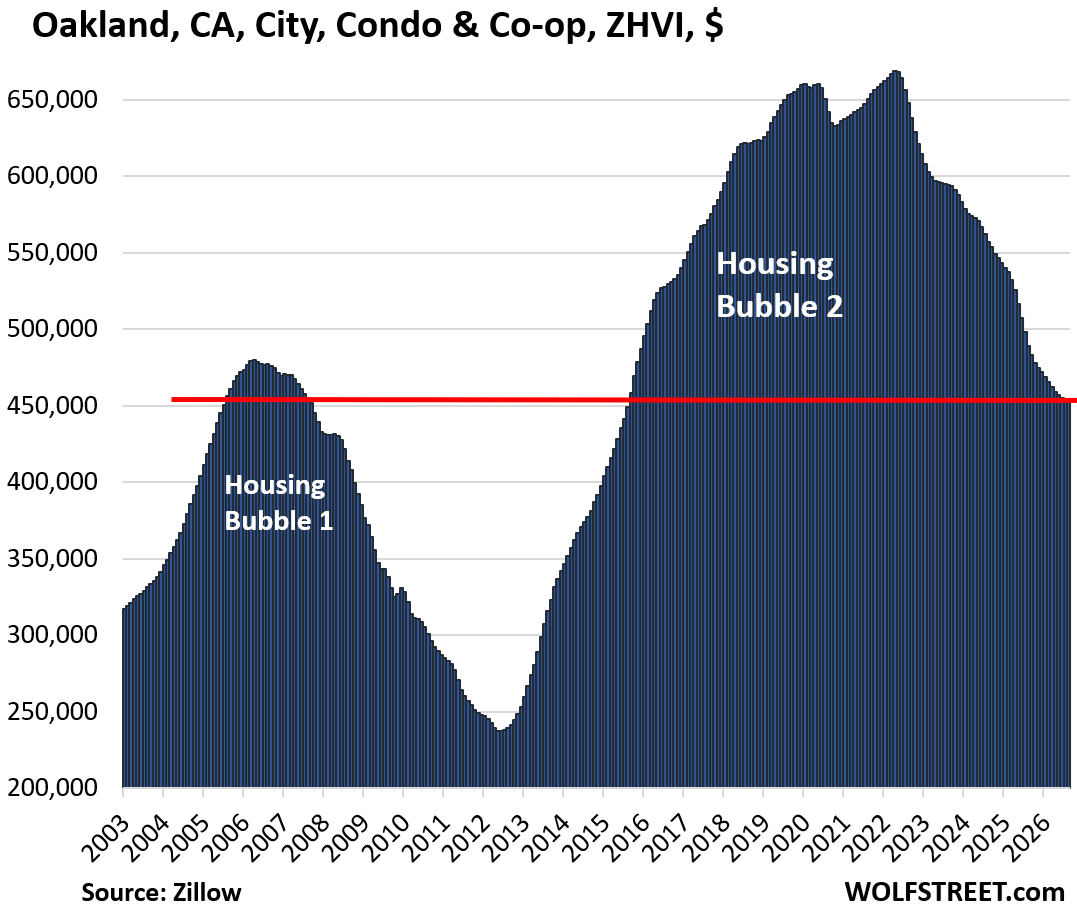
This period of decline follows a decade of unprecedented appreciation. Between 2012 and 2022, condo prices in these specific high-growth markets surged by 180% to 350%. The current deflationary trend suggests that the speculative fervor that characterized the post-pandemic housing boom has reached a breaking point, as market forces recalibrate against a backdrop of elevated interest rates and changing investor sentiment.
A Chronology of the Correction
The peak of the condo bubble was largely concentrated in the second quarter of 2022, a time when ultra-low interest rates and a shift toward remote work drove massive capital inflows into urban and vacation-centric real estate. As the Federal Reserve began its aggressive cycle of monetary tightening to combat inflation, the cost of borrowing surged, effectively cooling demand.
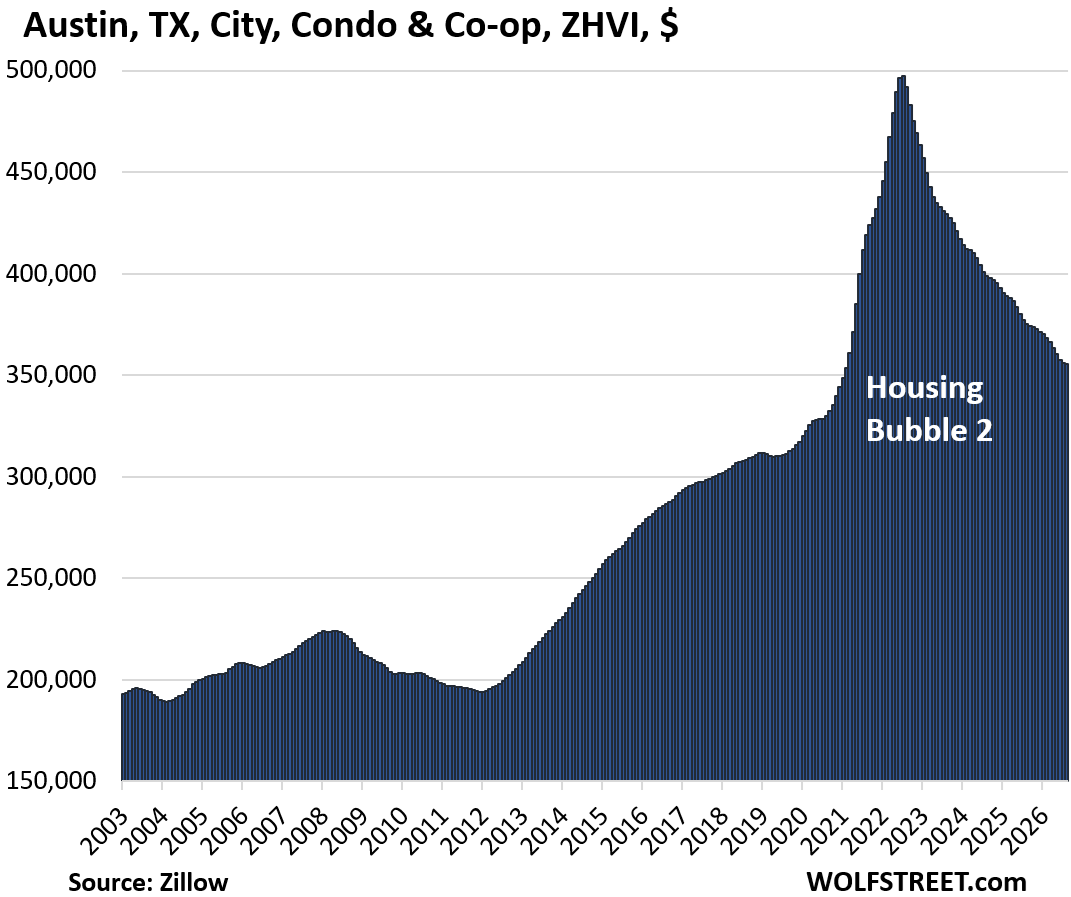
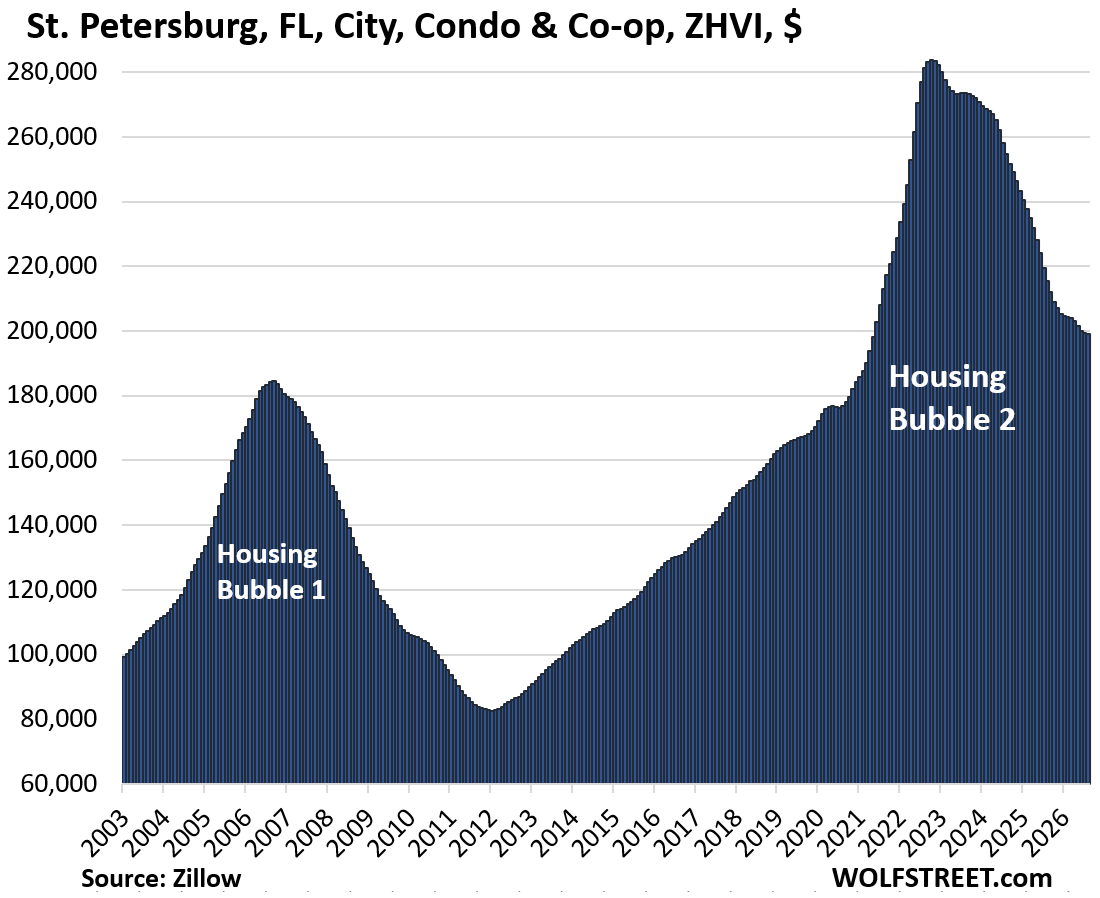
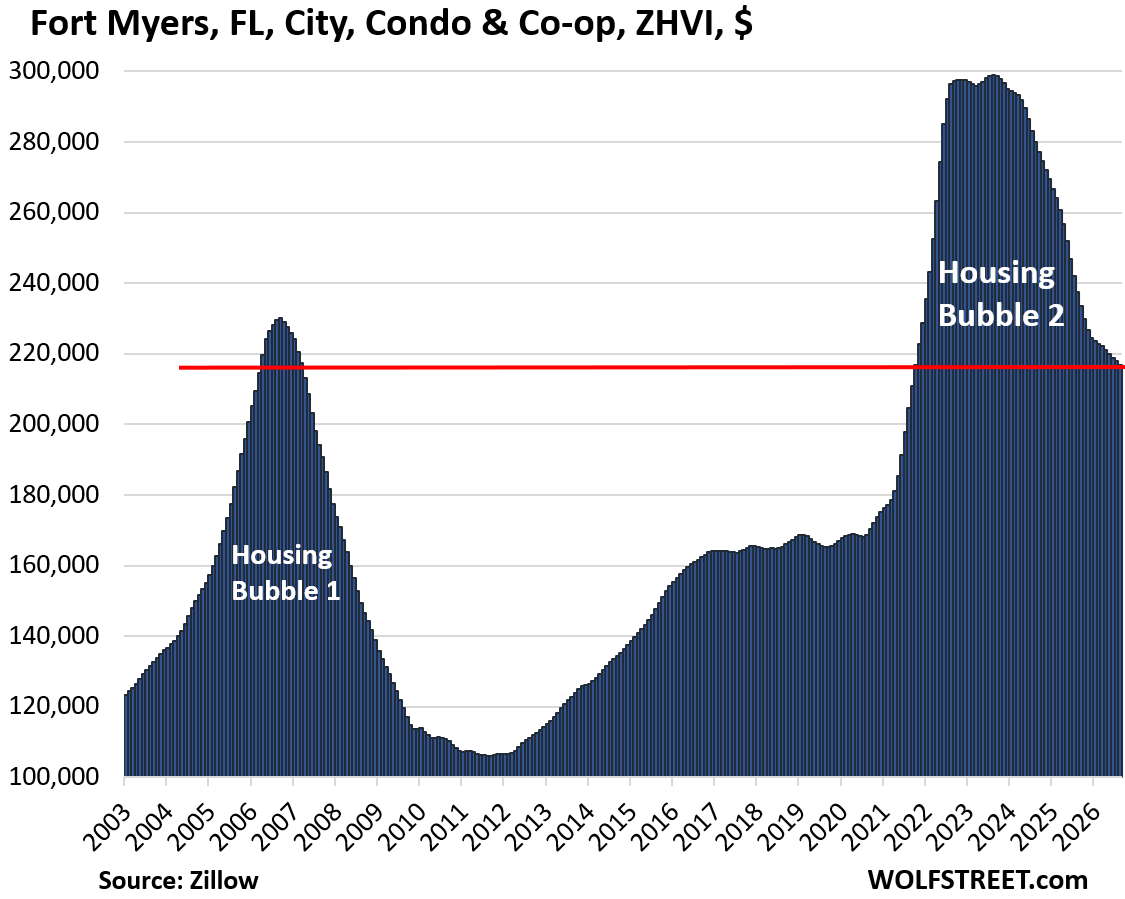
By mid-2023, the first signs of structural weakness appeared as inventory levels began to rise in markets like Austin, Texas, and various Florida coastal regions. In 2024, the stagnation deepened. The current data indicates that for nine of the tracked markets—including Oakland, California, Austin, Texas, and several Florida municipalities like Cape Coral and St. Petersburg—the decline has been severe, ranging from 21% to 34%. This represents a total erasure of the gains realized during the 2020-2022 mania. Notably, in six of these markets, current valuations have dipped below the levels seen during the 2006 Housing Bubble, effectively resetting the price discovery process to levels seen two decades ago.

Regional Variations and Market Vulnerabilities
The data highlights a clear divergence between major coastal cities and the Sun Belt regions that saw the most aggressive price explosions. Florida, in particular, remains a focal point of this correction. Cape Coral currently leads the list of decliners with a 34% drop from its 2022 peak, followed closely by St. Petersburg and Fort Myers. These areas were characterized by heavy investment from out-of-state buyers and short-term rental operators, who are now exiting the market as yields compress and insurance costs rise.
In California, the trend is equally pronounced, albeit driven by different factors. Oakland, Hayward, and San Mateo County are grappling with the fallout of a tech-sector slowdown and the waning appeal of high-density urban living in areas where commercial real estate vacancy rates remain high. The shift in corporate return-to-office mandates has not been sufficient to revive demand for urban condos, leading to a sustained erosion of asset values.
Conversely, cities such as Dallas, San Antonio, and Sacramento are currently experiencing more moderate declines in the 8% to 14% range. These markets are frequently monitored by analysts as potential candidates for sharper corrections should inventory levels continue to climb. The lack of velocity in these mid-tier markets suggests a standoff between buyers expecting lower prices and sellers who remain anchored to the peak valuations of the recent past.
The Unique Economic Profile of Condominiums
Condominiums are inherently more volatile than single-family detached homes due to the distinct nature of their ownership and usage. Unlike a standard house, a condo is part of a larger community association, which introduces layers of complexity that impact valuation.
- Special Assessments and HOA Health: Many older buildings are currently facing massive special assessments to address deferred maintenance or to meet new safety and structural integrity standards, particularly in coastal states like Florida. These looming costs are frequently baked into lower sales prices, as buyers demand discounts to offset the financial burden of future building repairs.
- Investor Concentration: Condos often attract a higher density of non-resident investors. When the market turns, these investors—many of whom are sensitive to cash flow and interest rate fluctuations—are often the first to list their properties. This creates a supply-demand imbalance that accelerates price depreciation.
- Rental Market Competition: As the supply of new, professionally managed multifamily apartments has surged, condo owners trying to rent out their units face stiff competition. This reduced rental yield discourages potential investors, further drying up the buyer pool.
Broader Economic Implications
The deflation of the condo bubble carries significant implications for the broader housing market and the financial health of households. For many, a condominium serves as an entry-level property. When values decline, it can create "underwater" mortgage situations, where the outstanding loan balance exceeds the current market value of the unit. This can lead to a "lock-in" effect, where owners are unable to sell their properties even if they need to relocate for employment or lifestyle reasons.
Furthermore, the banking sector remains cautious regarding condo loans. Lenders typically apply more stringent underwriting criteria to condo developments, especially those with high concentrations of non-owner-occupied units. As property values drop, some buildings may no longer qualify for certain types of mortgage financing, creating a self-reinforcing cycle of declining liquidity and falling prices.
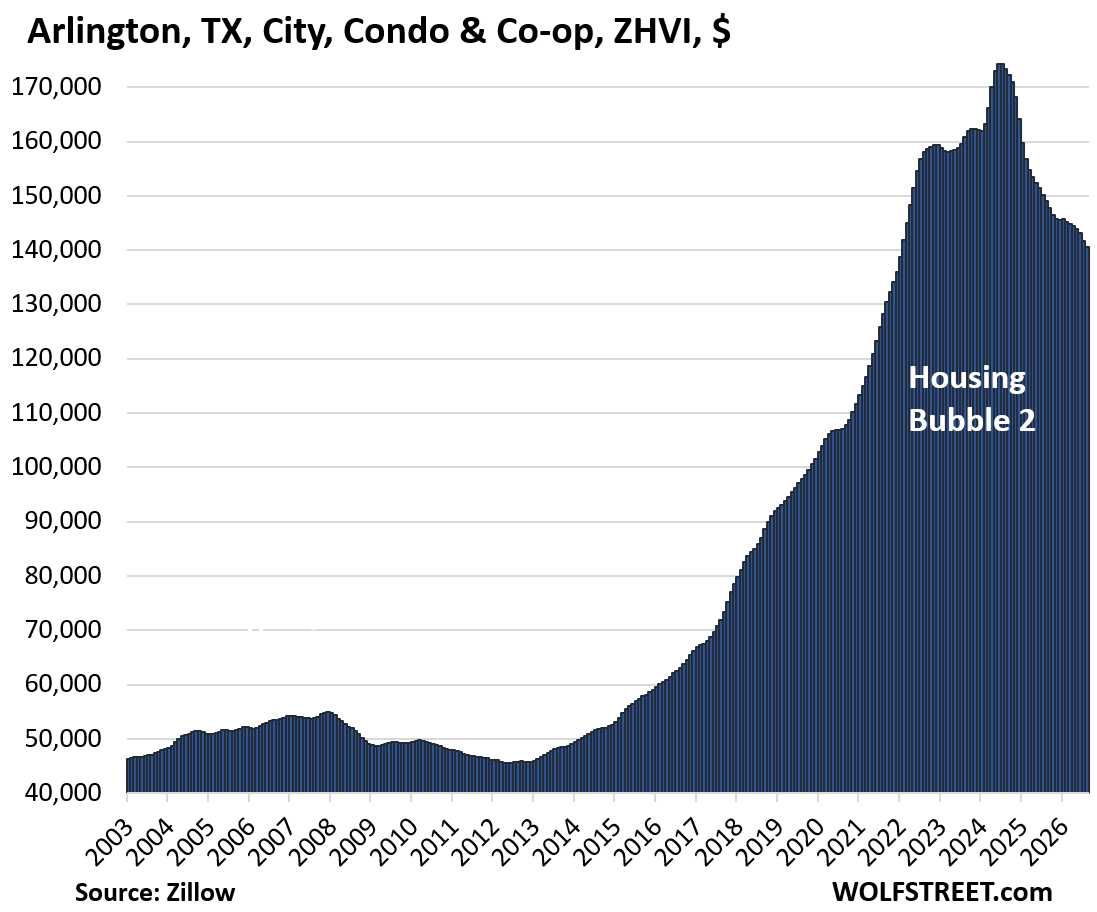
While major urban centers like New York City (specifically Manhattan) have seen declines in the range of 17%, the stability of these markets is often supported by high-net-worth buyers who are less sensitive to interest rate hikes. However, even in these prestige markets, the "since-peak" decline serves as a stark reminder that no asset class is immune to the normalization of interest rates.
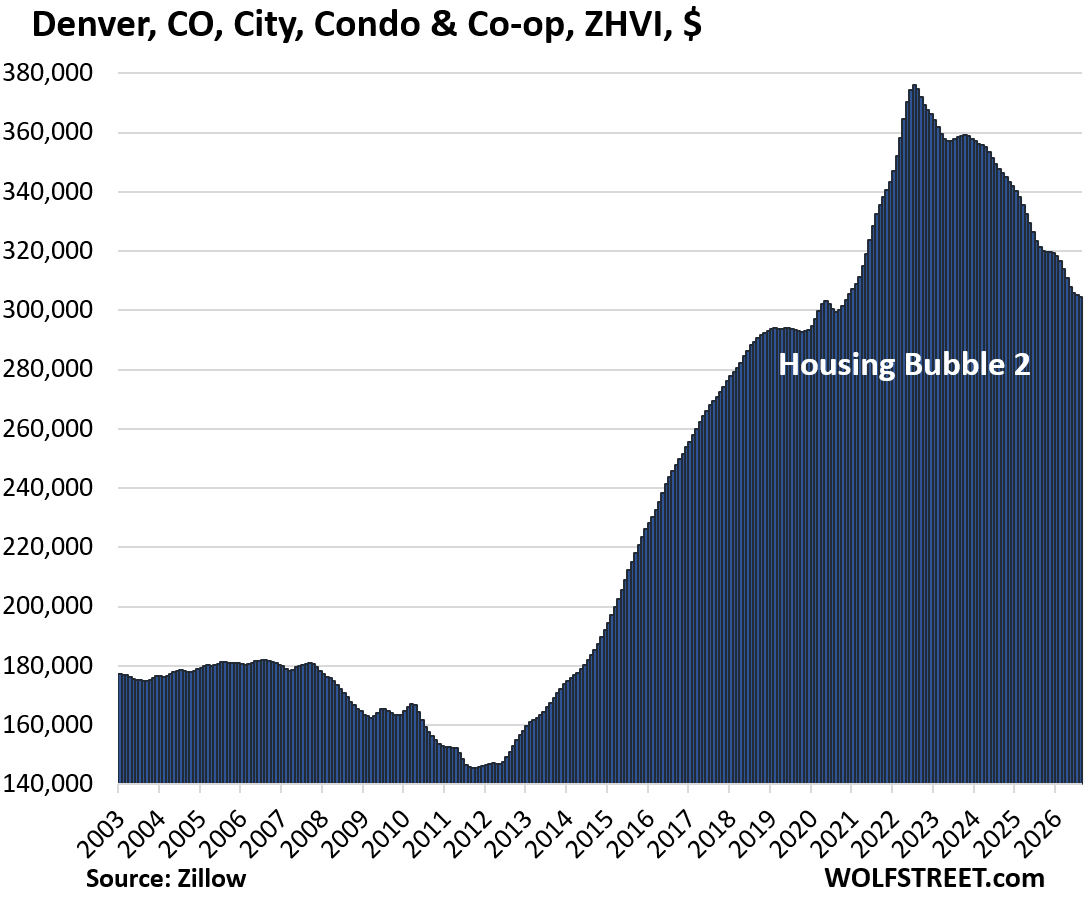
Analysis of Future Market Trajectory
Looking ahead, market observers are focused on the relationship between inventory levels and price floor discovery. Historically, housing markets find a floor when the cost of ownership aligns with local wage growth and rental yields. The current correction is essentially the market’s attempt to reach this equilibrium.
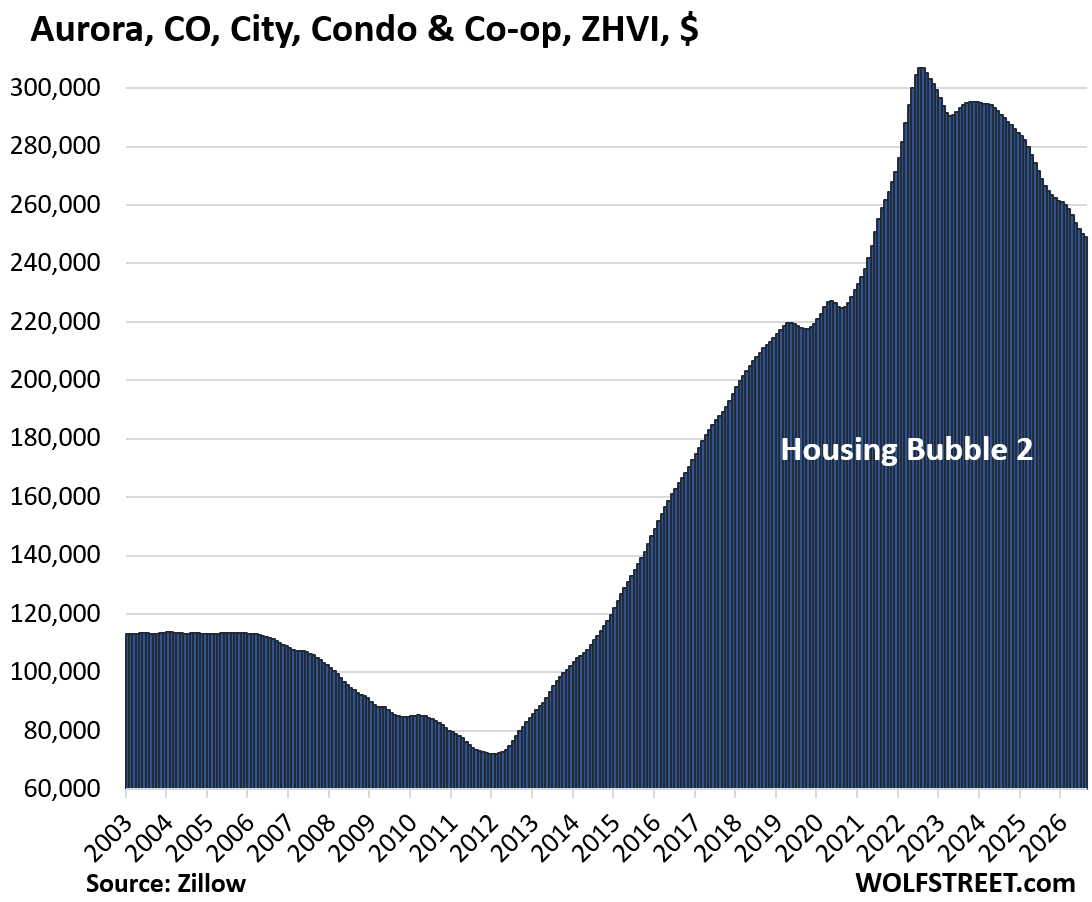
The inclusion of cities like Houston and Tempe in the list of significant decliners suggests that the correction is not merely a regional phenomenon confined to expensive coastal hubs, but is moving into more affordable, high-growth interior markets. The resilience of the job market remains the primary variable preventing a more systemic collapse. As long as employment remains stable, the correction is likely to proceed as a slow "grind" downward rather than a sudden systemic failure. However, should the macroeconomic climate shift toward recessionary conditions, the pressure on heavily leveraged condo owners could intensify, potentially accelerating the pace of these declines.
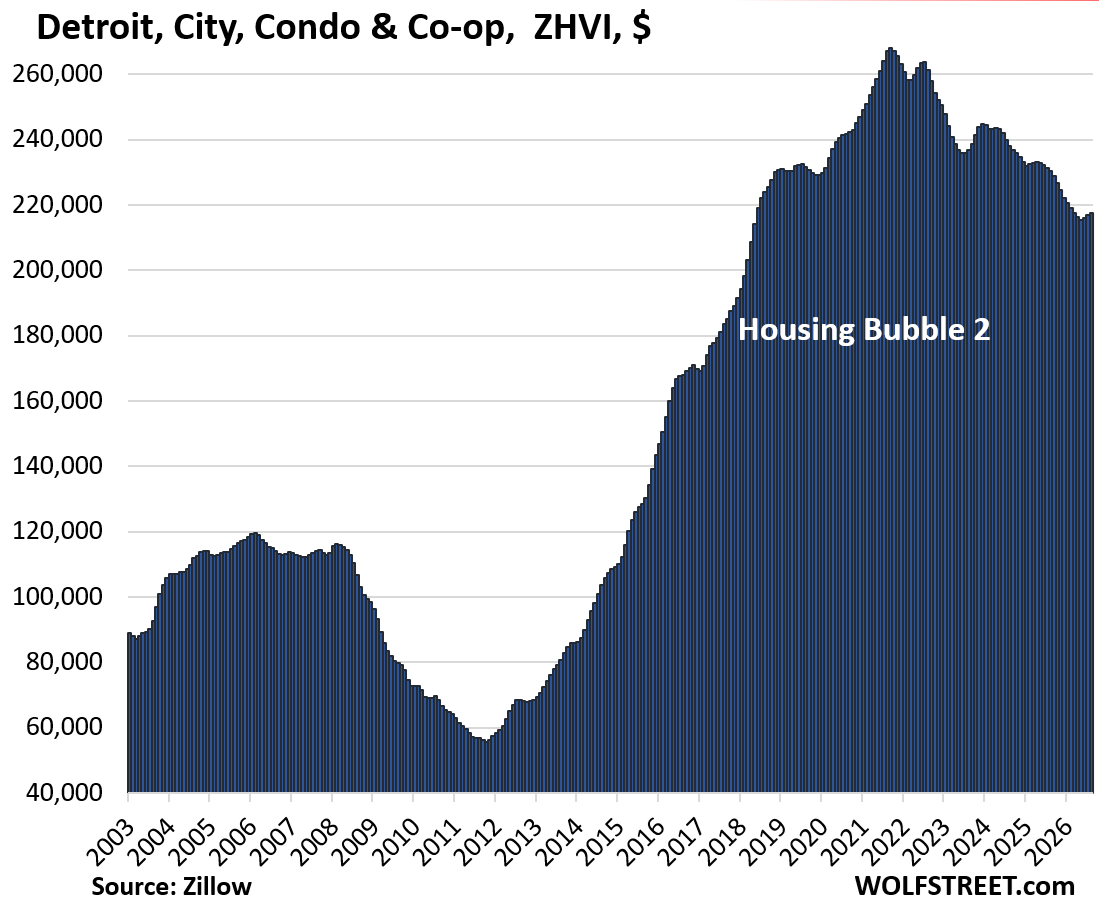
In conclusion, the data provided by the Zillow Home Value Index (ZHVI) reflects a market in the midst of a painful but necessary recalibration. The era of low-interest-rate-fueled appreciation has concluded, and both buyers and sellers are navigating a landscape where the fundamental utility of a property—rather than its potential for rapid speculative gain—is once again the primary driver of value. For the 34 cities highlighted, the journey back to price stability is ongoing, and until the inventory of unsold condos is absorbed by a market of end-users rather than speculators, the downward pressure on prices is expected to persist.
Related posts: