Build Alpha Introduces LLM Orchestrator to Revolutionize Automated Trading Strategy Generation and Hyperparameter Optimization

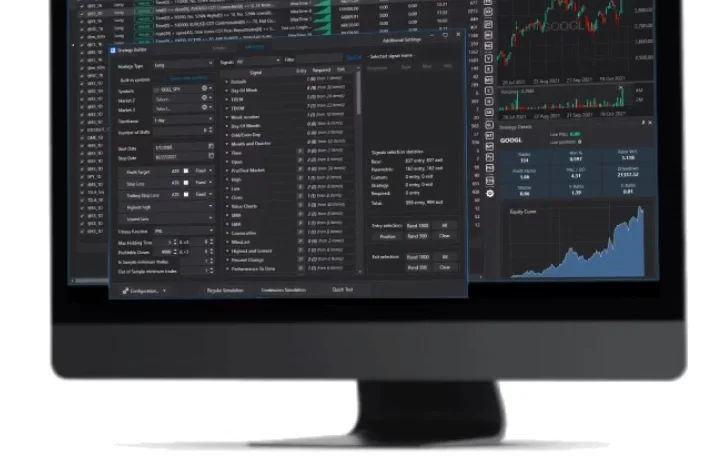
The landscape of algorithmic trading has undergone a significant transformation with the introduction of automated strategy generation engines driven by genetic algorithms. For years, quantitative researchers and retail traders alike have utilized these computational models to sift through vast arrays of financial data, uncovering trading rules and optimizing parameters such as moving average lookbacks, relative strength index lengths, and stop-loss distances. However, a persistent limitation has hindered these traditional systems: they operate strictly inside predefined search parameters, or hyperparameters. When a genetic algorithm hits a computational plateau or when a productive market regime lies outside the initially defined search space, human intervention has historically been required to recalibrate the software.
To bridge this gap, Build Alpha has officially integrated an advanced Large Language Model (LLM) orchestration layer—known as AutoTune—into its core software architecture. This innovative feature shifts the paradigm of algorithmic discovery by utilizing state-of-the-art AI models to oversee, direct, and dynamically modify the search parameters of the underlying genetic algorithm in real time. Rather than merely offering static insights or passive trading suggestions that demand slow manual adjustments from a human operator, Build Alpha’s LLM orchestrator closes the loop between analysis and execution. By operating directly through user-provided API keys, the software empowers popular reasoning models—such as OpenAI’s ChatGPT, Anthropic’s Claude, Google’s Gemini, xAI’s Grok, DeepSeek, and Perplexity—to take an active supervisory role in the quantitative research process.
The fundamental architectural distinction of this integration lies in the division between parameters and hyperparameters. While the genetic algorithm excels at searching inside the box—optimizing variables within a fixed framework—the LLM orchestrator acts as a higher-level supervisor that picks the box. When a simulation converges or plateaus, signaling that the genetic algorithm has exhausted the productive territory of the current search space, the LLM intervenes. It assesses the trajectory of the research session, decides whether a change in course is necessary, and dynamically alters the hyperparameter settings, redirects search boundaries, and restarts the engine without requiring human oversight. Furthermore, the orchestrator is not limited to choosing from Build Alpha’s existing library of over 7,000 price and non-price signals—which range from traditional technical indicators and volume metrics to sentiment, macroeconomic data, COT reports, weather patterns, and intermarket spreads. The LLM possess the unique capability to invent entirely new trading signals mid-session. If the model determines that a novel volatility-adjusted breadth indicator or custom mathematical transformation is required for a specific market regime, it writes the signal definition, hands it directly to the C++ execution engine, and validates the resulting strategies alongside the built-in library.
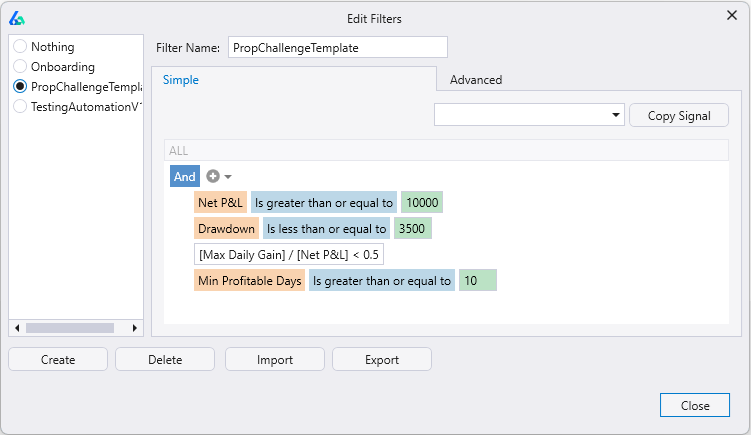
Crucially, the integration of generative artificial intelligence into quantitative finance raises valid concerns regarding validation and curve-fitting. To mitigate the risks associated with unverified machine-generated code, Build Alpha maintains strict adherence to rigorous institutional-grade validation pipelines. Every signal invented by an LLM orchestrator and every strategy evolved by the genetic algorithm must pass the exact same rigorous robustness gates configured by the user. These include out-of-sample testing, walk-forward analysis, noise tests, and randomized benchmark comparisons. Furthermore, the software fully supports modern proprietary trading firm challenge parameters, allowing traders to input specific daily loss limits, maximum drawdown thresholds, profit targets, and minimum trading day constraints. The LLM orchestrator cannot bypass these quantitative safety checks; rather, it works strictly within the validation envelope defined by the trader, ensuring that all output remains deployable and structurally sound.
Beyond real-time session management, the Build Alpha platform introduces a persistent cross-session memory architecture that fundamentally changes how historical research data is leveraged. Traditional AI tools typically reset their context windows at the end of every session, forcing users to start from scratch regardless of previous discoveries. In contrast, Build Alpha’s orchestrator automatically summarizes the reasoning, hyperparameter adjustments, successful signals, and dead ends encountered during a completed simulation, writing these lessons to a localized persistent memory store. When a trader initiates a new research session, the orchestrator queries this memory base using a proprietary similarity-scoring algorithm that weighs factors such as signal overlap, fitness function metrics, market classification, and timeframes. Consequently, if a previous run demonstrated that specific volatility regime filters were ineffective for a particular asset class, subsequent sessions automatically inherit this knowledge from the outset, allowing the system’s operational intelligence to compound over time.
The deployment workflow for traders utilizing the LLM orchestrator is designed for operational simplicity and security. Users supply their own API credentials directly within the desktop application, ensuring that sensitive keys remain stored locally on their local machine rather than passing through an external proxy server. Because the LLM processes compact numerical summaries and structural states rather than raw, high-frequency bar data, token utilization and associated API costs remain remarkably low. Moreover, traders retain total transparency through a comprehensive messaging and reporting suite. Throughout a simulation, the software logs every decision made by the model—categorized across events such as new fitness highs, plateau detections, hyperparameter adjustments, and routine analytical reasoning. Upon completion, a detailed audit trail and report are generated, transforming the software interface into an active research notebook that documents the exact rationale behind every discovered strategy.
Ultimately, the introduction of LLM orchestration to automated trading strategy generation represents a maturation of financial technology rather than a speculative leap into unsupervised trading. The AI model itself never trades live capital, never directly selects execution signals, and never manufactures artificial alpha where none exists in the underlying market data. Instead, it serves as an accelerated computational assistant that automates the tedious trial-and-error phases of quantitative research at machine speed. By shifting the human role from manual grid-search operator to strategic reviewer, Build Alpha’s AutoTune feature effectively compresses weeks of iterative hypothesis testing into minutes, offering a scalable methodology for systematic traders, proprietary firm applicants, and institutional portfolio managers seeking to optimize their workflow in increasingly complex global markets.