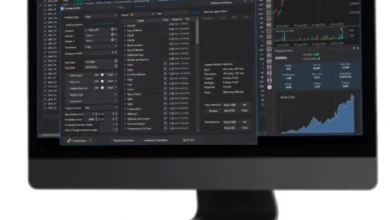
HaasOnline Launches WaveRunner Grid Execution Framework to Navigate Volatile Crypto Markets

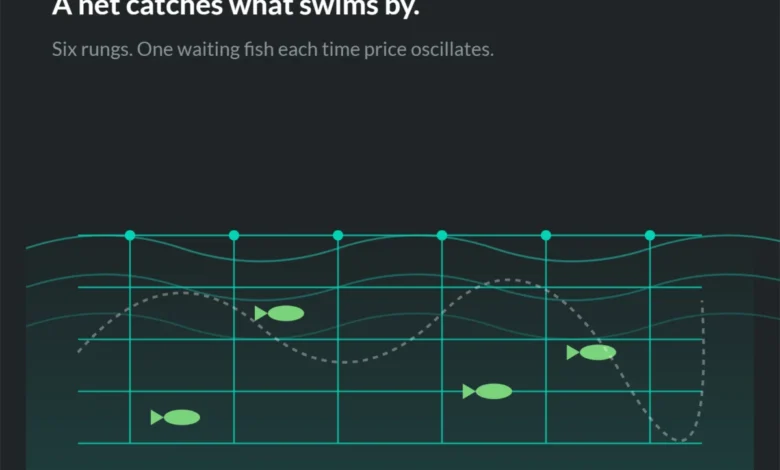
The introduction of the WaveRunner grid execution framework by HaasOnline marks a significant evolution in the company’s automated trading suite. Designed to operate within the HaasScript ecosystem on the TradeServer platform, the framework shifts the paradigm of algorithmic trading from directional speculation to oscillation capture. By utilizing a ladder-based strategy, WaveRunner seeks to eliminate the inherent risks of attempting to predict precise market tops and bottoms, instead positioning buy and sell orders across a price band to capitalize on market noise and sideways movement.
This development arrives at a time when institutional and retail traders alike are increasingly seeking alternatives to traditional momentum-based strategies. As cryptocurrency markets continue to demonstrate high levels of volatility without sustained directional bias, the demand for non-directional trading tools has grown. HaasOnline’s decision to build WaveRunner suggests a strategic pivot toward providing more robust, risk-mitigated infrastructure for users operating in unpredictable market regimes.
Historical Context of Grid Trading in Digital Assets
Grid trading is a mechanical strategy that has been utilized in traditional finance for decades, primarily within the foreign exchange (forex) markets. The strategy relies on the principle of mean reversion, operating on the assumption that an asset will eventually return to a historical average price. In the context of digital assets, where 24/7 trading cycles often result in extended periods of range-bound consolidation, grid trading has gained popularity as a means to extract value from small, frequent price fluctuations.
Unlike arbitrage or high-frequency trading (HFT), which rely on speed and latency advantages, grid trading is relatively latency-agnostic. Its effectiveness is derived from the configuration of the grid itself—specifically, the density of the rungs and the width of the price band. Historically, however, the implementation of such strategies has been fraught with complexity, requiring traders to manually manage order books or rely on rigid, pre-programmed bots that lacked the agility to adapt to shifting market environments.
The Mechanics of the WaveRunner Framework
The operational architecture of WaveRunner is built on a three-phase execution logic that differentiates it from previous HaasOnline scripts.
Phase one, designated as "Anchor Deployment," initiates the strategy by recording the market price at the moment of activation. This price acts as the central pivot point for the grid. The system then populates a ladder of buy orders below this anchor and a corresponding ladder of sell orders above it. This setup creates a structured environment where every price movement has a corresponding transactional outcome.
Phase two involves the active capture of market oscillations. Unlike conventional bots that require buy/sell signals from technical indicators such as Moving Averages or Relative Strength Index (RSI), WaveRunner functions on a deterministic basis. When the market price touches a rung, the system executes the trade. Each completed buy-sell cycle realizes a spread profit, gross of exchange fees. This mechanical approach removes the "human element" of discretionary decision-making, which is often cited as a leading cause of trading failure.
Phase three is the framework’s most advanced feature: the "Auto-Re-Anchor." Recognizing that market ranges are rarely static, WaveRunner is designed to monitor price drift. When the price moves sufficiently far from the original anchor point—effectively rendering the current grid obsolete—the system automatically cancels open orders and recalibrates the ladder around the new market level. This ensures that the framework remains responsive to shifting market regimes without requiring constant manual intervention from the user.
Safety Protocols and Risk Mitigation
A primary concern for automated traders is the risk of "runaway" markets, where a strong directional trend could lead to a series of unfavorable trades or over-exposure. To address this, HaasOnline has integrated three core safety mechanisms into the WaveRunner framework.
First, the "Anchor-Scale Safety" protocol acts as a throttle. As the market price deviates from the initial anchor, the system progressively reduces the size of new orders. This serves as a structural buffer, preventing the framework from committing significant capital during periods of high momentum. By easing off as conditions change, the strategy avoids the common pitfall of "buying into a cliff."
Second, the system is strictly limited to spot execution. By avoiding margin, leverage, or derivatives, WaveRunner mitigates the risk of liquidation. In the event of a significant market downturn, the user is left with an accumulation of the underlying asset rather than a debt obligation or a closed position due to margin calls.
Third, the framework adheres to a non-custodial model. Because WaveRunner runs on the user’s TradeServer instance using private API keys, HaasOnline does not have access to the user’s funds or exchange accounts. This architecture aligns with the broader movement toward self-custody and decentralized control in the cryptocurrency industry, ensuring that the user maintains full authority over their capital.
Implications for Market Participants
The release of WaveRunner reflects a broader shift in the fintech sector toward "modular" trading tools. By providing a framework rather than a "black box" strategy, HaasOnline allows users to maintain control over the configuration—such as rung spacing and order sizing—while offloading the execution logic to the machine.
Industry analysts suggest that tools like WaveRunner are well-suited for professional traders managing diverse portfolios. In a market where 80% of crypto assets often exhibit high correlation and frequent sideways movement, the ability to generate yield through mechanical grid execution can provide a steady performance baseline that is uncorrelated with directional market bets.
However, the framework is not without its limitations. HaasOnline has been transparent in stating that WaveRunner is not a "moonshot" tool. It is not designed to capture massive, sudden price breakouts. Traders who utilize this framework for high-volatility, one-sided trends may find their returns capped by the anchor-scale safety features. Therefore, the effectiveness of the tool is heavily dependent on the trader’s ability to identify appropriate assets that exhibit range-bound characteristics.
Strategic Analysis of the Launch
The introduction of WaveRunner serves as a key performance indicator of HaasOnline’s current product roadmap. By diversifying its offerings to include both high-performance directional bots and low-maintenance grid frameworks, the company is attempting to capture a broader segment of the market—ranging from algorithmic developers to passive investors.
The framework’s reliance on TradeServer and cloud-based infrastructure underscores the increasing professionalization of the retail crypto trading space. As exchanges continue to upgrade their API capabilities, the ability to run sophisticated, multi-layered scripts like WaveRunner becomes a prerequisite for maintaining a competitive edge.
Furthermore, the emphasis on a "fish with a net, not a rod" philosophy signals a departure from the hype-driven nature of earlier crypto trading bots. By positioning the product as a tool for "choppy, sideways, or modestly trending markets," HaasOnline is managing expectations, aiming to attract serious traders who prioritize risk management and long-term sustainability over short-term speculative gains.
Looking Ahead: The Future of Automated Execution
As the cryptocurrency market matures, the infrastructure supporting it is expected to become increasingly institutional in nature. The transition toward automated, rule-based frameworks like WaveRunner represents a necessary step in this evolution. For users, the path forward involves learning to integrate these tools into a broader portfolio strategy—using grid execution for range-bound assets while maintaining other strategies for trend-following and long-term holding.
For those interested in testing the framework, HaasOnline has opened access via its existing subscription tiers, with a free trial available for new users. As the landscape of digital finance continues to shift, the success of WaveRunner will likely be measured by its ability to maintain consistent performance across varying market conditions and its capacity to protect user capital during periods of extreme volatility.
In summary, WaveRunner represents a sophisticated, albeit mechanical, approach to the complexities of digital asset trading. By focusing on the structural benefits of grid execution, prioritizing safety over aggressive speculation, and maintaining a non-custodial architecture, HaasOnline has provided a tool that aligns with the requirements of a more cautious and professionalized trading environment. The framework does not promise to predict the future, but rather to capitalize on the present—a pragmatic approach that is increasingly favored in the current financial climate.