WEEX and HaasOnline Launch Strategic Partnership Campaign Featuring Automated Trading Incentives and Position Airdrops

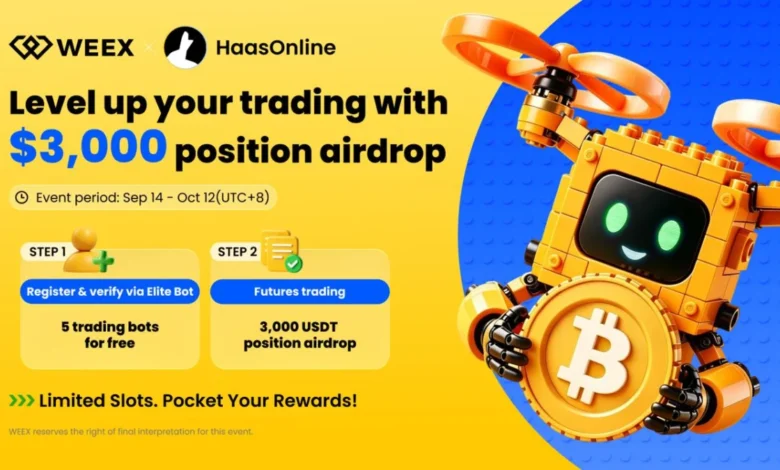
Following the successful execution of the Elite API Trader Tournament last month, WEEX, a global cryptocurrency exchange, and HaasOnline, a leading provider of automated trading software, have announced a follow-up collaborative campaign. Running from September 14, 2026, to October 12, 2026, the initiative aims to incentivize the integration of algorithmic trading strategies within the WEEX ecosystem. This partnership represents a growing trend in the digital asset industry, where exchanges and software providers align to lower the barrier to entry for high-frequency and automated trading solutions.
The campaign is structured as a two-tiered incentive program. The first phase focuses on user acquisition and technical onboarding, while the second phase encourages sustained trading activity through a USDT-denominated airdrop pool. By leveraging the automated capabilities of HaasOnline, participants are encouraged to move beyond manual trading, utilizing algorithmic bots to execute complex futures strategies across the WEEX platform.
The Strategic Context of Algorithmic Trading
The partnership arrives at a time when automated trading has become a cornerstone of professional-grade crypto market participation. According to recent industry reports, over 70% of volume on major centralized exchanges is now driven by algorithmic or API-based trading. The collaboration between WEEX and HaasOnline is designed to bridge the gap for retail traders, providing them with the same technological infrastructure previously reserved for institutional entities.
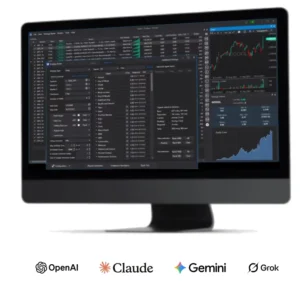
HaasOnline’s integration with WEEX provides users with access to over 1,500 spot markets and 950 USDT-margined perpetual futures pairs. By utilizing the HaasOnline TradeServer, traders can deploy various automated strategies—such as grid trading, dollar-cost averaging (DCA), and custom script-based triggers—to manage market volatility 24/7. This transition from manual to automated execution is a significant focus of the campaign, as it reduces the emotional friction often associated with high-volatility futures trading.
Chronology and Event Parameters
The campaign timeline is set for a four-week window, starting at 00:00 UTC+8 on September 14, 2026, and concluding at 23:59 UTC+8 on October 12, 2026. The chronological rollout of the event is as follows:
- Onboarding Phase (Sept 14 – Sept 21): New users are directed to register via the WEEX Elite Bot on Telegram. This process is intended to verify eligibility for the first tier of the campaign.
- Bot Deployment Phase (Throughout the event): Once registered, users gain access to five complimentary trading bots hosted on HaasOnline. Participants are encouraged to configure these bots to begin active market monitoring and order execution.
- Active Trading Phase (Sept 14 – Oct 12): Participants engage in USDT-margined futures trading. Eligibility for the airdrop is determined by the total trading volume accumulated during this window.
- Distribution Phase (Post-Event): Following the conclusion of the event on October 12, WEEX will process the trading data to allocate the position airdrops from the $30,000 BTC-denominated reward pool.
Incentive Structure and Data-Driven Participation
The core incentive of this campaign is a $30,000 BTC airdrop pool, from which participants can earn up to 3,000 USDT in position airdrops. The mechanism is tiered based on trading volume, a standard practice in exchange-led liquidity incentives. While the exact volume requirements are dynamic, the primary objective is to increase the depth of the order books on the WEEX futures platform.
Position airdrops function differently than standard cash rebates. By providing a "position airdrop," the exchange allows the user to hold a larger market exposure without increasing their collateral commitment, essentially leveraging the exchange’s liquidity to boost the user’s position size. This can be a double-edged sword: while it maximizes profit potential during favorable market movements, it simultaneously increases the liquidation risk if the market moves against the trader’s position.
Technical Integration and Ecosystem Synergy
The technical backbone of this campaign is the API integration between HaasOnline’s software and the WEEX exchange infrastructure. Users can connect their accounts using a single set of API keys, which covers both spot and futures markets. This simplified connectivity is a tactical improvement over earlier iterations of crypto-API setups, which often required separate permissions for different asset classes.
The integration supports advanced features, including various position modes (isolated vs. cross margin) and comprehensive backtesting capabilities. For traders, the ability to backtest a strategy against historical WEEX data before committing real capital is a critical risk-management tool. The campaign organizers have emphasized that the use of these tools is meant to complement, not replace, the trader’s fundamental understanding of market risks.
Market Implications and Risk Assessment
The collaborative effort between WEEX and HaasOnline reflects the increasing professionalization of the retail trading space. By incentivizing the use of automation, the exchange is effectively promoting a more systematic approach to trading, which, in theory, should lead to more disciplined market participants.
However, industry analysts maintain a cautionary stance regarding the risks inherent in such campaigns. The primary concern is "volume farming"—where traders increase their activity specifically to qualify for rewards, often disregarding the cost of trading fees or the probability of losses. If a trader pays 0.05% in fees per trade to chase an airdrop that equates to less than their cumulative fee expenditure, the trade becomes mathematically net-negative.
Furthermore, automated bots are not inherently profitable. A poorly configured bot, or one operating under an flawed strategy, can execute losing trades faster than a human operator. The organizers have explicitly warned that "trading volume for the sake of rewards can cost more in fees and losses than the airdrop is worth." Participants are strongly advised to utilize the WEEX simulated trading environment—often referred to as a "paper trading" account—to verify the effectiveness of their automated strategies before deploying real capital.
Official Statements and Governance
While the campaign is presented as a joint effort, it is important to note the distinction in responsibilities. WEEX is the primary entity managing the exchange infrastructure, the reward pools, and the distribution of the airdrops. HaasOnline serves as the technical service provider, offering the software tools that facilitate the automation.
WEEX has reserved the right of final interpretation, meaning that the exchange retains authority over the event rules, eligibility criteria, and any modifications to the reward structure deemed necessary to ensure the integrity of the competition. Participants are urged to review the official campaign page on the WEEX website to stay updated on any potential adjustments or clarifications to the rules throughout the duration of the event.
Conclusion and Future Outlook
The WEEX and HaasOnline campaign serves as a barometer for the current state of the crypto-derivative market. As competition between exchanges intensifies, the focus has shifted from simple fee-discount models to sophisticated ecosystem-building initiatives that integrate third-party tools and automated software.
For the average trader, this presents a unique opportunity to gain experience with professional-grade automation tools while potentially offsetting the costs of experimentation through the airdrop program. However, the success of such an endeavor relies entirely on the user’s ability to balance the technical advantages of automation with robust risk management practices.
As the digital asset landscape continues to evolve, the integration of trading bots into daily retail workflows is expected to become the industry standard. The results of the October 12, 2026, conclusion of this event will likely provide insights into the efficacy of these incentive models in driving sustained platform volume and user retention. For those interested in participating, the path forward involves registering via the designated Telegram bot, connecting the API, and—most importantly—conducting thorough backtesting before launching automated strategies into the live market.