The Ghost of 1873 and the Perils of Policy Overreaction in the Modern Economic Era

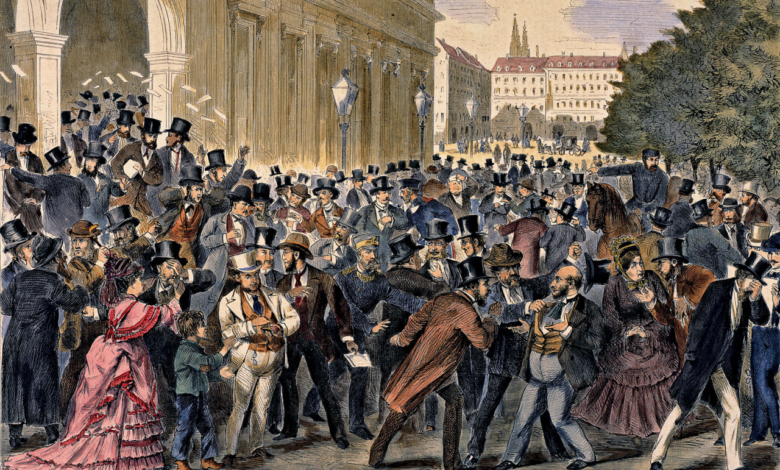
The economic landscape of the 19th century stands in stark contrast to the inflationary environment of the post-World War II era. Between 1800 and 1940, the global economy operated under a vastly different paradigm where sustained price increases were the exception rather than the rule. During these 140 years, the average annual inflation rate hovered at a mere 0.2%. Consequently, the cost of living in 1940 was only 28% higher than it had been at the dawn of the 19th century. This era was characterized by frequent bouts of deflation, with nearly 70 distinct periods where prices retreated. Among these episodes, the Panic of 1873 and the subsequent Long Depression remain the most illustrative examples of how financial market volatility can be transformed into a protracted economic crisis through catastrophic policy missteps.
The Anatomy of the 1873 Financial Collapse
The Panic of 1873 was not an isolated event but the culmination of rampant speculation, fueled by an aggressive expansion of credit and a boom in railroad infrastructure. Following the conclusion of the American Civil War and the unification of Germany, the global economy experienced an "innovation boom" characterized by excessive optimism. Investors poured capital into high-risk ventures, often backed by lax lending standards and highly leveraged balance sheets.
The bubble began to deflate in September 1873, when Jay Cooke & Company—a prominent American banking house—failed due to its inability to market the bonds of the Northern Pacific Railway. This triggered a cascade of bank failures and a precipitous decline in stock market valuations. In the United States, the crisis wiped out years of paper wealth, yet, remarkably, the initial economic impact was relatively contained. Industrial production in the U.S. fell by approximately 6%, while major European powers like Britain, France, and Germany experienced stagnation rather than a systemic collapse.
From Recession to Depression: The Role of Policy Error
Historical analysis, particularly in the works of economists such as Liaquat Ahamed, suggests that the label "Long Depression" was not an inevitable outcome of the 1873 market crash. Had governments allowed the natural business cycle to recalibrate, the period might have been remembered as a routine correction. Instead, global policymakers implemented a disastrous restructuring of the international currency system.
By moving to restrict the money supply amid financial instability, governments engineered a massive liquidity squeeze. This decision, intended to preserve the integrity of the gold standard, effectively turned a manageable recession into a multi-decade ordeal. Prices worldwide collapsed by 20% to 25% over the next six years. In the United States, wholesale prices plummeted by 35%. This deflationary spiral persisted, with prices falling by one-third by the mid-1890s, while wholesale prices saw a total decline exceeding 50%.
The consequences of this deflation were deeply asymmetric. While creditors saw the real value of their assets increase, the debtor class—primarily farmers and nascent industrial laborers—faced ruin. As business profits evaporated, investment in innovation and infrastructure dried up, leading to a decade and a half of economic pessimism. The period between 1880 and 1896 is widely recognized by economic historians as the longest bear market in recorded history, characterized by high unemployment and a systemic collapse in economic confidence.
Parallels to the Modern AI-Driven Market
The structural similarities between the late-19th century and the current economic environment are striking. Modern financial analysts have frequently drawn parallels between the 19th-century railway bubble and the current capital expenditure cycle surrounding artificial intelligence (AI). Both eras feature massive credit expansion, extreme speculative behavior, and a stock market driven by high-growth technological expectations.
However, the primary concern for contemporary economists is not necessarily the correction of the AI boom, but the potential for a "policy blunder" in response to a slowdown. The experience of the early 2000s provides a cautionary tale. When the dot-com bubble burst, the resulting recession was relatively mild, with GDP declining by less than 1% and the unemployment rate rising from 4% to 6%.
Despite this, the Federal Reserve responded by lowering interest rates to levels unseen in four decades. While this prevented a deep recession at the time, it created a low-interest-rate environment that encouraged excessive borrowing and fueled the housing bubble. The subsequent collapse of this bubble in 2008 triggered the Great Financial Crisis, demonstrating how a policy response to a minor correction can inadvertently plant the seeds for a systemic catastrophe.
Assessing Contemporary Policy Risks
Today, the intersection of monetary, fiscal, and industrial policy creates a complex web of risk. As financial markets become increasingly intertwined with government support mechanisms, the scale of intervention following a "market hiccup" has grown significantly. The risk is that if the current AI spending boom begins to decelerate, authorities may feel compelled to intervene with aggressive stimulus, potentially creating distortions in asset pricing or credit markets that could lead to even greater instability in the long term.
Policy errors can manifest in several forms:
- Monetary Policy: Over-correction through interest rate suppression, leading to asset bubbles.
- Fiscal Policy: Excessive spending that crowds out private investment or creates long-term debt sustainability issues.
- Regulatory/Trade Policy: Protectionist measures that stifle global liquidity or hamper technological innovation.
The lesson of 1873 is that economic resilience is often underestimated. The global economy possesses a natural capacity to absorb shocks, provided that the foundational rules of the market remain stable. When governments intervene to "fix" a natural downturn by fundamentally altering the monetary or currency framework, the unintended consequences can be far more damaging than the initial shock.
Implications for Future Stability
As the global economy navigates the later stages of the current investment cycle, the focus of institutional observers remains on the potential for policy-induced volatility. Unlike the late 19th century, where the gold standard acted as a rigid constraint, modern policymakers possess a wider array of tools, yet these tools also carry the risk of greater miscalculation.
The historical trajectory of the 1870s serves as a reminder that the most significant risks to the economy are often not the booms or busts themselves, but the reactive, often reflexive, policy decisions made in the heat of the moment. Whether the current cycle ends in a soft landing or a deeper contraction, the primary challenge for central banks and governments will be to avoid the temptation of drastic, unnecessary intervention that could turn a routine market correction into a long-term structural crisis.
Ultimately, the stability of the global financial system depends on distinguishing between systemic fragility and natural cyclical adjustment. By analyzing the blunders of the past—specifically the unnecessary contraction of liquidity following the Panic of 1873—policymakers are better equipped to navigate the volatility of the present. As the AI-driven expansion eventually cools, the mandate for economic leadership will be to balance caution with restraint, ensuring that the response to a potential downturn does not become the catalyst for the next generation of financial instability.
Related posts: