Artprice congratulates Brognon Rollin as winners of the 2026 Marcel Duchamp Prize

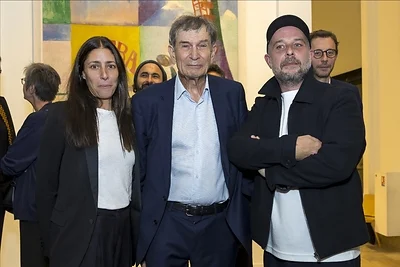
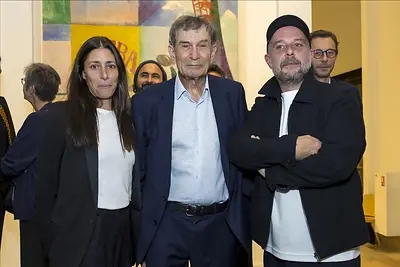
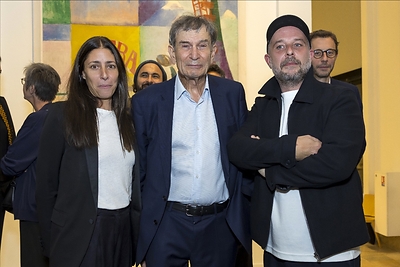
The Parisian art scene reached a significant milestone on Thursday, October 22, 2026, as the prestigious Marcel Duchamp Prize was awarded to the artistic duo David Brognon and Stéphanie Rollin. Announced by Claude Bonnin, President of the Association pour la diffusion internationale de l’art français (ADIAF), at the Musée d’Art Moderne de Paris, the selection of Brognon Rollin underscores a growing institutional focus on conceptual works that prioritize human experience, vulnerability, and the passage of time. The award, which carries a total endowment of €90,000—with €35,000 going directly to the winners—serves as a cornerstone of the French contemporary art calendar, cementing the duo’s place in a lineage of influential past recipients, including Kader Attia, Dominique Gonzalez-Foerster, and Tarik Kiswanson.
A Context of Disruption and Resilience
The announcement of the 2026 laureate took place during an exceptionally volatile week for the global art market. Paris Art Week, typically a period of celebration and high-volume commerce, faced significant operational hurdles this year. On Friday, October 23, 2026, the organizers of Art Basel Paris were forced to close the fair prematurely at 7 p.m., ahead of the public weekend, citing security concerns arising from planned demonstrations in the city.
Despite this turbulent backdrop, the Marcel Duchamp Prize ceremony remained a focal point of intellectual discourse. The decision to host the exhibition of shortlisted artists and the final ceremony at the Musée d’Art Moderne de Paris—a temporary home for the event while the Centre Pompidou continues its multi-year renovation project—has provided a stable, albeit temporary, anchor for the French art community. The exhibition, which will remain open to the public until February 7, 2027, highlights not only the winning duo but also the contributions of shortlisted artists Joël Andrianomearisoa, Laura Henno, and Josèfa Ntjam, each of whom explores the intersection of materiality, social marginalization, and historical narrative.
Conceptual Rigor and the Human Element
The winning installation by Brognon and Rollin, titled "5,376 Years, 1,892 Months, 1,110 Days, 1,201 Hours," serves as a profound meditation on the nature of addiction, abstinence, and the fragility of the human condition. Since 2006, the duo has built a reputation for work that engages with the margins of society, often focusing on themes of waiting and confinement.
The installation features a collection of sobriety tokens—physical markers of time earned by individuals during their journey toward recovery. By integrating four carnival-style machines that hold these tokens in a perpetual state of teetering suspension, the artists create a visceral metaphor for the struggle of maintenance. Furthermore, the inclusion of three wall lights connected to a real-time remote trigger operated by an individual in long-term recovery—Kate, who has been sober for eight years—infuses the static gallery environment with the pulse of an external, living reality.
In a conversation with thierry Ehrmann, founder of Artprice, Claude Bonnin noted that the work perfectly embodies the spirit of Marcel Duchamp’s conceptual legacy. By selecting mundane, pre-existing objects and recontextualizing them within an artistic framework, Brognon and Rollin adhere to the "readymade" tradition while simultaneously injecting a profound, affective human narrative. The tokens are no longer mere plastic or metal discs; they become repositories of effort, endurance, and the quiet, daily persistence of human life.
The Evolution of the Marcel Duchamp Prize
Since its inception in 2000, the Marcel Duchamp Prize has functioned as a critical barometer for the health and direction of the French art scene. Organized in partnership with the Centre Pompidou, the prize has historically been instrumental in elevating French artists to a global stage. The 2026 jury, chaired by Xavier Rey, Director of the Musée national d’art moderne, included notable figures such as the 2016 winner, Kader Attia. This continuity of leadership and influence ensures that the prize remains grounded in a deep understanding of contemporary practice.
The support provided by ADIAF goes beyond the monetary endowment. Winners benefit from international exhibition opportunities and high-profile residencies, including collaborations with the Villa Albertine in the United States and the prestigious Manufacture de Sèvres. These institutional bridges are vital for sustaining long-term careers in an increasingly competitive global market.
Transmission and the Role of Artificial Intelligence
The 2026 edition of the prize has sparked a broader debate regarding the nature of creation, particularly in the context of emerging technologies. Artprice, a long-standing partner of the ADIAF, has used this year’s ceremony to draw parallels between the conceptual work of Brognon Rollin and the evolving role of artificial intelligence in authorship.
In his latest work, "Dialogue Between a Thinker and AI," thierry Ehrmann documents a 450-hour exchange between himself and an artificial intelligence system. The project serves as an experiment in "entrusted authorship," where the conceptual foundation, memories, and corrections remain firmly in the hands of the human thinker, while the act of articulation is delegated to the machine. This mirrors, in a digital sense, the questions raised by Brognon and Rollin. If the artist selects the objects, defines the parameters, and directs the emotional arc, does the lack of manual fabrication diminish the authenticity of the creative act?
The conclusion drawn by proponents of this conceptual shift is that the value lies in the "thought-act"—the decision-making process and the intent behind the selection. Just as a sobriety token acts as a vessel for a lived experience it did not itself generate, a piece of AI-generated text or a conceptual installation relies on the human experience to imbue it with meaning. The gap between the object and the lived reality is precisely where the art resides.

Market Implications and Future Outlook
For collectors, critics, and institutional buyers, the recognition of Brognon and Rollin serves as a signal of shifting market tastes. There is an observable pivot toward works that require deep intellectual engagement and that possess a clear, ethical, or social dimension. The 2026 Contemporary Art Market Report by Artprice confirms that while the auction market remains volatile, works that resonate with urgent societal issues—such as mental health, social justice, and the intersection of human and digital life—continue to hold strong value and institutional interest.
The exhibition at the Musée d’Art Moderne de Paris is expected to attract significant international attention through early 2027. By hosting the prize, the museum has reaffirmed its role as a premier venue for avant-garde thought. The accessibility of the exhibition, combined with the open-access nature of the "Dialogue Between a Thinker and AI" project, suggests a trend toward democratizing the discourse surrounding contemporary art.
As the industry looks toward the next cycle of the Marcel Duchamp Prize, the focus will likely remain on artists who can successfully bridge the divide between the physical object and the immaterial, conceptual, and digital realms. The 2026 laureates have set a high bar, demonstrating that the most potent art is often that which refuses to choose between the conceptual and the deeply, painfully human.
Fact-Based Chronology of the 2026 Prize
- 2000: Founding of the Marcel Duchamp Prize by ADIAF.
- October 22, 2026: Brognon Rollin announced as winners at the Musée d’Art Moderne de Paris.
- October 23, 2026: Early closure of Art Basel Paris due to security concerns, highlighting the volatile climate of the art week.
- October 2026 – February 7, 2027: Exhibition of the shortlisted artists (Brognon Rollin, Joël Andrianomearisoa, Laura Henno, and Josèfa Ntjam) at the Musée d’Art Moderne de Paris.
- 2025–2029: Period during which the Musée d’Art Moderne de Paris serves as the host venue for the prize due to the Centre Pompidou’s renovation.
The recognition of David Brognon and Stéphanie Rollin is more than a validation of their individual practice; it is a testament to the enduring relevance of conceptual art in a rapidly changing world. By making the invisible struggles of addiction and recovery visible, the duo has provided a compelling example of how contemporary art continues to serve as an essential medium for human connection and societal reflection.