The Evolution of Market Structure: How the Financial Landscape Has Transformed Since 1960

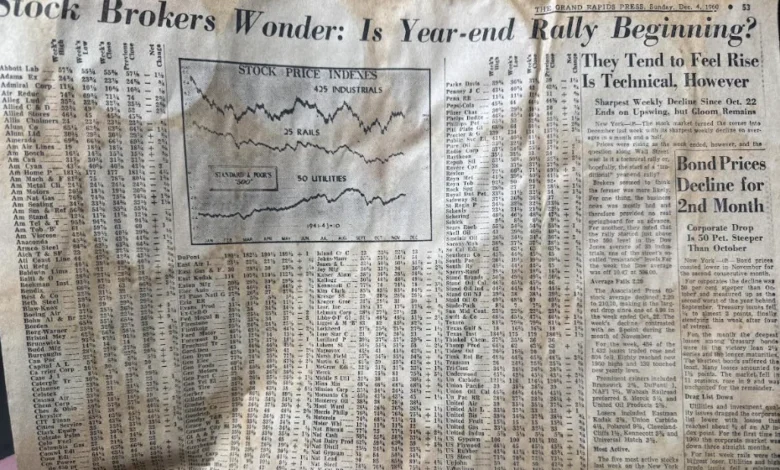
The financial markets of the mid-20th century functioned under a set of constraints and structural realities that are virtually unrecognizable to the modern investor. A historical review of the S&P 500 sector composition from 1960 reveals a narrow economic focus dominated by heavy industry, manufacturing, and raw materials. By contrast, the contemporary index reflects a diversified, technology-heavy ecosystem that mirrors the global shift toward intangible assets and digital infrastructure. This structural evolution is not merely a change in branding; it represents a fundamental shift in how capital is allocated, how information is disseminated, and how the costs of participation have been democratized for the individual investor.
A Chronology of Market Transformation
The transition from the 1960s to the present day can be categorized into three distinct eras of financial architecture. The first era, spanning from the post-war period through the late 1990s, was characterized by high transaction costs and informational asymmetry. Investors were largely confined to the gatekeeping of institutional brokerage houses, where commissions on trades often exceeded 2%. During this period, mutual funds were the primary vehicle for retail diversification, yet these products were burdened by high upfront sales loads, sometimes reaching as high as 8.5%, alongside steep annual management fees.
The second era began in the late 1990s and continued into the early 2000s, defined by the "democratization of information." A pivotal moment in this evolution occurred in 2000 with the Securities and Exchange Commission’s (SEC) implementation of Regulation Fair Disclosure (Reg FD). Before this regulation, public companies were permitted to share material information with select institutional analysts and hedge fund managers before releasing it to the general public. This practice created a tiered market where retail investors were structurally disadvantaged. Reg FD forced corporate transparency, ensuring that significant developments were disseminated to all market participants simultaneously, thereby leveling the playing field.
The third and current era is defined by extreme cost efficiency and the proliferation of automated investing. The advent of commission-free trading, the rise of low-cost exchange-traded funds (ETFs), and the utilization of algorithmic rebalancing have reduced the friction of investing to near-zero levels. When adjusting for inflation and transaction costs, the net return on investment for the average participant has arguably reached a historical peak, even if gross market returns were higher in more volatile, less efficient periods.
The Shift in Sector Composition and Valuation
Comparing the S&P 500 of 1960 to the current iteration reveals more than just a change in corporate names; it highlights the changing nature of value. In 1960, the index was heavily weighted toward cyclical industrials, energy, and materials—sectors that relied on physical capital and tangible output. Today, the dominance of the Information Technology and Communication Services sectors suggests that value is increasingly derived from intellectual property, network effects, and scalable software solutions.
This shift complicates the use of historical valuation metrics, such as the Price-to-Earnings (P/E) ratio. Because modern companies carry different asset profiles and depreciation schedules compared to the heavy manufacturing firms of the 1960s, a direct comparison of historical P/E multiples can be misleading. Investors today are paying for future growth and scalability rather than the replacement cost of physical machinery. While the market has become more concentrated in a handful of top-tier mega-cap technology firms, the broader index provides a more comprehensive representation of the modern economy than it did six decades ago.
The Role of Information and the "Milken Lesson"
The history of the financial markets is punctuated by individuals who exploited gaps in existing knowledge. The development of the high-yield, or "junk bond," market in the 1970s by Michael Milken serves as a case study in informational advantage. Milken’s strategy was rooted in his study of the work of Walter Braddock Hickman, an economist who analyzed corporate bond performance between 1900 and 1943.
Hickman’s research concluded that, contrary to the prevailing academic wisdom of the era, lower-rated, higher-risk bonds often yielded returns that more than compensated for the risk of default. While most financial professionals ignored these findings, Milken utilized the data to create a market for debt that was previously viewed as "uninvestable." This historical episode underscores a critical lesson: market anomalies often exist simply because the prevailing consensus is based on outdated or incomplete data. In today’s environment, where data is ubiquitous and analysis is instantaneous, such blatant inefficiencies are significantly harder to identify and exploit.
Structural Implications for Modern Investors
The reduction in transaction costs and the leveling of the informational playing field have had a profound impact on the performance of active management. Financial analysts have observed a decline in the ability of active hedge fund managers to consistently beat the market. This is not necessarily due to a lack of skill, but rather to the maturation of market structure. When information is instantly priced into the market, the opportunity to generate "alpha"—or returns above the market average—through proprietary insights is severely diminished.
Furthermore, tax considerations remain a critical, albeit often overlooked, component of net returns. Research by investment experts such as Andrew Ang highlights that while nominal returns on stocks have been robust, tax liabilities have historically served as a significant drag on compounded growth. Although current federal tax rates on long-term capital gains are lower than they were in many previous decades, the future trajectory of fiscal policy remains a significant variable for long-term planning.
The Human Element: A Constant Across Cycles
Despite the radical technological and regulatory changes, one variable remains constant: human behavior. While the tools of the trade have evolved from ticker tape machines and paper ledgers to high-frequency trading algorithms and automated robo-advisors, the psychological drivers of the market—fear, greed, and overconfidence—remain unchanged.
The abundance of data available to the modern investor presents a new challenge: the illusion of control. Having access to more information and more granular analysis does not inherently improve the ability to forecast the future. In fact, an over-reliance on historical data can lead to overconfidence, blinding investors to structural shifts that defy historical patterns. As the market continues to evolve, the most successful participants will likely be those who recognize that while the mechanisms of the market change, the fundamental principles of risk management, patience, and behavioral discipline remain the bedrock of long-term financial success.
Conclusion
The evolution of the stock market since 1960 is a testament to the power of technological and regulatory progress. By reducing costs, increasing transparency, and democratizing access to complex financial instruments, the market has become a more efficient vehicle for capital accumulation. However, this efficiency comes with the trade-off of reduced opportunity for excess returns through traditional information-based strategies. As investors look toward the future, the focus must shift from attempting to "outsmart" an increasingly efficient market to leveraging the structural advantages of low-cost, diversified, and automated investment frameworks. The history of the markets serves as a reminder that while the landscape is always shifting, the pursuit of sustainable wealth remains a disciplined endeavor.