The Return of Fixed Income: Why Investors are Rethinking the Role of Bonds in Modern Portfolios

For the better part of the last two decades, the investment landscape was defined by an anomalous environment of near-zero interest rates, leaving many individual investors to view bonds as an obsolete asset class. However, as shifting macroeconomic tides bring interest rates to levels not seen since 2007, a significant portion of the investing public—including many who have spent their careers exclusively in equities—are reconsidering the utility of fixed income. The recent inquiry from a 38-year-old investor regarding the strategic pivot into bonds mirrors a broader trend: as volatility in the stock market persists and yields on debt instruments become competitive, the traditional 60/40 or diversified portfolio is undergoing a rigorous reassessment.
The Historical Context: From Bull Market to Bear Market
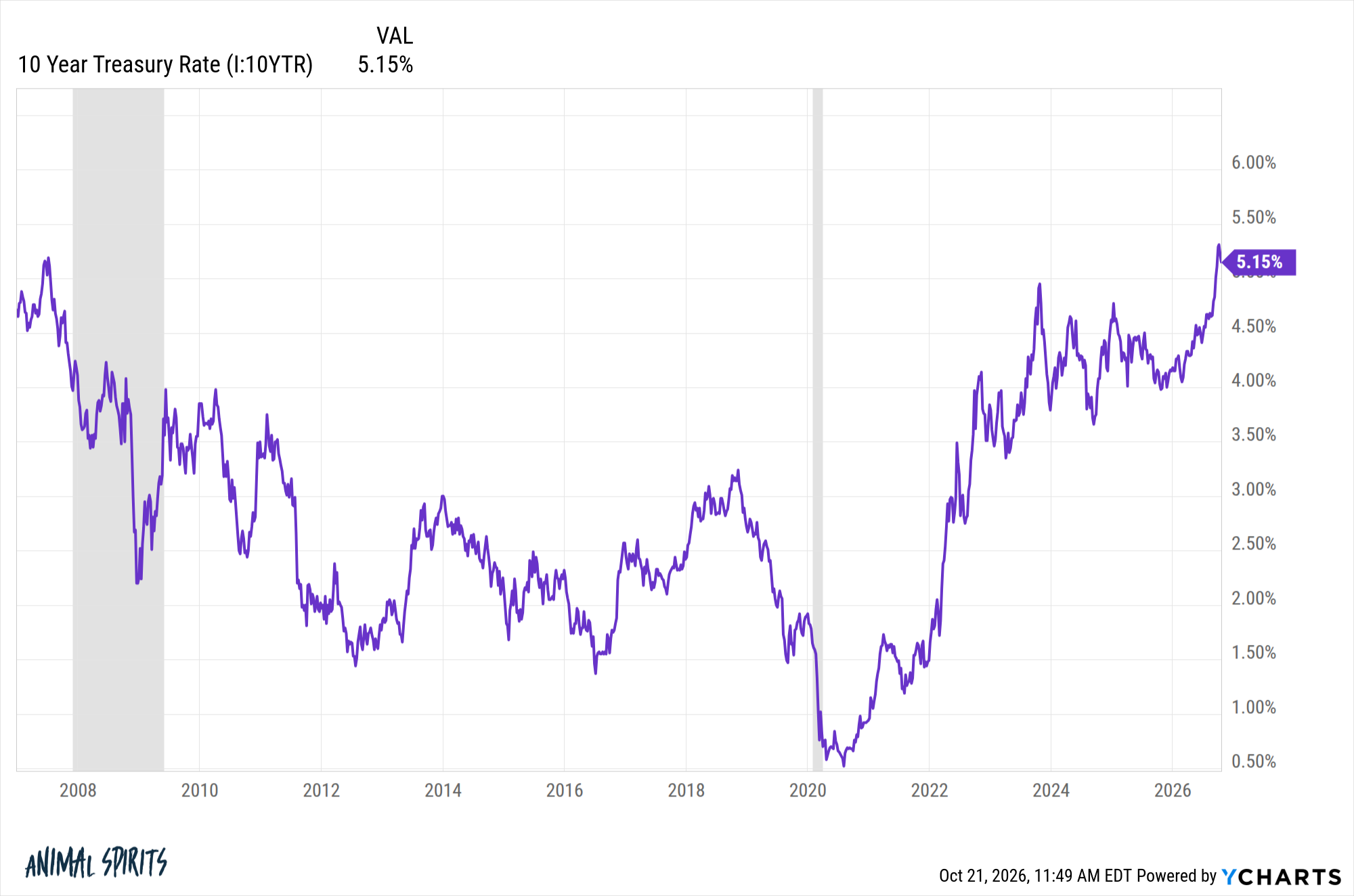
The bond market’s trajectory over the last 40 years has been a study in extremes. Following the stagflationary era of the early 1980s, the U.S. economy entered a multi-decade bull market for bonds. As the Federal Reserve aggressively tackled inflation, interest rates began a long, secular decline. In bond mathematics, when interest rates fall, bond prices rise; this inverse relationship provided a tailwind for fixed-income investors that lasted until the early 2020s.
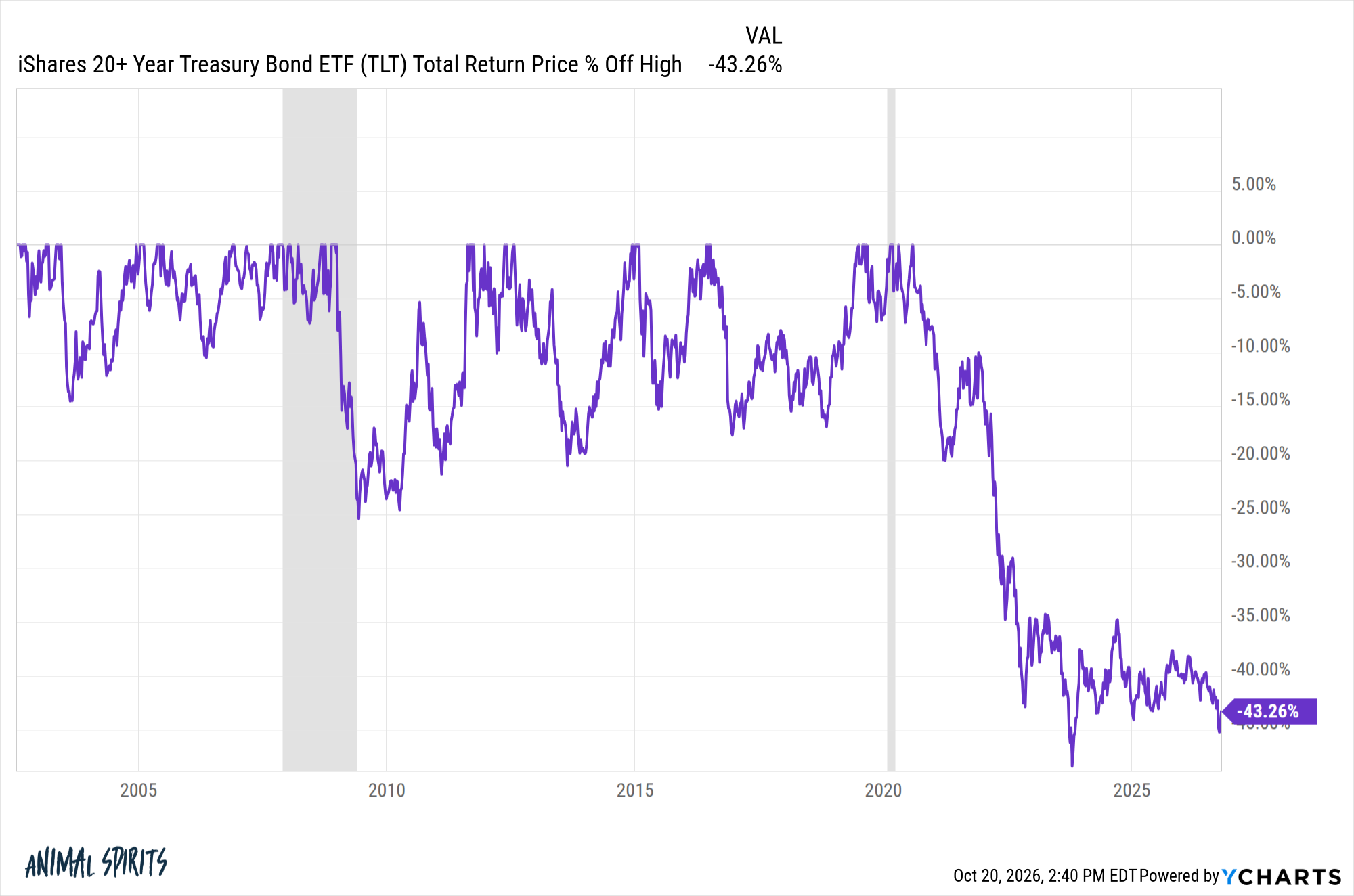
The environment shifted dramatically during the COVID-19 pandemic. To combat the economic paralysis caused by lockdowns, the Federal Reserve slashed the federal funds rate to a range of 0% to 0.25%, while the federal government injected trillions of dollars into the economy through fiscal stimulus. As the economy reopened, this massive liquidity surge, coupled with acute global supply chain disruptions, ignited the highest inflation rates in forty years. The resulting "bond bear market" was one of the most severe in modern history, as the Federal Reserve was forced to execute an aggressive cycle of interest rate hikes to temper price pressures, sending bond prices into a sharp decline.
Analyzing the Data: Why the Landscape Has Changed
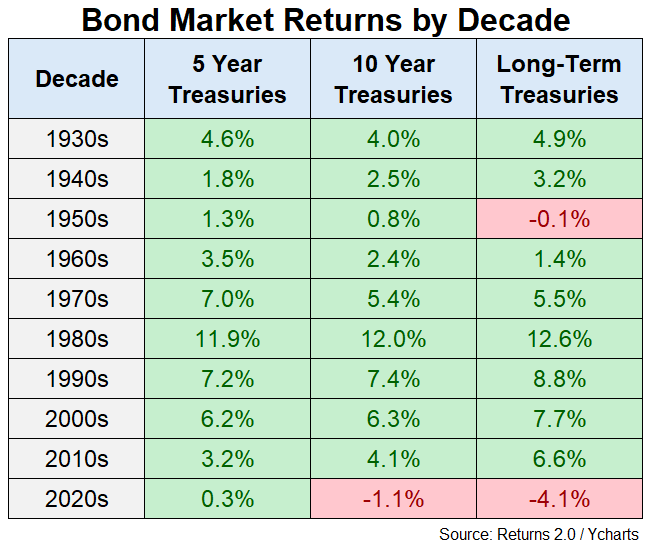
Recent financial data highlights the stark reality of the previous decade for bondholders. The 2014–2024 period saw the worst cumulative performance for fixed income in modern financial history. Investors who had relied on bonds as a reliable "sleep-well-at-night" anchor for their portfolios saw their positions decimated by the dual threat of rising rates and inflation.
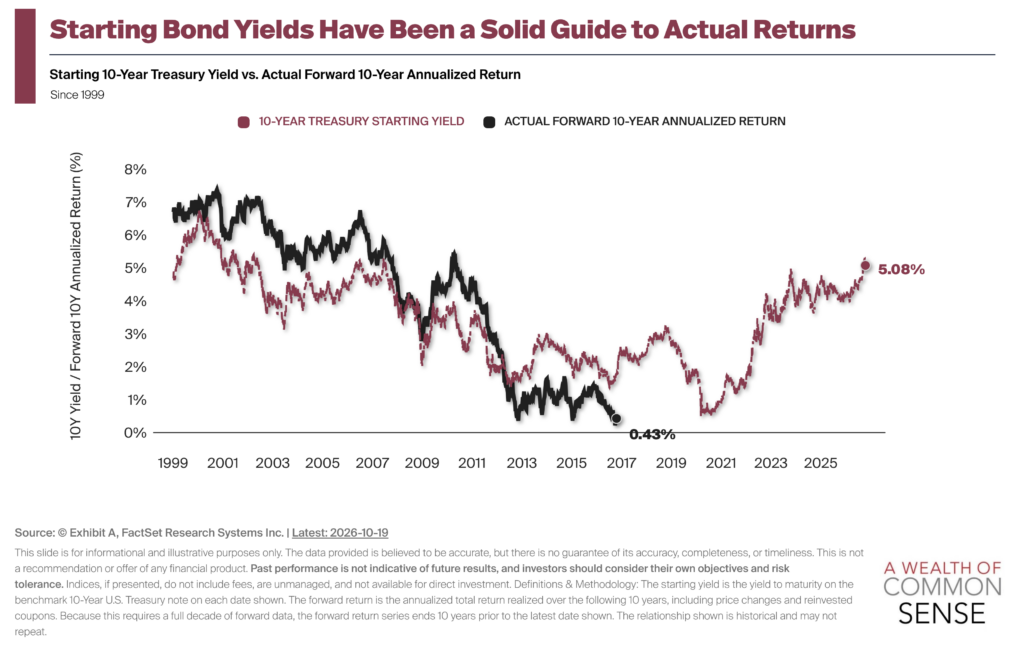
However, the current environment presents a different set of variables. With the 10-year Treasury yield hovering at levels not seen since before the 2008 Great Financial Crisis, the risk-reward profile has fundamentally altered. Unlike the period between 2010 and 2020, where bonds yielded near-zero returns and offered little in the way of a "risk premium," current yields offer a meaningful income stream. For an investor with a mid-to-long-term horizon, this represents a significant shift: bonds are once again providing a return that competes with other asset classes, effectively offering a margin of safety that was absent during the low-rate era.
Understanding Duration Risk and Volatility
One of the most critical factors for any investor entering the bond market is understanding duration risk—the measure of a bond’s price sensitivity to changes in interest rates. Duration essentially quantifies the price fluctuation one can expect from a 1% shift in market yields. For instance, a bond fund with a duration of 15 years, such as the iShares 20+ Year Treasury Bond ETF (TLT), is highly sensitive to rate changes. A 1% increase in interest rates would mathematically imply a price decline of approximately 15%.
This level of volatility is often unsuited for investors seeking stability or those who do not have a specific outlook on the future path of interest rates. Financial experts frequently advocate for intermediate-term duration (typically 5 to 6 years or less) as a middle ground. By reducing duration, investors mitigate the "price-drop" risk associated with potential future rate hikes while still capturing the higher yields currently available in the market.
The Role of Bonds in a Modern Portfolio
For the modern investor, particularly those in their late 30s or early 40s who have historically maintained 100% equity portfolios, the decision to incorporate bonds is rarely about timing the market. Instead, it serves three primary functions:
- Capital Preservation and Liquidity: Bonds can act as "dry powder." By holding high-quality fixed income, investors have a source of liquidity that can be deployed into equity markets during a significant downturn, without being forced to sell stocks at depressed prices.
- Income Generation: With yields currently in the 4% to 5% range for various high-quality debt instruments, bonds provide a reliable stream of cash flow that can be used for intermediate-term financial goals, such as education funding or capital expenditures.
- Risk Diversification: While equities remain the primary vehicle for long-term capital appreciation, bonds provide a hedge against the inevitable, albeit unpredictable, volatility of the stock market.
Broader Market Implications
The transition back to a normalized interest rate environment carries significant implications for institutional and retail investors alike. For the past fifteen years, the "TINA" (There Is No Alternative) phenomenon forced investors into the stock market because bonds were yielding next to nothing. Today, that narrative has shifted.
The current economic climate, characterized by "sticky" inflation and persistent government spending, suggests that interest rates may remain elevated for longer than the market initially anticipated. While this creates short-term price pressure on existing bond holdings, it also suggests higher reinvestment rates for investors moving forward. The "margin of safety" provided by current starting yields means that even if rates rise slightly, the income generated over time acts as a buffer against capital loss.
Strategic Considerations for the Individual Investor
As investors adjust to this new reality, the consensus among financial planners is that asset allocation should be guided by specific life stages and risk tolerance rather than macroeconomic forecasting. Predicting the next move of the Federal Reserve or the exact trajectory of inflation is notoriously difficult, even for seasoned professionals. Therefore, risk management should not be predicated on "knowing" what will happen, but on building a portfolio robust enough to withstand multiple scenarios.
For the investor who has lived through a period of historically high equity returns, the transition to a more balanced portfolio is often viewed as a maturation of strategy. It represents a shift from "growth at all costs" to a more sustainable, risk-adjusted approach. As bond yields continue to look attractive relative to historical norms, the inclusion of fixed income is increasingly seen not as an admission of defeat, but as a deliberate and prudent step toward long-term financial resilience.
In summary, while the memory of the recent bond bear market remains fresh, the current reality of the fixed-income landscape is fundamentally different. Investors are finding that, when viewed through the lens of long-term risk management and income potential, the case for holding bonds has arguably never been stronger in the last two decades. Whether used for diversification, income, or strategic liquidity, bonds are reclaiming their traditional role as a cornerstone of a well-constructed investment strategy.