After Brazil and Serbia’s Elections: Lessons and Challenges for the Global Democratic Resistance

The recent electoral defeats experienced by far-right and nationalist political forces in Brazil and Serbia have provided pro-democracy advocates worldwide with a critical case study in how to confront entrenched illiberal movements. These high-stakes political contests, watched closely by international observers, demonstrated that populist strongmen and nationalist platforms can indeed be challenged at the ballot box. However, political analysts and democratic institutions emphasize that a single electoral victory does not eradicate the underlying conditions that allowed authoritarian tendencies to flourish in the first place. As the newly established administrations in Brasilia and Belgrade assume power, they face daunting structural hurdles, fractured legislatures, polarized electorates, and deep-seated institutional decay that will test the resilience of their respective democratic systems.
The Global Context of Democratic Pushback
Over the past decade, liberal democracy has faced an unprecedented global recession. The rise of populist strongmen in regions spanning Latin America, Eastern Europe, South Asia, and parts of Western Europe has normalized rhetoric that undermines institutional checks and balances, discredits independent media, and weaponizes cultural polarization.
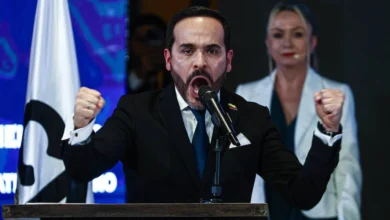
Within this bleak global landscape, the political trajectories of Brazil under Jair Bolsonaro and Serbia under Aleksandar Vučić’s ruling apparatus became flashpoints for the global struggle between democratic norms and illiberal governance. Both leaders mastered the art of grievance-based politics, leveraging social media algorithms, appealing to traditionalist and nationalist identities, and consistently casting doubt on the integrity of electoral systems to build and maintain power.
Consequently, when opposition forces in both nations managed to mobilize broad-based coalitions to defeat these populist figures or significantly curtail their legislative dominance, it sent a wave of cautious optimism through the international community. Scholars of democratization immediately began dissecting these outcomes to identify replicable strategies. Did success stem from uniting fractured centrist and leftist factions? Did it rely on aggressive grassroots mobilization, or effective legal pushback against disinformation campaigns? While answers vary between the South American giant and the Balkan state, the overarching narrative remains the same: far-right hegemony is not invincible, but defeating it requires a disciplined, multi-front strategy.
Chronology of Recent Political Upheavals
To understand the current political landscape in Brazil and Serbia, it is necessary to examine the timeline of events leading up to these pivotal electoral cycles.

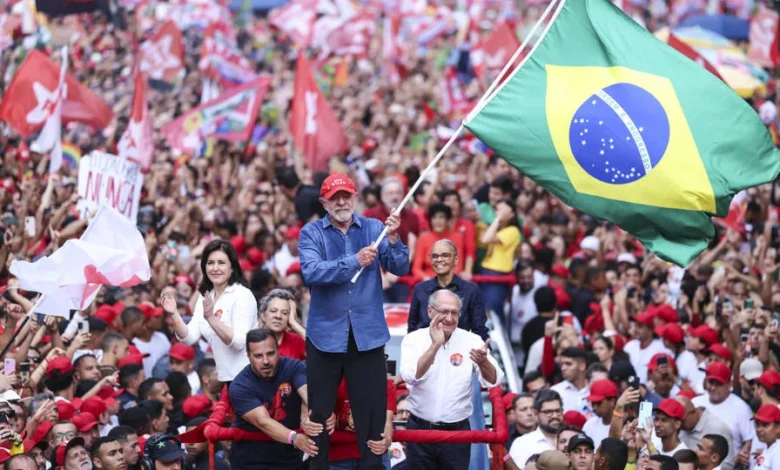
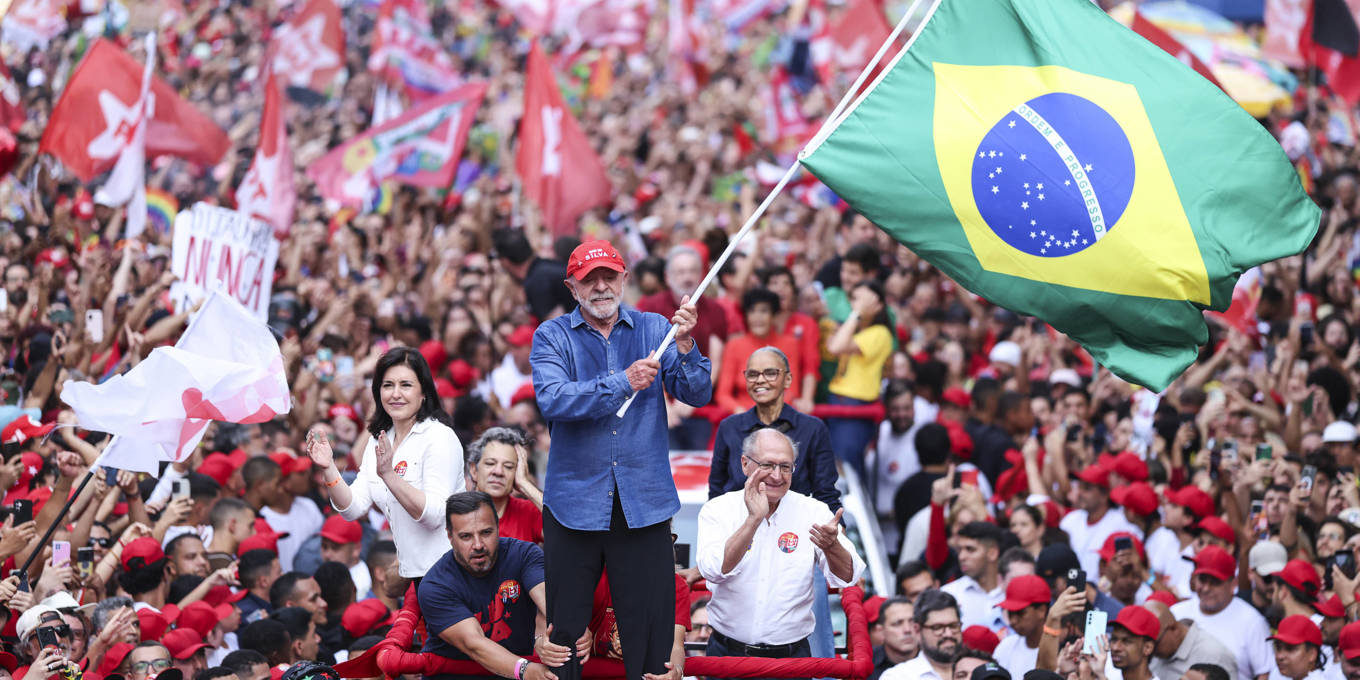
In Brazil, the friction began well before the 2022 general elections, which saw the return of Luiz Inácio Lula da Silva to the presidency. Throughout his tenure, Jair Bolsonaro openly criticized the nation’s electronic voting system, attacked the independence of the Federal Supreme Court (STF), and managed the COVID-19 pandemic in a manner that drew international condemnation. The polarization culminated in a fiercely contested campaign characterized by unprecedented levels of political violence and targeted disinformation. Following Lula’s narrow runoff victory in October 2022, the tension did not dissipate; it spilled over into early 2023 with the storming of government buildings in Brasilia—an event eerily reminiscent of the January 6 attack in the United States. Subsequent judicial investigations systematically targeted conspirators, disqualifying Bolsonaro from running for public office until 2030 and weakening his political inner circle ahead of subsequent municipal and regional ballots.
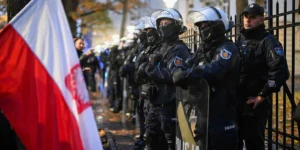
Meanwhile, in Serbia, Aleksandar Vučić and the Serbian Progressive Party (SNS) have maintained a dominant grip on state institutions, public media, and the economy since 2012. Serbia’s democratic backsliding has been a matter of intense concern for the European Union, which Belgrade formally aspires to join. The turning point in recent years came through a series of parliamentary and local elections characterized by intense opposition mobilization, allegations of voter transportation from neighboring entities, and widespread protests led by student groups and civic coalitions. Despite facing an uneven playing field heavily tilted toward the ruling party, opposition parties managed to secure critical victories in major urban centers, most notably Belgrade, and eroded the SNS’s absolute legislative monopoly. These local victories shattered the aura of invincibility surrounding Vučić’s regime, proving that persistent street-level activism coupled with unified electoral participation could crack an entrenched hybrid regime.
Quantitative Insights and Electoral Data
An examination of the data underlying these elections reveals the fragility of populist coalitions and the mechanics of their defeat.

In Brazil’s 2022 presidential runoff, Lula da Silva secured approximately 60.3 million votes (50.9% of the valid votes), narrowly edging out Bolsonaro, who garnered 58.2 million votes (49.1%). This razor-thin margin underscored a deeply divided nation, split geographically between the more prosperous, agribusiness-heavy center-south and the industrial, traditionally working-class northeast. Subsequent regional and municipal elections in the years following have shown a recalibration of the electorate; while right-wing figures retained localized strength, the monolithic nationalist wave receded, replaced by pragmatic transactional politics in many city councils.
In Serbia, electoral data highlights the urban-rural divide that characterizes many modern illiberal democracies. While the SNS maintains robust support in rural municipalities where state-controlled television is the primary source of news, urban centers like Belgrade have become epicenters of anti-establishment resistance. In recent municipal showdowns, opposition coalitions capitalized on voter turnout spikes of over 50% in major cities—a significant jump compared to previous cycles. This surge in civic participation effectively overwhelmed the electoral engineering historically deployed by the ruling party, proving that high turnout is the single most effective antidote to systemic electoral manipulation.
Furthermore, public opinion data compiled by international democracy watchdogs, such as Freedom House and the V-Dem Institute, indicates that while Brazil and Serbia have clawed back some democratic ground, both nations remain fragile. Brazil’s institutional score continues to recover from the erosion of judicial independence, while Serbia’s status remains classified as a "Transitional or Hybrid Regime," reflecting ongoing state capture of media outlets and pressure on civil society organizations.

Official Responses and Stakeholder Reactions
The shifting political dynamics in Brasilia and Belgrade have triggered distinct responses from domestic stakeholders and international partners.
In Brazil, the federal government has prioritized the restoration of institutional norms and international environmental credibility. Re-engaging with global climate frameworks and rebuilding diplomatic ties with North American and European partners have been central pillars of Lula’s foreign policy. Domestic allies have praised the judiciary’s aggressive stance against actors who attempted to subvert constitutional order, viewing it as a necessary defense of democracy. However, critics from the conservative opposition argue that these judicial measures constitute overreach and political persecution, warning that weaponizing the courts against populist figures sets a dangerous precedent for future administrations.
In Serbia, the reaction from the ruling elite has been a mix of defiant public dismissal and tactical concessions. President Vučić has routinely accused Western governments and non-governmental organizations of orchestrating protests and funding opposition groups to destabilize the state. Yet, behind closed doors, the regime has occasionally adjusted its posture to appease European Union mediators, recognizing that complete international isolation could cripple Serbia’s economy, which relies heavily on foreign direct investment and trade integration with Western Europe.

Civil society organizations in Serbia, such as the Center for Research, Transparency and Accountability (CRTA), have played a pivotal role in documenting electoral irregularities. Their rigorous monitoring reports have provided international bodies, including the Organization for Security and Co-operation in Europe (OSCE), with the empirical evidence needed to pressure Belgrade into implementing electoral reforms.
Broader Implications for the Global Democratic Order
The experiences of Brazil and Serbia offer a blueprint—and a cautionary tale—for pro-democracy movements globally.
First, they demonstrate that defeating populism requires broad ideological coalitions. In both countries, victory or significant political gain was only possible when disparate political factions—ranging from the center-left to traditional conservatives—set aside ideological purity to unite around a singular objective: the preservation of constitutional governance and the rule of law.

Second, the electoral outcomes highlight the critical importance of resilient domestic institutions. Independent judiciaries, professional electoral management bodies, and investigative journalism act as the primary lines of defense against authoritarian encroachment. When these institutions stand firm, they can withstand pressure from the executive branch and enforce accountability.
Finally, these developments serve as a reminder that democracy is never a finished project. The newly empowered democratic forces in Brazil and Serbia inherited economies plagued by inflation, societies fractured by cultural warfare, and administrative apparatuses deeply penetrated by partisan loyalties. Addressing these systemic vulnerabilities requires more than winning an election; it demands sustained policy delivery, economic inclusion, and civic education to rebuild public trust in democratic systems. As other nations prepare for high-stakes electoral showdowns in the coming years, the lessons learned from the trenches of Brasilia and Belgrade will undoubtedly resonate across the global stage.