Unlocking Intraday Market Dynamics: How Event Conditioned Trading Signals are Reshaping Algorithmic Strategies

In the modern landscape of quantitative finance, market participants constantly seek methods to extract actionable intelligence from high-frequency price movements. Traditional technical indicators typically describe the immediate characteristics of a single price bar, leaving traders vulnerable to noise and false breakouts. To address these limitations, algorithmic developers are increasingly turning to event-conditioned trading signals. By establishing a temporal separation between a specific market occurrence and the subsequent trade execution, quantitative platforms are enabling a more contextualized approach to intraday strategy development.
The Mechanics of Event-Conditioned Signals
An event-conditioned trading signal operates on a fundamental principle: market behavior observed during a specific window often dictates subsequent price action later in the session. Unlike conventional indicators that evaluate the current bar, event-aware frameworks capture data from a designated historical event and carry that information forward.
This methodology is anchored by advanced programming functions, such as the proprietary "Value When" tool introduced in algorithmic software packages like Build Alpha version 3.1. The function requires two primary inputs: a condition and a value. When the specified condition evaluates as true, the system records the corresponding value. On all subsequent bars, the function preserves this recorded figure until the condition is met again.
This approach allows traders to ask complex questions that standard indicator libraries cannot easily process. For example, a system can capture the open price or closing range at a precise timestamp—such as 9:30 AM or 4:00 PM—and utilize that historical reference point to inform trade setups hours later. The core design principle relies entirely on time separation: the event occurs within one distinct timeframe, while the trade execution takes place in another.
Practical Frameworks and Intraday Setups
To demonstrate the efficacy of this approach, quantitative researchers have outlined several empirical setups tailored to United States equity index trading hours, spanning from the 9:30 AM market open to the 5:00 PM close. Each setup illustrates how historical intraday context can filter or trigger subsequent market entries.
- Prior Day Momentum Translation: This setup examines whether late-day strength carries into the following morning session. By storing the closing prices at 4:00 PM and 5:00 PM on the previous day, the system evaluates whether the last hour closed higher. Because these values are locked before the market opens, the comparative condition is fully established prior to the opening bell, allowing traders to execute positions during the first hour of the new session.
- Opening Range Projections: By evaluating whether the opening range—measured between 9:30 AM and 10:00 AM—closes higher, traders can project potential momentum into the final hour of the trading day. This information is finalized by 10:30 AM, providing a multi-hour buffer before the afternoon trade execution window opens.
- Midday VWAP Positioning: Tracking whether price action holds above or below the Volume Weighted Average Price (VWAP) at the 12:00 PM midday mark offers a clear indicator of institutional control during the first half of the session. Storing this metric allows systems to position themselves accordingly for the afternoon close.
- Volatility and Range Filtering: Advanced setups utilize event conditions as filters rather than standalone triggers. For instance, an Opening Range Breakout (ORB) strategy can be restricted to days where the current morning’s range exceeds the prior day’s final hour range, signaling an expansion in market energy and volatility.
- Proportional Volatility Scaling: Similarly, strategies can compare the opening range directly to the total daily range of the previous session. When the opening range constitutes a significant percentage of yesterday’s full range, it suggests that market volatility is broadening, providing breakout trades with sufficient room to trend.
Integration and Signal Libraries
As quantitative development tools evolve, developers are gaining access to extensive pre-built signal libraries containing over 160 event-conditioned variables. These libraries categorize metrics into last-hour signals, opening-range evaluations, body-to-range ratios, and time-specific market structure checkpoints spanning 30-minute intervals through the trading day.
Industry experts emphasize that event-conditioned signals rarely function as complete, standalone trading strategies. Instead, their primary value lies in providing robust contextual filters. Quantitative platforms allow traders to merge these event signals with traditional technical indicators, volume profiles, sentiment metrics, and macroeconomic data pools. Through genetic optimization algorithms, computer software can test millions of potential combinations to determine which signal pairings yield statistically significant performance metrics.
Furthermore, natural language processing tools, such as prompt-to-signal generators, now allow developers to articulate complex trading ideas in plain English. The underlying software translates these descriptions into executable code compatible with multiple scripting languages, including EasyLanguage, NinjaScript, Pine Script, and Python, bridging the gap between theoretical market observation and algorithmic deployment.
Rigorous Validation and the Search Space Challenge
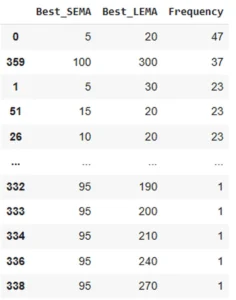
While the flexibility to optimize times, thresholds, and window lengths offers powerful customization, it also introduces significant statistical hazards. Testing hundreds of variations inevitably uncovers historical parameters that appear profitable purely by chance—a phenomenon known in quantitative finance as curve-fitting or data snooping.
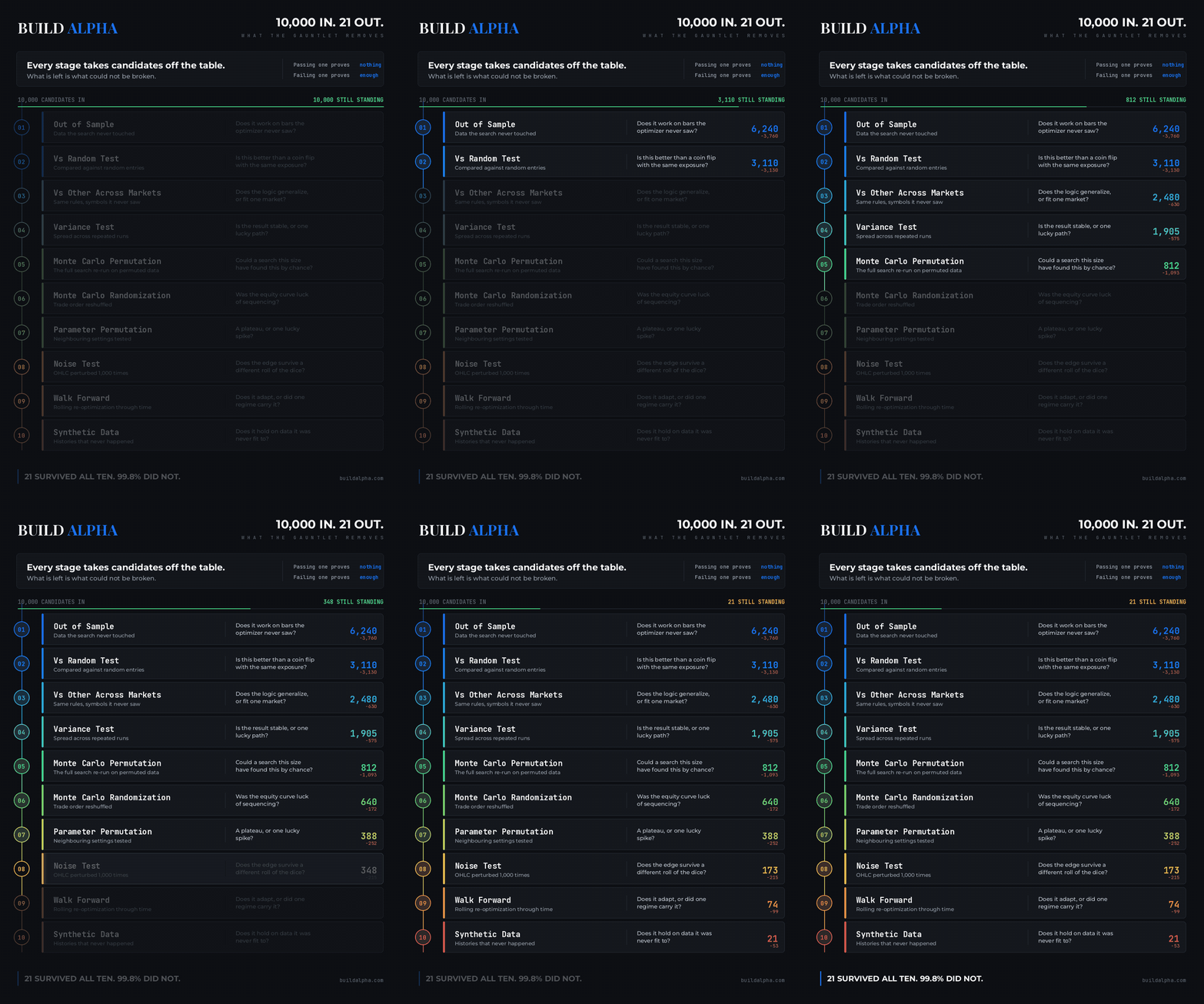
To mitigate this risk, professional algorithmic developers rely on rigorous validation frameworks. A genuinely robust event-conditioned signal must demonstrate stability across a wide plateau of nearby parameter values rather than isolated optimization peaks. Methodologies such as parameter permutation tests, noise testing, walk-forward analysis, and out-of-sample data partitioning are essential tools in the validation gauntlet. Most candidate strategies generated during automated searches fail these stringent robustness tests and are eliminated before ever reaching live deployment.
Broader Implications for Systematic Trading
The integration of event-conditioned signals into mainstream algorithmic toolkits reflects a broader industry shift toward more nuanced, context-aware market analysis. By bridging the temporal gap between distinct trading sessions and intraday milestones, quantitative researchers can better capture institutional behavior, liquidity shifts, and volatility expansions.
As computational power increases and natural language tools lower the barrier to entry for complex strategy development, the systematic exploitation of intraday market context is likely to remain a cornerstone of modern quantitative trading. However, the long-term viability of these strategies will continue to depend heavily on disciplined out-of-sample validation and strict adherence to statistical robustness standards.