The United States labor market is currently navigating a period of robust expansion and significant structural tightening, according to the latest figures released by the Bureau of Labor Statistics (BLS). As of November 2026, key economic indicators—ranging from nonfarm payroll growth to hourly wage increases—suggest an economy characterized by high demand for labor and a resilient workforce. This latest report provides a comprehensive snapshot of a job market that has effectively overcome the stagnation observed during the 2025-2026 transition period.
Chronology of Recent Labor Market Trends
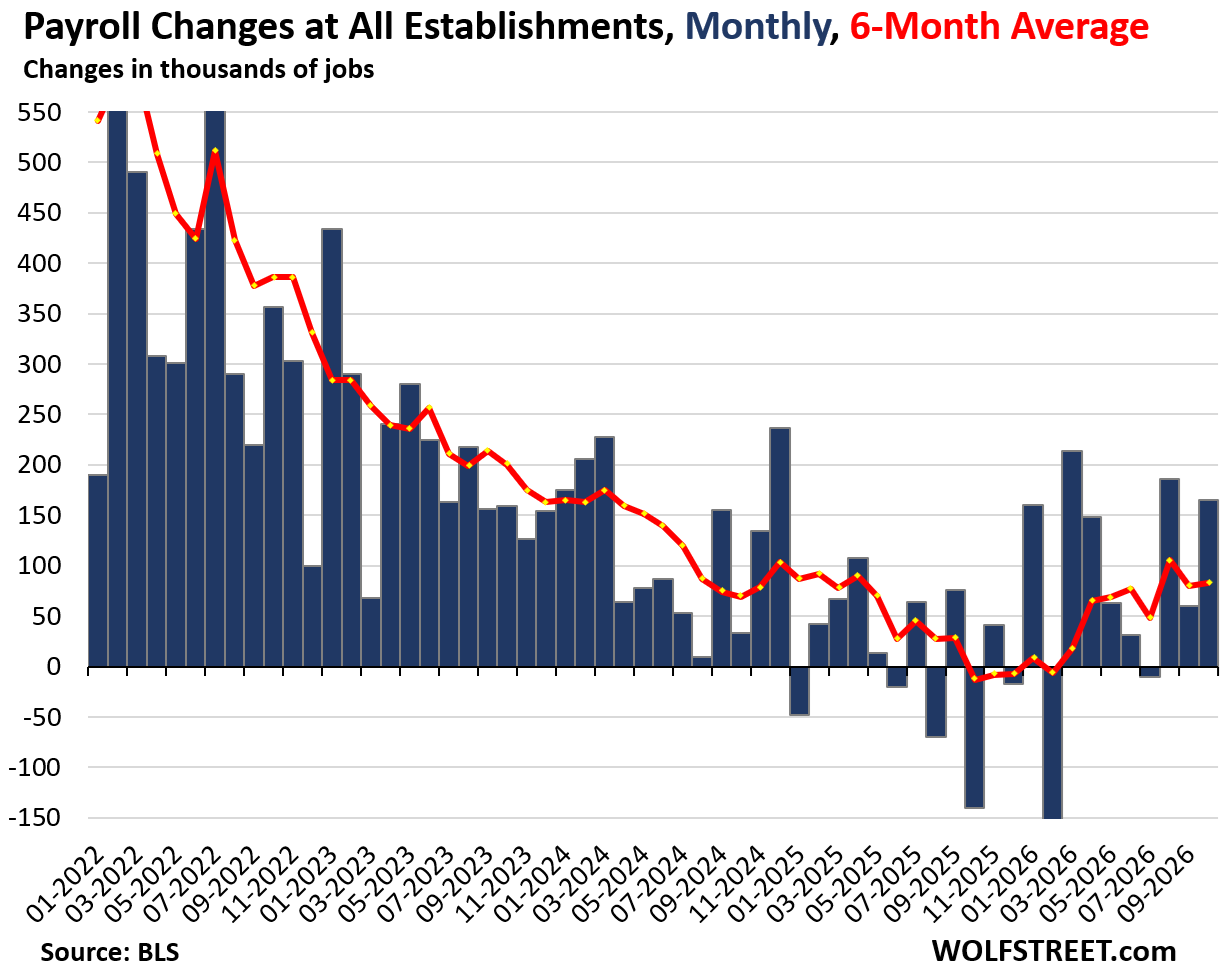
The current state of the labor market did not emerge in a vacuum. To understand the significance of the October 2026 data, one must look at the preceding eighteen months. Throughout 2025, the U.S. labor market experienced a pronounced "flat spot." During this period, nonfarm payroll growth stalled as private-sector job creation barely kept pace with the contraction in the public sector.
Beginning in early 2025, the federal government initiated a significant reduction in its workforce, shedding approximately 11%—or 328,000 positions—by the end of that year. Simultaneously, state-level employment declined as public university systems faced the impact of lower student enrollment rates, resulting in the loss of 46,000 state government jobs. This dual drag on employment, combined with the structural impact of an aging Baby Boomer generation exiting the workforce, created a period of lethargic growth. However, since the low point in late 2025, the trend has shifted decisively toward acceleration. The six-month moving average of payroll gains has climbed steadily, reaching a robust +83,000 jobs by the end of October 2026, signaling a consistent upward trajectory.
Breakdown of Employment Gains
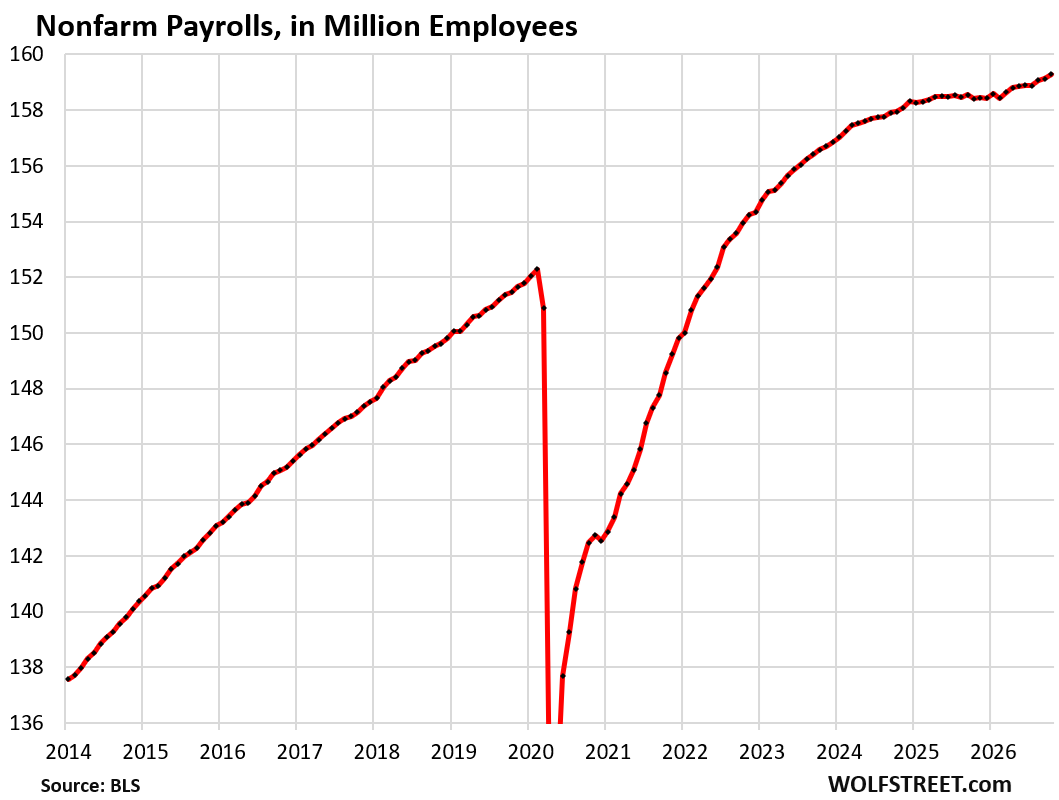
In October 2026, nonfarm payrolls surged by 165,000. This headline figure is bolstered by substantial upward revisions to the prior two months, reflecting a more optimistic economic reality than previously estimated. August payrolls were revised upward by 53,000, bringing the total for that month to 186,000, while September’s gains were increased by 31,000, settling at 60,000.
Total nonfarm employment has now reached a historic peak of 159.29 million. This milestone is particularly notable because it occurred despite the ongoing reduction in government-sector employment. The growth has been almost exclusively driven by the private sector, which has demonstrated a heightened capacity to absorb labor despite rising operational costs.
Wage Growth and Inflationary Pressures
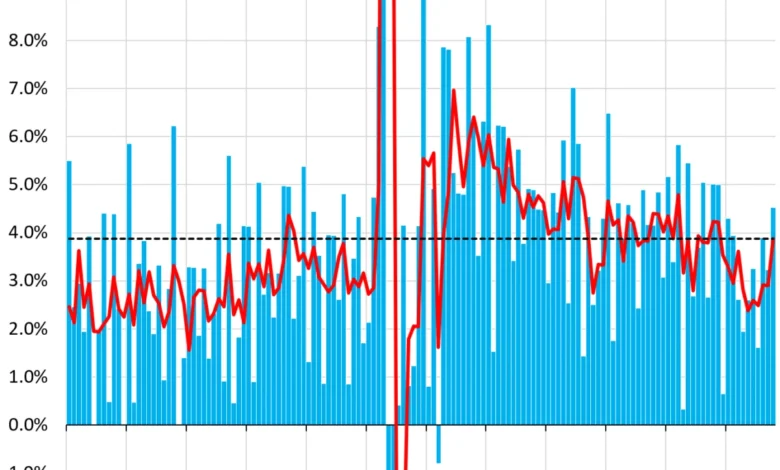
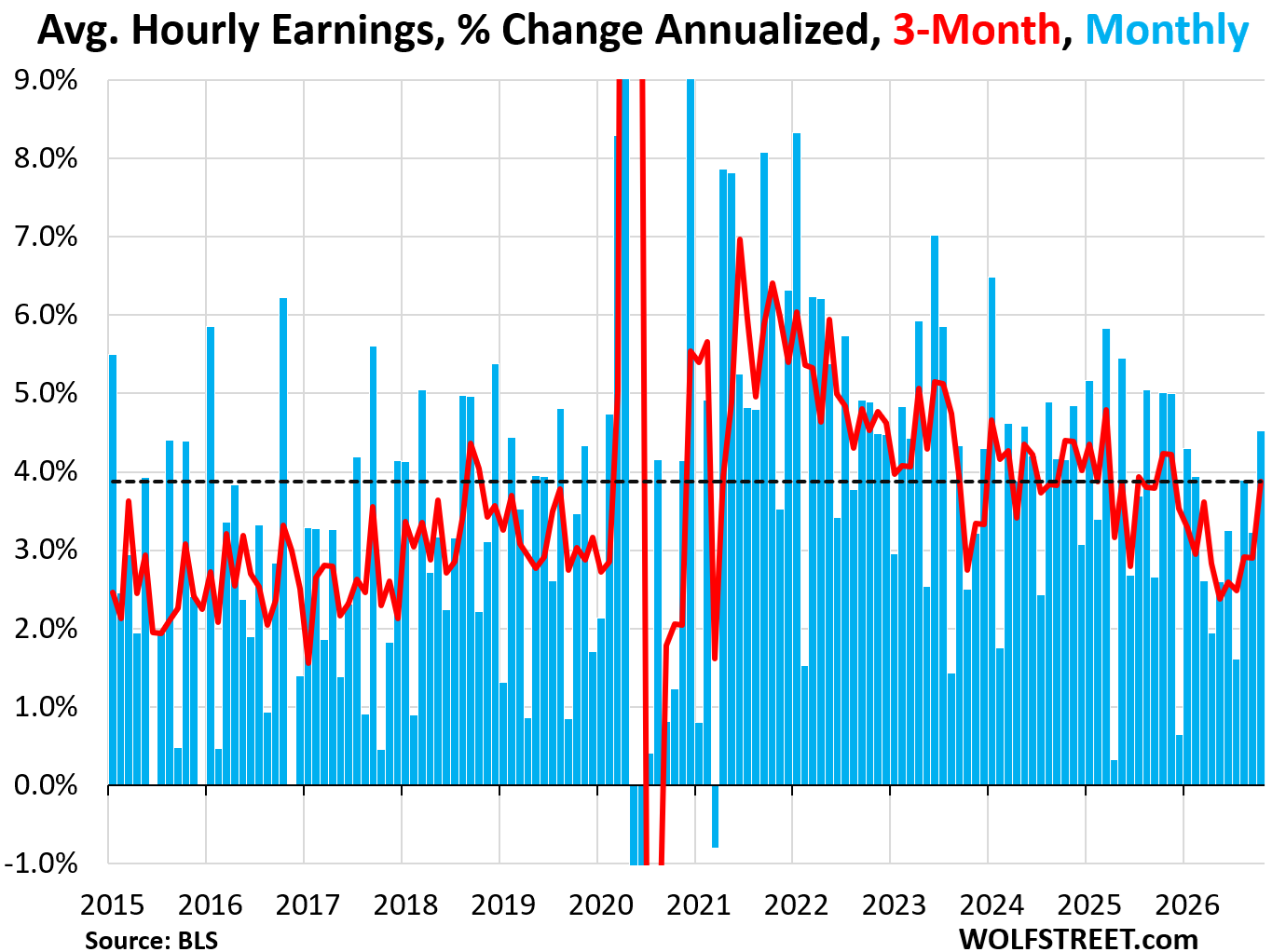
A critical component of the October report is the acceleration of average hourly earnings. Wages increased by 0.37% month-over-month, marking the most significant gain in nearly a year. On an annualized basis, the three-month trend for earnings growth hit 3.9%, the highest level in 11 months. Year-over-year, earnings rose by 3.1%.
These figures arrive at a complex juncture for the American consumer. While wage growth is healthy, it is currently struggling to outpace the rate of inflation, which has remained elevated throughout 2026. With CPI inflation measured at 3.7% year-over-year in September, the "real" purchasing power of the average worker has been under pressure. Economists note that this disconnect between nominal wage gains and the cost of living has been a primary driver of consumer sentiment, often reflected in broader social and political trends.

Workforce Participation and Unemployment Dynamics
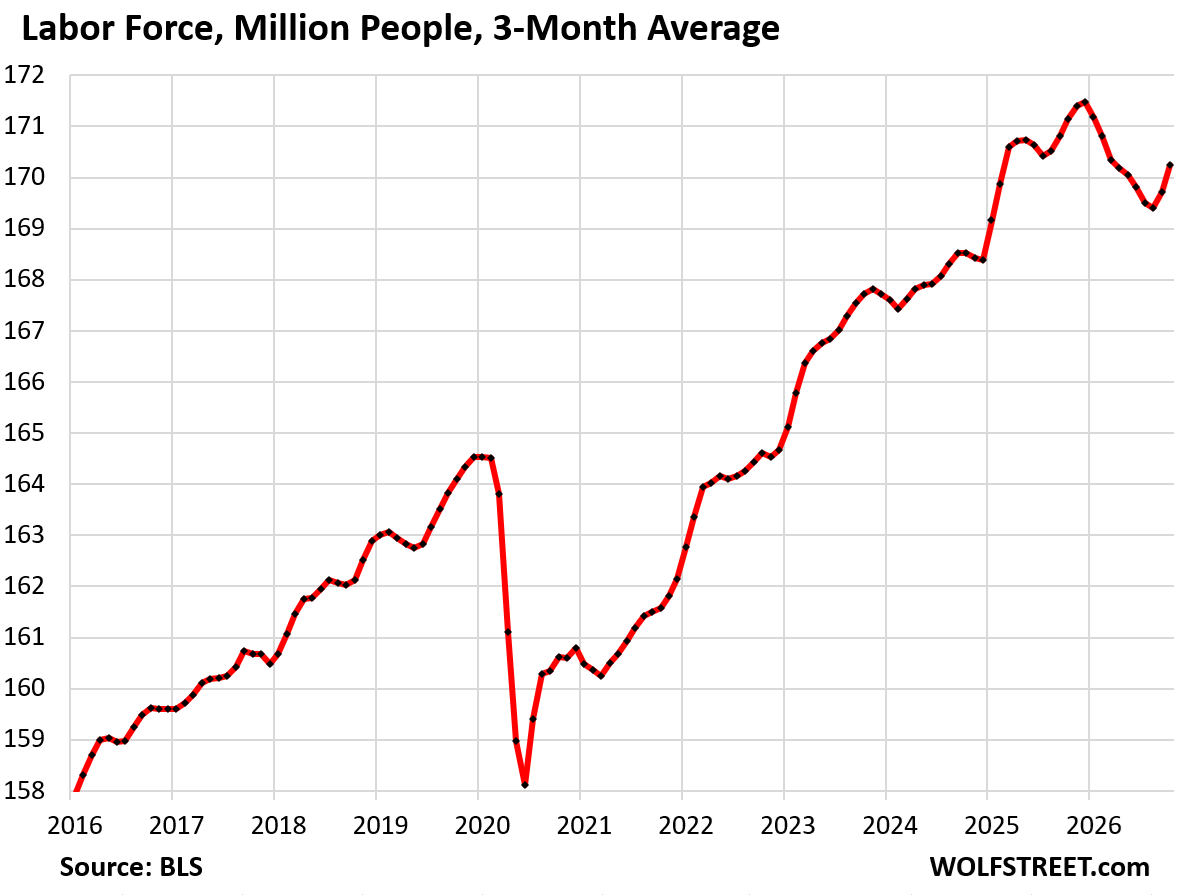
The labor force saw a significant influx in October, expanding by 421,000 individuals to a total of 170.68 million. This represents the third consecutive month of growth, with the labor force increasing by a combined 1.59 million people in that timeframe. This influx is a vital indicator of market health, suggesting that the labor market is successfully drawing in individuals who were previously on the sidelines.
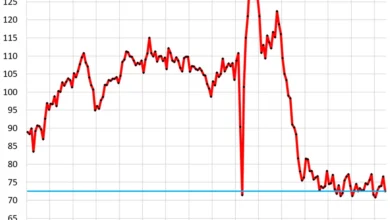
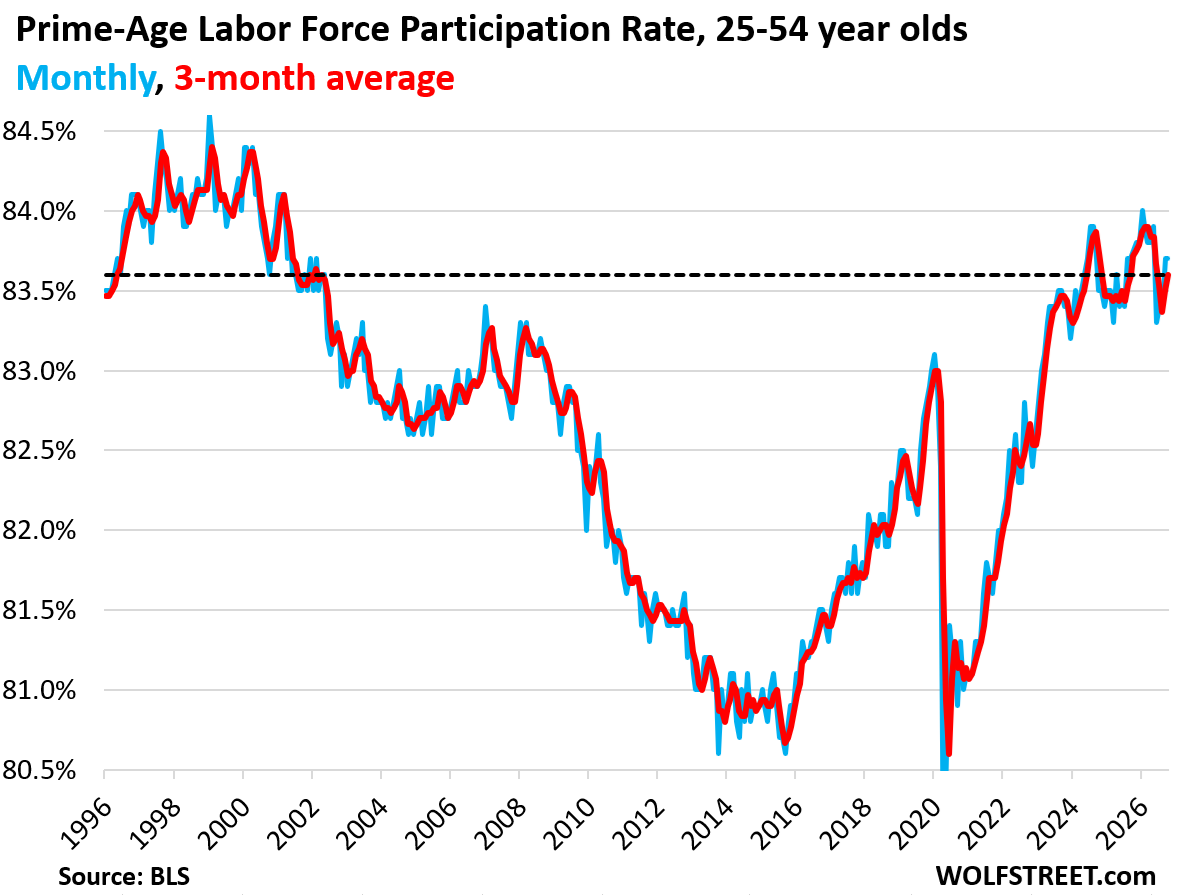
Perhaps the most telling metric is the prime-age labor force participation rate (ages 25–54), which held steady at 83.7% in October. This level of participation is the highest seen in over 24 years, effectively mirroring the intensity of the labor market during the height of the Dotcom era. By focusing on the 25–54 age bracket, analysts can strip away the noise created by Boomer retirements, revealing that the core engine of the American workforce is operating at near-maximal capacity.
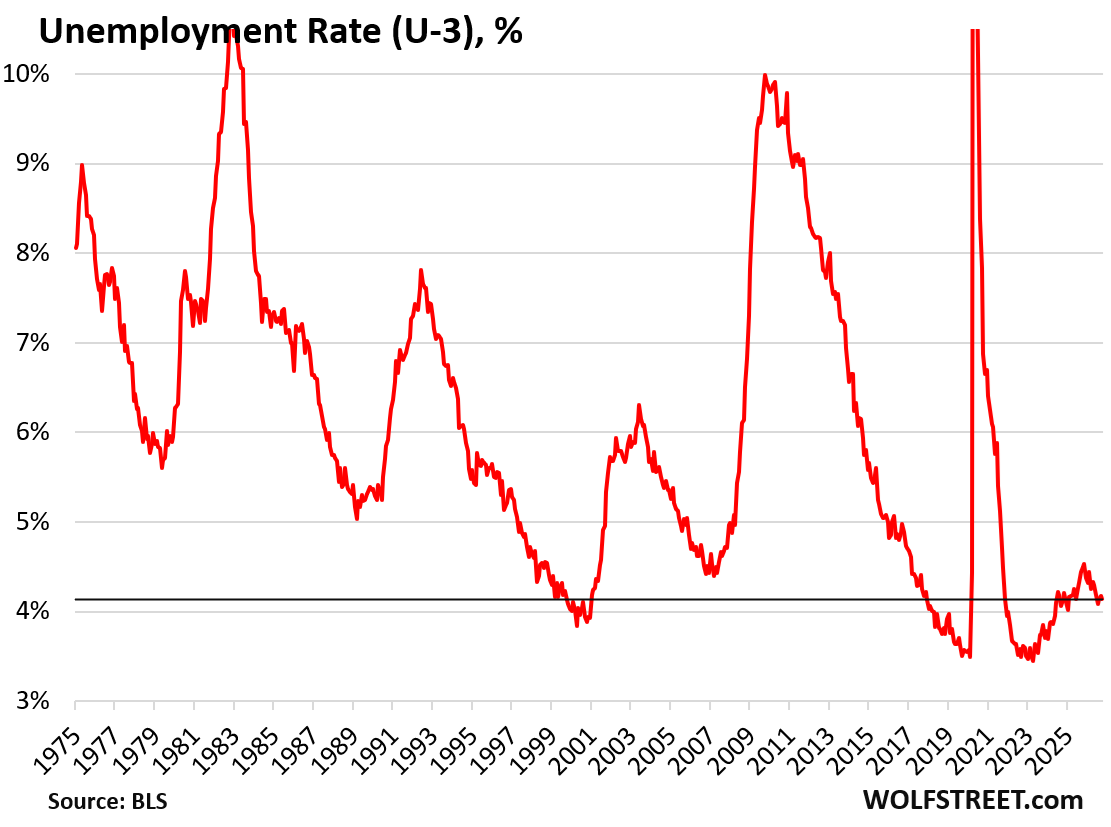
Meanwhile, the unemployment rate edged down to 4.14%. While statistical fluctuations are normal, this remains a historically low rate within a 50-year context. The number of unemployed persons actively seeking work currently stands at 7.07 million, a figure that, when viewed against the backdrop of total employment, confirms a market that is exceptionally tight.
Broader Context: JOLTS and Unemployment Insurance
The October employment report is corroborated by other high-frequency labor data. The Job Openings and Labor Turnover Survey (JOLTS) data released earlier this week revealed an uptick in the "quits rate," a reliable proxy for worker confidence. When workers quit, it is almost always to transition into a new, higher-paying role, indicating that the labor market is characterized by high mobility and a favorable environment for job seekers.
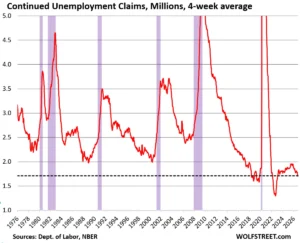
Furthermore, initial applications for unemployment insurance have reached lows not seen since the late 1960s. The four-week moving average of these claims reinforces the narrative that layoffs are minimal and that the risk of involuntary job loss remains at an all-time low.
Implications and Future Outlook
The implications of a labor market this tight are multifaceted. For employers, the primary challenge remains the competition for talent, which necessitates higher wage offers and, consequently, exerts upward pressure on prices. For the broader economy, the record-high participation rate among prime-age workers is an encouraging sign of long-term sustainability, as it suggests that the supply of labor remains responsive to economic opportunity.
However, the persistent gap between earnings growth and inflation remains a point of contention for policymakers. If wage growth continues to accelerate to match or exceed the 3.7% inflation rate, it may lead to a "wage-price" dynamic that complicates the Federal Reserve’s efforts to stabilize long-term price levels.
In summary, the United States labor market is in a position of significant strength. The transition from the stagnation of early 2025 to the current climate of widespread growth suggests a robust underlying economy. With the labor force expanding, the unemployment rate at historic lows, and the prime-age participation rate reaching 24-year highs, the fundamental metrics of the American labor market appear to be in their strongest position in a generation. Moving forward, the focus will likely shift toward whether this momentum can be sustained in the face of continued inflationary pressure and how fiscal policies may further influence the trajectory of public and private sector employment.
Related posts: