Build Alpha Introduces LLM Orchestrator to Automate Quantitative Strategy Generation and Hyperparameter Tuning

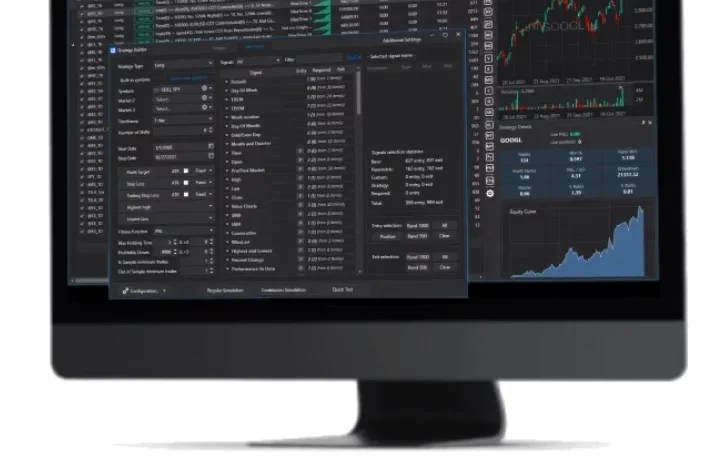
Quantitative trading platform Build Alpha has officially rolled out an advanced artificial intelligence capability known as the LLM orchestrator, a system designed to autonomously supervise, direct, and optimize genetic algorithms during the financial strategy development process. Built to bridge the persistent gap between manual quantitative research and raw algorithmic execution, the optional feature—marketed as AutoTune—allows large language models from major providers to dynamically adjust the operational boundaries of automated trading strategy searches in real time.
The integration addresses a fundamental bottleneck that has historically plagued systematic traders: the labor-intensive nature of hyperparameter tuning. While genetic algorithms have long excelled at optimizing parameters within a predefined search space, they remain fundamentally constrained by initial human inputs. If a profitable trading regime or optimal signal combination lies outside the initially configured parameters, traditional systems will fail to locate it, regardless of how long simulations run. The introduction of an orchestration layer attempts to solve this structural limitation by shifting the AI’s role from a passive advisor to an active, self-correcting supervisor.
Background and the Evolution of Automated Trading Research
For decades, quantitative finance has relied on brute-force computational methods, such as genetic algorithms, to evolve trading strategies. These algorithms mimic natural selection, iteratively breeding and mutating technical rules, position-sizing methods, and risk-management parameters to maximize a specific fitness function, such as the Sharpe ratio, Sortino ratio, or compound annual growth rate (CAGR). However, human researchers have always been required to manually define the search space—choosing which technical indicators to include, establishing lookback boundaries, and interpreting performance plateaus before manually reconfiguring the software for subsequent runs.
This manual workflow created an inherent speed limit on institutional and retail research alike. A quantitative researcher might spend days analyzing simulation logs, identifying convergence plateaus, and adjusting constraints before launching a new batch of tests.
The Build Alpha integration seeks to compress this timeline by utilizing commercial and open-weight large language models to automate the feedback loop. By connecting directly to local application programming interface (API) credentials supplied by the user—supporting providers such as Anthropic, OpenAI, Google, xAI, and others—the orchestrator continuously reads optimization telemetry, diagnoses performance stagnation, and modifies search parameters without human intervention.
Core Mechanics: Inside the Box Versus Picking the Box
The functional architecture of Build Alpha’s AutoTune feature relies on a distinct separation of computational duties. The genetic algorithm continues to handle micro-level optimization, searching intensively inside the box of established constraints. Meanwhile, the LLM orchestrator operates at a macro level, tasked with picking the box.
When an optimization run hits a performance plateau—signaling that the genetic algorithm has fully converged within a specific parameter subspace—the LLM intervenes. Rather than forcing the computational engine to exhaustively grind through diminishing returns, the orchestrator re-evaluates the broader search space. It can alter hyperparameter configurations, adjust regime filters, shift timeframes, or completely redirect the evolutionary path toward more productive market regions.
Crucially, the orchestrator is not limited to selecting from Build Alpha’s existing library of over 7,000 built-in price action, volume, volatility, macroeconomic, and alternative data signals. Mid-session, the model can synthesize and invent entirely new trading signals. If the orchestrator determines that a novel, custom-calculated volatility-adjusted breadth metric could provide an informational edge during a specific market regime, it writes the underlying signal definition and submits it directly to the genetic algorithm.
These AI-generated signals are treated as first-class components within the software’s validation framework. They must pass the exact same rigorous robustness gates applied to standard indicators—including out-of-sample testing, walk-forward analysis, noise tests, and randomized benchmarking. Strategies incorporating these novel indicators can subsequently be exported into native code formats compatible with major execution platforms such as TradeStation, NinjaTrader, MultiCharts, MetaTrader 4 and 5, TradingView, Interactive Brokers, and Python environments.
The Self-Improving Loop and Persistent Cross-Session Memory
A primary criticism of modern artificial intelligence tools in financial research has been their isolated, transactional nature. Typical AI workflows conclude with the generation of qualitative insights or text-based suggestions, leaving the burden of execution, re-tooling, and validation entirely on the human user.
Build Alpha seeks to close this loop by establishing an autonomous feedback structure where insights instantly translate into automated software actions. The trader transitions from an active operator to an auditor, reviewing comprehensive decision logs after a simulation concludes.
Furthermore, the platform incorporates a persistent cross-session memory architecture designed to accumulate institutional knowledge over time. Most conversational AI models reset their context windows upon the termination of a session, forcing users to repeatedly provide background context. Build Alpha’s orchestrator avoids this limitation by writing structured summaries of every completed simulation to a local memory store.
When a simulation concludes, the LLM logs its operational reasoning—documenting which hyperparameter adjustments succeeded, which market regimes proved intractable, and which signal combinations yielded structural value. Each entry is tagged metadata-wise by asset class, timeframe, fitness function, and signal pool. When a user initiates a new research session weeks or months later, the orchestrator queries this local database using a proprietary similarity-scoring system. Consequently, new simulations do not start from a blank slate; they immediately inherit the cumulative lessons of past research, compounding the platform’s utility over time.
Security Architecture and Localized Key Management
In response to heightened institutional sensitivities regarding proprietary trading logic and data privacy, Build Alpha has implemented a localized API key management structure. The software does not proxy user traffic through an intermediate corporate server, nor does it retain user credentials on external cloud infrastructure.
Traders supply their own API keys from their preferred AI providers, which are stored securely on the local machine. Build Alpha makes direct calls to the respective provider’s endpoints, ensuring that proprietary strategy constraints and performance data remain strictly confidential. Additionally, token operational costs are kept minimal because the language models process compact, structured performance summaries rather than massive raw bar-data arrays or extensive trade logs.
Verification, Robustness Testing, and Prop Firm Compliance
Despite the introduction of advanced autonomous orchestration, platform developers emphasize that the AI cannot circumvent existing validation safeguards. The LLM functions strictly as a search director rather than an infallible oracle of alpha.
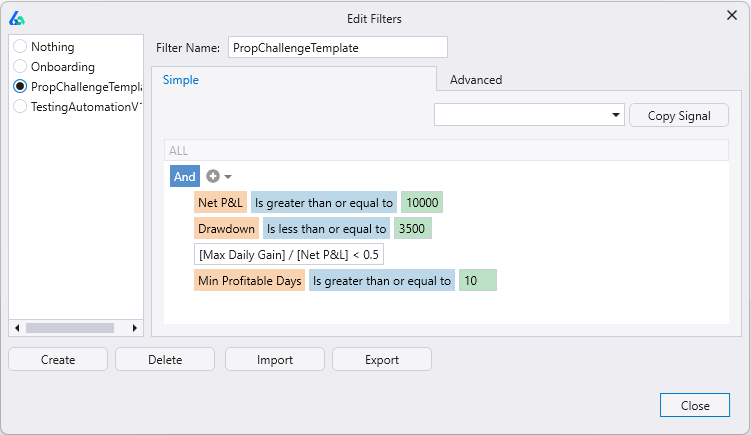
All candidate strategies generated during an orchestrated session remain subject to Build Alpha’s established suite of robustness tests. This includes strict adherence to user-defined proprietary trading firm (prop firm) constraints—such as daily drawdown limits, maximum allowable losses, profit targets, and consistency rules. If a model attempts to steer the genetic algorithm toward configurations that violate these parameters, the rules of the underlying platform override the suggestion, ensuring that only compliant, thoroughly tested strategies emerge from the pipeline.
Implications for Systematic Quantitative Research
Industry analysts note that tools like Build Alpha’s LLM orchestrator represent a significant maturation in how machine learning is applied to financial engineering. By automating the tedious administrative overhead of hyperparameter tuning and search-space management, systems of this caliber allow independent quantitative researchers and small prop trading firms to scale their research operations significantly.
Rather than replacing human oversight, automated orchestration reallocates human capital toward higher-level tasks—such as designing overarching economic hypotheses, defining novel fitness metrics, and structuring appropriate risk parameters. As computational power and algorithmic reasoning continue to advance, the integration of autonomous orchestration into systematic trading workflows highlights a broader
industry trend toward machine-speed research and development in modern asset management.