Backtesting ICT and Smart Money Concepts: Bringing Quantitative Rigor to Modern Retail Trading Strategies

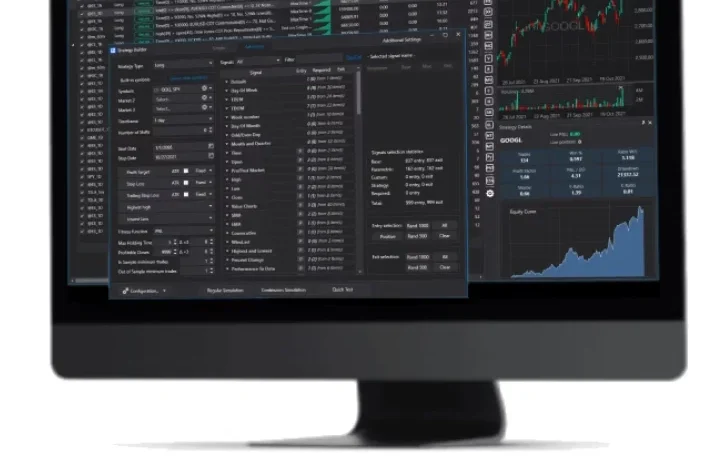
The debate over the validity of Inner Circle Trader (ICT) and Smart Money Concepts (SMC) has long divided the retail trading community. While millions of participants across forex, futures, and crypto markets rely on terms like order blocks, fair value gaps, and liquidity sweeps, traditional quantitative analysts have often dismissed these methodologies as vague, discretionary narratives. However, recent developments in quantitative software architecture are bridging this divide, allowing traders to systematically evaluate these popular chart patterns using rigorous mathematical frameworks.
Background Context and the Rise of SMC
Developed largely through the extensive educational content of Michael Huddleston—known widely as Inner Circle Trader—and subsequently expanded by the broader retail trading community under the umbrella of Smart Money Concepts, these techniques have achieved unprecedented popularity. Huddleston’s primary digital channels boast over 1.8 million subscribers, and variations of SMC vocabulary are now ubiquitous across online trading forums and proprietary trading firm ecosystems.
For years, institutional and quantitative desks remained skeptical of these methods, pointing to a lack of empirical validation. Discretionary traders often describe market behavior using qualitative phrases—such as "institutional order flow," "market manipulation," or "market sentiment"—making it difficult to separate genuine statistical edge from confirmation bias. Yet, a deeper examination of the geometry underlying SMC reveals that many of its core tenets are not based on sentiment at all, but rather on explicit, rules-based spatial relationships between price bars, highs, lows, and closing prices.
Translating Discretionary Patterns into Quantitative Rules
To subject ICT and SMC methodologies to data-driven scrutiny, analysts must first strip away subjective interpretations and convert visual patterns into precise mathematical algorithms. For instance, a bullish Fair Value Gap (FVG) is formally defined as a three-bar sequence where the low of the most recent bar sits strictly above the high of the bar two periods prior. This leaves a quantifiable, untraded price range that can be tracked across historical datasets.
Similarly, a bullish liquidity sweep occurs when price breaches a prior local low before reclaiming that level on the exact same bar. Break of structure (BOS) patterns—representing momentum and trend continuation—rely on identifying confirmed swing highs where a bar’s price range exceeds surrounding pivots.
A critical technical challenge in coding these rules involves overcoming lookahead bias, particularly regarding swing highs. In standard charting software, a fractal pivot is often defined as a bar higher than a specific number of preceding and succeeding bars ($N$). Consequently, an unverified indicator will draw the pivot point immediately, inadvertently utilizing future data that was unavailable to a trader in real time. Rigorous algorithmic implementations must therefore build in an $N$-bar confirmation delay, ensuring that historical backtests reflect actual trading conditions rather than hindsight perfection.
Overcoming Ambiguity with Memory Functions
Standard technical indicator libraries typically rely on rolling windows, such as a 20-period moving average or a 50-bar highest high. However, Smart Money Concepts frequently require price memory—the ability to reference a specific price level established by an event in the past, regardless of how many bars ago it occurred.
To address this limitation, advanced quantitative platforms utilize event-anchored memory functions, such as the EventPrice primitive. By pairing a specific condition with a value to remember, algorithms can store price boundaries dynamically. Every time the condition is met, the system updates its stored value; otherwise, it retains the previous level until a subsequent event occurs. This mechanism allows developers to seamlessly operationalize concepts like unmitigated order blocks, gap boundaries, and swept liquidity levels.
Furthermore, professional backtesting frameworks emphasize the normalization of size thresholds. Rather than hardcoding fixed point values or tick counts—which can distort test results as volatility regimes shift over time—analysts express spatial thresholds as multiples of the Average True Range (ATR). This normalization ensures that a Fair Value Gap identified during periods of low volatility in 2017 maintains a consistent structural meaning relative to volatility spikes in subsequent years, preserving the integrity of multi-decade historical evaluations.
The Necessity of Comprehensive Validation Suites
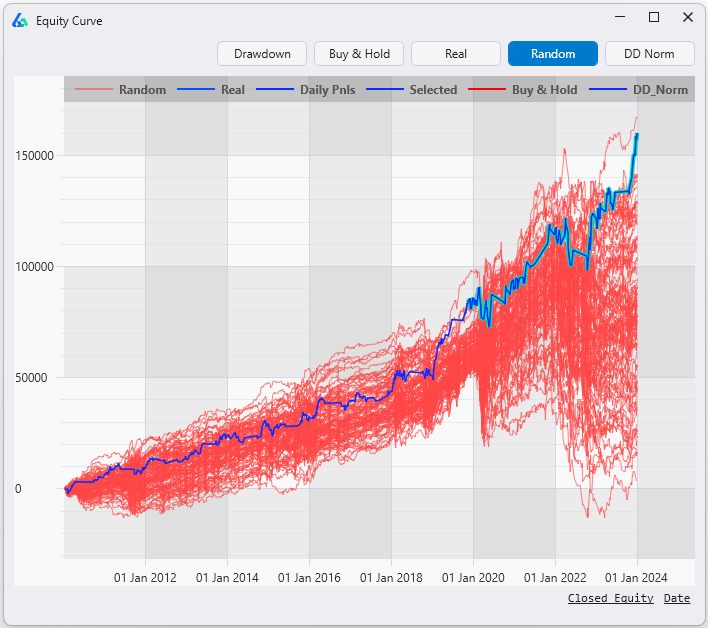
Obtaining a single profitable equity curve from a backtested Fair Value Gap strategy offers limited reassurance regarding its future viability. Because quantitative models feature numerous adjustable parameters—including gap size thresholds, ATR multiples, time-of-day session filters, and stop-loss placements—the risk of data snooping and curve-fitting is exceptionally high. With enough degrees of freedom, an analyst can easily engineer a profitable historical simulation from entirely random price data.
To separate a genuine market anomaly from statistical noise, industry-standard robustness protocols must be applied. These validation suites typically incorporate several rigorous stress tests:
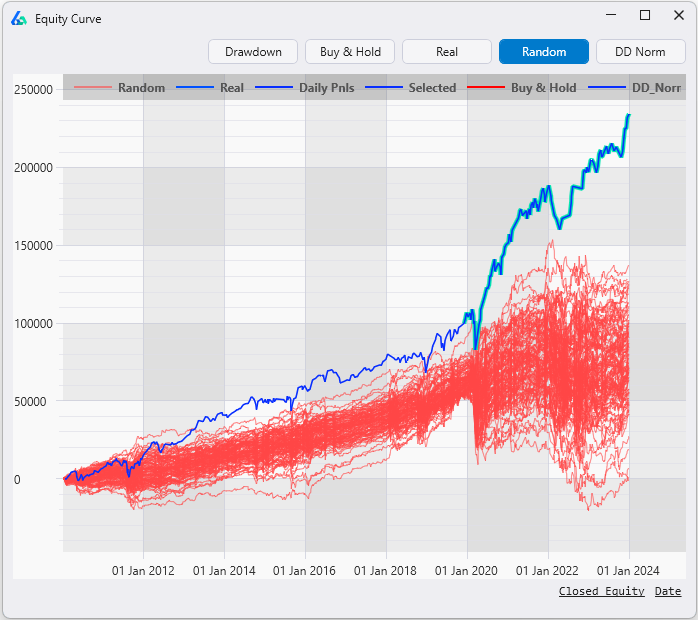
- Vs Random Benchmarking: Compares the performance of the strategy against a distribution of random market entries featuring identical trade counts and holding periods. If the SMC strategy fails to outperform a coin toss with matched characteristics, the pattern holds no true predictive edge.
- Noise Testing: Introduces minor perturbations into the historical price data to evaluate whether the strategy’s profitability collapses under slight variations.
- Monte Carlo Permutation Tests: Estimates the statistical significance of the results under the null hypothesis of no edge, generating empirical $p$-values.
- Walk-Forward Optimization: Assesses whether parameter values optimized on historical in-sample data maintain their efficacy on out-of-sample datasets.
Broader Market Implications and Future Outlook
The integration of Smart Money Concepts into institutional-grade backtesting software signifies a broader evolution in retail and quantitative trading. By democratizing access to sophisticated rule-building tools and automated natural-language script generators—such as AI-driven trading assistants capable of translating plain-English descriptions into executable code—the technical barrier to entry for systematic strategy development continues to lower.
Ultimately, quantitative analysis does not inherently validate or invalidate ICT and SMC as monolithic philosophies. Instead, it transforms broad conceptual narratives into precise, falsifiable hypotheses. While many specific rule configurations will inevitably fail rigorous validation testing, the ability to empirically evaluate these strategies marks a significant departure from decades of unverified market lore, empowering traders to rely on verifiable data rather than speculation.