Navigating the complexities of high-volume cryptocurrency transactions through over-the-counter trading services


As the global cryptocurrency market matures from a retail-dominated landscape into a sophisticated institutional asset class, the mechanisms for executing large-scale trades have undergone a significant transformation. While public digital asset exchanges remain the primary interface for individual retail investors, a parallel, private infrastructure known as Over-the-Counter (OTC) trading has emerged as the industry standard for high-net-worth individuals, corporations, and institutional investment firms. This shift is primarily driven by the need for market efficiency, price stability, and enhanced privacy when moving substantial volumes of digital assets.
The Evolution of Digital Asset Liquidity
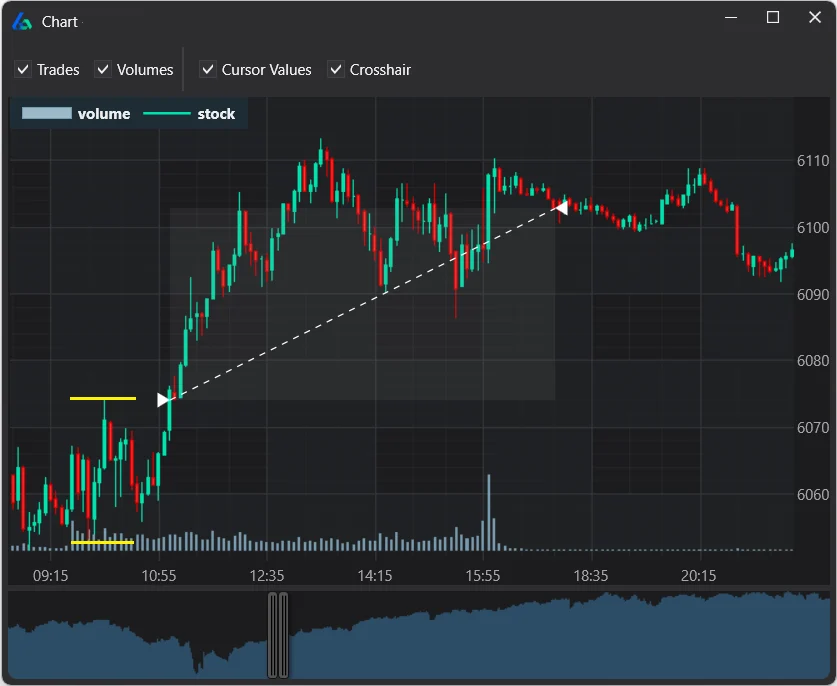
The concept of OTC trading is not novel; it is a cornerstone of traditional finance (TradFi), where it has long been used for bond and equity trades that are too large to be absorbed by public order books. In the context of cryptocurrencies, the rise of OTC desks traces back to the 2017 bull market. As institutional interest surged, it became clear that executing a million-dollar Bitcoin purchase on a retail exchange would cause "slippage"—a phenomenon where the size of the order consumes liquidity at various price points, causing the purchaser to pay an increasingly higher average price.
In the early years of Bitcoin, liquidity was fragmented, and the absence of institutional-grade OTC desks meant that large orders were often broken down into smaller pieces over weeks to avoid market disruption. By 2019, major financial institutions and specialized crypto-native firms began establishing dedicated desks, essentially acting as principal dealers. These entities utilize their own balance sheets or vast networks of liquidity providers to offer a "quoted price" to the buyer, effectively shielding the transaction from the volatility of public order books.
The Mechanics of OTC Transactions
Unlike a public exchange where a central limit order book (CLOB) matches buyers and sellers in real-time, OTC trading is a negotiated process. When a client approaches an OTC desk, the interaction begins with a request for a quote. The desk calculates the price based on current market depth, volatility, and the specific asset in question.
Once a price is agreed upon—usually locked in for a short period—the transaction occurs off-chain or via a settlement account. This process eliminates the "market impact" that would otherwise be visible to other traders. For instance, if an investment fund were to purchase 500 BTC on a public exchange, the sudden spike in buy volume would trigger algorithmic reactions, potentially causing a temporary price rally that would work against the fund’s interest. Through an OTC desk, that same 500 BTC is moved privately, ensuring that the market price remains stable and the client receives a predictable, fixed cost.
Comparative Analysis: Exchanges vs. OTC
The distinction between these two models is defined by the objective of the trade. Exchange trading is designed for speed, transparency, and accessibility. It is the ideal environment for retail traders looking to execute small, frequent transactions. However, when the transaction size reaches the six or seven-figure threshold, the limitations of public exchanges become apparent.
| Feature | Public Exchange | OTC Trading Desk |
|---|---|---|
| Visibility | Public (Order Book) | Private (Bilateral) |
| Pricing | Market-driven (Slippage risk) | Negotiated (Fixed) |
| Execution | Automated/Algorithmic | Consultative/Direct |
| Target User | Retail/Small-Scale | Institutional/Whale |
| Market Impact | High for large orders | Minimal |
Market analysts note that the growth of OTC services has contributed significantly to the "institutionalization" of crypto. By providing a stable entry and exit point for massive capital, these desks have encouraged hedge funds, family offices, and corporate treasuries to allocate portions of their balance sheets to digital assets without fear of destabilizing the market.
Regulatory Compliance and Security Standards
A common misconception regarding OTC trading is that it operates in a regulatory vacuum. On the contrary, reputable OTC desks operate under strict Know Your Customer (KYC) and Anti-Money Laundering (AML) mandates. Before any trade is executed, the provider must verify the identity of the counterparty and, in many cases, verify the source of funds.
This regulatory rigor is a response to global scrutiny from bodies such as the Financial Action Task Force (FATF). Consequently, modern OTC desks are often integrated with institutional-grade custody solutions. Assets purchased through an OTC desk are typically transferred directly to a secure, cold-storage wallet or a custodian, bypassing the security risks associated with holding large sums on a centralized exchange.
Identifying the Need for OTC Services
Determining when to move from an exchange to an OTC desk is a strategic decision for any investor. There is no industry-wide "minimum" entry point, but practitioners generally suggest that if a trade size is likely to represent more than 1% to 2% of the average daily volume of the asset on a major exchange, an OTC route is advisable to minimize slippage.
Investors should consider an OTC desk if they meet the following criteria:
- Capital Allocation: Businesses allocating treasury funds into Bitcoin or Ethereum to hedge against inflation.
- Privacy Concerns: Individuals or groups looking to execute large trades without signaling their intentions to the broader market.
- Price Certainty: Investors who require a fixed price for accounting, tax, or auditing purposes.
- Complexity: Investors who require specialized settlement, such as T+0 or T+1 delivery, or complex asset pairings.
The Role of Technological Integration
The modern OTC landscape has been further refined by the adoption of automated trading technologies. While the initial negotiation may be manual, many desks now utilize sophisticated trading bots and API-driven liquidity sourcing to ensure that the quotes provided are competitive with global market averages.
Industry leaders emphasize that transparency remains the most important factor for clients. When engaging a service provider, investors are encouraged to conduct due diligence on the firm’s settlement procedures. Reputable desks provide clear documentation on fee structures, which are often built into the spread—the difference between the buy and sell price—rather than being listed as a separate, opaque commission.
Future Implications for Market Stability
The rise of OTC trading serves as a shock absorber for the cryptocurrency market. By concentrating large trades in private channels, the retail market is shielded from the extreme volatility that would otherwise be caused by institutional rebalancing. This creates a dual-track ecosystem: a highly accessible, volatile retail market for individual participation, and a stable, high-volume OTC market for institutional capital.
As global regulatory frameworks continue to solidify, the integration between OTC desks and traditional banking sectors is expected to deepen. This will likely lead to even more efficient settlement times and reduced counterparty risk. For the average investor, this evolution indicates that the crypto market is moving toward a structure that mirrors the mature, highly efficient markets of the S&P 500 or the Treasury bond market.
Conclusion
For the modern investor, the choice between an exchange and an OTC desk is ultimately a matter of scale and strategy. While the allure of the DIY approach on a public exchange remains powerful, the professionalization of the market demands tools that can handle volume with precision.
By leveraging the private, efficient, and secure nature of OTC trading, investors can execute their long-term strategies without the interference of market slippage. As the digital asset space continues to integrate into the global financial architecture, understanding these professional-grade execution strategies is essential for any serious market participant. Whether one is managing a corporate treasury or executing a significant personal wealth allocation, the transition to OTC services represents a maturation in the investor’s journey, signaling a commitment to strategic, sustainable, and professional digital asset management.