The State of the American Household: A Comprehensive Analysis of the Federal Reserve’s Latest Survey of Consumer Finances

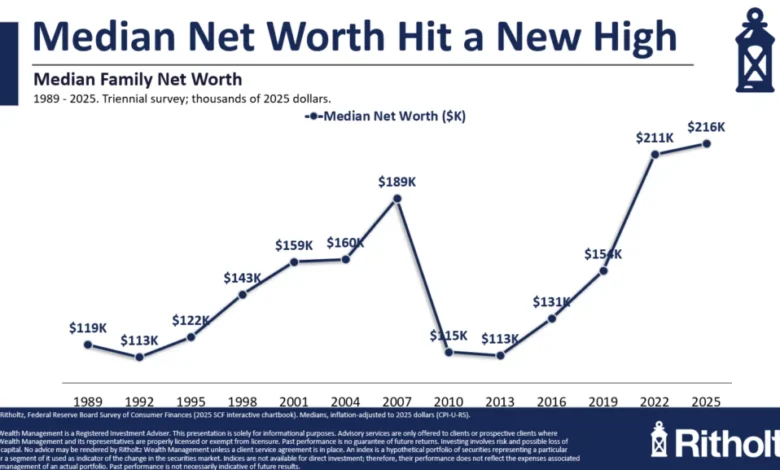
The Federal Reserve’s Survey of Consumer Finances (SCF), a triennial statistical powerhouse that serves as the gold standard for understanding the economic health of American households, has released its latest findings, offering a granular look at how families have navigated the tumultuous economic landscape of the mid-2020s. Conducted every three years, this comprehensive study provides a definitive record of the assets, liabilities, income, and demographic characteristics of U.S. families. By examining the trajectory of these metrics—all adjusted for inflation—economists and policymakers gain a clearer picture of the resilience and vulnerabilities inherent in the modern American economy.
A Chronology of Recovery: From Financial Crisis to Modern Resilience
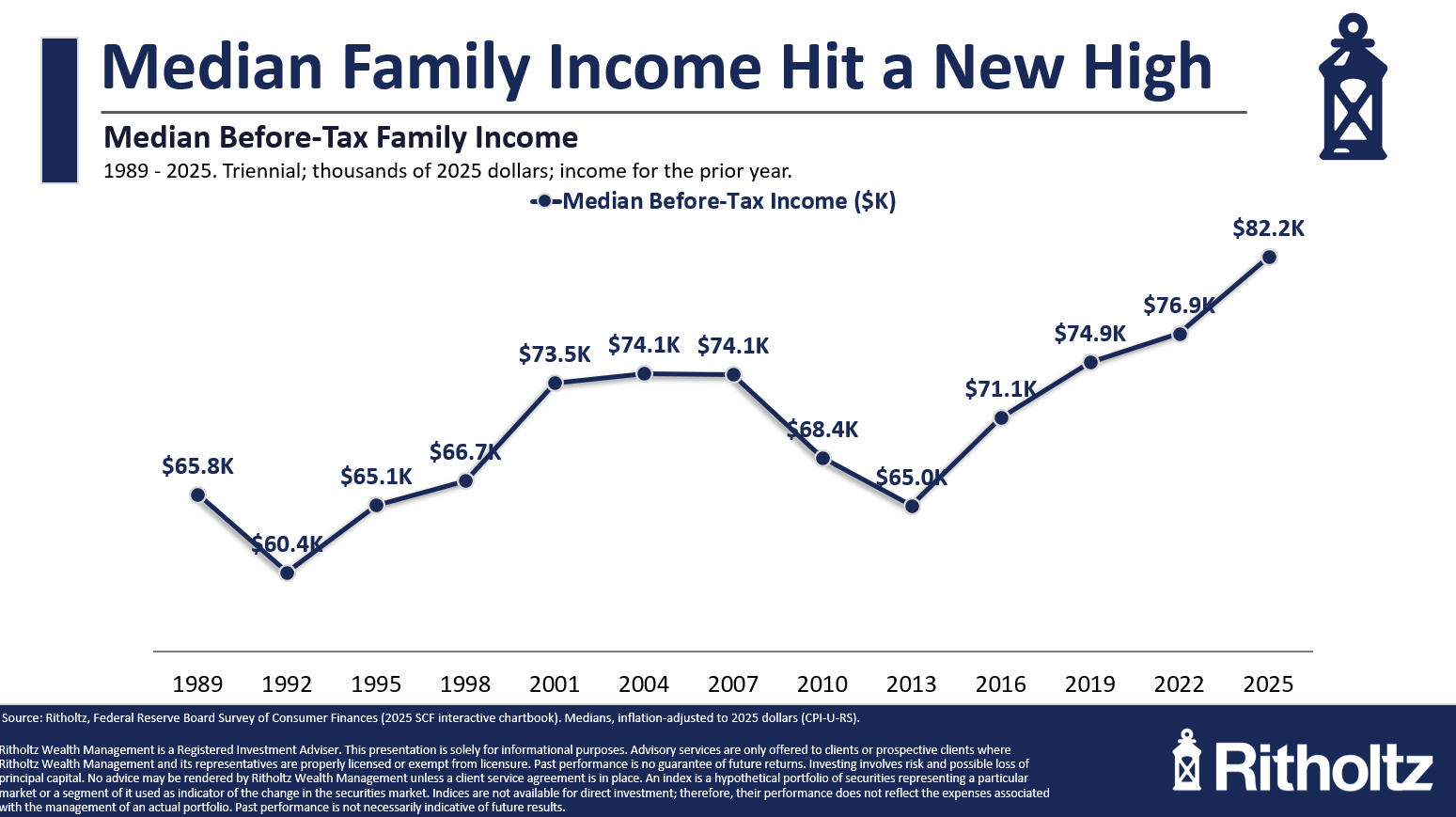
To understand the current economic position of the average American household, one must first look at the timeline of the last two decades. The period following the 2008 Great Financial Crisis was characterized by a profound "valley" in both income and net worth. Between 1989 and 2013, real median incomes remained stagnant, a period often described by economists as a "lost generation" for wage growth.
However, the data released in the most recent survey indicates a significant shift. Since the 2013 lows, inflation-adjusted median incomes have surged by nearly 30%. This rebound represents a departure from the historical stagnation that defined the turn of the millennium. The recovery was not linear; it was punctuated by the shock of the 2020 pandemic-era shutdowns and the subsequent inflationary environment, yet the aggregate trend line demonstrates a clear, upward trajectory in the real purchasing power of the median household.
Analyzing the Pillars of Household Wealth: Income and Net Worth
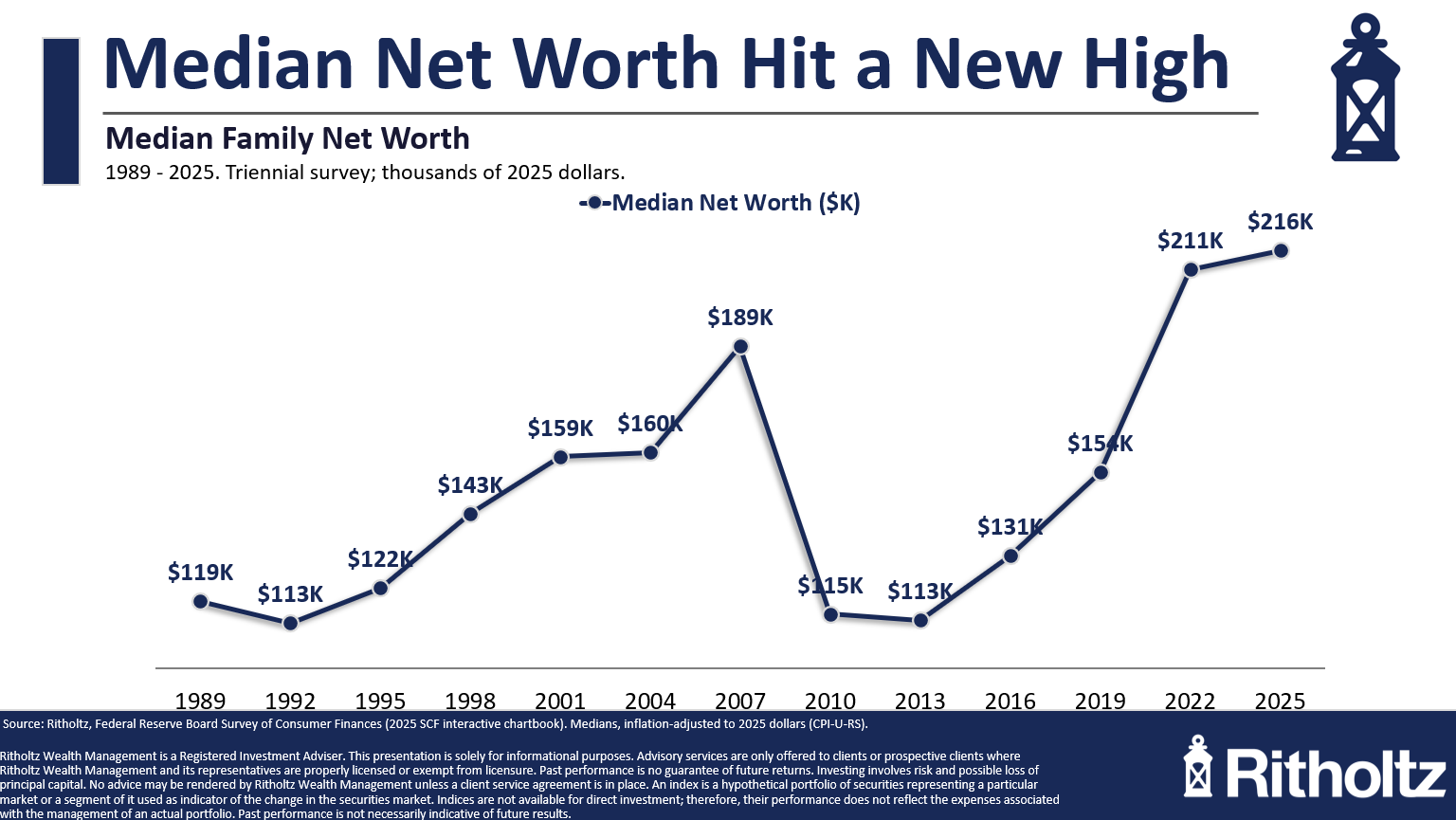
The Federal Reserve’s data highlights two primary drivers of household stability: median income and net worth. While income represents the flow of capital, net worth—the total value of assets minus liabilities—serves as the stock of security.
The volatility in net worth metrics remains striking. During the 2007-2009 period, American households saw a precipitous decline in wealth as the stock market shed nearly 60% of its value and housing prices plummeted by approximately 30%. When combined with a national unemployment rate that peaked at 10%, the erosion of wealth was systemic. Yet, the decade following this collapse saw a robust recovery. A synchronized boom in both real estate values and equity markets has pushed median household net worth to record highs. While the rate of growth has moderated in the most recent reporting period, the stability of these gains suggests that household balance sheets are significantly more robust than they were during the post-recession recovery period.
Liquidity and Debt: The Changing Composition of Household Balance Sheets
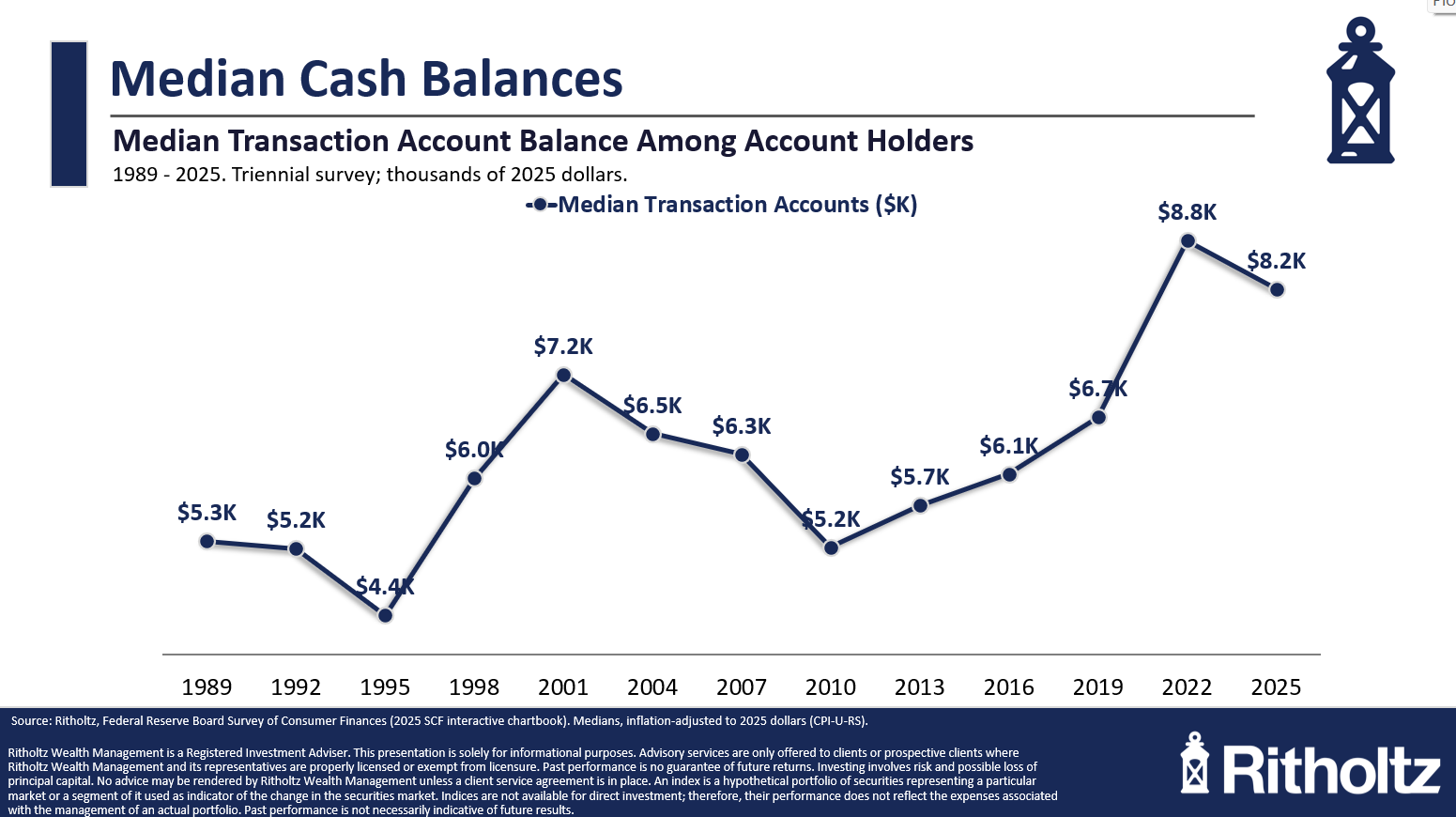
One of the most persistent narratives in financial journalism is the "emergency expense" myth—the idea that the vast majority of Americans are one $400 emergency away from total financial ruin. The latest SCF data provides a necessary corrective to this perception. The survey reports that the median cash balance for American households currently sits at $8,000. While this figure is not a panacea for all economic hardship, it represents a substantial liquidity buffer that contradicts anecdotal claims of widespread, immediate insolvency.
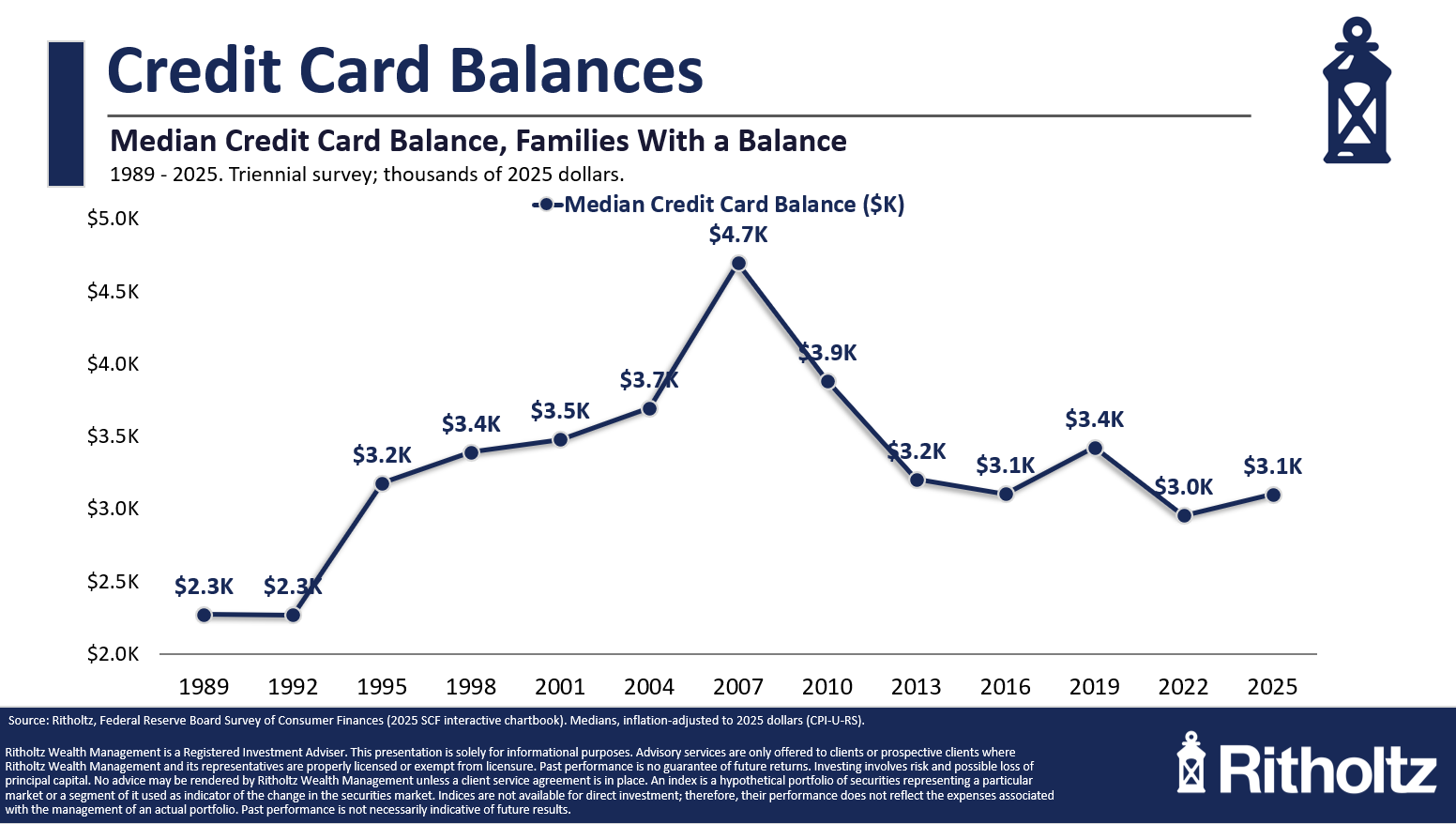
Equally compelling is the trend in credit card debt. Despite common assumptions regarding rising consumer debt loads, real-basis median credit card debt has been trending downward for several years. In fact, current levels remain well below those observed prior to the 2008 financial crisis. This deleveraging suggests that households have proactively repaired their balance sheets. From an institutional perspective, this implies that the American consumer possesses latent "firepower"—the capacity to absorb future shocks or bridge short-term deficits through credit if necessary, without the immediate threat of systemic default.
The Paradox of Sentiment: Local Reality vs. National Perception
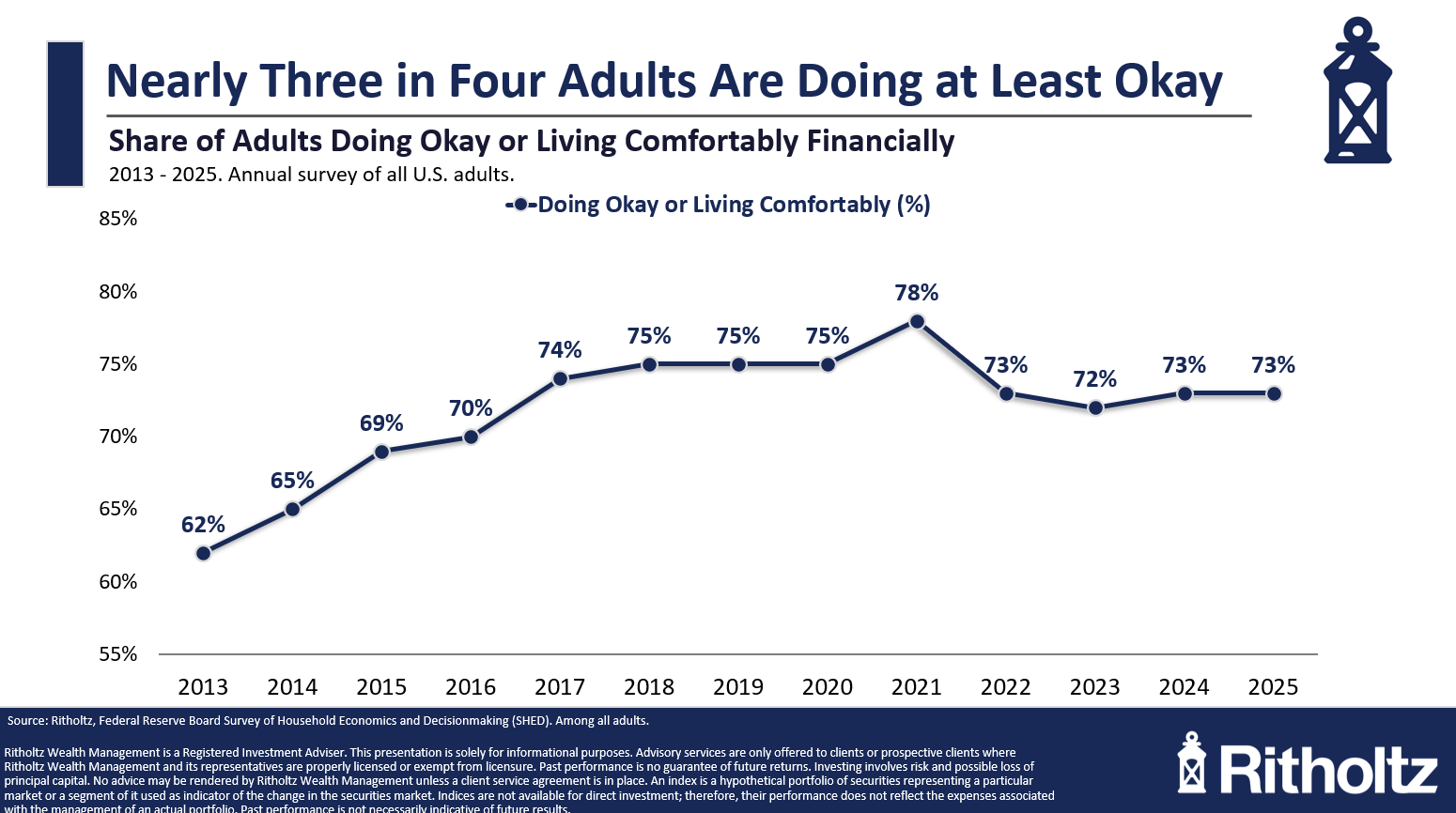
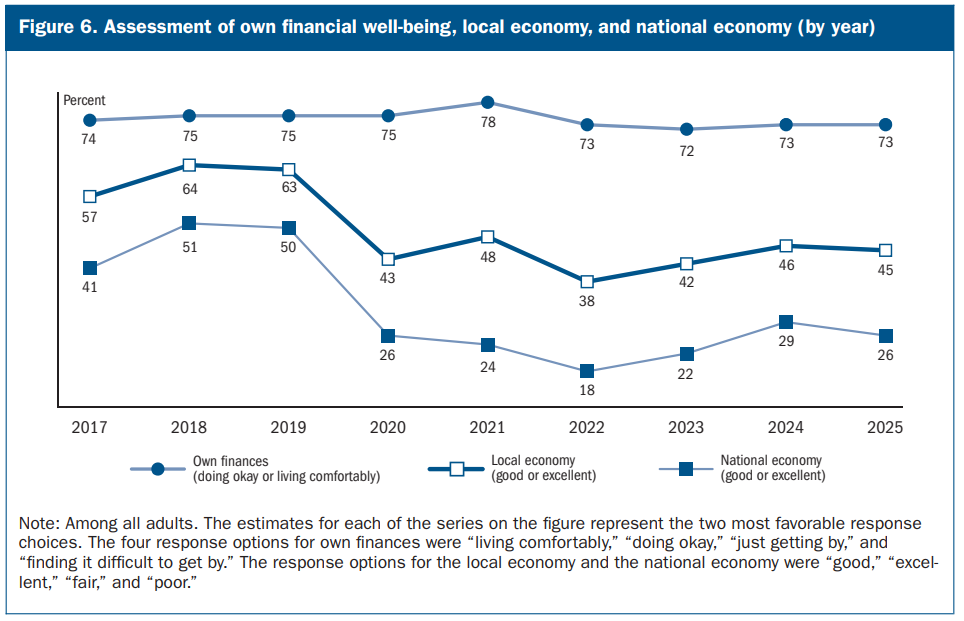
Perhaps the most fascinating—and perplexing—aspect of the Federal Reserve’s research is the divergence between personal financial reality and national economic sentiment. When asked to evaluate their own financial health, approximately 75% of households report they are doing "okay" or living "comfortably." This metric has remained remarkably stable, even following the conclusion of pandemic-era stimulus programs.
However, when these same individuals are asked about the state of the national economy, the responses shift toward pessimism. This "dichotomy of perception" suggests that while households feel secure in their own localized, immediate environment, their view of the broader macroeconomy is heavily influenced by external factors, including media coverage, political polarization, and social media discourse. This suggests that the current "vibecession"—a term coined to describe the gap between strong economic data and poor consumer confidence—is driven less by the bank accounts of individual citizens and more by the prevailing narrative of national instability.
Emergency Preparedness and Long-Term Stability
Beyond income and debt, the survey provides evidence of a strengthening safety net. More than half of all households now report having at least three months of emergency savings. This is a significant improvement from previous cycles and indicates a heightened focus on risk mitigation among the general population.
When questioned about how they would handle a sudden $400 expense, a significant portion of respondents indicated they would utilize cash or savings. For those who would be forced to borrow, the reliance on credit cards or asset liquidation remains a standard, if less than ideal, contingency. The fact that the majority of households have moved away from "living paycheck to paycheck" to having a multi-month cushion indicates a maturation of household financial planning.
Broader Implications for Policymakers
The implications of this data for federal and monetary policymakers are significant. The Federal Reserve, in its role as a steward of financial stability, often looks to the Survey of Consumer Finances to gauge the effectiveness of interest rate adjustments and fiscal policy.
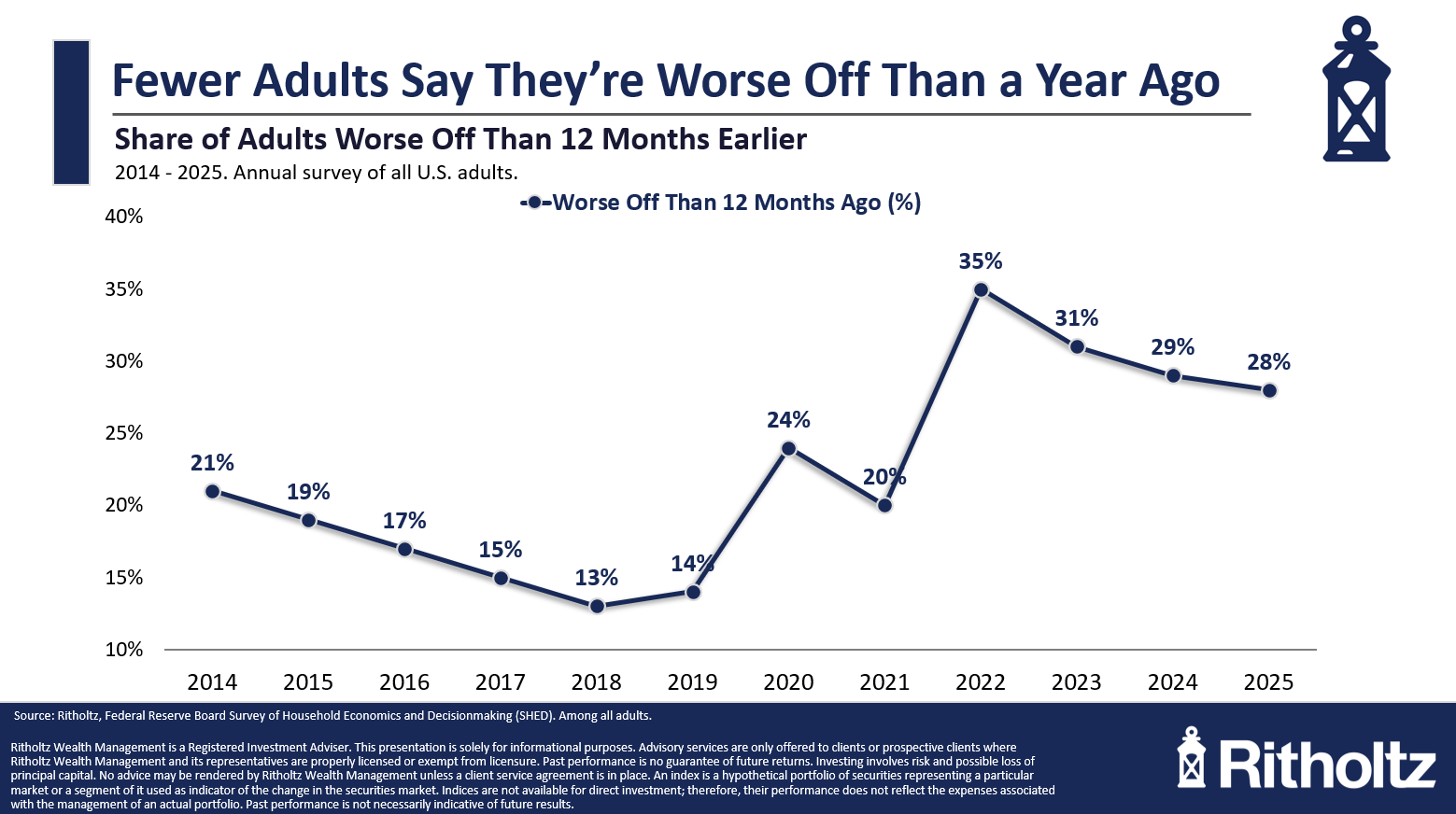
Current data suggests that while the broader economy is in a state of growth, it is not an egalitarian expansion. There remains a cohort of households experiencing genuine distress, driven by persistent inflation in essential goods, the lack of ownership of appreciating financial assets, and localized job displacement. The "middle" of the American economy is undoubtedly stronger, but the "tails"—those at the lower end of the income spectrum—remain vulnerable to shocks that the median household can now withstand.
Conclusion: A Measured Outlook
The latest Federal Reserve Survey of Consumer Finances paints a picture of an American household that is, in aggregate, more financially secure than it was a decade ago. The combination of rising real incomes, record-high net worth, lower relative debt, and improved cash reserves points to a period of structural resilience.
However, the economy is far from perfect. The persistence of the "negative sentiment" gap remains a hurdle, and the disparities in wealth accumulation continue to present challenges for long-term social mobility. As the country moves forward, the data serves as a reminder that aggregate economic health is not a proxy for universal prosperity. While the trend line is currently moving in the right direction, the lessons of the last twenty years—from the 2008 collapse to the pandemic—serve as a constant reminder that financial environments are dynamic and that today’s stability is not guaranteed for tomorrow. For now, however, the evidence suggests that the average American household has successfully navigated one of the most volatile economic periods in modern history with surprising durability.