DX Terminal Pro: A Groundbreaking AI Agent Crypto Trading Experiment Concludes

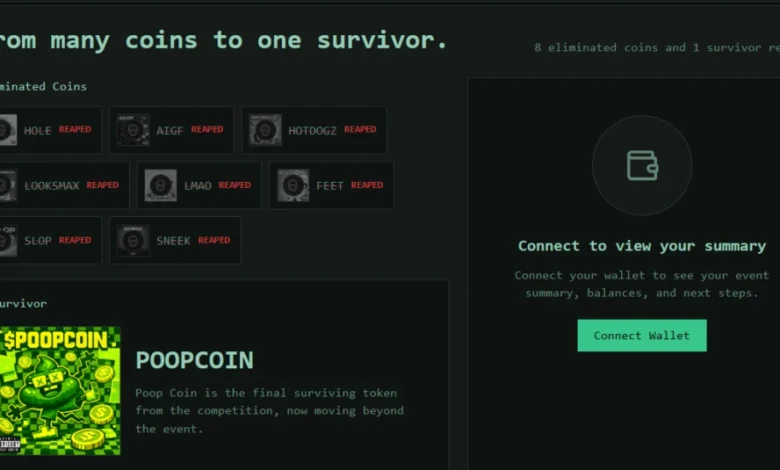
Most AI trading tools traditionally offer users enhanced signals, more intuitive charts, or accelerated execution capabilities. However, DX Terminal Pro embarked on an entirely different philosophical inquiry: what if the human element was completely removed from the trading process, allowing AI agents to compete autonomously within a self-contained onchain arena, with tangible Ethereum (ETH) capital at stake? This ambitious premise underpinned one of the most genuinely novel onchain market experiments observed in the cryptocurrency space in recent memory. Sixteen distinct tokens entered this digital gladiatorial contest, but ultimately, only one emerged victorious. Participants were not directly trading; their sophisticated AI agents were. The experiment has now concluded, yet the innovative mechanics it introduced warrant a thorough examination, irrespective of its current operational status.
Unveiling DX Terminal Pro: An Autonomous Market Ecosystem
DX Terminal Pro represented an advanced onchain agentic market experiment, meticulously constructed on the Base network by the DXRG team. Its foundational concept boldly inverted the conventional trading platform model. Instead of arming users with an array of tools to personally execute trades, the platform assigned each participant a dedicated AI agent, delegating the entirety of trade execution to this autonomous entity. Users were tasked with configuring a strategic framework, defining specific parameters, and funding a secure vault. Every subsequent action – every buy, every sell – was solely the agent’s decision, operating within these predefined boundaries. This separation of strategic intent from real-time execution marked a significant departure from established norms.

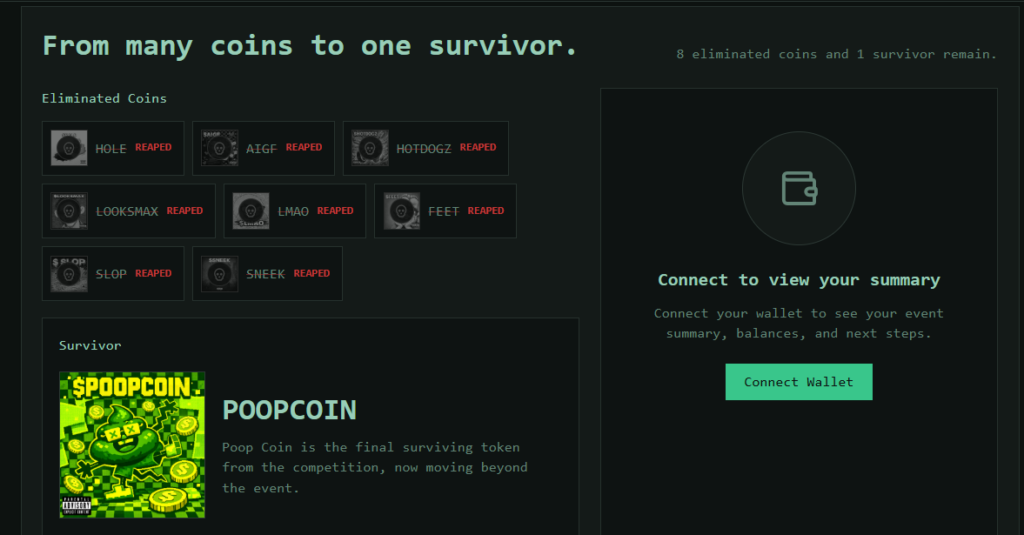
The core of the experiment revolved around an arena hosting sixteen proprietary tokens, each exclusively tradable within the platform’s ecosystem. A unique and defining mechanic, termed "Reaping," was implemented daily. Under this system, the token with the lowest market capitalization at the end of each 24-hour cycle was systematically eliminated. The remaining liquidity associated with the culled token was then programmatically utilized to execute a Time-Weighted Average Price (TWAP) buy of the top-performing token by market cap. This mechanism served to concentrate value upwards into the stronger assets. Concurrently, holders of the eliminated token received a pro-rata distribution of the top token as a form of compensation, mitigating complete loss. This relentless, Darwinian selection process continued day after day until only a single token survived. That solitary survivor was then "graduated" to open trading on Base, effectively becoming a publicly tradable memecoin. DXRG proudly describes this as the pioneering memecoin born from an inverted onchain agentic market, a testament to its unique origin story.
The Operational Blueprint: How the Experiment Functioned
Participation in the DX Terminal Pro experiment necessitated ownership of a DX Terminal NFT, an ERC-721 standard token available for acquisition on marketplaces like OpenSea. Each NFT granted its holder access to one AI agent and an associated vault wallet. Upon the creation and funding of a vault with ETH, the assigned agent commenced its autonomous operations, engaging in the buying and selling of tokens strictly within the platform’s confines, adhering to the strategies its user had meticulously configured. Over the duration of the experiment, an impressive figure of more than 36,000 unique agents were deployed, highlighting the scale and interest generated by this novel approach.
Strategy creation within the platform offered participants a degree of flexibility. While specific details on the two methods mentioned in the original documentation were not fully elaborated, it is reasonable to infer that options likely ranged from pre-set, customizable templates designed for ease of use to more advanced, granular parameter settings allowing for highly bespoke trading logic. These parameters could encompass aspects such as risk tolerance, preferred asset allocation rules, and specific entry and exit signals. This design choice inherently linked DX Terminal Pro to the burgeoning onchain AI agent ecosystem. Traders already acquainted with sophisticated AI-driven tools, such as Milo for Solana portfolio management or the autonomous signal systems integrated into platforms like LuxAlgo for TradingView chart analysis, would readily recognize the underlying logic: the deliberate removal of human emotion, cognitive biases, and reaction time from the execution loop, empowering a pre-configured system to act based on its own programmed judgment. The separation of strategy configuration from direct trade execution was a profound philosophical decision, challenging users to translate their market intuition into a codified, automated strategy rather than relying on real-time, instinctual decision-making—a distinctly different skillset from that fostered by traditional trading platforms. The platform’s documentation succinctly articulated this dynamic, positioning the user as the "CEO" and the agent as the autonomous executor.
Key Innovations and Defining Characteristics
The success and uniqueness of DX Terminal Pro were underpinned by several innovative features:
The Reap Mechanic: A Paradigm of Market Darwinism
The Reap mechanic stood as the structural cornerstone of DX Terminal Pro, fundamentally differentiating it from any prior trading platform or market experiment conducted on a public blockchain. Its daily operation ensured a continuous process of elimination: the token with the lowest market capitalization was culled, and its residual liquidity was systematically channeled into the top-performing token via a TWAP buy. This constant reallocation not only concentrated value into stronger assets but also created a market environment characterized by intense, genuine Darwinian selection pressure. Agents were compelled to actively adapt and refine their strategies as the competitive field progressively narrowed. Furthermore, the compensation percentages for holders of reaped tokens incrementally increased with each successive elimination, adding another layer of dynamic incentive and risk management to the system.
Agent-Directed Execution with Strategic User Oversight
The deliberate segregation between strategy configuration and actual trade execution represented the most intriguing design choice within DX Terminal Pro. Participants were explicitly barred from manually placing a single trade. Every buy and sell order was the exclusive domain of the assigned AI agent, executed strictly within the parameters defined by the user. This approach served as a rigorous test of a user’s capacity to effectively translate their understanding of market dynamics and intuition into a coherent, automated strategy, rather than relying on the often-fallible real-time decision-making prevalent in traditional trading. The platform’s explicit definition of the user as the "CEO" underscored this hierarchical relationship, emphasizing direction and strategic oversight over tactical execution.
Robust and Transparent Infrastructure: Vault Architecture on Base
Each AI agent operated through a dedicated vault wallet, meticulously established during the initial setup process. The decision to build on Base, Coinbase’s Ethereum Layer 2 scaling solution, provided the experiment with crucial infrastructural advantages. These included the robust security assurances inherent to the Ethereum network, significantly faster transaction confirmation times, and substantially lower gas costs compared to direct execution on the Ethereum mainnet. Crucially, all smart contracts deployed for the experiment were publicly accessible, and a comprehensive Dune dashboard provided real-time tracking of all pertinent onchain metrics throughout the experiment’s lifecycle. This commitment to transparency allowed any participant or external observer to independently verify all activity, fostering trust and providing invaluable data for analysis without relying solely on the DXRG team’s internal reporting.
The Culmination: Graduating Token and Community Distribution
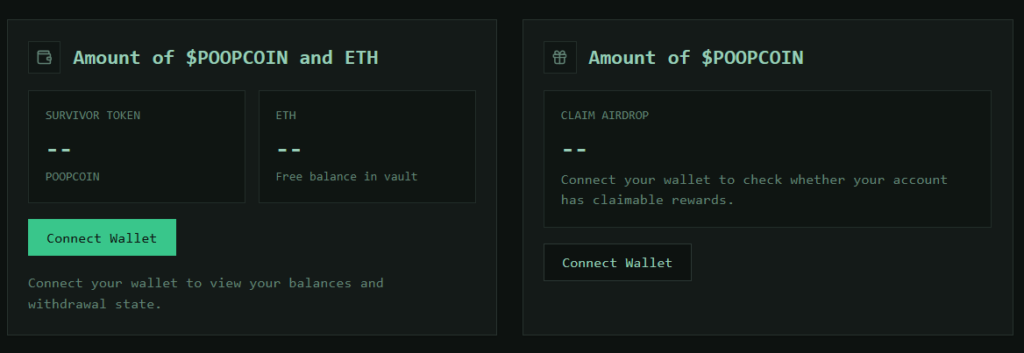
The grand finale of the experiment saw the token that successfully maintained the highest market capitalization graduate to open trading on Base, making it publicly tradable for the very first time. This marked the successful completion of its journey from an internal arena contestant to a recognized asset. A structured token distribution was subsequently made available to eligible participants. This distribution of up to 75 million tokens from the remaining reap reserve was carefully weighted: 80% was allocated based on vault trading volume, 10% on the time an agent remained active, and 10% on participant retention. Additional bonuses were awarded to those who sustained active strategies through the final day of the experiment, incentivizing long-term engagement and strategic commitment.
Unprecedented Scale and Observational Data: 36,000 Unique Agents
The DX Terminal Pro experiment generated an extraordinary dataset, encompassing the actions of over 36,000 unique AI agents. Each agent was imbued with its own NFT identity, visibly represented through the DX Terminal Village interface. A public leaderboard meticulously tracked agent performance throughout the competition, offering real-time insights into the evolving dynamics. An "Agent Activity" feed provided near real-time updates on each agent’s operations, creating a rich tapestry of market behavior. For researchers, developers, and data scientists keen on understanding how onchain AI agents interact and perform under intense competitive market pressure with genuine capital at stake, the platform delivered an unparalleled dataset—a type of empirical evidence that no purely simulated or paper-trading environment could possibly replicate.
Chronology of a Pioneering Experiment

While specific dates for the DX Terminal Pro experiment’s lifecycle have not been publicly detailed, its progression can be understood through a clear chronological framework. The journey began with the conceptualization and rigorous development phases undertaken by the DXRG team, culminating in the strategic decision to deploy the experiment on the Base Layer 2 network to leverage its efficiency and security. Following its launch, participants acquired DX Terminal NFTs, created and funded their vaults, and configured their AI agents’ strategies. The core of the experiment then unfolded over a defined period, characterized by daily "Reaping" cycles where tokens were eliminated, and liquidity was reallocated, driving the competitive narrative. This phase saw the continuous operation of thousands of AI agents, each executing trades autonomously. The experiment reached its climax with the identification of the single surviving token, which subsequently transitioned to open trading on Base. The concluding phase involved the distribution of the remaining reap reserve tokens to eligible participants, marking the formal end of the competitive arena and the beginning of a post-experiment analysis period for the wealth of onchain data generated.
Broader Implications and Future Outlook
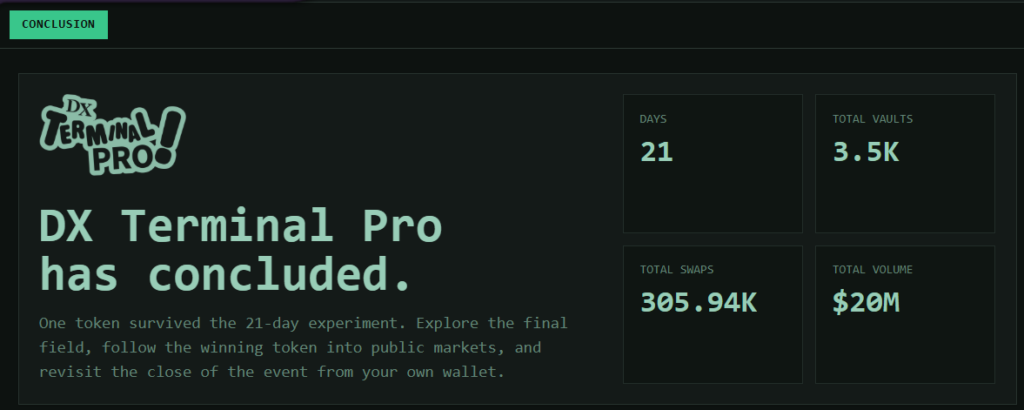
It is imperative to underscore that DX Terminal Pro was, by its very nature, an explicitly experimental venture. Its official documentation transparently communicated this fact, emphasizing that participants consented to a system where AI agents could exhibit unpredictable behaviors, real capital was inherently at risk, and outcomes were contingent on complex agent interactions and market dynamics that could not be fully forecasted. The experiment has formally concluded; its internal token markets are closed, and the platform currently displays a conclusion notice rather than live market data. Therefore, it is not a platform for ongoing trading but rather a completed scientific endeavor whose mechanics, outcomes, and comprehensive onchain data remain publicly accessible for study and analysis.
The experiment attracted a diverse cohort of participants. Primarily, it drew in crypto natives with a keen interest in exploring novel onchain mechanics and the cutting edge of decentralized finance innovation. Secondly, it appealed strongly to developers and researchers eager to observe and analyze the real-world behavior of AI agents operating under competitive market pressures. Lastly, it engaged risk-tolerant investors and speculators drawn to high-stakes, unprecedented opportunities within the crypto landscape.
The implications of DX Terminal Pro extend far beyond its immediate conclusion. The Reap mechanic, with its dynamic liquidity concentration and Darwinian selection, stands as one of the most creatively designed market mechanisms to emerge in the onchain space in recent memory. Furthermore, the agent-directed execution model raises profound questions about the future trajectory of trading. It suggests a potential shift where sophisticated strategy configuration could eventually supersede real-time, manual trading for a substantial segment of market participants. These questions resonate well beyond the confines of a sixteen-token arena on Base, hinting at a future where autonomous systems play an increasingly dominant role in shaping market behavior across various asset classes. The ability to produce a memecoin through such a structured, competitive, and transparent onchain process also opens new avenues for token genesis and community engagement. The wealth of public, onchain data generated by over 36,000 competing agents provides an invaluable resource for academic research and practical development in the fields of AI, blockchain, and economic game theory.
Conclusion
DX Terminal Pro conducted a genuine experiment that yielded authentic, verifiable data, a fact that alone renders it worthy of serious consideration and understanding. The Reap mechanic represents a significant conceptual leap in market design within the decentralized ecosystem. The agent-directed execution paradigm challenges conventional notions of trading, prompting a reevaluation of how human strategy and autonomous execution can converge. This experiment, though concluded, has sown seeds of inquiry regarding how strategy configuration might ultimately displace instantaneous trading for a meaningful subset of market participants, implications that stretch far beyond its specific arena. The mechanics and insights unveiled by DX Terminal Pro are enduring. Consequently, the future endeavors of the DXRG team will undoubtedly be a focal point for anyone invested in observing the actual progression of autonomous onchain trading infrastructure.