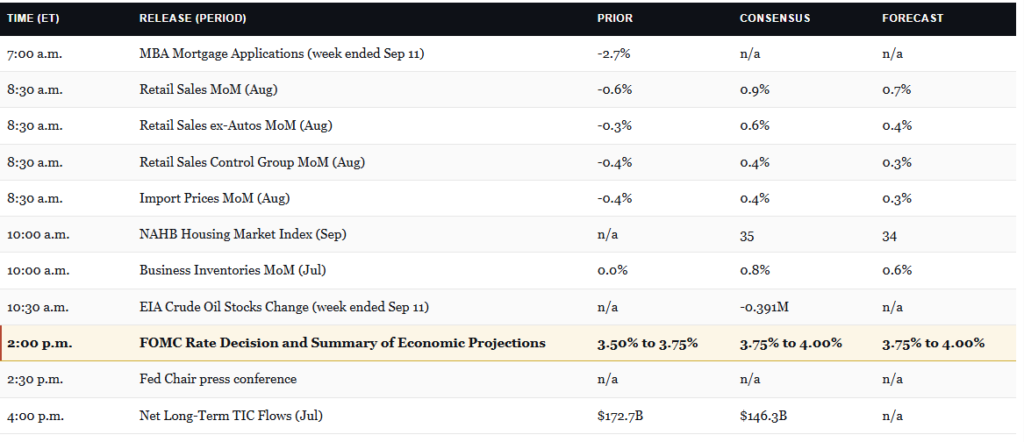
With Fed Funds futures markets pricing in a near-certainty of an interest rate hike during the afternoon Federal Open Market Committee (FOMC) meeting, financial analysts and market participants have largely moved past the binary debate of whether the central bank will tighten monetary policy. Instead, the critical focus has shifted toward the trajectory of future policy decisions, the underlying economic signals driving the central bank’s actions, and what broader implications this environment holds for equity and fixed-income portfolios.

Market participants are turning their attention to three key deliverables from the FOMC meeting: the updated Summary of Economic Projections (SEP), commonly referred to as the dot plot; shifts in the balance of risk language within the official FOMC policy statement; and how the framing of the decision is communicated during the post-meeting press conference.
Decoding the Federal Reserve’s Signals
The release of the Summary of Economic Projections serves as the primary roadmap for anticipated monetary policy. Analysts are closely monitoring the median projections and outlier dots regarding where the Federal Funds rate is expected to land by the close of the year. A tightly clustered set of projections typically indicates broad consensus and conviction among FOMC members, whereas a wide dispersion highlights internal division. With a limited number of policy meetings remaining on the calendar, market expectations lean toward the median pointing to a modest trajectory, assuming an immediate rate increase is implemented.
Equally important is the qualitative language utilized in the FOMC statement, specifically concerning the balance of risks. If the FOMC adopts a softer tone regarding persistent inflation pressures, today’s anticipated rate increase may be interpreted as a singular, defensive adjustment rather than the initiation of an aggressive, multi-step hiking cycle. Conversely, heightened anxiety surrounding softening labor market conditions could compel the central bank to signal heightened caution moving forward.

Finally, the phrasing employed during the post-meeting press conference will dictate market psychology. Rather than committing to definitive characterizations such as "one and done" or the "first of several," officials are expected to emphasize a data-dependent approach, anchoring subsequent policy adjustments to incoming macroeconomic metrics.
Historical Context of Rate Hiking Cycles
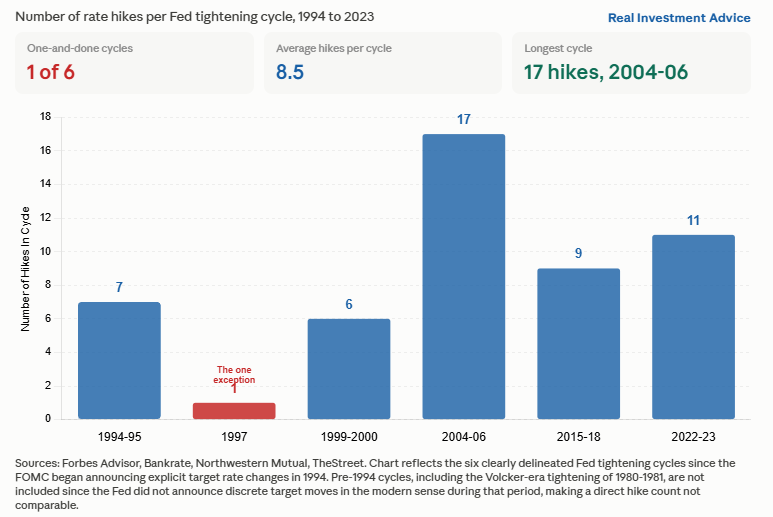
To evaluate the potential longevity of the current monetary tightening phase, market historians look back at prior Federal Reserve actions. Since 1994, the U.S. central bank has initiated six major hiking cycles. The vast majority of these historical episodes—five out of six—extended across multiple years, ultimately encompassing six or more individual rate increases.
The notable exception occurred in March 1997, when then-Chairman Alan Greenspan implemented a solitary rate hike before pivoting to monetary easing with rate cuts in 1998. Aside from that historical anomaly, modern tightening cycles have consistently persisted well beyond the initial adjustment.
However, analysts caution that blind adherence to historical templates can be misleading. This cycle features a distinct starting point, characterized by historically elevated real interest rates. Consequently, market expectations point toward a more constrained and limited number of rate hikes compared to previous aggressive eras.
Yields, Valuations, and the 2022 Miscomparison
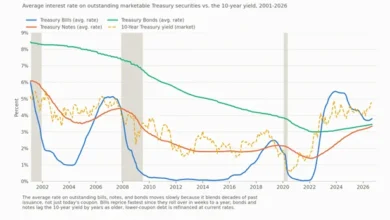
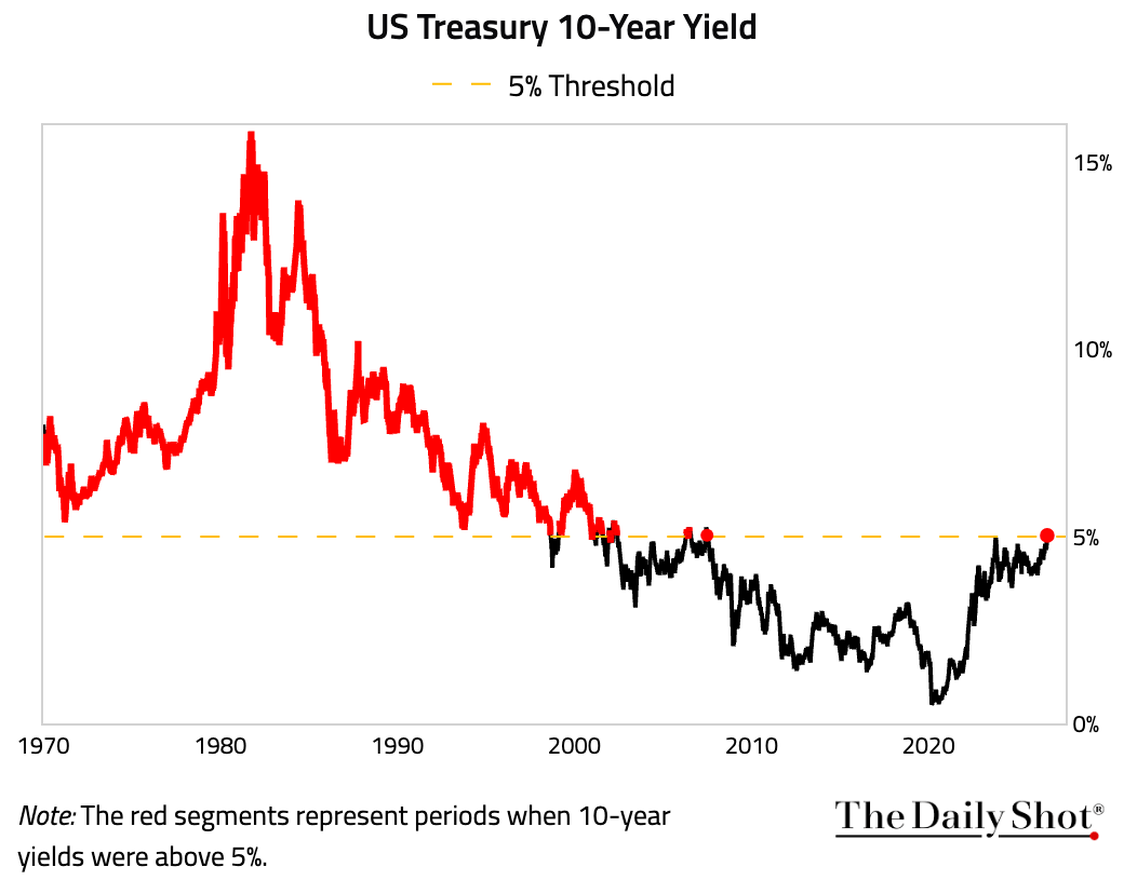
The broader macroeconomic environment is heavily influenced by movements in the fixed-income market. The benchmark 10-year U.S. Treasury yield recently pushed above the 5% threshold, reaching its highest nominal level since July 2007. This milestone has renewed debates concerning equity valuations and potential market corrections.
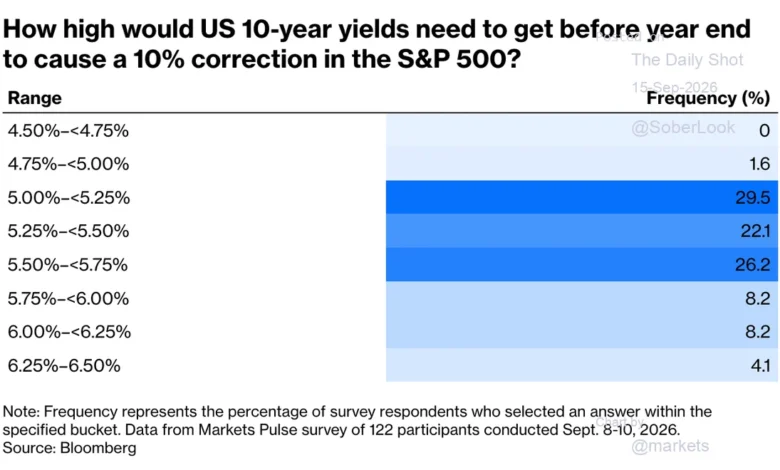
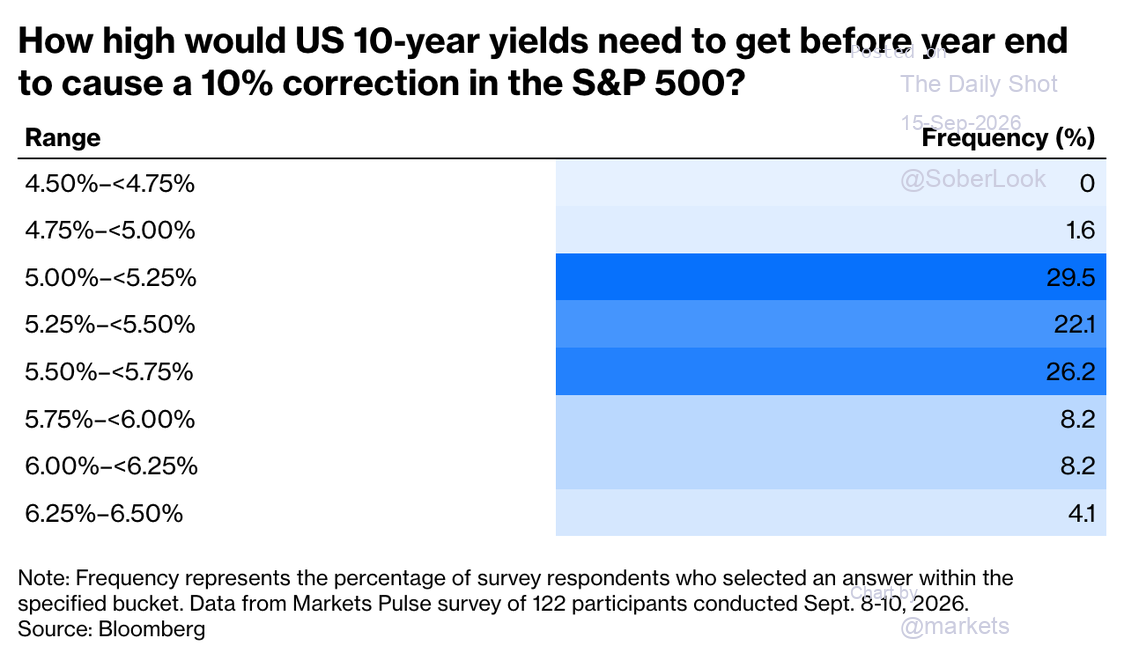
Wall Street sentiment surveys, such as recent pulses taken among institutional market participants, reveal that a vast majority of professionals believe 10-year yields would need to sustain levels between 5.00% and 5.75% to trigger a correction of 10% or more in the S&P 500 index. However, historical data suggests that the direct inverse relationship between rising yields and equity performance is heavily nuanced.
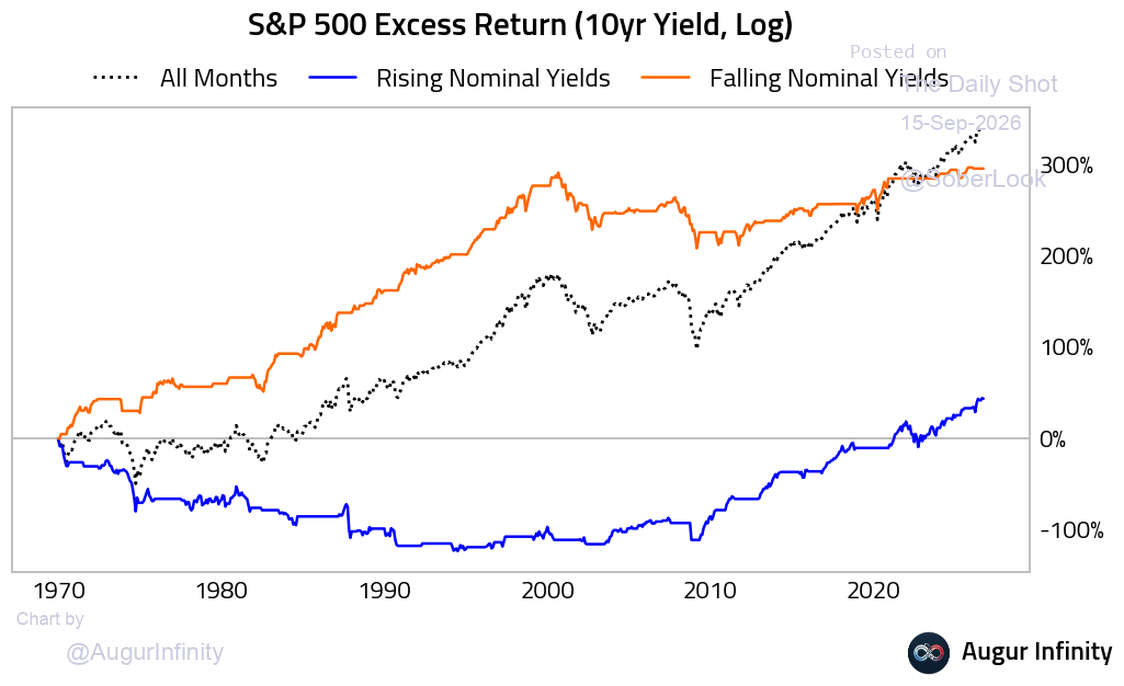
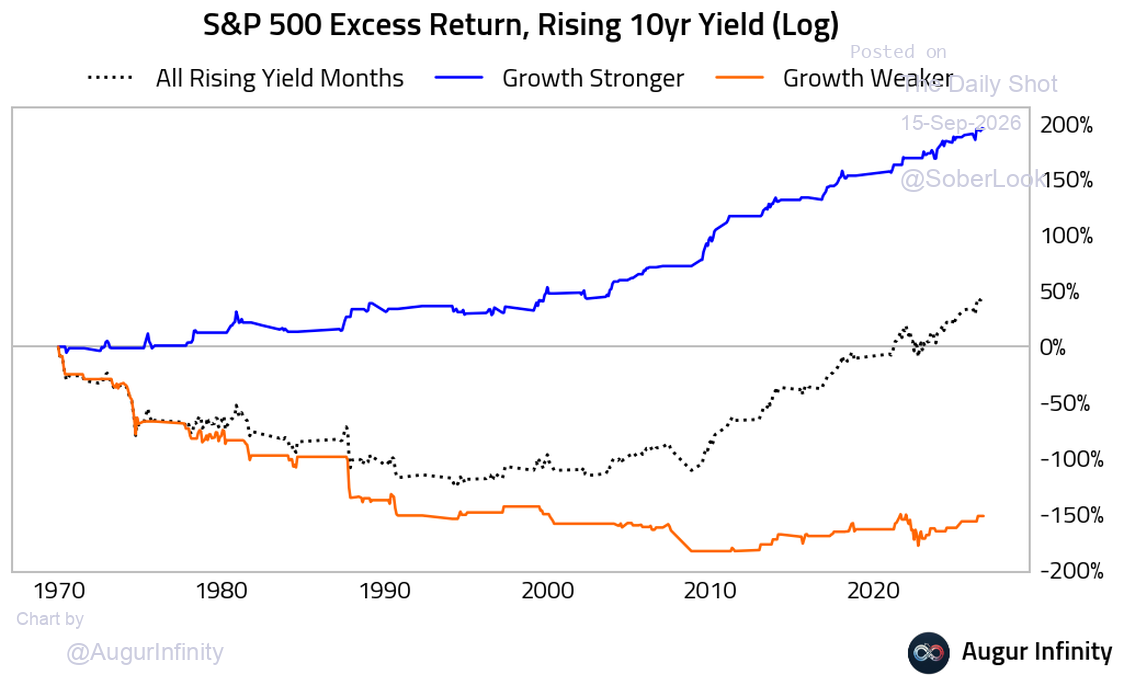
A granular examination of prior rising-yield environments demonstrates that the ultimate outcome for equities is dictated primarily by underlying economic growth rather than the nominal yield print itself. Periods characterized by rising yields coupled with strengthening economic growth have historically generated positive excess returns relative to cash. Conversely, rising yields accompanied by weakening growth metrics have produced deeply negative equity outcomes.
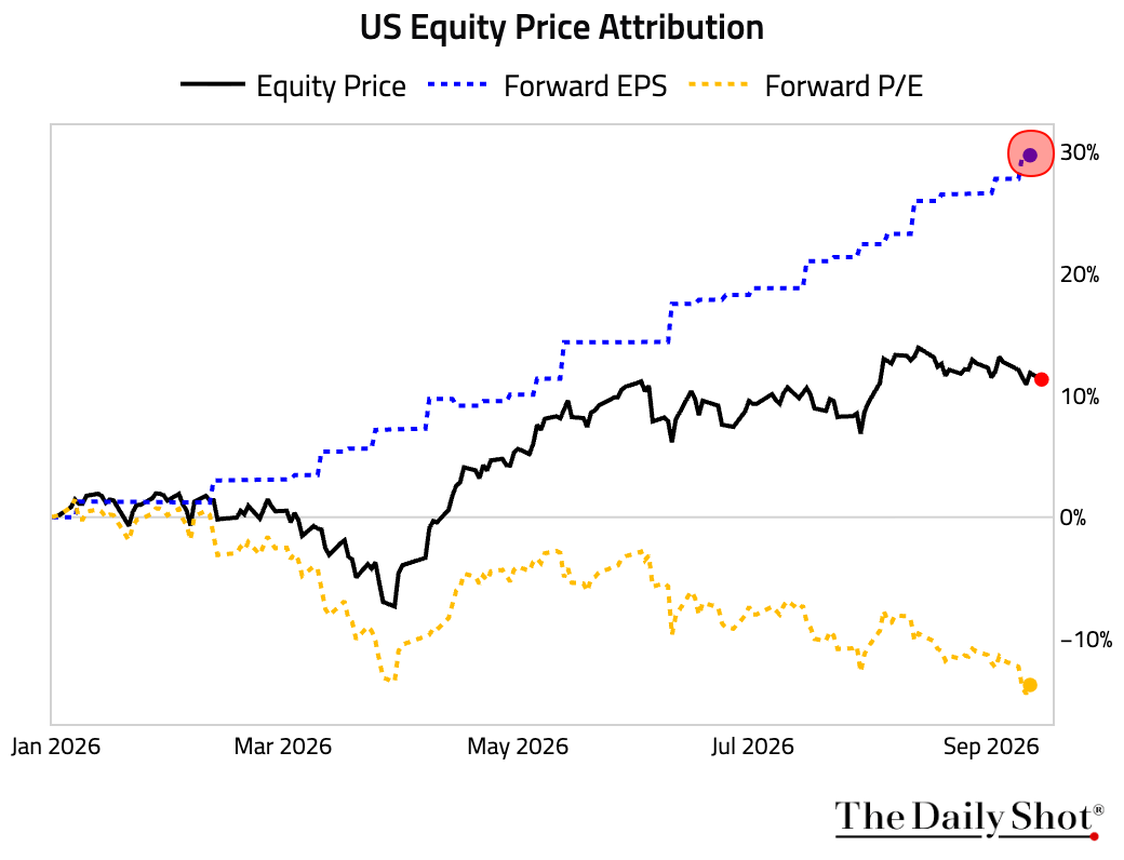
Furthermore, equity markets have already absorbed a significant degree of multiple compression. Forward earnings have expanded notably over the course of the year, while the forward price-to-earnings (P/E) multiple has compressed significantly from levels north of 23 down closer to 19. This dynamic indicates that the valuation de-rating frequently warned about by fixed-income bears has largely already occurred.
Despite parallels drawn by some market commentators, financial analysts emphasize that the current economic backdrop bears little resemblance to the aggressive tightening cycle of 2022.
The 2022 Hiking Cycle vs. The Present Environment
In 2022, the Federal Reserve faced an environment where it was substantially behind the curve. Headline inflation surged toward 9%, while real 10-year yields sat firmly in negative territory despite rapidly accelerating price pressures. The central bank was forced to maintain highly accommodative monetary policy long after economic conditions demanded tightening. This necessitated an aggressive sequence of 11 rate hikes over a 16-month span—the most rapid monetary tightening campaign since the early 1980s—causing a violent repricing across bond markets.
By contrast, the contemporary macroeconomic landscape is fundamentally different. Real 10-year yields hover near elevated levels not seen in nearly two decades, and the yield curve has experienced meaningful flattening. These indicators suggest that broader financial conditions are already restrictive. Rather than playing catch-up against a runaway domestic demand-pull inflation cycle, today’s policy adjustments reflect a central bank acting proactively to preserve institutional credibility.

Moreover, the primary drivers of inflation differ significantly. Current price pressures are largely exogenous, stemming from geopolitical tensions, energy market volatility, and related supply-side constraints. Unlike the broad demand-supply imbalances fueled by unprecedented pandemic-era fiscal stimulus and fractured global supply chains in 2022, geopolitical shocks tend to re-balance more rapidly as underlying conflicts evolve. Investors bracing for a prolonged, painful repetition of the 2022 tightening regime risk fighting the wrong war.
Market Technicals and Strategic Outlook

As equity markets navigate the Federal Reserve’s policy decisions, technical levels remain critical for short-term positioning. Major indices, including the S&P 500, have recently traded near key moving averages, such as the 50-day moving average. Maintaining these technical thresholds separates standard market repricing from deeper corrections, with subsequent structural support lines resting further down at the 200-day moving average.
Ultimately, portfolio managers emphasize that macroeconomic fundamentals—specifically the health of economic growth and corporate earnings—remain the definitive drivers of long-term market trajectories. As the Federal Reserve navigates its latest policy adjustments, market participants are advised to focus on broader growth indicators rather than individual yield prints, keeping in mind the foundational market adage: interest rate hikes rarely end bull markets, but recessions do.